The analog paneer controversy of 2026 is officially the biggest food scandal of the year. Maybe you were ordering a quick meal online or picking up groceries at your local market. You thought you were buying real, healthy dairy for your family. But there's a very high chance that white cube in your matar paneer is actually fake paneer.
The state governments in Maharashtra and Gujarat just banned it, and Chhattisgarh followed right behind. They finally drew the line on this massive deception. Violators in Maharashtra now face six months in jail and a Rs 1 lakh fine. That's serious business. You don't see food adulterants get criminal jail time often.
So what exactly is going on here? Why are regulators cracking down so hard this month? And how did this synthetic substitute end up on our plates?
Basically, we have a massive demand and supply problem. India consumes an unbelievable amount of paneer. It's the default premium vegetarian option for weddings and weekend dinners. Real paneer requires good quality, high-fat milk. And milk prices keep going up every single year. The math just doesn't work for cheap roadside eateries or budget restaurants. This widening gap between cost and consumer price expectation created the perfect black market for a cheaper alternative, in my experience.
What is analog paneer anyway?
Let me break down how they actually make this stuff. Real paneer is a simple food. You take full cream milk and boil it. Then you add a little lemon juice to curdle it, and separate the whey. Finally, you press the milk solids into a block. It's mostly milk fat and casein protein. Because you need several litres of good milk to make one kilo, authentic dairy paneer costs around Rs 350 to Rs 450 per kilo depending on which city you live in.
Analog paneer is a completely different chemical product. Manufacturers take skimmed milk. They remove the valuable fat to make butter. Then they need to replace that missing fat to get the right texture. So they pump in cheap vegetable oils. It's a cheap trick. We're usually talking about palm oil or low-grade hydrogenated fats.
Then they mix in synthetic binding agents and cheap starches to give it that familiar bouncy, solid texture.
I looked up the wholesale prices. It's shocking. This fake paneer costs only Rs 120 to Rs 150 per kilo to manufacture. You can instantly see why a small restaurant owner might be tempted to switch. They can triple their profit margin on every single plate of palak paneer they sell just by swapping the main ingredient. Honestly, it's a mess.
The core problem isn't that this artificial food exists. There's a market for cheap vegan cheese substitutes globally. But the real crime here is the deception. Restaurants and local shops sell this synthetic block of vegetable fat as pure dairy paneer. You pay the premium dairy price, but you get a completely inferior product. If you want more background on how everyday systems are manipulated for profit, check out our detailed explainers.
FSSAI guidelines and the 2026 state bans
Food regulators are finally waking up to the scale of this scam. The Food Safety and Standards Authority of India (FSSAI) has always had strict rules about dairy products. The law is clear. If you replace milk fat with any other fat, you absolutely can't label or sell it as paneer. Legally, it has to be called a "cheese analogue" or a "non-dairy substitute".
But enforcement across Indian states was notoriously weak. Until August 2026.
The Maharashtra Food and Drug Administration (FDA) started conducting massive, coordinated raids earlier this year. What they found terrified them. They discovered hundreds of tonnes of this synthetic product sitting in cold storage facilities across Mumbai and Pune. The packaging was deliberately deceptive. It looked exactly like regular dairy brands. No clear labels. And zero disclosure about the vegetable fat content.
This led to the outright ban in Maharashtra. Gujarat and Chhattisgarh quickly followed. The new rules are strict. Any shop or restaurant caught passing off analog cheese as real paneer will face immediate consequences.
We're talking about the immediate shutdown of the premises and actual jail time. The Rs 1 lakh fine is just the starting point. Health officials are now using digital tracking to follow the supply chain. They track the UPI payments between the manufacturers and the local dhabas to prove the illegal sale network. It's a full crackdown. I'm not sure exactly why it took them this long, honestly.
The FSSAI explicitly states that any product replacing milk fat with vegetable oil cannot legally be sold, marketed, or labelled as paneer in India.
Honestly, I think this is a fantastic move. People buy paneer specifically for the high-quality protein and healthy dairy fats. Parents feed it to their growing kids thinking they're building strong bones and immunity. But feeding them refined palm oil instead is just morally wrong.
The real health risks of eating fake paneer
You might be wondering if eating this stuff once in a while is actually dangerous. The short answer is yes.
Real milk fat contains essential vitamins like A and D, along with healthy short-chain fatty acids. It digests easily. It provides sustained energy. Analog paneer gives you absolutely none of that nutritional profile.
Instead, you get a heavy dose of heavily refined vegetable oils. These oils undergo intense chemical processing. They often contain trans fats which are notorious for raising your bad LDL cholesterol levels and lowering your good HDL cholesterol. If you eat a lot of this outside food, you're unknowingly putting massive stress on your cardiovascular system (which makes sense, actually).
Then there are the binding agents and starches. Some sketchy manufacturers use cheap industrial starches and unregulated chemicals to get the weight up. It completely messes with your digestion. Many people complain of severe bloating or gas after eating restaurant paneer dishes. We almost always blame the heavy restaurant gravy. But the truth is, the fake paneer block itself is often the main culprit.
There's also a massive hygiene factor to consider. Genuine dairy brands have strict quality control because milk spoils incredibly quickly. The people manufacturing cheap analog paneer in unregistered industrial sheds don't care about hygiene. The longer shelf life of vegetable oil means they can cut corners on cold chain storage. They often transport it in open trucks without proper cooling.
If you're worried about your safety in other areas of life, especially digital banking, you might want to read our latest scam alerts to protect your hard-earned money.
How this affects local Indian dairy farmers
There's a huge economic side to this story that nobody talks about. Millions of rural Indian families depend on dairy farming. When a restaurant buys cheap analog paneer made from imported Indonesian palm oil, they're directly taking money out of the pockets of local Indian farmers.
The dairy cooperative model in India only works if there's a steady demand for milk. When the market gets flooded with fake synthetic dairy, the demand for real milk drops. Farmers are forced to sell their milk at throwaway prices.
It's a vicious cycle. We're actively destroying our own rural economy just so a caterer can save fifty rupees on a wedding buffet. Supporting authentic dairy brands means supporting the rural Indian economy, if you ask me.
How to spot fake paneer in your kitchen
So how do you protect your family? You can't always trust the printed label, especially if you buy loose paneer from local unbranded sweet shops or dairies. But you can do a few very simple tests right in your own kitchen.
I know some of these sound a bit like a high school chemistry experiment. But they literally take two minutes.
The texture and taste test
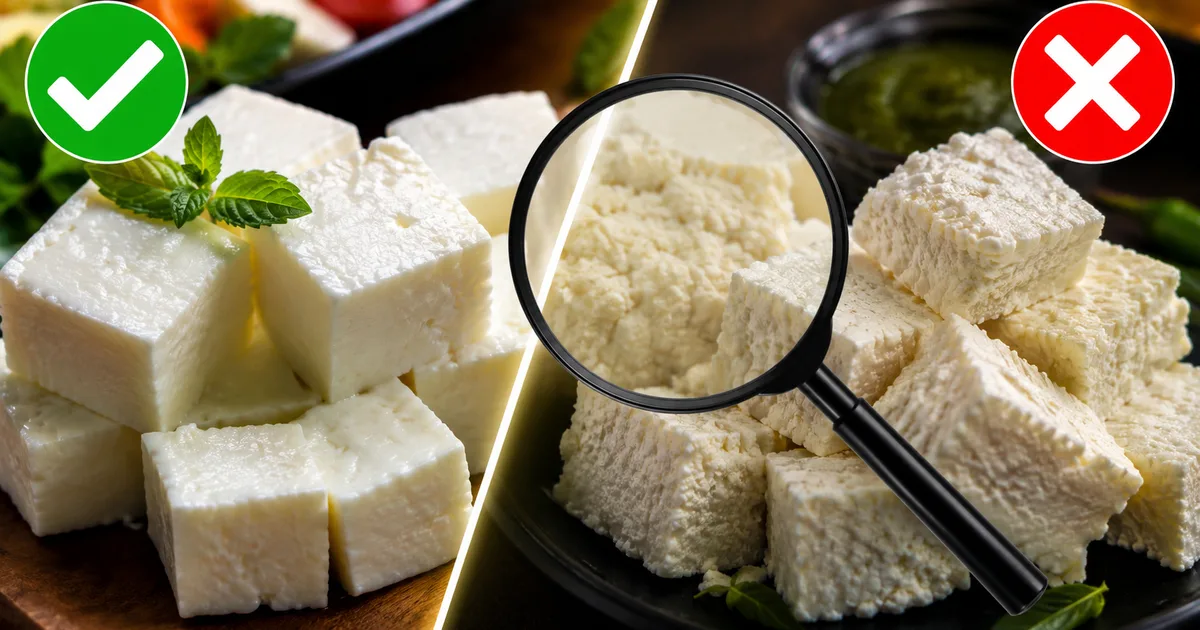
Real paneer is dense. It's slightly heavy, but it crumbles easily when you press it hard between your fingers. It has a mild, milky sweetness. Fake paneer feels unnaturally rubbery. It bounces back a bit too much when you squeeze it. When you eat it raw, it leaves a strange, waxy coating on the roof of your mouth. That coating is the cheap vegetable oil clinging to your palate.
The boiling water check
Take a small cube and drop it in heavily boiling water for a few minutes. Authentic paneer will become very soft. It might start to break apart slightly at the edges. Analog paneer will become extremely chewy. It holds its sharp square shape stubbornly because of the synthetic chemical binders holding the oil and starch together.
The iodine test for starch
This is the most reliable scientific method. The FSSAI officially recommends this specific test. You just need a small bottle of iodine tincture from any local pharmacy. It costs barely twenty rupees.
Boil a small piece of the suspect paneer in a cup of water. Let it cool down completely to room temperature. Add two or four drops of the iodine solution into the water. If the paneer or the water turns a dark bluish-black colour, it's 100% fake. The blue colour is a well-known chemical reaction proving that external starch was added to bulk up the product. Pure milk paneer will just turn slightly yellowish-brown from the natural colour of the iodine itself.
You can often spot the deception by looking for these specific signs:
- The price is suspiciously low compared to retail milk prices.
- The texture is rubbery and it bounces back when pressed.
- It doesn't break down easily when boiled in water.
- The raw pieces leave a waxy, sticky film inside your mouth.
What to do when eating out or ordering food
Testing at home is easy enough. But what about when you order on food delivery apps? Or when you eat out at a new restaurant?
This is much trickier. You obviously can't take a bottle of iodine to a restaurant table (annoying, I know). But you can look for obvious red flags.
Be highly suspicious of extremely cheap paneer dishes. If a small restaurant is selling a massive portion of paneer butter masala for Rs 120, they're definitely cutting corners somewhere. The numbers here are a bit fuzzy, but the raw material math simply doesn't allow for real dairy at that low price point. Real food costs real money.
You can also ask direct questions. When you buy from a local dairy shop, ask them directly if they make it in-house from fresh full cream milk. Look at how they store their products. Ask to see the wholesale packaging if they're buying it in bulk from outside. Good shopkeepers will proudly show you their supplier details and FSSAI license numbers.
If you strongly suspect a shop or restaurant is selling adulterated products, you can and should report them. The FSSAI has a dedicated Food Safety Connect portal online. You can also file a quick complaint through their toll-free national number 1800112100. It takes five minutes of your time. And you might save your entire neighbourhood from eating cheap palm oil blocks for the next year.
You can also store your grocery bills and restaurant receipts securely in your DigiLocker if you ever need to make a formal consumer court complaint. The digital trail is your best friend when fighting food fraud.
Look, we all love our paneer dishes. It's a staple of Indian cuisine. We just need to be a bit more vigilant about what we put in our bodies. The government bans in Maharashtra and Gujarat are a fantastic first step. But at the end of the day, you have to protect your own plate. Read the labels carefully. Trust your tastebuds. Stop buying from sketchy unbranded shops. And please, don't fall for deals that seem way too good to be true.
If you found this guide helpful and want to stay updated on what is actually happening in the Indian market, we have plenty more practical advice. Browse our consumer guides for more tips on navigating daily life in India safely, or check out our latest tech news to see how digital tools are changing food safety.