Picture this. Your uncle suddenly complains of severe chest pain in the middle of the night. You rush him to a private hospital in your city. The doctors stabilize him, which is a huge relief, but then the billing department hands you an estimate for a bypass surgery. Five lakh rupees. Just like that, years of hard-earned savings are wiped out in a single night.
This is exactly why you need to care about the Ayushman Bharat PMJAY 2026 scheme. Medical emergencies don't wait for your bank balance to look healthy. And if you're eligible, this government scheme gives your family free health coverage up to ₹5 lakh per year. I've seen families sell their land to pay hospital bills (which is heartbreaking, actually). But you don't have to be one of them if you have this card.
Look, I know government schemes sound complicated. You immediately think of the endless paperwork and the portals that never seem to load. But checking your eligibility for the Ayushman card is actually pretty simple this year. You can do it from your smartphone right now. Honestly, you just need your phone and a few minutes.
What exactly is the Ayushman Bharat PMJAY scheme?
Pradhan Mantri Jan Arogya Yojana, or PMJAY, is basically free health insurance provided by the government of India. It covers secondary and tertiary care hospitalization. So, things like operations and intensive care treatments are covered. This applies to both government hospitals and empanelled private hospitals across the country.
Here's what you actually get if you're covered under this program:
- Free treatment up to ₹5,00,000 per family, per year.
- Cashless and paperless access to healthcare facilities.
- Coverage for pre-existing diseases from day one, which is huge because private insurance usually makes you wait years.
- No restriction on family size, age, or gender.
- Coverage includes expenses for up to 3 days pre-hospitalization and 15 days post-hospitalization, covering medicines and diagnostics.
In my experience, this is one of the more useful welfare programs out there. It actually works when you need it most. But there's a catch. You can't just apply for it like you'd buy a private health insurance policy from HDFC or ICICI. You just have to be automatically eligible based on specific government criteria.
Who is eligible for the Ayushman card in 2026?
I think this is where most people get confused. The government originally used the 2011 Socio-Economic Caste Census data to decide who gets covered. But they've expanded the net significantly since then. So now, several other groups are eligible too.
You're likely eligible if your family falls into any of these categories today:
- Families listed in the original SECC 2011 database.
- Holders of specific ration cards like Antyodaya Anna Yojana.
- ASHA workers, Anganwadi workers, and helpers who were recently added to the scheme.
- Building and construction workers registered with their respective state welfare boards.
The rules keep changing slightly from state to state. For instance, West Bengal is finally expected to launch its version of the Ayushman Bharat scheme in July 2026. This brings millions of new families into the fold. They were previously left out due to state-level political differences. So if you live in West Bengal, this is the time to start checking your status on the national portal.
The government has steadily expanded Ayushman Bharat coverage over the years to include ASHA workers, Anganwadi workers, and various other vulnerable groups, making it the world's largest government funded healthcare program.
How to check your PMJAY eligibility online
You don't need to visit a government office to find out if you're on the list. Just follow these steps on your phone or laptop. It takes about two minutes. Maybe three.
First, go to the official beneficiary portal. The website is beneficiary.nha.gov.in. Be very careful here. There are fake websites that try to steal your Aadhaar details. So always double-check the URL before you enter any information (those fake sites are super sketchy).
Second, log in using your mobile number. You select "Beneficiary" as the login type and enter your mobile number. Then you hit verify. You'll get an OTP on your phone. Enter it along with the captcha code on the screen.
Third, search for your name in the database. Once logged in, you select your State, Scheme (PMJAY), District, and how you want to search. You can search by Family ID, Aadhaar Number, Name, or your rural/urban Location. Honestly, searching by Aadhaar is usually the fastest way to find your record. It's just easier.
If your name pops up on the screen, congratulations. You're eligible for the benefits. If it says "No Record Found", you aren't currently covered under the scheme. But don't panic if you can't find it immediately. Try searching by your ration card number or Family ID if the Aadhaar search fails.
How to download your Ayushman golden card
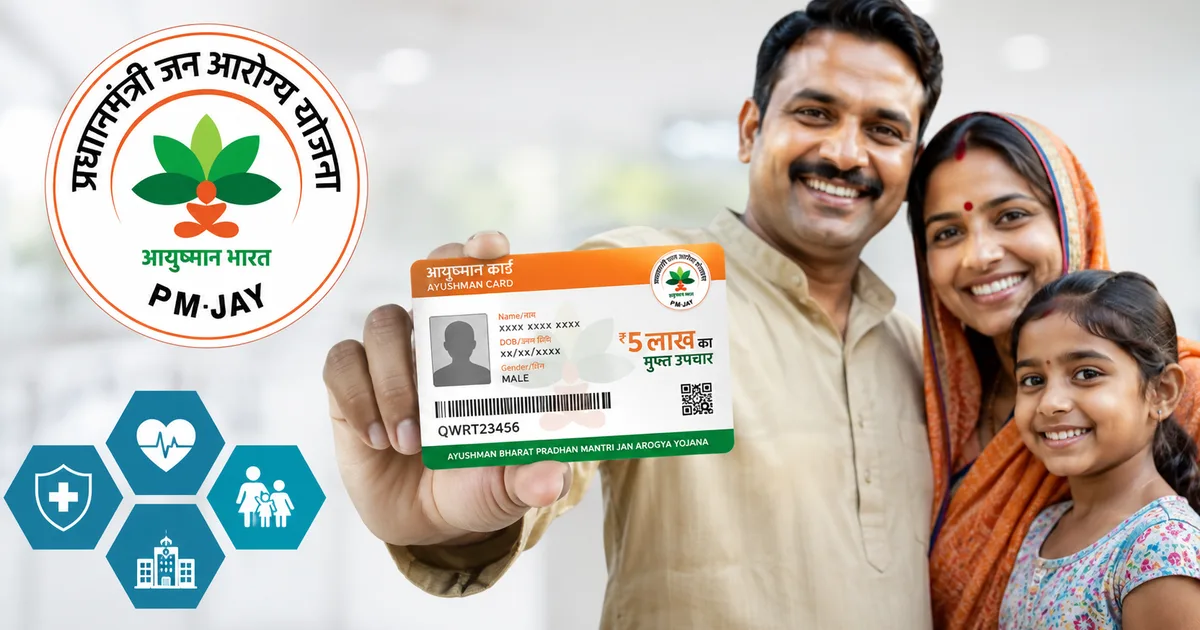
Finding your name on the list is just the first step. To actually get free treatment at a hospital, you need the Ayushman card. People often call it the golden card. You can download this online once you complete a quick verification process called eKYC.
If you checked your eligibility and found your name, you'll see an "Action" column next to it. If it says "Not Generated", you need to do your eKYC. Just click on the icon to start the process.
You'll need your Aadhaar card for this step. The system will ask you to verify your Aadhaar. You can use an OTP sent to your Aadhaar-linked mobile number. Or you can use your fingerprint or an iris scan. Most people just use the Aadhaar OTP because it's the absolute easiest method if your phone is linked.
After verifying, you take a quick live photo of yourself using your laptop webcam or phone camera. Then you match it with your Aadhaar photo and fill in a few basic details like your current address. Then you hit submit. The system usually approves it instantly. And once approved, the status changes to "Verified". You can then just click the download icon to save your Ayushman card as a PDF file.
I highly suggest keeping a printed copy in your wallet and saving the PDF in your DigiLocker account. Hospitals accept the digital version without any fuss. But having a physical copy helps when your phone battery dies at the worst possible time.
What happens when you reach the hospital?
You can't just walk into any private hospital and demand free treatment.
The hospital must be empanelled with PMJAY.
When you reach an empanelled hospital, look for the Ayushman Mitra desk. Every participating hospital has one. You just show them your golden card or your Aadhaar. The Ayushman Mitra will then verify your identity on their system and register your case.
Once you're admitted, the entire process is supposed to be cashless. You don't pay for registration, surgery, medicines, or food during your stay. The hospital bills the government directly. It's a massive relief for families who would otherwise have to arrange cash on short notice.
Important PMJAY rules you must know in 2026
The Ayushman scheme is huge, and the government constantly tweaks the rules to stop fraud and manage costs. Some of these changes are quite controversial. And they can directly impact your treatment.
For example, a new PMJAY rule recently barred many experienced cancer specialists from treating patients under the scheme. The government updated the eligibility criteria for medical oncologists, requiring specific DM or DNB degrees in medical oncology. I'm not sure exactly why they did this, but it meant doctors with MDs in general medicine and European certifications were suddenly disqualified from the PMJAY panel. Even though they had been successfully treating cancer patients for years.
This is a big deal if you're seeking cancer treatment. You have to make sure your specific doctor is still empanelled under the new 2026 guidelines, not just the hospital itself. You can check the list of empanelled doctors and hospitals on the official PMJAY website or mobile app.
Also, remember that while the treatment is supposed to be free, you might still face hurdles. There are documented cases where hospitals wrongly charge patients for consumables or deny refunds for out-of-pocket expenses. Recently, a widow won ₹5.5 lakh after a hospital wrongly denied her a refund despite her husband having a valid Ayushman card. The consumer court ruled in her favor. So if a hospital refuses to honor your valid card or asks for illegal payments, you have the right to file a formal grievance on the PMJAY portal. Or you can call the toll-free number 14555.
Watch out for Ayushman card scams
Whenever there's government money involved, scammers follow closely behind. Fake links circulating on WhatsApp and Telegram promise to generate your Ayushman card instantly for a fee of ₹100 or ₹500. Don't click them. Ever.
The entire process of checking your eligibility and downloading the card is completely free on the official government portal. Nobody can add your name to the list for a bribe. If your name isn't already in the government database based on the official criteria, you don't get the card. Simple as that.
Scammers create fake websites that look exactly like the real PMJAY portal. When you enter your Aadhaar number and OTP, they use it to access your bank accounts or commit identity theft. Always look for the ".gov.in" in the website address. If you spot a fake website asking for your Aadhaar details or money, report it immediately on the national cyber crime portal (cybercrime.gov.in) or call the 1930 helpline. We cover these kinds of frauds extensively in our scam alerts section to help keep you safe.
Final thoughts
Medical inflation in India is frankly terrifying. A single hospitalization for a major illness can push a stable middle-class family straight into poverty. But if you have the Ayushman card, it takes a massive weight off your shoulders. It gives you the confidence that a medical emergency won't ruin you financially.
Take five minutes today. Go to the portal and enter your Aadhaar to check your status. (The numbers here are a bit fuzzy, but millions are eligible without knowing it). Read more about government initiatives in our explainers section to stay informed. Check for your aging parents and your domestic help too. It's free to check. And it could literally save a life when the unexpected happens.