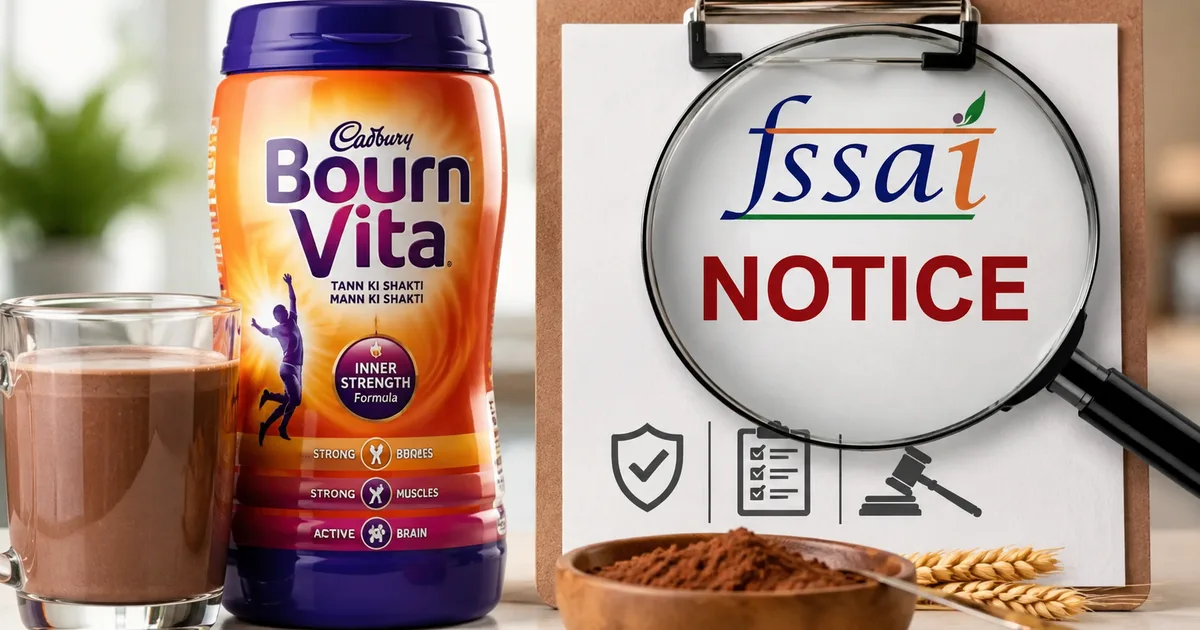
Remember those old television ads telling you a certain brown powder would make your kids taller and stronger? Well, the government finally woke up. The Mondelez India Bournvita FSSAI notice 2026 is making headlines everywhere, and honestly, it's about time. You walk into any Reliance Smart or local kirana store, and the shelves are packed with these so-called health drinks. But are they actually healthy? That's what the Food Safety and Standards Authority of India (FSSAI) is finally asking, and the answers are changing the supermarket landscape.
So, here's the deal. Mondelez India, the company behind Bournvita, recently had to scrub their packaging and e-commerce listings clean of health claims. This didn't happen out of the goodness of their hearts. They got a strict notice from the FSSAI. And they aren't the only ones feeling the heat. Amway also had to drop the "100% pure" label from its coconut oil. The government has basically ordered platforms like Amazon India and Flipkart to remove Bournvita and similar beverages from the "health drinks" category altogether. A pretty big mess, if you ask me.
What exactly did the FSSAI say?
If you read through the government directives, the core issue is simple. The term "health drink" doesn't actually exist in Indian food laws. Read that again. We've been buying products marketed as health drinks for decades. But legally, there is no such category under the Food Safety and Standards Act of 2006.
The FSSAI cracked down because calling these malt-based or dairy-based beverage powders "health drinks" misleads consumers. Think about a regular middle-class Indian parent. You're spending your hard-earned rupees, maybe Rs 250 or Rs 300 for a jar, thinking you're doing something good for your kid's nutrition. But when a government body steps in and says to stop calling it healthy, you have to take a hard look at the ingredients. I think we all just blindly trusted the labels.
The sugar problem in your child's glass
This whole controversy kicked off when people started paying closer attention to the sugar content in these powders. Consider the numbers. A standard serving of many popular malt beverages has a shocking amount of added sugar. Pediatricians and online creators have pointed out that in certain brands, up to 50% of the powder by weight is just sugar and liquid glucose.
(I know, it sounds crazy, but just check the back of the pack in your kitchen right now.)
When the FSSAI issued their directives, they were targeting exactly this kind of misleading packaging. You can't load a product with sugar, add a sprinkle of vitamins, and slap a "healthy" tag on the front. It's false advertising. And it tricks parents who are just trying to do their best for their kids. The numbers here are a bit fuzzy across different brands, but the core issue is the same.
How Mondelez and others responded
Mondelez India didn't wait around for the situation to get worse. Following the FSSAI action, they quietly pulled their health and nutrient claims from e-commerce platforms. If you go on Swiggy Instamart or Zepto right now and search for Bournvita, you'll notice the language is a lot more careful. They're calling it a "cereal based beverage" or just a "drink mix".
But this isn't just about one brand. The entire FMCG sector in India is getting a massive reality check. We've seen similar crackdowns before about misleading ads, but this one feels different. The Ministry of Commerce and Industry specifically instructed e-commerce websites to de-list these products from the health drinks section. They're now categorized simply as "beverages" or "chocolaty drinks".
"The term 'health drink' is not defined under the FSSAI Act, and using it to sell sugary malt beverages is misleading to the Indian consumer."
That's a huge shift in how products are sold in India. For years, these brands sponsored school events and board exams. They tied their sugary drinks to academic success. Now, they're being forced to call a spade a spade.
The role of social media in this crackdown
We can't talk about this FSSAI notice without mentioning how we got here. This wasn't just a random government audit. For the past year, health creators and concerned doctors on YouTube have been calling out these brands. A few viral videos broke down the exact sugar content in popular Indian kids' drinks. They compared them directly to colas.
The brands tried to fight back initially. They sent legal notices and tried to get the videos taken down. But the Streisand effect kicked in. The more they tried to silence the critics, the more the Indian public shared the information. WhatsApp family groups were flooded with messages about sugar limits. Finally, the regulatory bodies had to step in. (Which makes sense, actually, given the uproar.)
This shows the power of the Indian internet user. When we pay attention and demand better, the system has to respond.
The NCPCR intervention and child rights
You might be wondering why this became a massive national issue. It wasn't just the FSSAI acting alone. The National Commission for Protection of Child Rights (NCPCR) actually played a huge part in this. They took notice of the complaints about the high sugar content and the misleading ads targeting children.
The NCPCR sent notices pointing out that these brands were failing to clearly display mandatory declarations. When you're marketing directly to kids, using cartoons and promises of winning sports days, the ethical bar has to be much higher. The commission basically argued that misleading parents about the health benefits of a sugary drink is a violation of consumer rights. And by extension, child rights.
This dual pressure from the food safety regulator and the child rights commission is what finally got results. It forced the Ministry of Commerce and Industry to issue the blanket order to e-commerce companies. It's a perfect example of different government departments working together to fix a loophole that companies had exploited for years. In my experience, seeing that kind of quick coordination is rare.
What this means for everyday Indian buyers
Look, nobody is saying you can't give your kids a chocolate drink. If they like the taste, and you're okay with the sugar, that's your choice as a parent. The problem was always the deception.
When you scan that QR code and pay via UPI at your local supermarket, you deserve to know what you're actually buying. The Bournvita FSSAI notice 2026 is a big win for consumer transparency in India. It forces companies to be honest.
Reading the labels correctly
You should start doing a few things immediately when you navigate the supermarket aisles:
- Check the ingredients list. The ingredients are always listed by weight. If sugar, maltodextrin, or liquid glucose are in the top three, you are buying a dessert.
- Look at the nutritional information panel. Check the "added sugars" specifically. The FSSAI is getting stricter about clear labeling, so use that to your advantage.
- Don't fall for the front packaging. Ignore the big bold claims about immunity or brain development. Focus on the boring table on the back.
- Compare products. You might find that a cheaper, unbranded cocoa powder mixed with a little sugar at home is actually healthier and saves you money.
The broader impact on the e-commerce space
This directive has caused a massive headache for tech companies. E-commerce platforms had built their catalog structures around categories like "Health Drinks" and "Nutritional Supplements". Now, their engineering and cataloging teams are working overtime to reclassify thousands of Stock Keeping Units (SKUs).
If you regularly buy groceries online via apps like Blinkit, you might notice that finding your usual products takes an extra click or two. They're being moved to more accurate categories. This is actually a great time to explore other helpful consumer tech updates to see how platforms are adapting to new Indian regulations.
And it goes beyond just drinks. Amway dropped the "100% pure" label from its coconut oil. We're likely going to see a domino effect across the entire food and wellness industry. Companies are terrified of getting an FSSAI notice. So they're preemptively cleaning up their act.
Understanding the legal side of FSSAI regulations
To really grasp why this is happening, you have to look at how the Food Safety and Standards Authority of India operates. They have very specific guidelines on packaging and labeling under the FSS (Advertising and Claims) Regulations.
According to these rules, a brand can't claim that a food product is a substitute for a balanced diet. Any claim related to health or immunity has to be backed by solid, independent scientific evidence. For a long time, brands got away with vague claims by using tiny asterisks and disclaimers hidden on the back of the pack. I'm not sure exactly why it took so long to stop this.
The 2026 notice basically says that playing games with fonts and asterisks is no longer acceptable. If your product is 40% sugar, you can't put a picture of a gold medal and a stethoscope on the front. It's a strict interpretation of the law. And it's exactly what Indian consumers need.
Are there healthy alternatives?
Honestly, basic Indian dietary habits are pretty solid if we stick to them. A glass of plain milk with a little turmeric (haldi doodh) or homemade badam milk gives your kids the nutrients they need without the massive sugar spike. We don't necessarily need packaged, heavily processed powders to fill nutritional gaps.
If you're genuinely worried about your child's nutrition, talk to a qualified pediatrician. Don't rely on a television commercial or a targeted Facebook ad to dictate what goes into their breakfast. The FSSAI is doing its job by regulating the market. But as consumers, we have to do our part by reading the labels and making informed decisions.
Holding brands accountable
The whole Mondelez India Bournvita FSSAI notice 2026 situation is a massive wake-up call for everyone. It's a reminder that we have to be smart, skeptical consumers. The days of blind trust in big legacy brands are over. We have the internet. We have access to information via our smartphones. And we have government bodies finally stepping up to enforce the rules.
Make the most of it. Next time you're doing your grocery shopping, take an extra thirty seconds to turn the box around. Read the ingredients. Ask yourself if you're paying for actual nutrition or just clever marketing and a lot of sugar.
You can read more about how to protect yourself from misleading online claims in our latest consumer protection guides. If you want to understand how e-commerce platforms are changing their algorithms to comply with these rules, check out our detailed tech guides. Stay informed. Read those labels. And keep holding these brands accountable.