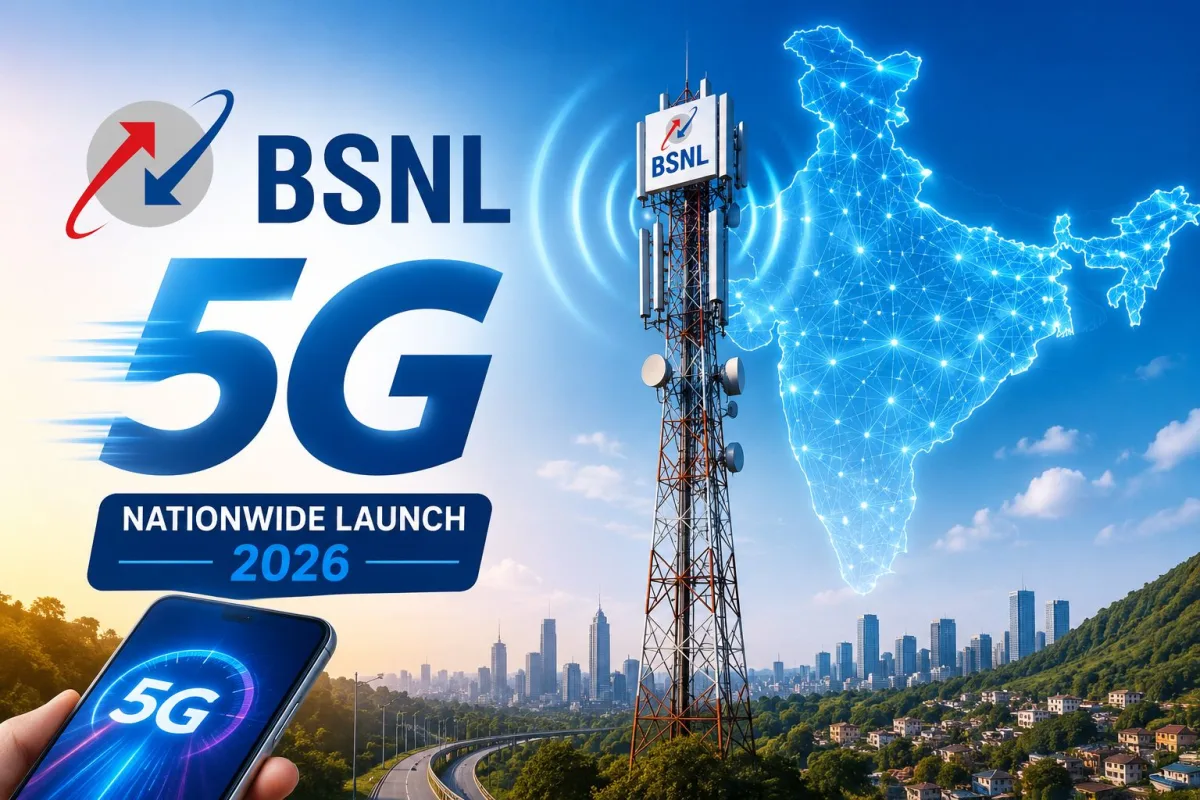
Jio and Airtel hiked their prices again this year. You probably noticed your phone bill creeping up yet again. Right when people started porting their numbers out in frustration, the state-run telecom operator finally started making some actual noise. We've been waiting a remarkably long time for this. But the BSNL 5G nationwide commercial launch is officially taking shape in 2026. It genuinely changes the math for smartphone users in India.
I know what you're thinking right now. BSNL promised massive network upgrades before and left users dealing with dead zones and randomly dropped calls. Thing is, the current telecom market is a mess. It leaves us with very few choices. If you want a secondary SIM just to get your bank OTPs or make your UPI apps work at the local shop, paying over 300 rupees a month is completely unreasonable. That makes BSNL's aggressive return incredibly relevant. (Annoying, I know).
When exactly is the 5G network going live?
We finally have a concrete timeline straight from the top. BSNL CMD Robert Ravi confirmed they're eyeing a soft launch of 5G services within the next six months. They are currently treating FY2026-27 as a heavy network expansion period. So we will see how that goes.
They aren't just flipping a magic switch overnight. The strategy is to heavily expand the 4G base first across the country. Once those towers are active, they'll upgrade those same sites to 5G using software updates and minimal hardware swaps. It's a slower approach. You won't get nationwide blanket coverage by Diwali.
They're targeting specific high-density areas first. If you live in a major metro or a Tier-1 city, you might see the 5G logo pop up on your phone status bar by late 2026. The rollout will slowly push into rural areas after that. The numbers here are a bit fuzzy right now.
Private telcos are getting nervous about the pricing
This is where things get genuinely interesting. For years, Jio and Airtel dominated the market. Now they're shifting their focus to enterprise growth and broadband services. They want higher average revenue per user. They expect everyday consumers to simply accept the steep tariff hikes. Basically, they want us to pay more.
BSNL responded by launching a massive 365-day recharge plan. It has unlimited calling and daily data that drastically undercuts the competition. It is immediate relief from expensive private networks. They even floated an INR 1 plan recently. Wild.
The private telecom lobby is furious about this. Reports show private telcos are formally complaining and calling the INR 1 plan predatory pricing. I find that highly ironic. Look, Jio gave away free 4G data for months back in 2016 to crush smaller operators. Now a government entity is using aggressive pricing to win back subscribers. Suddenly the big players are worried about market fairness. Go figure.
The hardware running the show is entirely local
One major reason BSNL took so long to upgrade is the strict government mandate to use indigenous technology. Airtel and Jio happily bought their ready-made gear from foreign companies like Ericsson and Nokia. But BSNL had to wait for Indian companies to build a modern telecom stack entirely from scratch. That takes time.
Companies like Tejas Networks and C-DOT are providing the actual backbone for this rollout. Tejas Networks just reported their Q4FY26 results. They posted a loss of INR 211 crore. But their order book is up 49 percent. A huge chunk of that money comes directly from supplying gear for BSNL towers.
Building a completely homegrown telecom stack is difficult. There were massive delays and lots of technical failures along the way. But having a completely local 4G and 5G network is a massive win for national security. Your data runs through Indian-made equipment. We finally join a very small group of nations that actually make their own core telecom infrastructure. I think that matters.
Will the connection actually be reliable this time?
This is the real question for anyone thinking about porting their number today. We all remember the painful days of standing on a balcony trying to get a single bar of 3G signal. BSNL is heavily investing in physical infrastructure right now to fix those exact dead zones.
The company financials are starting to reflect this push. BSNL profits soared to INR 5,100 crore directly amid this massive tower expansion. They are putting physical hardware on the ground in rural and semi-urban areas that private companies routinely ignore. They are actually building it out.
"Digital inclusion is BSNL's founding purpose. We are building a network that reaches every citizen, not just the most profitable ones."
Yes, they still face network issues in certain pockets. The management openly admits they have patching to do. But you have to look at what you are actually paying for. If you just need WhatsApp messages to send and quick UPI payments to clear, you don't need a gigabit connection. You just need it to work. (Which makes sense, actually).
You can read more about how to navigate these digital transitions and save money in our consumer tech guides.
Being late to the party is completely fine
People keep pointing out that BSNL is years behind the private players. That's completely true. Airtel and Jio have millions of active 5G users already enjoying fast speeds. It is what it is.
But BSNL being late to 5G isn't actually a problem for their target audience. India is targeting one billion 5G subscribers by 2031. To hit that massive number, we desperately need a provider that prioritizes affordability over record-breaking download speeds.
Most Indian users consume data for basic entertainment and daily communication. You don't need a lightning-fast connection to check the news, download a PDF from DigiLocker, or authenticate your Aadhaar online. You just need a connection that doesn't drop. And you need it priced at a tier that doesn't hurt your wallet.
If you're dealing with endless spam calls while waiting for this network upgrade, check out our recent news updates on telecom regulations. You can see how the government is trying to clean up the mess.
What you should do with your SIM right now
Don't rush to port your primary business number just yet. Let the network stabilize in your specific city first. Wait for the soft launch to happen and read the local reviews. I'm not sure exactly why anyone would jump blindly anyway.
Here is a highly practical approach if you want to test the waters right now. Keep your primary Jio or Airtel number active for now. Pick up a new BSNL SIM as your secondary connection. Put it in your dual-SIM phone and buy one of their cheap long-term validity packs.
- Test the signal strength at your home and your office.
- Check if basic video calls drop while you are commuting.
- Monitor how fast your banking apps open on their data network.
- See if the battery drain on your phone increases due to network searching.
If the internet speed holds up and the calls connect smoothly, you can easily port your main number over later. The porting process in India takes less than a week nowadays. It is pretty easy.
The return of a strong government telecom operator keeps the entire industry honest. Even if you never switch to BSNL, you should want them to succeed. Their presence in the market is the only thing standing between you and another massive price hike from the private players next year. In my experience, monopolies always end up costing us more. Check out our telecom comparison tools to see the exact price differences in your specific telecom circle.