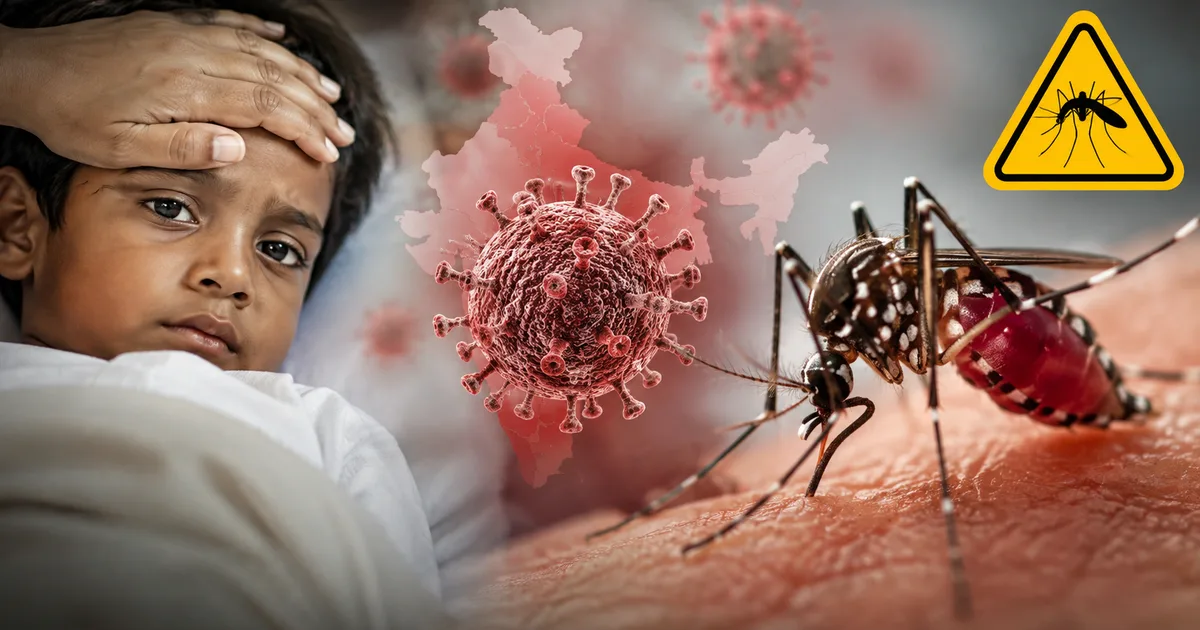
Look, nobody wants to wake up to news about a deadly virus. But here we are. The Chandipura virus outbreak 2026 is actively spreading in Gujarat and Rajasthan, and it's hitting children the hardest. This isn't some far-off global pandemic we have months to prepare for. It's happening right now in our own backyards. And if you're a parent, you need to understand exactly what this is and how it works.
I know it sounds terrifying. 22 kids have already died in Gujarat alone this monsoon season. That means 22 families are shattered, and in my experience, numbers like that usually mean the real count is higher. The central government deployed a National Joint Outbreak Response Team to investigate because this is serious. So let's talk about what the Chandipura virus actually is. We'll cover how it spreads and what you can do to keep your family safe.
What is the Chandipura virus?
Think of it like a monsoon cousin to dengue. It's much more aggressive, though. It's an infection that attacks the brain fast. It gets its name from a town in Maharashtra where it was first discovered back in 1965 during an encephalitis outbreak. So no, this isn't a new virus. It's been around for decades. We've seen small outbreaks in Andhra Pradesh and Gujarat before. But the current Chandipura virus outbreak 2026 is one of the worst we've seen in recent years.
Basically, it causes a severe form of encephalitis. That's a medical term for brain inflammation. When the virus enters the body, it travels to the central nervous system rapidly. And it specifically targets children under 15. Adults rarely show severe symptoms, which makes the threat to kids even more heartbreaking.
The exact reason why kids are so vulnerable is something scientists are still trying to nail down. I'm not sure exactly why it hits them so hard. The exact numbers are a bit fuzzy too. But we know children have developing immune systems that struggle to fight off this specific pathogen. It belongs to the Rhabdoviridae family. That's the exact same family of viruses that causes rabies. Which explains why it attacks the brain so aggressively. It also explains why the mortality rate is so frighteningly high. In some past outbreaks, the fatality rate crossed 50 percent.
How does the virus spread?
This is the part that's frustrating health officials right now.
We know it spreads through insect bites. Specifically, sandflies. These are tiny insects that breed in mud and cracks in house walls. They're much smaller than mosquitoes, so you might not even notice them. They usually bite during the evening and early morning.
But here's the catch. The researchers testing insect samples in Gujarat haven't been able to definitively prove which exact bug is the main culprit this year. I think the testing process is just really slow. They're testing sandflies and ticks in the affected areas. Mosquitoes are on the list too. But sandflies remain the prime suspect because of historical data from past outbreaks. These bugs thrive in rural areas with poor sanitation. They absolutely love the monsoon moisture.
So when an infected sandfly bites a child, the virus enters their bloodstream. It doesn't spread directly from person to person. You can't catch it by sitting next to someone who has it or sharing a meal. It's entirely vector-borne. That makes insect control the absolute top priority. If there are no insect bites, there's no virus transmission.
Early symptoms you cannot ignore
The scary thing about this virus is the timeline. If you ask me, this timeline is the scariest part. The symptoms of the Chandipura virus start out looking like a standard monsoon fever. You might think it's just a seasonal flu. But they escalate rapidly. Often within 24 to 48 hours.
Here is what you need to watch for:
- A sudden, extremely high fever that doesn't respond well to basic paracetamol
- Severe headaches and body aches
- Vomiting and intense nausea
- Convulsions or seizures, which look like the child is having fits
- Altered mental state or confusion. Extreme drowsiness is common too.
- Falling into a coma in severe cases
If your child gets a high fever and starts vomiting, don't wait. Don't try home remedies. Don't give them kadha and wait for the fever to break on its own. Take them to a hospital immediately. A delay of even a few hours can be fatal. The virus attacks the brain so quickly that medical intervention is required right away to manage the brain swelling.
(I know, sounds complicated, it's not. It just means the doctors need to keep the pressure inside the skull down while the body fights the infection.)
Why is Gujarat seeing so many cases?
Gujarat and parts of Rajasthan are the epicenter right now. There are a few reasons for this.
First, the heavy monsoon rains are perfect breeding grounds for sandflies. Puddles and damp mud walls are everywhere. Stagnant water is a mess right now. The weather conditions this year have been unusually favorable for vector breeding across western India.
Second, the virus seems to have found a reservoir in the local insect population. Once a critical mass of insects carries the virus, human infections naturally spike. The insects bite infected animals, carry the virus, and then pass it to humans.
Third, many of the affected families live in rural or semi-urban areas. I think the government was caught a bit off guard here. Homes made of mud are ideal hiding spots for these tiny sandflies. Cracks in walls are bad too. This is a socioeconomic issue. It's a health issue too. Families in well-sealed urban apartments face a much lower risk. And the government is struggling to roll out fumigation fast enough to cover every affected district, village by village.
The government response to the Chandipura virus outbreak 2026
The Union Health Ministry has finally stepped in. They sent a multi-agency team to Gujarat and Rajasthan. This National Joint Outbreak Response Team includes experts from the National Centre for Disease Control (NCDC) and the Indian Council of Medical Research (ICMR).
What are they actually doing on the ground?
- They're conducting epidemiological investigations to track exactly where the infections are happening and mapping the hotspots.
- They're capturing and testing insects to find the exact vector spreading the virus this season.
- They're helping local health departments implement better vector control measures, like targeted insecticide spraying in high-risk villages.
- They're issuing clinical management protocols to local hospitals so doctors know exactly how to treat incoming cases.
The state health department in Gujarat has also set up isolation wards in district hospitals. They're tracking cases daily. But honestly, government action can only do so much. If you ask me, they need more people on the ground. They can't spray every single house in the state overnight.
The real prevention has to happen at home.
Prevention guidelines for parents
Since there's no vaccine and no specific antiviral drug for the Chandipura virus, prevention is literally the only cure. You have to stop the bites.
Here's exactly what you need to do to protect your kids during this outbreak.
Use insect repellent religiously
Buy a good quality mosquito repellent. Creams or roll-ons. Sprays work too. Apply it to your children every single time they go outside. Especially in the late afternoon and evening when insects are most active. You can find good repellents at any local pharmacy for around ₹80 to ₹150. You can just scan a QR code and pay via UPI. It's a small price for safety.
Dress them in full clothes
I know it's hot and humid right now (annoying, I know). In my experience, kids hate wearing full clothes in the heat. But bare skin is a major risk. Make your kids wear long-sleeved shirts and full pants. Light-colored clothing is better because it doesn't attract insects as much as dark colors do.
Fix the cracks in your walls
If you live in a house with mud walls or exposed brickwork, seal the cracks. Sandflies breed in these tiny crevices. A little bit of cement or plaster can go a long way in keeping these bugs out of your living space.
Use mosquito nets at night
This is old-school but it works. Sleep under a mosquito net. Make sure the net doesn't have any holes. And tuck the edges firmly under the mattress so nothing can crawl in from below.
Clear stagnant water and damp spots
Look around your house and yard. Get rid of any stagnant water. Empty out old tires and broken pots. Coconut shells are sketchy too since they collect water. Sandflies also love damp corners with rotting vegetation. Keep your surroundings clean and dry.
"The rapid onset of symptoms is what makes Chandipura so dangerous. Parents must seek medical attention at the very first sign of high fever accompanied by vomiting or altered sensorium." - Public Health Guidelines
Treatment options and hospital preparedness
If a child gets infected, what happens next?
Like I said, there's no specific medicine that kills this virus. Treatment is entirely supportive. That means doctors focus on keeping the child alive and stable while their immune system fights off the infection.
The child will be admitted to an intensive care unit (ICU). Doctors will administer fluids intravenously to keep them hydrated. They'll give medications to control the fever and stop the seizures. Most importantly, they'll use drugs like mannitol to reduce the swelling in the brain. They might also need a ventilator to help them breathe if the coma deepens.
It's a terrifying experience for any parent. The medical bills can also pile up if you go to a private hospital, easily crossing ₹50,000 to ₹1,00,000 for a few days in the ICU, which in my experience is enough to bankrupt a normal family. Though government hospitals are treating these cases for free, the rush means beds are scarce (which makes sense, actually, given the panic). If you have health insurance, check your policy details right now. Keep your Aadhaar card and digital medical records ready on your DigiLocker app just in case of an emergency admission. But your best bet is avoiding the hospital entirely by preventing the bites.
Looking ahead at the rest of the monsoon
The monsoon season still has a few weeks left. That means the risk of the Chandipura virus isn't going away tomorrow. The government teams will eventually figure out the exact bug causing this specific spread. And the fumigation drives will start making a dent.
But until then, you have to be paranoid. If you live in Gujarat or Rajasthan, take this seriously. Neighboring areas too. Don't let your kids play near garbage dumps or damp mud walls.
For more context on how to handle health emergencies, you might want to check our guides on navigating local healthcare and insurance claims. We also have a section on explainers that covers how other seasonal diseases work in India. And if you're worried about fake remedies being sold online via WhatsApp groups, read our scams page to stay safe. Avoid buying "miracle cures" from unknown sellers online. Always consult a real doctor.
We're going to see more cases before this outbreak ends. That's just the reality of how these vector-borne viruses spread during the monsoon in India. But being informed and taking basic precautions cuts your risk down drastically. So stock up on repellent, get those mosquito nets out, and keep a very close eye on your kids.