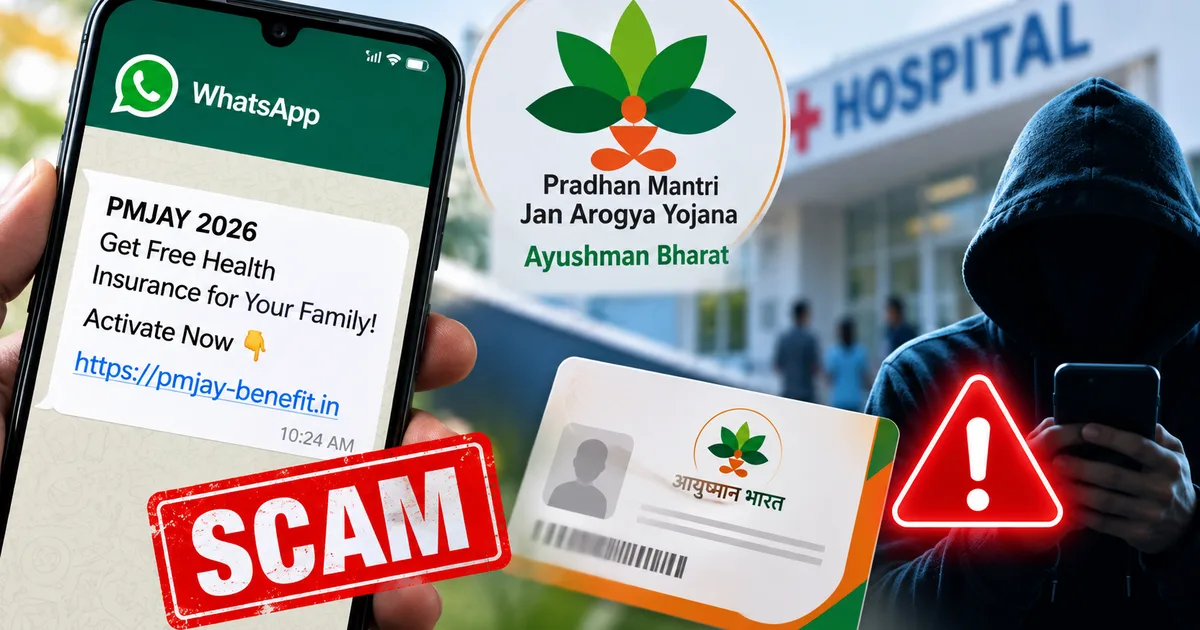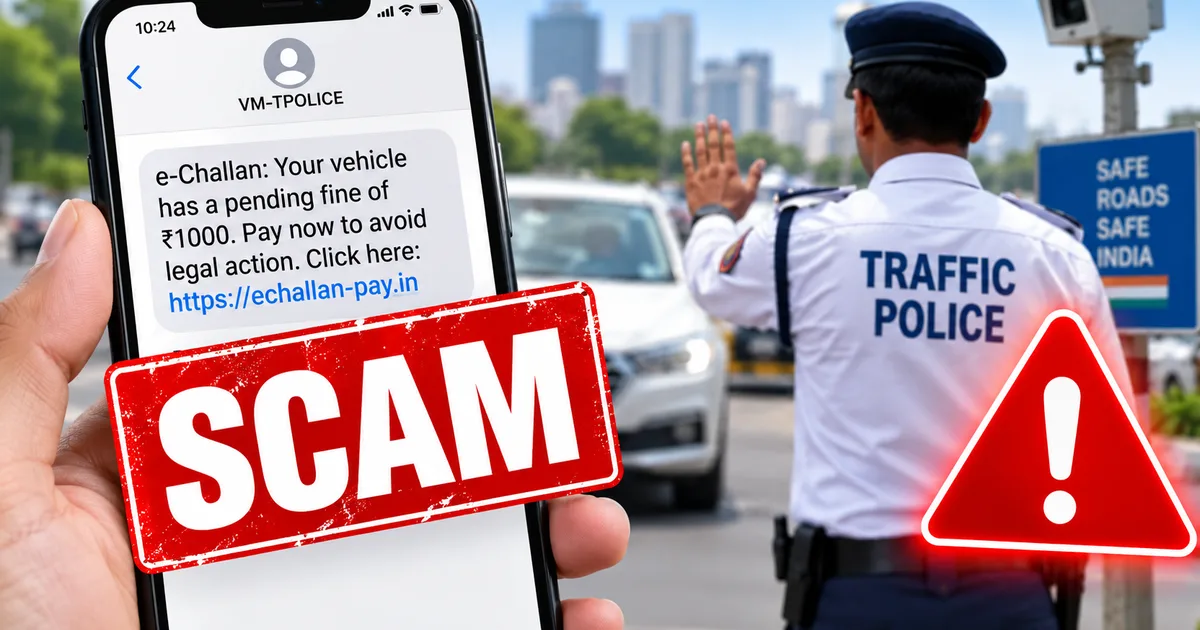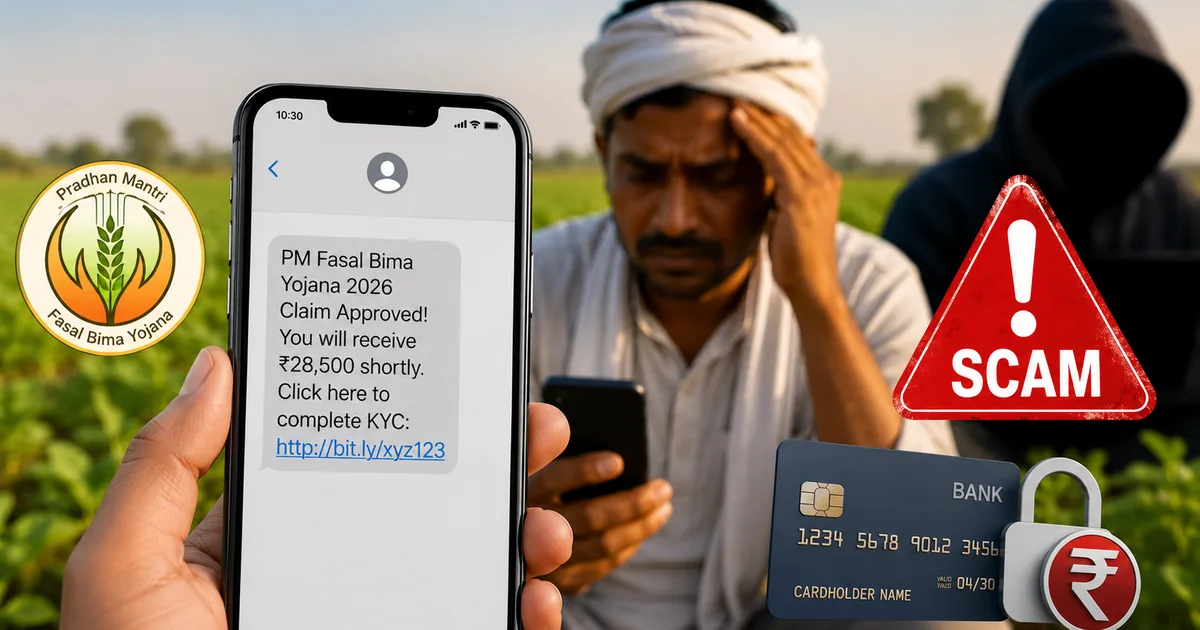
The fake PM Fasal Bima Yojana 2026 claim approval SMS scam is emptying bank accounts. That's the reality right now for thousands of farmers across India. You're waiting for your crop insurance payout. You get a text message saying your claim for INR 35,000 is approved. The message includes a link to deposit the money directly into your account. You click it. And within minutes, your entire bank balance is gone.
Honestly, this is a seriously vicious fraud. Scammers target people with crop losses from unseasonal rain or drought. They know you're expecting money. They know you're stressed. So they exploit that exact vulnerability. (I think it's the cruelest part of the whole thing.)
I've spent the last few weeks looking into how these networks operate. The scale is massive. We're talking about highly organized criminal syndicates. They operate out of remote villages and use sophisticated tech to rob hardworking people.
What exactly is this crop insurance fraud?
Scammers send a text pretending to be from the Pradhan Mantri Fasal Bima Yojana or your regional bank. The SMS says something urgent about your claim being approved. It contains a malicious link. Click that link, and it takes you to a fake website that looks exactly like a real government portal.
The site asks for your bank details or asks you to open your UPI app to get the money. This is the trap.
I see people fall for this every single day. The messaging is highly convincing. The scammers use official government logos. They even copy the exact fonts and color schemes on the Ministry of Agriculture websites. They spoof the sender ID so the message looks like it came from a legitimate source like VM-PMFBY. It pops up in the exact same thread as your real government alerts.
But the moment you interact with that link, you hand over your financial life.
You might want to read our guide on recent UPI frauds to understand just how common these tactics have become in rural India.
How the legitimate PMFBY process actually works
To understand the scam, you have to know the real system. The government doesn't send random SMS links for money.
Register for crop insurance, and your details are linked to your bank account and Aadhaar. If there's a localized calamity or widespread crop failure, the state government and insurance companies assess the loss. (They do this through a crop cutting experiment, which is pretty standard.)
Once approved, the insurance company transfers the money directly to your linked bank account. They use National Electronic Fund Transfer (NEFT) or the Aadhaar Enabled Payment System (AePS). It's a direct benefit transfer.
You don't click a link to claim it. You don't verify your account again. You don't open Google Pay or PhonePe. The money just appears. Then you get a standard bank SMS confirming the deposit.
Any message asking you to take an action to receive approved funds is a lie.
How the scam actually works in practice
These criminal networks run a very tight operation. Basically, they follow a tested script that works incredibly well.
First, they get massive databases of farmers. Sometimes they get this through corrupt local operators. Recently we saw a huge case where 48 Common Service Centre operators in Jalgaon were investigated for 27,000 bogus claims. When people inside leak data, scammers get your name and phone number. They even get the exact amount of your insurance premium.
They text you directly using this stolen data. "Dear Kisan, your PMFBY claim of Rs. 42,500 is approved. Click here to verify your bank account for instant transfer."
You click the link. It opens a webpage that looks real. It has the Prime Minister's photo. It asks you to verify your identity using Aadhaar.
Then comes the critical step. The fake site tells you to link your bank account via UPI to receive the funds. It redirects you to your installed UPI app. A screen pops up asking for your UPI PIN.
Thing is, you never enter your UPI PIN to receive money. You only enter it to send money. But the app screen might be manipulated. Or the farmer is just rushing.
You enter the PIN. The scammers instantly drain your account and transfer the money through multiple digital wallets. This hides the trail.
The psychological tricks scammers use
Why do smart people fall for this? It isn't about intelligence. It's psychology. In my experience, fear overrides logic every time.
Scammers create artificial urgency. They tell you the claim approval expires by 5 PM today if you don't verify your details. When you're worried about money, your brain focuses on the deadline. You don't look closely at the sketchy URL.
They also use authority. We are conditioned to trust official-looking government documents. When a website has the exact layout of the PMFBY dashboard, your natural skepticism drops.
And finally, they exploit hope. You lost your crop. You desperately need that insurance money for loans or seeds. The scammers offer a quick solution to a massive problem. And in that moment of relief, you click the link.
Scammers rely on your financial desperation. They know that a farmer who has lost a harvest is looking for any sign of help from the government, making them the perfect target for fake approval messages.
Real examples of crop insurance fraud in 2026
This isn't a hypothetical situation. Real arrests are happening right now across Indian states. I'm not exactly sure how many, but it's a lot.
Look at what happened in Jhansi recently. Police busted a crop insurance scam and arrested three people. They operated a racket that manipulated documents and tricked farmers out of legitimate payouts. The scammers used fake Aadhaar cards and compromised bank accounts. They understood the local banking system perfectly.
In Maharashtra, the government is threatening to blacklist farmers who submit bogus claims. But the real problem is the middlemen and the scammers. When local CSC operators manipulate data, it creates a massive vulnerability. Scammers use this leaked information to make their phishing SMS messages look highly targeted.
I tried calling one of these scam numbers last week. The person spoke perfect regional Hindi. They sounded exactly like a bored government clerk. They knew how to answer my questions about the PMFBY scheme. They are running professional call centers dedicated solely to robbing rural citizens.
For more on how these call centers operate, check out our coverage of recent cyber police raids.
Warning signs you should never ignore
You can protect yourself if you know what to look for. The scammers always make mistakes.
- The link does not end in gov.in or nic.in. If the link says something like pmfby-claim-update.com or bit.ly/kisan-funds, it is absolutely a scam. Real government portals use the official gov.in domain.
- They ask for your UPI PIN. This is the biggest red flag. The government will never ask for your UPI PIN. Never.
- The message creates a false sense of urgency. They will say the link expires in 24 hours or your claim will be cancelled. Government processes are notoriously slow. They never cancel claims via a 24-hour SMS link.
- The SMS comes from a standard 10-digit mobile number instead of an official shortcode. Government alerts usually come from sender IDs with letters, not a random Jio or Airtel number.
- They ask you to download a random APK file to track your claim. Never download apps from outside the official Google Play Store or Apple App Store.
- The message has spelling mistakes. Official government communications are usually proofread. If you see words spelled wrong, delete the message.
These signs are consistent across almost all digital frauds in India today.
Why it is so hard to get your money back
I need to be honest with you about what happens after the money is gone. Getting it back is incredibly difficult.
When you enter your UPI PIN, you're technically authorizing the transaction. From the bank's perspective, you logged in, entered your secret PIN, and sent the money. It doesn't look like a hack to their systems. It looks like a legitimate transfer.
Because of this, banks often reject your initial dispute claim. They will say you compromised your own security. (Which is frustrating, I know.)
The scammers also move the money instantly. They transfer it to a mule account or withdraw it as cash from an ATM in a completely different state within ten minutes. By the time you call the bank, the money is already gone.
This is why prevention is your only real defense.
How to protect yourself and your bank account
You have to be paranoid about your digital life. The banking system is secure. But human beings are easily tricked.
Always verify your claim status through official channels. Go directly to pmfby.gov.in. Type it into your browser yourself. Don't click links sent via SMS. You can also call the official toll-free number provided by your insurance company. You can find these numbers on the official PMFBY portal.
Keep your Aadhaar biometrics locked using the UIDAI portal. Scammers sometimes use leaked Aadhaar data to clone fingerprints and bypass bank security. Locking your biometrics stops this completely. It takes two minutes to do, and you can unlock it temporarily when you need to use it.
Don't trust anyone calling you on WhatsApp claiming to be a bank official. Government departments don't use WhatsApp voice calls for official business. If you get a suspicious call, hang up immediately.
Never share your screen using apps like AnyDesk or TeamViewer. Scammers will often call you, pretend to help you navigate the PMFBY portal, and ask you to download a screen-sharing app. Once they see your screen, they can read your OTPs and take over your phone.
If you aren't sure about a message, ask someone younger in your family to look at it before you click anything.
You can read more about securing your phone in our complete digital safety guide.
Where to report this fraud immediately
If you realize you have been scammed, act fast. Speed is everything. Don't wait even five minutes.
Call 1930 immediately. This is the national cybercrime helpline. It's managed by the Ministry of Home Affairs. If you call within the first hour, the police can often freeze the scammer's bank account. The longer you wait, the harder it gets.
You also need to file a formal complaint at cybercrime.gov.in. Keep screenshots of the SMS. Keep the fake website URL. And save your bank statement showing the transaction. Don't delete the scam messages. The police need them for evidence.
Next, call your bank's customer care number and tell them to block your account. Don't wait until the next morning to go to the branch. Call them immediately.
The Indian Computer Emergency Response Team regularly issues advisories about these phishing campaigns. But they can't protect you if you willingly hand over your UPI PIN. You have to be the first line of defense.
I know it sounds exhausting to constantly question every message you receive. It is exhausting. But this is the reality of using digital payments in 2026. Scammers are getting smarter, and they use local languages to lower your guard.
Stay alert. Talk to your family members in rural areas. Warn them about this specific PM Fasal Bima Yojana SMS scam. A five-minute phone call from you could save them their entire season's earnings.