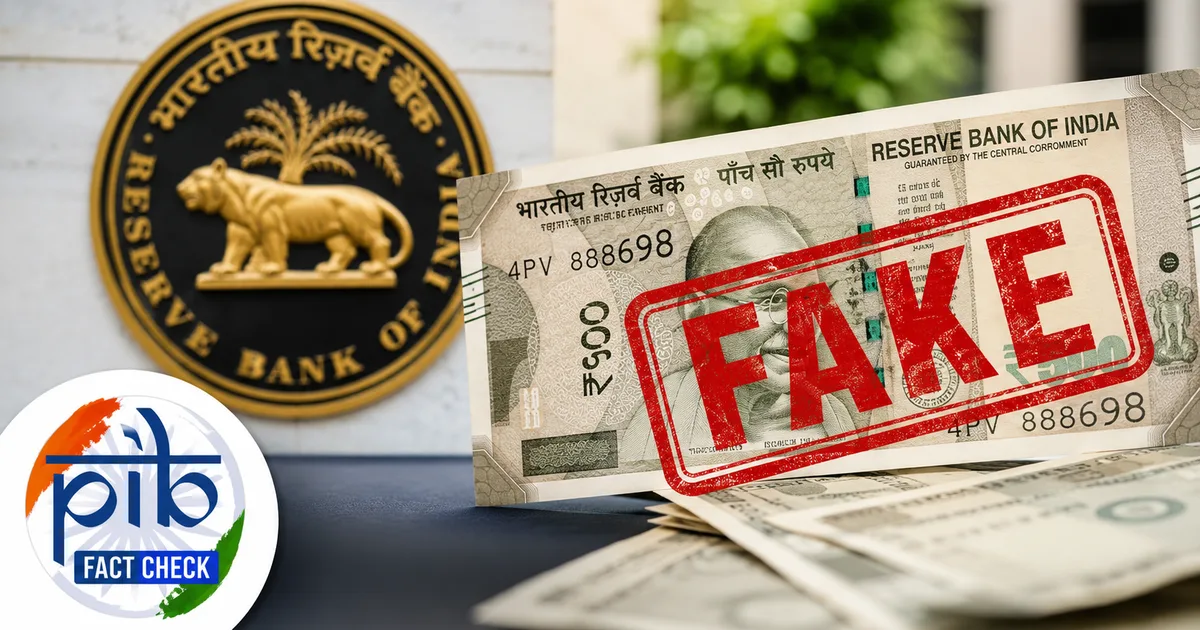
Your WhatsApp family group is probably buzzing with a scary forward today. It claims that the Reserve Bank of India is planning to pull all paper currency notes from circulation by June 30, 2026. The message says we'll all have to switch to plastic currency notes overnight. If you're worried about your hard-earned cash, let me tell you straight away: this is a completely fake RBI paper note discontinuation rumour. Your paper 500 and 100 rupee notes are perfectly safe. Don't panic. The government has no such plans to ban them. You can continue using your cash exactly as you always do.
Honestly, these viral messages spread like wildfire in India. It's because we still remember the 2016 demonetisation, and if you ask me, any news about currency notes triggers instant anxiety. But this time, it's pure fiction. The Press Information Bureau, which is the government's official media agency, did a quick check on this claim and found it's entirely false. I saw the viral message yesterday. It looked exactly like the kind of panic-inducing spam that seniors and small business owners fall for (which makes sense, actually, given how professional these fakes look). So, let's look at what the rumour says and how you can verify it yourself. You can also read our detailed guide on online safety.
The truth about the RBI paper note ban rumour
The message circulating on social media claims that the RBI'll withdraw all paper currency notes and introduce plastic notes from June 30, 2026. It suggests paper money'll lose its value after this date. Honestly, I think this claim's caused unnecessary worry among kirana shop owners and families keeping emergency cash. The reality is the RBI isn't withdrawing paper cash. And the government clarified paper notes'll continue to be legal tender. So don't rush to exchange them.
Where'd this rumour even come from? A few years ago, the RBI mentioned they were looking into varnished banknotes (which makes sense, actually). These are traditional paper notes with a thin protective layer of varnish to make them last longer and keep them clean. It reduces printing costs. Somehow, internet tricksters twisted this news to claim that RBI's replacing paper cash with plastic notes. Look, there's a huge difference between trial runs for varnished paper notes and a complete ban.
PIB Fact Check posted a clear warning to stop this misinformation. And they stated that the viral claims are false. RBI hasn't issued any notification to withdraw paper notes by June 30. Basically, the central bank operates under strict rules, and any major currency changes are always published on their website first. If you see a message claiming otherwise, just delete it. Don't forward it. It's fake.
PIB fact check details on plastic notes in India
Many people get confused because other countries use plastic banknotes. Countries like Australia and Canada transitioned to polymer notes, and so did the United Kingdom, because they don't tear easily and are harder to counterfeit. But introducing plastic notes here in India isn't simple. India has a massive population and a cash-reliant economy. And printing billions of plastic notes requires special machinery and lots of investment. The RBI hasn't made any announcements about a transition to polymer currency.
Actually, the RBI's conducted small, limited trials of plastic notes in the past to test their durability in Indian weather. I'm not sure exactly why they picked those specific cities, but in my experience, trials like these usually take years. So those tests in Shimla, Kochi, Mysore, Jaipur, and Bhubaneswar were just research. They weren't a policy decision to replace paper money. The RBI's currently focusing on digital payments and the central bank digital currency (the e-Rupee, as it's called). They aren't trying to replace paper cash with plastic.
The government's repeatedly warned citizens not to believe these viral claims. Fake currency rumours can create panic in the market. Look at how people react when they think their cash's going to become useless. Shopkeepers start refusing Rs 500 notes, and people crowd ATMs. It disrupts daily life for everyone, especially those who don't use UPI or digital wallets. That's why I think it's really important to verify information before sharing it.
How to verify RBI currency announcements yourself
You don't have to rely on random WhatsApp forwards to know the truth. The Indian government's provided some easy tools for us to check facts. So here's a step-by-step guide to verify currency news and avoid fake messages.
- First, check the official Press Information Bureau website or social media channels. You can open your mobile browser and type pib.gov.in. Once the page loads, look for the 'Fact Check' section. Or just search for the official PIB Fact Check handle on X. You'll see a profile page with a blue verification tick. The screen displays their latest posts, where they upload images of viral fake messages with a bold stamp saying 'FAKE'. This's the quickest way to see if a rumour's already been debunked.
- Second, use the official PIB Fact Check WhatsApp helpline. This's a great tool because it doesn't require any technical skills. First, save the official Indian phone number +91 87997 11259 in your phone contacts. Then open WhatsApp and start a new chat to send a screenshot or copy-paste the message you received. You'll see an automated message confirming they've received your request. Within a few hours, the team'll review the claim and send you a message showing the official verdict, complete with a graphic that explains the facts.
- Third, visit the official Reserve Bank of India website directly. Open your web browser and enter rbi.org.in. Don't use search engine links if you're unsure, since scammers sometimes create fake clone sites. When the official RBI homepage loads, you'll see a simple layout with a menu bar. Look for the 'Press Releases' or 'Notifications' section under the 'What's New' tab. All genuine decisions about currency notes, bank rules, interest rates, or other financial policies are listed here with official dates and signatures. If there's no press release about a currency ban, the news's fake.
- Fourth, check RBI's dedicated consumer education website. The RBI runs a portal called Paisa Bolta Hai to educate the public about currency security features. You can access it via paisaboltahai.rbi.org.in. The screen shows images of Indian banknotes and lists security features, like the watermark, security thread, micro-lettering, or printing quality. If there're any updates to banknotes, the RBI uploads guides and videos here. It's a really useful resource to identify fake notes and, if you ask me, understanding currency policies is always a good idea.
How currency rumours turn into financial scams
A simple fake news forward might seem harmless, but fraudsters use these rumours to steal your money. Once a rumor about a paper note ban spreads, scammers start contacting people, especially seniors who might not be familiar with digital banking. In my experience, the fraudster calls you or sends a WhatsApp message and pretends to be a bank official. They tell you that since paper notes'll be discontinued, you must transfer your cash to a temporary 'government secure account' via UPI or net banking to protect it. They might even send you a link to download a fake app that claims to help you convert your cash to plastic notes. For more on how to identify these threats, see common digital scams in India.
Here's the deal: no bank or government official'll ever ask you to transfer money over the phone to save it from a currency ban. If you receive such calls, hang up immediately. Don't wait. Don't share your bank account details, UPI PIN, Aadhaar number, or passwords. The RBI doesn't have any rules that require you to transfer funds to third-party accounts for currency verification.
Warning signs of currency fraud and fake messages
If you want to protect your savings, you must learn to identify fake news and scams. Here're the warning signs of currency rumours:
- The message has a 'Forwarded many times' tag on WhatsApp. That means it didn't come from a trusted contact.
- The text uses dramatic language and urges you to share it immediately with everyone you know.
- There're no links to official government websites ending in .gov.in or .nic.in.
- A caller or sender asks you for personal banking information, OTPs, UPI transfers, or PINs to 'update' your currency status.
- The message has spelling mistakes and looks unprofessional. Honestly, I think any message with poor grammar like that is sketchy.
Where to report currency scams and fake news
If you've been targeted by a scammer who uses this fake currency ban news, you must report it immediately. The Indian government's set up channels to deal with cybercrime, which you can track in our latest technology updates. In my experience, reporting early makes a huge difference, so don't hesitate to use them.
- You can file a complaint online at the National Cyber Crime Reporting Portal. Visit the official website at cybercrime.gov.in. The page lets you report anonymous complaints or track progress with your phone number.
- Dial the 1930 helpline to call the national cybercrime helpline number. This helpline operates 24/7 and helps victims of financial fraud block unauthorized transactions. If you accidentally transferred money to a scammer, calling 1930 within the first golden hour'll help freeze the fraudster's bank account.
- You can also report the fake WhatsApp messages directly to the PIB Fact Check team. Sharing these messages helps them issue public warnings, so it stops the spread of misinformation across the country.
Keep calm and ignore the fake news
I know how stressful it's when rumours about our hard-earned money start circulating. But next time you see a message about the RBI withdrawing paper cash or introducing plastic notes, just ignore it. Your paper currency remains fully valid. No need to worry. There's no need to make panic decisions. If you want to stay safe, keep the PIB Fact Check number saved on your phone and verify any news that sounds too dramatic to be true. The exact details of RBI's next trials for varnished banknotes are still unclear (the official timeline is a bit fuzzy, honestly), but we know it's not a ban. Remember, the government isn't changing your cash anytime soon. If you ask me, we shouldn't let these scammers win. So, take a deep breath, close that WhatsApp forward, and enjoy your tea.