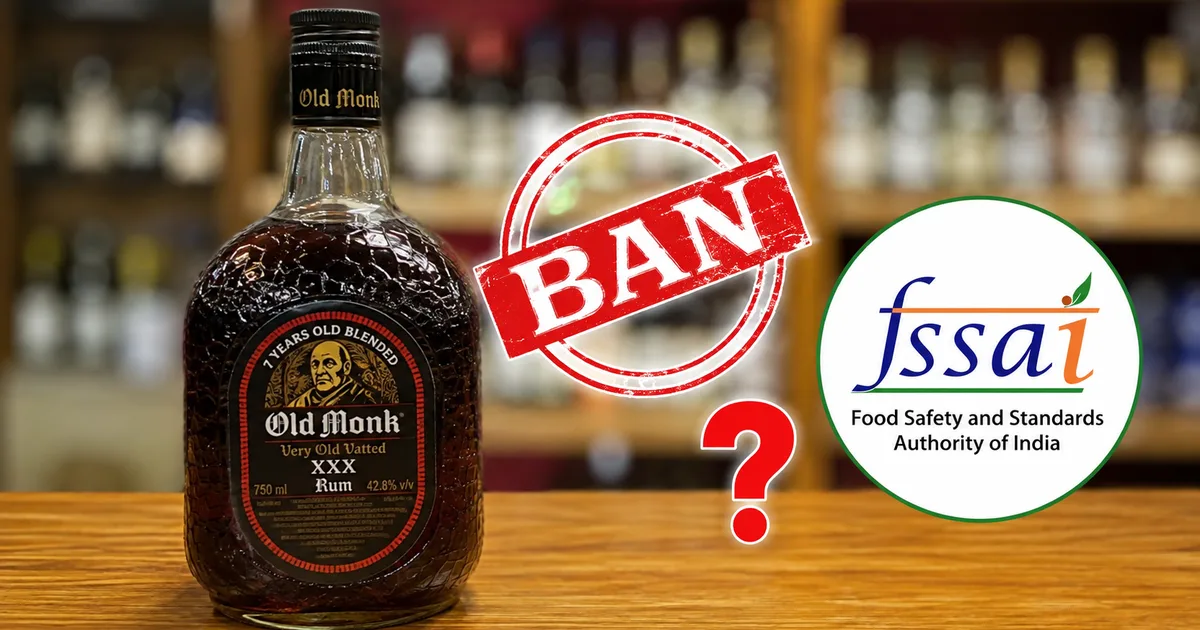
You've probably seen the WhatsApp forwards by now. Someone in your family group or friend circle sent a message claiming your weekend drink is gone forever. I've seen at least four different versions of these messages since yesterday. The FSSAI Old Monk Ban Rumors 2026 have genuinely caused a mild panic across local wine shops from Mumbai to Kolkata.
Thing is, you can calm down. Your favorite dark rum isn't going anywhere.
Here's the deal. The Food Safety and Standards Authority of India took action against some common liquor brands recently. Yes, Old Monk is on the list. But Royal Challenge and Bagpiper are on it too (which makes sense, actually, given how they're made). The issue isn't the alcohol itself. It's the additives companies use to alter the taste. I think the panic is overblown, so I'll explain exactly what the regulator found so you don't go clearing out the local shop just yet.
What the regulator actually found
The FSSAI is the government body that decides what's safe to eat or drink in India. They test products off the shelf constantly. Recently they tested some domestic liquor samples. And they found a massive problem with the flavouring in some popular bottles.
They found unauthorised artificial flavouring in select variants of these brands. Basically, companies can't just dump chemicals in to make their rum taste like vanilla. Or make their whisky taste woody.
Indian regulations are actually quite strict about alcoholic beverages. If a bottle says it's rum, the flavour has to come from sugarcane distillation and barrel aging. When companies take sketchy shortcuts with unapproved flavours, the FSSAI gets involved.
I read the news updates on this yesterday. The reports are clear about this being limited to specific variants and specific batches. It isn't a blanket ban on Old Monk or Diageo's whisky.
The emotional connection to Indian rum
Look, Old Monk is more than a drink in India. It's an absolute emotion. Mohan Meakin launched it decades ago. It has a massive cult following despite zero advertising. People have very strong memories attached to it from their college days, and honestly, so do I.
That emotion is why these rumors spread like wildfire. When people hear their favorite bottle is under threat, they react. They forward the message to ten friends. They rush to the store to buy cases of it. The actual facts just get completely buried.
How rum and whisky are supposed to be made
To get why the FSSAI is angry, you have to know how these drinks are made in the first place. Real rum starts with fermenting and distilling sugarcane molasses. The clear liquid is aged in oak barrels. That aging is what gives it the dark color and the complex flavours.
Whisky goes through a similar process. But it starts with a fermented grain mash like barley or corn.
Aging liquor takes a long time. Time is money. For mass-market Indian Made Foreign Liquor (IMFL), companies often look for shortcuts. Sometimes they blend a small amount of aged spirit with neutral spirits. And sometimes they add flavourings to mimic long barrel aging.
The FSSAI has specific rules about this. You can add permitted flavours if you declare them on the bottle. If you add unauthorised artificial flavours that haven't been safety tested, the regulator will pull your product. That's what happened here.
- Natural flavours come directly from plant or animal sources.
- Nature-identical flavours are created in a lab but chemically match natural substances.
- Artificial flavours are entirely synthetic and do not exist in nature.
The regulator just wants to make sure your 800 rupee 750ml bottle actually contains what the label claims. If a brand says it's premium aged rum, it shouldn't be cheap alcohol mixed with synthetic vanilla.
The WhatsApp rumor mill strikes again
This is where the situation gets annoying. A nuanced regulatory action against a few batches turns into "Old Monk is banned permanently" instantly. It's a total mess by the time it reaches your phone.
We see this with everything in India. A small banking rule change becomes a rumor about ATMs shutting down. A food check turns into a cancer scare. You can read about how these fake messages spread in our scam alerts section.
I know a guy who bought two cases of rum yesterday. He was convinced it was disappearing forever. Don't be that guy. Panic buying creates artificial shortages at the local theka. The guy at the counter will gladly overcharge you by 200 rupees because he knows you're panicking.
The reality is way less dramatic. The parent companies like Diageo have massive legal teams dealing with this. They'll pull the non-compliant batches. They'll probably pay a fine, though the numbers here are a bit fuzzy right now. Then they'll update their labels to comply with the rules.
Why companies use artificial flavours
You have to look at the economics of Indian liquor to get why companies take these risks. Every state in India taxes alcohol differently. Some states take a massive cut. That leaves manufacturers with very thin profit margins.
To keep the price low for consumers, companies have to cut costs. Aging alcohol in oak barrels for five years is expensive. Mixing neutral spirits with a lab-created flavour compound is cheap. It lets them sell a bottle for 600 rupees instead of 3000.
I'm not defending the practice at all. Consumers deserve to know what they're drinking. If a company uses a chemical shortcut for a specific taste, they have to declare it on the packaging. The FSSAI enforces this basic rule of transparency. When brands hide these additives, they violate consumer trust and they break the law.
Fake liquor versus unauthorised flavouring
I want to make a clear distinction here because people confuse the two all the time. This regulatory action is about unauthorised artificial flavouring. It has nothing to do with fake liquor.
Fake liquor is when criminals fill empty bottles with dangerous illicit alcohol. That is a massive problem in India. It causes severe health issues and even death. The current FSSAI action involves legitimate companies. They run legitimate distilleries but use chemical additives that violate food safety standards.
Both are bad. But they are completely different issues. You won't go blind from drinking rum with unapproved vanilla flavouring. The government is just ensuring corporate brands follow the rules.
What this means for the Indian liquor market
India is one of the largest alcohol markets in the world. Our consumption of whisky and rum is huge. When a regulator flags products from major players, the entire industry gets a clear warning.
I think we'll see other brands quietly checking their own formulas this month. Nobody wants the bad PR of a government ban. Even a temporary one.
This situation might push some consumers toward premium brands or imported liquor. The market dynamics in India are shifting already. More people in cities like Bengaluru and Mumbai are willing to spend 2500 rupees on a single malt instead of buying cheaper blended whiskies. When they read news about artificial flavouring in mass-market brands, it accelerates that shift.
But the vast majority of the market still relies on affordable brands. That makes the FSSAI's job incredibly difficult. And necessary. They have to police thousands of batches of liquor produced across every state in India.
"Consumer safety in the alcohol sector is complicated because alcohol itself is a regulated substance with state-specific taxation and distribution laws, making national enforcement challenging."
How to check your bottles
If you're genuinely worried about what you're drinking, start reading the labels. Most people just look at the brand name and the price.
The FSSAI mandates strict labeling requirements for ingredients in India. Look for the FSSAI logo and the 14-digit license number on the bottle. This number tells you exactly which distillery produced that specific batch. If a company uses artificial colours or flavours, they have to print a declaration on the label.
Sometimes you might notice a slight change in the taste of your regular drink. That happens when a company adjusts its recipe to comply with regulations. It isn't always a bad thing. Often it means they removed a synthetic chemical that shouldn't have been there.
If you ever suspect a product is counterfeit, you can report it. The FSSAI has a dedicated portal for consumer grievances. You can report suspicious food and beverage products directly on their website with the license number and batch details. You can also complain to your state excise department. Our consumer protection guides have more details on how to file these complaints.
Final thoughts on the regulatory action
Honestly, this level of scrutiny is a good thing for consumers. You want someone checking if the mass-market alcohol in India meets basic safety and quality standards. For years, the IMFL industry operated with very little oversight about exact ingredients and flavourings. The focus was always on taxation and revenue.
The fact that the FSSAI is testing for specific synthetic flavour compounds shows they take beverage quality seriously. It forces companies to be honest about what they sell us.
So next time someone forwards you a panicked message about your favourite drink being banned, just delete it. Your weekend plans are safe. The brands will fix their compliance issues. Everything will go back to normal eventually. I'm not sure exactly why people panic so easily over WhatsApp, but they always do.