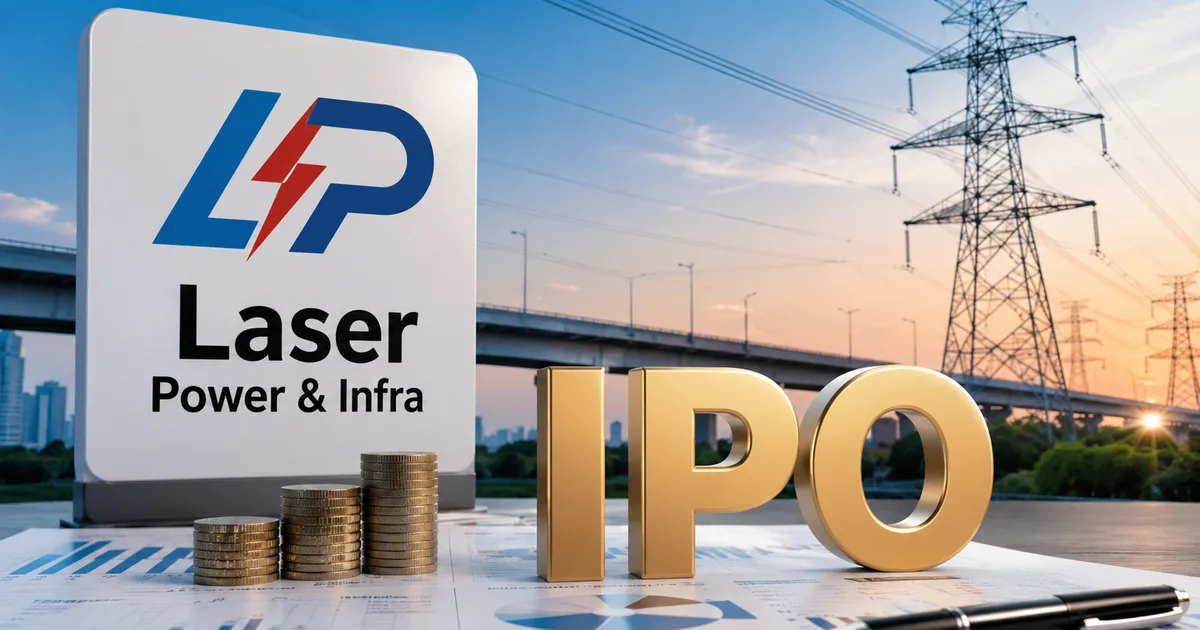
So, you're hearing a lot of buzz about the Laser Power & Infra IPO and wondering if it's worth your money. Honestly, with the market swinging the way it is right now, it's a fair question. You probably saw the Grey Market Premium (GMP) numbers flashing on your phone and thought about jumping in. I get it. We're all looking for that decent listing gain. But we need to look at what this company actually does and if this IPO makes sense for a regular retail investor like you.
Thing is, applying for an IPO isn't just about hitting a button on your Zerodha or Groww app and hoping for the best. You've got your hard-earned rupees on the line. And while blocking ₹14,000 to ₹15,000 via UPI is easier than ever, you still need to know where your money is going. There are countless companies going public every month (which makes sense, actually). Separating the solid businesses from the hype trains takes a bit of digging. I think people often forget this step entirely.
What does Laser Power & Infra actually do?
Look, the name sounds fancy, but the business is pretty straightforward. Laser Power & Infra manufactures power cables and transmission products. They make the hardware that keeps the lights on across the country. They have three manufacturing facilities in West Bengal. Their combined installed capacity is 85,448 metric tonnes. That's a huge amount of metal being pushed out of their factories every year.
Why should you care about cables? Because India is aggressively upgrading its power grid. Every time you hear about a new smart city project or a rural electrification drive, companies like this are supplying the raw materials. It's a boring business. But boring businesses often make consistent money. They aren't building flashy consumer apps. They are building the physical infrastructure that powers everything else. In my experience, these are the stocks you actually want to hold.
Deepak Goel, the CMD of Laser Power & Infra, has been vocal about their growth strategy. They're pushing into advanced conductor technology and underground cables. And here's the deal. They're targeting ₹4,000 crore in annual revenue in three years without needing major capital expenditure. Basically, they want to scale up fast using their existing setup. The numbers here are a bit fuzzy, but the goal is clear. If you want to understand how companies fund these expansions and manage their capital, our deep dive on corporate funding is worth a read.
The shift towards underground cables is particularly interesting. As Indian cities get more congested, overhead power lines are slowly being replaced by underground networks. This is a big structural change. Companies positioned to supply these specific cables stand to benefit significantly over the next decade.
Laser Power IPO details: The hard numbers
You need the specifics to decide whether to apply or skip. The basic mechanics of the offering dictate how much you commit and your odds of getting shares.
- The IPO opened on 9 July and officially closes on 13 July 2026, giving you a tight window to make your decision.
- The shares are priced between ₹203 to ₹214 per share. Retail investors usually bid at the cut-off price to maximize their chances.
- The company is looking to raise a total of ₹742 crore from the market.
- While the exact lot size for retail isn't always front and center, given the price band, a standard retail application will fall right in that SEBI-mandated ₹14,000 to ₹15,000 range.
- As for allocation, 50% of the issue is reserved for Qualified Institutional Buyers, 15% for Non-Institutional Investors, and the remaining 35% is strictly for retail investors like you and me.
It's a mainboard IPO. This means you'll need your demat account active and your UPI mandate approved promptly. If you've ever had issues with UPI mandates not coming through or getting stuck on your bank's app, I'd strongly suggest checking our guide on fixing UPI mandate failures before you try to apply. Nothing is more frustrating than missing an IPO because a bank server timed out. Trust me on that.
What is the GMP telling us?
The Grey Market Premium is the unofficial premium at which the unlisted shares are trading before they officially hit the stock exchange. It is completely unregulated. But it gives you a very real sense of the hype and retail demand surrounding the issue.
As of Day 3 of the subscription period, the GMP for Laser Power & Infra IPO is hinting at around a 16% to 17% listing gain. This means people in the unofficial market are willing to pay roughly ₹34 to ₹36 over the upper price band of ₹214. If you snag an allotment, you might be looking at a decent profit on listing day. It won't buy you a house.
The subscription numbers back up this moderate hype. On Day 3, the issue was booked around 2.5 to 3.68 times overall. Retail demand is steady, and institutional money is flowing in nicely.
But a 16% GMP isn't a guarantee of anything. The broader market can tank on listing day due to some global news, and that premium can vanish instantly. You could end up with shares listing at a discount. Don't ever borrow money or take a personal loan to invest based on a GMP figure you saw on a random Telegram group. It's a sketchy move. Speaking of which, there's been a massive rise in fake trading apps promising guaranteed IPO allotments in exchange for upfront fees. Keep a close eye on our scam tracker to stay safe from these fraudsters operating out of tier-2 cities.
The business model: Pros and cons
When you buy an IPO, you're buying a piece of a business. It's not just a ticker symbol. You need to understand what works for them and what could go wrong.
On the plus side, Laser Power has a solid manufacturing base in West Bengal. Their 85,448 metric tonnes capacity is huge. They have existing relationships with state electricity boards and private power distributors. The government's relentless push for infrastructure development and upgrading the national grid provides a very clear runway for demand over the next several years.
But it's not all sunshine. The power cable business is highly dependent on raw material prices, primarily copper and aluminum. If global commodity prices spike, their profit margins can get squeezed fast. And they deal heavily with government entities. This historically means longer receivables cycles (annoying, I know). Basically, they might have to wait a long time to get paid for the goods they've delivered. This can put a heavy strain on their working capital.
Should you apply? The retail investor perspective
I'll be honest, the infrastructure sector in India is hot right now. Government spending is huge. Companies producing physical goods like power cables have a solid structural advantage. The management's ₹4,000 crore revenue target sounds ambitious but doable given the sector's strong tailwinds and their established manufacturing capacity. I'm not sure exactly why they think it'll happen so fast, but the setup is there.
On the flip side, a 16% expected listing gain isn't exactly a lottery ticket. If you're looking for a quick double-your-money situation, this probably isn't the IPO for you. But if you want a relatively stable infra play that might give you a small pop on listing and holds some decent long-term value, it's definitely worth considering.
How to apply using UPI (the right way)
Applying is dead simple now compared to a decade ago. You don't need to fill out physical ASBA forms and submit them to a bank branch.
- Open your broker app, whether you use Zerodha, Groww, Upstox, or Angel One.
- Navigate to the IPO section and select Laser Power & Infra from the active issues list.
- Enter the number of lots you want. Applying for just 1 lot is usually the smartest move to maximize your mathematical chances of getting an allotment.
- Put in your correct UPI ID linked to your primary bank account where you have the funds.
- Submit the application on the broker app.
- Open your UPI app within a few hours to approve the mandate request, which officially blocks the funds in your bank account.
If you don't get the allotment, the mandate is automatically revoked, and your money is unblocked. It usually takes a few days after the allotment date for the block to clear completely. So don't panic if you don't see the money immediately available in your account. The banks are notoriously slow with mandate revocations.
Checking your allotment status
Once the issue officially closes on 13 July, the anxious waiting game begins. The allotment status is usually finalized a couple of days later. You can check it directly on the official registrar's website or on the BSE and NSE portals. You'll just need your PAN card number or your specific application number generated by your broker.
I've seen too many people frantically refreshing their broker app on allotment day, complaining that nothing is updating. Relax. The broker app is usually the absolute last platform to update the status. Go straight to the registrar's portal for the fastest confirmation. And make sure your PAN card is properly linked to your Aadhaar and your demat account. If it isn't, your application might get rejected outright before the draw even happens. If you're unsure about the latest updates about PAN linking, check our latest tech news section.
The final verdict
The Laser Power & Infra IPO is a decent, straightforward offering from a company operating in an important sector for the country. They make the literal pipes and wires of India's ongoing growth story. The ₹742 crore issue size is big enough to provide liquidity. And the subscription numbers show a healthy level of interest from both retail and institutional buyers.
If you have some spare cash, specifically money that you don't need for living expenses over the next six months, and you understand the inherent risks of the stock market, throwing in an application for one lot isn't a terrible idea. Just keep your expectations realistic. A 16% GMP is a nice bonus. It's just not life-changing wealth.
Always do your own research. Read the Red Herring Prospectus (RHP) if you have the patience to wade through hundreds of pages of legal jargon. Don't blindly follow the herd. The stock market is a mess for those who don't pay attention. So keep an eye on your money.