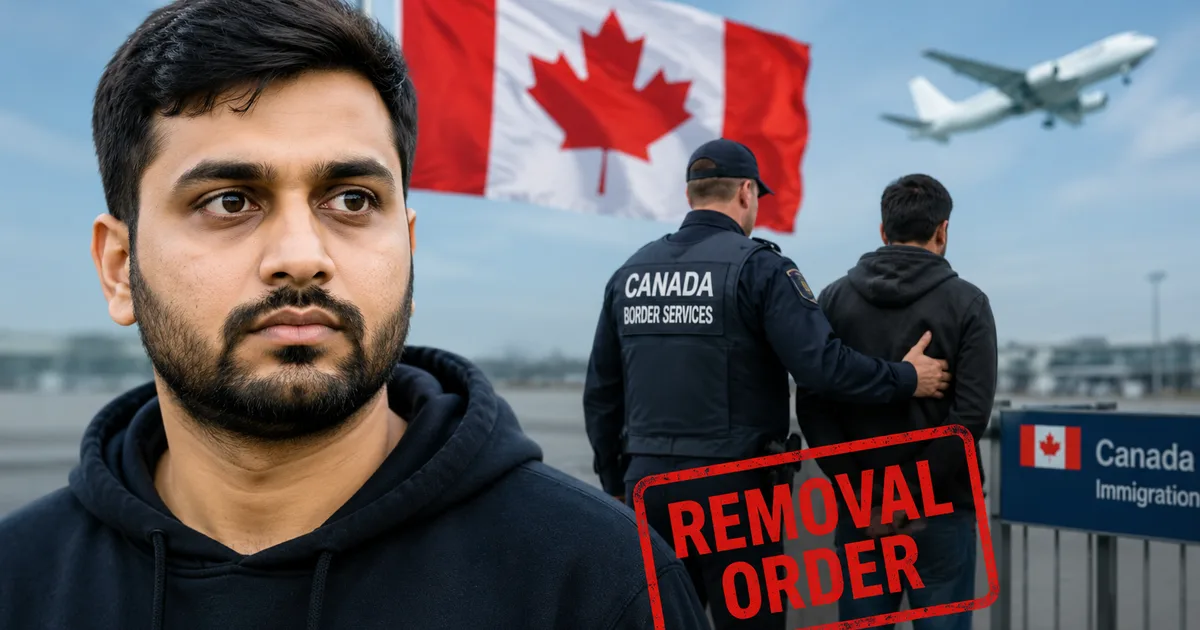
You probably saw the news blowing up on your WhatsApp groups. An Indian man named Mitul Patel just got slapped with a removal order from the US. And right next door, Canada is pushing through some of the strictest deportation rules we have seen in years. If you are searching for information on the Mitul Patel Removal Order 2026: Canada Deportation Rules Explained, you need to understand that North American immigration policies have completely changed overnight.
These aren't just isolated cases anymore. We're looking at a massive crackdown on immigration fraud across North America. I've been following these policy shifts for months. Honestly, the sheer volume of Indians getting caught in this net is alarming. People are spending 30 to 40 lakh rupees. They're selling their family land in Punjab or Gujarat just to end up with a one-way ticket back home.
I want to explain exactly what happened in the Patel case, what Canada's new Bill C-12 means for students or workers, and why the old tricks to get a visa simply don't work anymore.
The Mitul Patel case: faking a robbery for a US visa
So, what exactly did Mitul Patel do? He tried to exploit something called a U Visa in the United States.
The US government created this visa with good intentions. It's meant to protect undocumented immigrants who become victims of violent crimes. If you get robbed at gunpoint and help the police catch the guy, they might give you a visa so you can stay in the country safely. It makes sense on paper.
But someone will always figure out how to monetize a loophole. (Annoying, I know).
Patel, a 40-year-old Indian national, pleaded guilty to participating in a massive fraud ring. These guys were literally staging armed robberies at convenience stores or fast-food joints. They'd hire someone to come in with a fake gun. Then they'd pretend to rob the place and make sure the cameras caught the whole thing. After that, the victims would file police reports and apply for U Visas.
I know, it sounds insane. But people were paying thousands of dollars to be part of this scam. It's a mess.
The FBI eventually caught on. You can't run a fake armed robbery ring across multiple states without leaving a paper trail. The court came down hard on everyone involved. Patel got one day in prison. But more importantly, he received a federal removal order. That means he's being deported back to India and is likely banned from re-entering the US for a very long time. Possibly forever.
This kind of visa fraud ruins the system for people who actually need help. And it has made US and Canadian authorities hyper-suspicious of every single application coming from India right now.
Canada's Bill C-12: the 2026 deportation reality
While the US is cracking down on fake robberies, Canada is overhauling its entire system. If you have relatives trying to get their Permanent Residency in Toronto or Vancouver, you probably already know how tense things are.
Canada recently passed Bill C-12, officially known as the Strengthening Canada's Immigration System and Borders Act. And it has some serious teeth.
For years, the Canadian immigration system was seen as the friendly alternative to the US H-1B lottery. You go study at a strip-mall college, get a Post-Graduation Work Permit, and eventually apply for PR. It was practically an assembly line. But the math of Canada's immigration enforcement no longer works. They brought in too many people, housing prices exploded, and the system broke down.
Now, the government is reversing course. Bill C-12 gives border agents and immigration officers way more power to reject applications and deport people who break the rules.
Over 9,000 people from Punjab are likely to be deported from Canada just because of these new rules. That's a staggering number. These are mostly students and temporary workers. Some overstayed their visas. Others submitted fake IELTS scores or got caught working cash jobs for more hours than they were legally allowed.
The broken screening process
Things got so bad in Canada that organized crime groups started exploiting the broken screening process to recruit international students as foot soldiers. Yes, actual gangs. Young guys land in Canada, realize they can't afford rent on a part-time minimum wage job, and get sucked into illegal activities just to survive.
The Canadian government is trying to clean this up fast. They aren't giving people the benefit of the doubt anymore. If your paperwork looks sketchy, or if you lied about your work experience in India, they will issue a removal order.
The asylum loophole is closing fast
Because Canada is making it harder to stay, a lot of desperate people are trying a new tactic. They fly into Canada legally. Then they try to cross the border illegally into the United States to claim asylum.
Some people think Canada's strict new policies actually force asylum seekers into the US. The logic is twisted but simple. If Canada is going to deport you anyway, you might as well take your chances running across the border into New York or Washington state.
But the US is waiting for them. Border patrol agents are catching record numbers of Indian nationals trying to cross from the north. And if you get caught doing that, you're thrown straight into detention. You don't get a court date three years from now. You get put on a chartered flight back to New Delhi.
How the deportation process actually works for Indians
People talk about deportation like it's just a stamp on your passport. It's a mess. It's a lot messier than that.
When someone gets a removal order, whether it's Mitul Patel in the US or a student in Canada under Bill C-12, the legal process kicks in.
First, you get a notice. If you're caught committing a crime or committing visa fraud, you might be held in a detention center. These are essentially jails for immigrants. You sit there while your family scrambles to find a lawyer who charges 50,000 rupees an hour just to file an appeal.
Most appeals fail. The judges are completely overwhelmed. The numbers here are a bit fuzzy, but the system is designed to process people quickly now. As one recent Oxford Law blog pointed out regarding Canadian penal populism, there's no sympathy for fake documents.
Once the appeal is denied, authorities coordinate with the Indian embassy to get emergency travel documents. You're escorted to the airport, sometimes in handcuffs, and put on a commercial flight. When you land in India, local authorities question you. Your dreams of earning in dollars are over. You're left with the massive debt you took on to pay the agents in the first place.
The massive cost of fake documents
I can't stress enough how devastating this is financially. Let's do the math. A typical middle-class family in India might take an education loan of 25 to 30 lakh rupees at 10-12% interest to send a child to a Canadian diploma mill. They expect the student to work part-time to cover living expenses, graduate, get a work permit, and eventually send money home.
But under Bill C-12, the rules are getting brutally strict. The government is tying work permits to specific industries that actually need labor. If you spent 30 lakhs studying general business administration at a college nobody has ever heard of, you might not get a work permit at all. And without that work permit, you have zero path to PR. Your visa expires, and you get a removal order.
When that student is forced to return to India, that 30 lakh rupee loan still exists. The EMI still hits the bank account every month. It destroys families financially. You can read more about how these financial pressures affect families in our latest explainers on student loans.
Collateral damage in the system
We also have to talk about the collateral damage happening in the system right now. Legitimate applicants are getting caught in the crossfire. There are heartbreaking stories popping up constantly. Just recently, a single father was reported to be stuck in immigration limbo in Canada. He was missing out on financial aid because his status was suddenly up in the air due to processing delays. When the system gets overloaded with fraudulent applications and subsequent deportation proceedings, the honest people who follow the rules end up waiting years for basic processing. They can't work legally. They can't access healthcare. And they can't return home because they have nothing to return to.
The impact on tech workers and H-1B hopefuls
Even legitimate IT workers are feeling the heat. With companies conducting layoffs and consolidating vendors, many Indian techies on H-1B visas are losing their jobs. You get 60 days to find a new employer who is willing to sponsor your visa. In this economy? It's incredibly difficult. If day 61 arrives and you haven't secured a new role, you're out of status. You have to pack your bags and leave, or you risk getting a removal order yourself.
And this brings us to a harsh truth. The West is prioritizing its own citizens. The political climate in both the US and Canada has shifted aggressively toward restricting immigration. Politicians are winning elections by promising to deport more people and issue fewer visas.
What honest Indian applicants should do now
Look, the dream of moving abroad isn't dead. But the shortcut route is absolutely closed.
If you're planning to apply for a visa to the US or Canada in 2026, you have to be smarter than the people who got caught.
- First, stay away from shady consulting agents in Jalandhar or Hyderabad. If an agent promises you guaranteed PR, walk away immediately. If they tell you they can arrange a fake job offer or suggest messing with your bank statements, don't listen. They will take your money, and you will be the one facing a ban.
- Second, get your documents straight. Ensure your educational certificates are real. Make sure your tax returns match your stated income. Authorities can verify documents faster than ever. They cross-check things with Indian banks. They know what a fake Aadhaar card looks like, and they are increasingly aware of verified documents via DigiLocker.
- Third, keep track of the official government portals. Read the actual policy documents on canada.ca or the USCIS website. Do not trust an agent's word over the official government rules.
If you encounter a visa agent offering fraudulent services or fake job offers, you should immediately report them to cybercrime.gov.in or call the 1930 helpline to protect others from falling into the same trap.
The days of easily gaming the North American immigration system are over. The technology used to catch fraud has improved, and the political patience for illegal immigration is at zero.
Finally, consider the reality of the destination. Canada is expensive right now. Rents are wild. Jobs are hard to find. The H-1B lottery is exactly that. A lottery. Have a backup plan in India. The tech sector here is growing. With initiatives like the digital public infrastructure, there are solid opportunities at home. If you ask me, that's where the smart money is going.
The Mitul Patel case is a perfect example of what not to do. Faking an armed robbery to get a visa is extreme. But even small lies on your application can trigger a removal order under the new rules. Play it straight. Do your research. Protect your future.