Nothing has a habit of making us pay attention. Carl Pei and his team know exactly how to run a hype train. We've seen it with their smartphones and earbuds. But building premium over-ear headphones is a completely different game. You can't just slap a transparent casing on a mediocre driver and expect people to pay flagship money in India.
So when details about the Nothing Headphone 1 2026 India Launch: Expected Price, ANC Features and Release Date Explained started leaking, I was highly skeptical. I've tested enough audio gear to know style often hides terrible substance. But the official specifications for the new Nothing Headphone (1) Pro are finally out. They look incredibly promising for the Indian market.
We're looking at triple drivers and a titanium frame. Plus, the battery life almost sounds like a typo. The premium headphone market is brutal right now. Sony and Apple dominate the space. But Nothing is trying to carve out its own aggressive corner. If you read the Latest Tech News, you already know the competition is fierce. Nothing usually manages to shake things up, though.
The reality of the Nothing brand in India
Before we look at the specs, we need to talk about how Nothing is positioned here. Indian buyers are smart. We care about aesthetics, sure. But we care a lot more about value for money. A fancy transparent back doesn't mean much if the product is a mess after six months of Mumbai humidity or Delhi heat (which makes sense, actually).
Nothing built its reputation on offering clean software and good hardware at a reasonable price point. Their service center network has grown. This gives buyers more confidence. But pushing a premium over-ear headphone means convincing buyers to skip the established giants.
That's a massive challenge. When you spend thirty thousand rupees on audio gear, you want a guarantee that it'll sound good. And it has to last for years. Nothing is essentially asking Indian consumers to take a leap of faith on a first-generation flagship headphone product.
And that's why the spec sheet on the Headphone (1) Pro is so aggressive. They had to overdeliver on hardware to justify the shift upmarket.
What triple drivers actually do for your music
Most headphones use a single driver in each earcup. That one component handles the bass and the midrange vocals. It also manages the high-pitched treble. That's totally fine for casual listening. But when you crank up the volume on a heavy track, things get muddy. The bass bleeds into the vocals. The highs get harsh and scratchy.
Nothing decided to put three distinct drivers in the Headphone (1) Pro. It's a smart choice. This means different physical parts of the speaker handle different sound frequencies. One driver focuses purely on giving you that deep bass. Another handles the mid-range vocals. The third takes care of the crisp high notes.
I haven't had the chance to listen to them yet. But if their sound tuning is accurate, this should make a massive difference for complex tracks. Think about listening to an A.R. Rahman composition. There's usually a lot going on. In my experience, multiple instruments and layered vocals hit all at once.
A triple driver setup keeps all those elements perfectly separated. You get pure clarity instead of a wall of noise. (I know, sounds complicated, but it's not. It just means significantly better sound).
The 46dB active noise cancellation situation
Active Noise Cancellation is absolutely non-negotiable on premium headphones today. Nothing claims an impressive 46dB noise cancellation depth using a 10-mic system. Numbers on a spec sheet are one thing. The real test is the Delhi Metro or a noisy café.
Ten microphones are a lot for a pair of headphones. They constantly listen to the outside world. Then they generate opposing sound waves to cancel the ambient noise. 46dB is firmly in the upper tier of noise cancellation capabilities. It should block out the low hum of an airplane engine with zero issues.
It'll probably struggle a bit with sudden high-pitched noises, like a sharp auto rickshaw honk in traffic. That's just how the physics of ANC works right now across all brands. I'm not sure exactly why it's so hard to fix, but it is.
Thing is, good ANC also relies heavily on a solid physical seal around your ears. The Headphone (1) Pro uses thick memory foam pads. If they clamp down properly without giving you a headache after an hour, the passive isolation combined with the software ANC should be fantastic. For comparison, you might want to look at the upcoming Bose QuietComfort Earbuds 2026 India Launch: Expected Price, ANC Features, and Battery Life Explained to see how in-ear options are competing on the noise cancellation front this year.
Battery life that actually makes sense
This is the specific feature that got my attention. Nothing officially claims up to 68 hours of continuous battery life on a single charge.
Let that number sink in for a second. You could literally take a long flight from Delhi to New York, fly back the next week, and still have enough battery left for a week of office commuting. Even if that 68-hour figure is with the ANC turned completely off, you're probably looking at a very solid 45 to 50 hours with noise cancellation enabled full time.
I absolutely hate charging my headphones. I always forget until right before a meeting (annoying, I know). Having a headset that lasts a full month on a single charge if you listen for just a couple of hours a day is a massive quality-of-life upgrade.
And since it supports rapid fast charging via USB-C, plugging it in for ten minutes will likely give you hours of playback. That eliminates battery anxiety entirely.
Spatial audio and the titanium build
Nothing included dynamic spatial audio with head tracking. Basically, the music sounds like it's coming from all around you, not just trapped inside your head. When you physically turn your head, the sound profile shifts to match your movement.
Honestly, I find head tracking incredibly annoying for standard music listening. It feels unnatural. But for watching movies on your phone or tablet on a flight? It's genuinely excellent. It creates a proper theater-like surround experience. Apple popularized this with the AirPods Max. Now everyone else has to follow suit to compete.
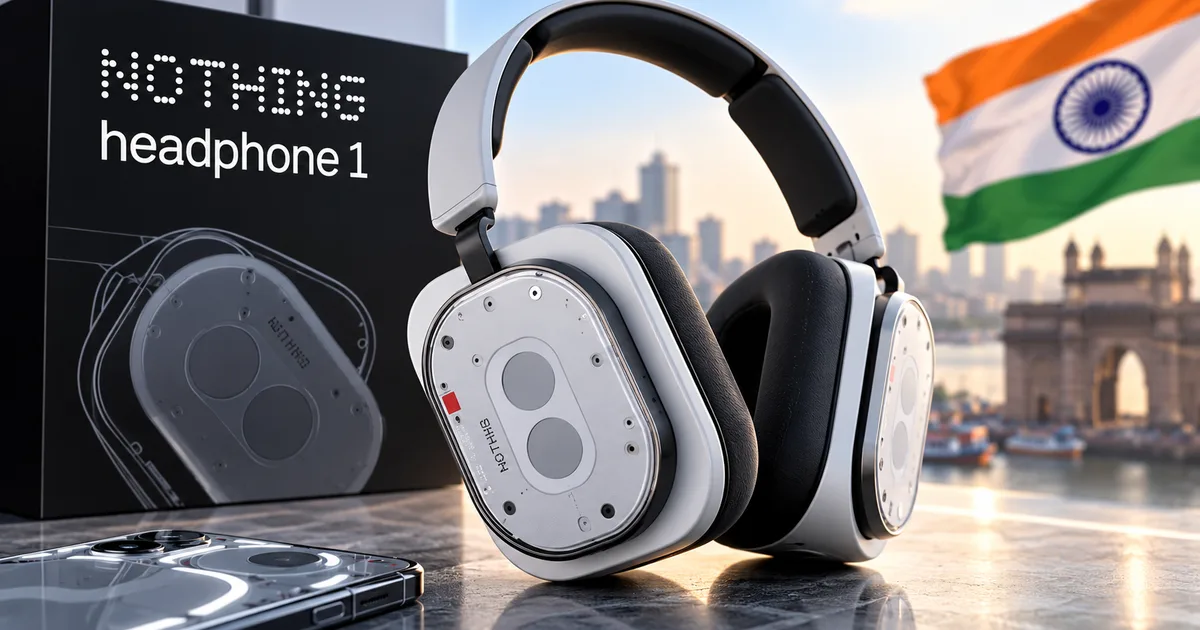
More importantly, Nothing built the frame out of titanium. They've built their entire brand identity on transparent plastic. It looks cool on a desk. But plastic creaks under stress. For a flagship headphone, you need something much stronger.
Titanium is an incredibly smart move. It's exceptionally strong but much lighter than stainless steel. Over-ear headphones get very heavy. If you wear them for three hours on a train, a heavy headset will dig painfully into the top of your head. A lighter titanium frame makes a huge difference for long-term wearing comfort.
They did keep the transparent design elements on the earcups. You can see some of the neat internals and wiring. It's a signature Nothing look. You'll instantly know someone is wearing a Nothing headset from across the room.
That design choice is bold.
Software features and ecosystem lock-in
Hardware is only half the story. The Nothing X app is where a lot of the magic happens. They've steadily improved this app over the last two years.
You can expect a full custom equalizer and controls for the ANC strength. You also get firmware update access. Nothing is usually very good about pushing regular updates. They tweak sound profiles and fix bugs based on user feedback.
The real question is how well these headphones will play with non-Nothing devices. Will you get the same seamless pairing and high-resolution codec support on a Samsung or an iPhone? Probably. But the best experience is usually reserved for people already using a Nothing Phone.
Expected India price and official release date
Let's talk about the money. Nothing hasn't announced the official Indian pricing yet. But we can make an educated, solid guess based on global pricing trends and local import duties. The numbers here are a bit fuzzy, honestly.
The previous Nothing audio products sat comfortably in the affordable mid-range segment. But the "Pro" moniker, the titanium frame, and the complex triple drivers mean these are moving sharply upmarket. I strongly expect the Nothing Headphone (1) Pro to launch in India somewhere between INR 24,999 and INR 29,999.
That puts them in direct, aggressive competition with older Sony WH-1000XM4 models and the Sennheiser Momentum series. It's a very tough crowd to beat. If they price it over 30,000 rupees, I think they'll really struggle to find buyers outside their hardcore fanbase. Indian consumers are extremely value-conscious. We want the best specifications. But we also demand a reasonable price tag.
As for the actual release date, supply chain channels suggest they'll hit Indian retail shelves by the third week of October 2026. Pre-orders should start a week earlier on major platforms like Flipkart and Nothing's official India website. You can expect the usual credit card bank offers bringing the effective price down by a couple of thousand rupees at launch.
If you're looking for something significantly cheaper, you should check out the CMF Buds Neo 2026 India Launch: Expected Price, ANC Features, and Specifications Explained which targets a much more affordable, budget-conscious segment under the Nothing sub-brand.
Final thoughts on the new flagship
If you desperately need premium headphones today, just buy the Sony XM4. They're proven. Also, the price has dropped significantly in recent sales. But if you have time, the Nothing Headphone (1) Pro is definitely worth keeping an eye on. The hardware on paper is undeniably impressive.
The 68-hour battery life alone is a massive selling point for anyone who travels frequently or commutes long distances daily. It's that good. The real question mark remains the software reliability and the final sound tuning out of the box.
To recap, here are the major upgrades you're getting with the new Pro model over the standard edition:
- A much stronger titanium frame instead of all plastic.
- Triple drivers for dedicated bass, mid, and high frequencies.
- An upgraded 10-microphone array for 46dB active noise cancellation.
- Dynamic spatial audio with built-in head tracking for movies.
- A massive 68-hour battery life that easily outlasts the competition.
Nothing has pushed regular updates to their previous earbuds, constantly tweaking the EQ and ANC performance. They'll almost certainly do the exact same here. You aren't just buying the physical hardware. You're buying into their ongoing software ecosystem updates.
We'll have a full, detailed review up once we get our hands on a retail Indian unit. I want to test that 10-mic ANC against the absolute chaos of Mumbai street traffic before making a final call.
If you want to learn more about the tech behind these new audio standards, you can browse our Tech Explainers section for more detailed guides on how spatial audio and multi-driver setups actually work under the hood.