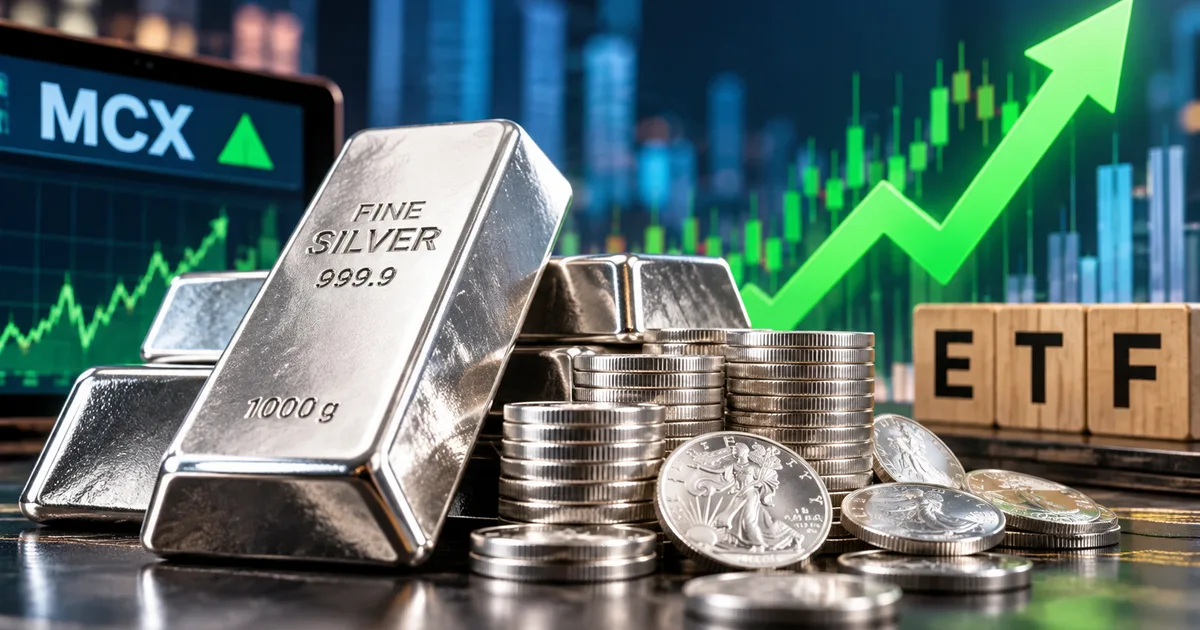
If you opened your Zerodha or Groww watchlist this morning expecting steady gold prices, you probably saw something far wilder. The massive silver price surge october 2026 has caught almost everyone off guard. Silver futures on the Multi Commodity Exchange (MCX) soared past ₹2.42 lakh per kilogram, breaking past earlier records as international spot prices crossed $60 per ounce. For years, silver was treated like gold's quiet younger sibling, pulled out mainly for coins during Dhanteras or small family weddings. But that sleepy reputation has vanished.
I talked to a friend yesterday who bought physical silver bars two years ago for his daughter's higher education fund. He didn't know whether to cash out right away or let the rally run. Honestly, if you ask me, seeing an 85% year-to-date leap in an asset class usually viewed as conservative is completely disorienting. Silver is moving faster than mid-cap equities right now.
Why MCX silver rates hit record highs this month
This price spike isn't some random bubble cooked up by retail traders on Telegram. Physical supply has tightened across the world. I'm not entirely sure why the crunch hit all at once this month, but mines simply can't dig silver out of the dirt fast enough to feed factories. When that shortage meets heavy institutional buying, prices explode.
Look at where silver actually goes today. More than half of all silver mined on earth goes into industrial manufacturing, not jewellery. The biggest driver is solar power. Modern solar panels, specifically newer n-type TOPCon and heterojunction cells, need far more silver paste on their conductive strips than older designs. As countries rush to build gigawatt-scale solar parks, factories are buying physical metal in bulk. You can see similar demand patterns mirrored across clean energy stock rallies where infrastructure spending pushes raw materials to their limits.
Electric vehicles add even more pressure. Every modern electric car uses around double the silver found in a petrol car. Silver is the best electrical and thermal conductor among all metals, which makes it essential for battery management systems and fast-charging connectors (which makes sense, actually). When you stack heavy EV production on top of massive power builds for artificial intelligence data centers, industrial demand simply overwhelms the market. And supply can't keep up.
And here's the catch: silver supply can't adjust overnight. Around 70% of global silver output is mined as a byproduct of lead, zinc, copper, and gold. If a mining firm runs a copper pit in Peru or Chile, they don't dig faster just because silver prices went up. They produce based purely on copper demand. I think that's why silver supply stays so rigid, so shortages take years to clear up instead of months.
How the physical silver market connects to digital futures
If you've never traded commodities before, the connection between a jeweller in Zaveri Bazaar and a futures contract on your screen can feel confusing. Here's the deal. The Multi Commodity Exchange in Mumbai is India's primary electronic platform for commodity derivatives. When jewelers, bullion dealers, exporters, and industrial manufacturers want to protect themselves from price swings, they trade futures contracts on MCX.
Think of an MCX futures contract like booking a wedding banquet hall six months in advance at a fixed rate. You lock in your price today for delivery on a future expiry date. Because India imports over 80% of its silver needs, domestic prices hinge on two primary drivers: the international spot rate in dollars and the rupee-to-dollar exchange rate. On top of that, Indian customs duties add extra cost to every kilo. If the rupee weakens against the dollar, MCX silver rates jump even if global prices hold steady. The exact import data for this month is still a bit fuzzy, but if you ask me, domestic demand is running ahead of what customs can clear (and that's being conservative). If you want to understand how these price signals travel through modern demat apps, check out our personal finance tech guides where we break down trading mechanics step by step.
Trading desks have experienced rapid momentum shifts in bullion, with intraday swings reflecting tight physical supply rather than routine festive shopping.
Abhilash Koikkara, Head of Forex and Commodities at Nuvama Professional, pointed out that silver futures have seen steady buying through wild sessions. When big desks spot supply shortages alongside expected US Federal Reserve rate cuts, they rush cash into hard assets. That institutional push drives the benchmark rate on your screen.
What the rally means for silver ETF returns and investors
For most everyday Indian investors, trading futures contracts on MCX is way too risky. A standard silver contract is 30 kilograms of metal, while a silver mini contract is 5 kilograms. That's serious risk. A minor price drop could wipe out your trading capital in minutes, which is why retail interest has shifted overwhelmingly toward silver ETFs.
Silver exchange-traded funds let you buy units directly through your regular broker, whether that's Zerodha, Groww, Angel One, or Upstox, using plain UPI. You don't have to worry about bank lockers, locker rent, theft risks, or testing silver purity with a touchstone. Under rules set by the Securities and Exchange Board of India (SEBI), every silver ETF in India must back at least 95% of its portfolio with physical silver bars of 99.9% purity. In my experience, that strict vault rule gives retail investors genuine peace of mind. Those bars sit inside insured vaults run by Sequel Logistics and Brink's.
When silver prices jumped past ₹2.42 lakh per kg on MCX, holders of funds like Nippon India Silver ETF and ICICI Prudential Silver ETF saw their net asset values climb in lockstep. It's clean and fast. Unlike physical shops that recently went through retail jewellery stock fluctuations amid volatile store footfall, digital funds let you exit with a single tap on your smartphone during market hours.
The friction points: tracking errors, liquidity, and taxes
Digital silver sounds effortless on paper. But it has quirks. The biggest headache during wild market rallies is tracking error. An ETF is supposed to match the exact percentage move of domestic spot silver, minus a small annual expense ratio of 0.3% to 0.6%. But when trading volumes surge crazily, the price on your screen can drift away from the fund's actual net asset value.
Here's why that happens. When hordes of retail investors click buy on their mobile apps all at once, exchange demand temporarily outstrips the units available on the order book. The ETF market price trades at a noticeable premium to its real vault value. Market makers, known as authorised participants, eventually step in to create new units and restore balance, but that process takes time. If you buy during peak panic, you might pay an artificial markup that evaporates the next morning.
Taxes are the other unpleasant surprise. Before April 2023, holding silver funds for more than three years gave you indexation benefits, which lowered your tax bill significantly. That's completely gone. Under current rules, capital gains tax on silver ETFs is calculated at your slab rate, no matter how long you hold the units (annoying, I know). If your total income puts you in the 30% tax bracket, nearly a third of your profit goes straight to the government. Physical silver held for more than two years still qualifies for a 12.5% long-term capital gains rate without indexation. That difference creates a tricky dilemma for long-term investors, if you ask me.
To keep up with ongoing regulatory updates and bullion market developments, bookmark our latest market updates section.
Smart ways to handle silver in your portfolio today
Watching prices shoot up creates an intense urge to jump in before you miss out. Honestly, that's usually when retail investors get burned. Buying right after an 85% run means you're entering when volatility is highest and institutional desks are already thinking about taking partial profits.
Here are practical steps to manage your exposure sensibly:
- Keep your total precious metals allocation, including gold and silver combined, between 5% and 10% of your total liquid investment portfolio.
- Avoid lump sum purchases during record highs, and instead use systematic investment plans in silver mutual funds or purchase small ETF units across multiple trading weeks.
- Always check the indicative net asset value of the ETF on the fund house website before placing a market order on your demat app to avoid paying inflated premiums.
- Choose physical hallmarked coins from reputable banks or certified refiners if your primary goal is gift-giving during Dhanteras or weddings, avoiding high making charges on decorative ornaments.
- Factor your income tax slab into your net return calculations before choosing between silver ETFs and physical bullion for holding periods exceeding two years.
Silver has always been far wilder than gold. Much wilder. It drops fast during economic slowdowns, but rallies hard the second manufacturing picks up speed. In my experience, you should treat it as a tactical hedge and an industrial play, not a guaranteed shortcut to wealth.