Imagine you live in Delhi or Patna. You wake up in the middle of May. You turn on your tap, and water flows. Or maybe you look at your electricity bill, knowing a big chunk of that power comes from massive dams up north. We take this completely for granted. But the Systemiq Himalayan Glacier Study Findings 2026 paints a very different, very dry picture for our future.
I spent the weekend reading through the latest climate reports. Honestly, the numbers are terrifying. A major study just dropped from a global consultancy called Systemiq. And they worked alongside the Integrated Mountain Initiative and the G.B. Pant National Institute of Himalayan Environment to figure out exactly what is happening to our mountains.
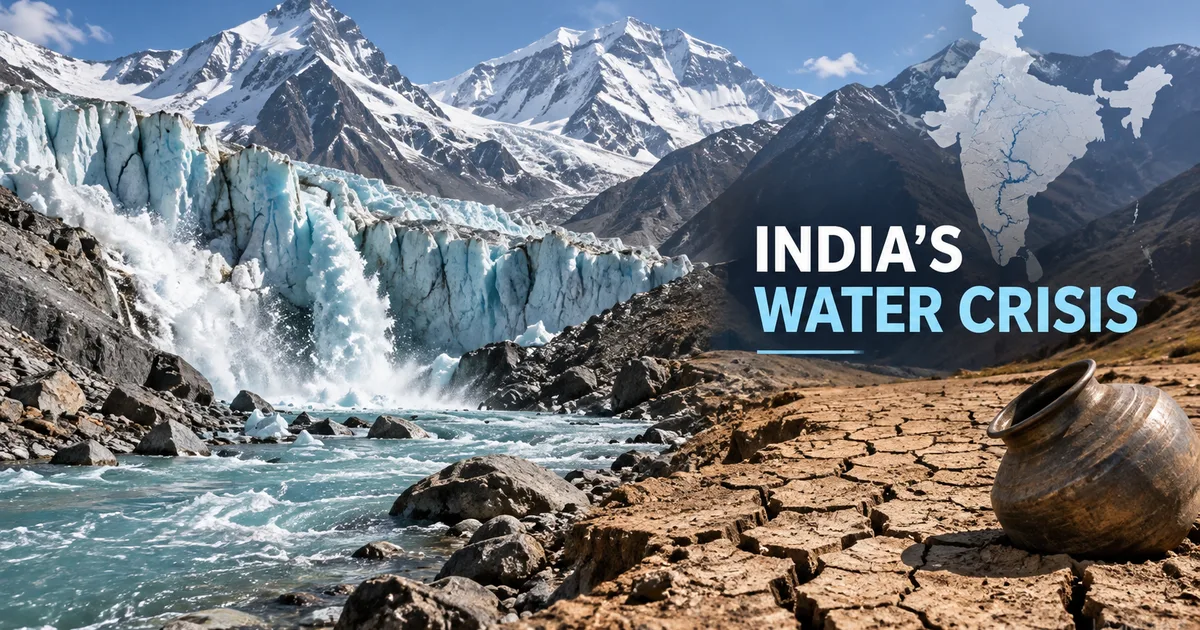
What they found is that Himalayan glaciers are losing mass 65 percent faster than they were just ten years ago.
Sixty-five percent. That's an enormous acceleration. If you ask me, we aren't talking about this enough.
So what does this actually mean for an everyday Indian internet user? It means the water we rely on for drinking and farming is under immediate threat. We regularly cover complex topics in our Tech Explainers section. But this one directly hits our wallets and our basic survival.
The ticking clock on India's water supply
Let's break down exactly how this natural plumbing system works.
Think of the Himalayas as a massive, frozen water tank for all of South Asia. Rivers like the Ganga and the Yamuna get a huge portion of their dry-season flow from melting ice. During the hot months before the monsoon hits, it's the slow melting of these glaciers that keeps our rivers alive.
Right now, the ice is melting incredibly fast. So we actually have more water flowing into these rivers. But this is a dangerous trap (which makes sense, actually, if you think about it). The Systemiq report warns about a concept called "peak water".
Peak water is the point where the ice reserves shrink so much that river flows permanently drop. We get a temporary surge of water now. Then we get a permanent, severe drought later. Once we cross that threshold, the water volume simply won't return.
When we hit peak water, the impact on India's water supply is going to be devastating. Millions of farmers across Punjab, Haryana, Uttar Pradesh, and Bihar rely on this river water for irrigation. Major cities depend on it for basic drinking water supplies. If you thought the summer water cuts in Bengaluru or Chennai were bad, imagine the entire northern plains running dry at the same time. The scale of the problem is just a mess.
Flash floods and the 56 dangerous lakes
But before we run out of water entirely, we have to deal with the problem of having too much of it all at once.
As these massive blocks of ice melt at record speeds, they leave behind huge pools of meltwater. These glacial lakes are held back by natural dams. These dams are just piles of loose rock and dirt left behind by the retreating glacier. They aren't engineered concrete walls. They're fragile piles of debris.
When temperatures rise, the permanently frozen ground called permafrost begins to melt. The steep mountain slopes become unstable. When a chunk of ice falls into one of these lakes, or the water pressure simply gets too high, those natural dams break.
The result is a Glacial Lake Outburst Flood. People often call it a GLOF. A massive wall of water and mud rushes down the mountain valley. It destroys absolutely everything in its path.
We saw this happen in Sikkim in late 2023. A glacial lake burst and at least 70 people died. Roads and bridges were wiped out in a matter of hours. In 2021, a very similar disaster in Uttarakhand killed over 200 people after a massive flood swept through the Rishiganga and Dhauliganga valleys. More recently, devastating floods near the Nepal-Tibet border killed over 1,300 people. They also damaged countless bridges and roads.
The Indian government is very aware of this. In July, they told parliament that 56 glacial lakes in the Indian Himalayan region are classified as "very high risk". They based this on a 2025 scientific assessment of 189 high-risk lakes. The Central Water Commission is currently monitoring 2,485 glacial lakes larger than 10 hectares across our river basins. The numbers here are a bit fuzzy, but the danger is real.
Living below these lakes is like living downstream from a cracked dam. The anxiety for mountain communities is real and constant.
Why 20 percent of the Indian economy is on the line
Here's where the math gets genuinely scary for the rest of the country.
Around 18 percent of India's land is in the Himalayas. Yet, the region accounts for about 35 percent of all our national disasters. The fast melting puts roughly 20 percent of India's GDP at risk.
How does melting ice affect the GDP? It comes down to a few major factors:
- India has invested around Rs. 2.4 lakh crore in hydroelectric projects in the mountains, which will become useless if river flows drop after peak water.
- Sudden glacial floods can physically destroy these dams and surrounding infrastructure long before the water runs out.
- The fertile Indo-Gangetic plain relies on continuous water supply from Himalayan rivers, meaning less water directly leads to smaller crop yields and food inflation.
We often talk about the economic shifts in the corporate world, like the Tata Motors demerger. But environmental destruction can wipe out billions in infrastructure overnight. Your grocery bill in Mumbai or Hyderabad goes up because the ice in Uttarakhand is melting. The entire agricultural supply chain is tied tightly to those glaciers.
The reality of glacial bankruptcy
Some researchers are now using the term "glacier bankruptcy" to describe what's happening in the Himalayas. It's a very accurate way to think about the problem.
Imagine you have a large savings account. Every year, you withdraw a small amount of interest to live on, and the main balance stays untouched. That's how the glaciers used to work. They would melt a little in the summer. They'd provide water, and then freeze again in the winter. That kept their mass stable.
Now, because temperatures are so high, we're withdrawing the main balance. We're spending the capital. The Systemiq report shows we're burning through these reserves 65 percent faster than before. Once the account is empty, the regular payouts stop entirely.
For the two billion people in Asia who rely on this water system, including hundreds of millions in India, this bankruptcy means severe water stress. The International Centre for Integrated Mountain Development (ICIMOD) contributed heavily to this research. And their warnings are clear. The river basins in the Hindu Kush Himalayan region will eventually run dry if current trends continue.
The recent floods in Nepal and Tibet are just the early symptoms of this bankruptcy. The ice is losing its structural integrity. Honestly, the mountains themselves are literally falling apart.
We are flying completely blind
Perhaps the most frustrating detail in the entire Systemiq study is the absolute lack of data. It's really sketchy.
There are an estimated 40,000 glaciers across the vast Himalaya-Karakoram region. Do you want to guess how many are being actively monitored in detail on a sustained basis?
Twenty-one.
That isn't a typo. Out of 40,000 massive, changing bodies of ice, we're closely watching exactly 21.
Thing is, the physical landscape of the mountains is changing rapidly. Lakes are expanding. Ice is thinning. The permafrost is thawing out too. Yet, we barely have sensors on the ground to track these changes.
While India is busy rolling out advanced satellite networks and high-tech internet infrastructure, which you can read about in our piece on JioSpaceFiber, we desperately lack basic monitoring for our most important water source. The gap in our knowledge is massive. And it leaves us highly vulnerable to sudden disasters.
What happens next?
The findings of the Systemiq Himalayan Glacier Study 2026 are a loud wake-up call. The loss of Himalayan ice is a massive problem for people living in mountain states like Himachal Pradesh or Sikkim. But it goes way beyond that.
It is a national emergency.
It affects the drinking water available in our cities. It dictates the price of wheat in our markets. And it determines whether our power grids have enough electricity during peak summer months.
The government and various organizations are trying to improve disaster response. I'm not sure exactly why, but regulatory frameworks and funding often slow things down. Some NGOs working on climate resilience face hurdles, a topic related to the broader discussions around the FCRA Bill 2026. In my experience, the bureaucracy needs to move faster than the melting ice.
Basically, we need a massive increase in monitoring. We need stronger infrastructure that can handle sudden floods. We need better early warning systems. And most importantly, we have to prepare our agriculture and cities for a future where water is much scarcer than it is today.
You can keep up with more developments like this in our Latest Tech News section as we track the intersection of climate science and technology. The Himalayas might seem far away if you're sitting in an office in Pune or a cafe in Bengaluru. But the health of those mountains directly controls the future of the Indian economy.