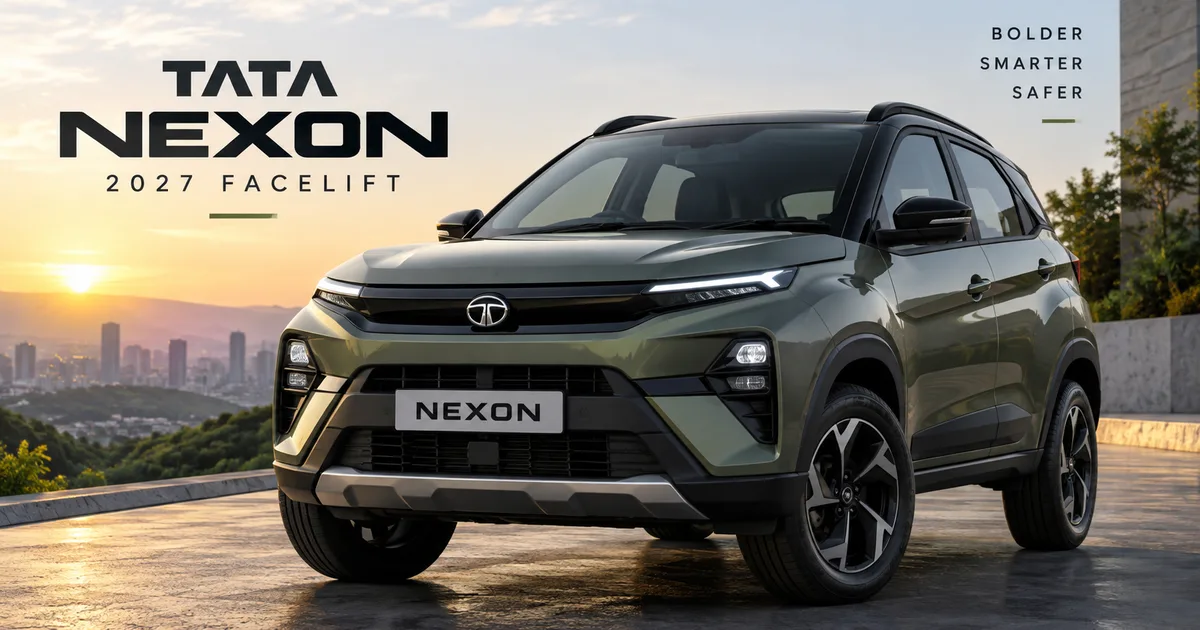
Look, if you drive on Indian roads for more than five minutes, you'll spot a Tata Nexon. It's literally everywhere. From the cramped gullies of Old Delhi to the sprawling highways of Maharashtra, it's become the default choice for millions. But the current generation is getting old, and the competition isn't slowing down. This brings us to the highly anticipated Tata Nexon 2027 facelift India launch. Rumours and spy shots are circulating everywhere right now. I spent the entire weekend going through leaked images and supplier reports to figure out exactly what Tata Motors is planning for their biggest cash cow.
The next-gen Nexon is internally codenamed 'Garud'. And it's a huge engineering overhaul. Tata is completely changing the bones of the car. They're moving it to a brand new platform. We're talking about the ATLAS architecture, which is the exact same base used for the Tata Curvv. In my experience, this is a massive deal for passenger safety. And cabin space.
Honestly, the sub-4-metre SUV segment in India is a bloodbath. You have the Maruti Brezza dominating sales and the Hyundai Venue packing slick tech. Soon, Volkswagen is dropping a brand new SUV based on the Skoda Kylaq (annoying for Tata, I know). Tata can't afford to mess this up. So they're throwing absolutely everything at it.
What the ATLAS platform actually means for you
The biggest change happening under the metal is the shift to the Adaptive Tech-Forward Lifestyle Architecture (ATLAS). This actually matters for a few practical reasons.
First, it gives you more room inside. The current Nexon is comfortable enough. But the rear legroom gets pretty tight for taller passengers on long trips. The ATLAS platform is designed specifically to improve second-row space. If you ask me, if you regularly travel with adults in the back seat, this upgrade alone is a huge reason to wait for the 2027 model.
Second, the safety aspect is getting a serious bump. The Nexon already has a legendary 5-star BNCAP rating. But ATLAS is built for even better crash safety standards globally. It also supports a cloud-connected electronic architecture. That sounds like corporate jargon. Basically, it means the car's computer systems will be much faster. They'll also be fully capable of over-the-air updates, much like your smartphone.
The shift to the ATLAS architecture is expected to support improved crash safety, better rear-seat space and a more advanced electronic architecture.
This is a smart business move by Tata. Sharing the platform with the Curvv means they save massive amounts of money on research and development. Hopefully, they pass those savings on. It'd be great to keep the final price tag reasonable for everyday buyers.
Four powertrain options for the 2027 Nexon
Tata is covering all their bases here. They know different Indian cities have completely different fuel economics. A daily commuter in Bangalore might want an EV. But someone doing highway runs from Delhi to Chandigarh needs a diesel. A family in Mumbai might want a CNG for cheap running costs. The 2027 Nexon will likely have four distinct ways to power the wheels.
- The 1.2-litre turbo-petrol engine for standard city and highway driving
- The 1.5-litre turbo-diesel engine for high mileage users who need torque
- A twin-cylinder iCNG setup for maximum fuel economy in heavy traffic
- The fully electric next-gen Nexon.ev
The twin-cylinder CNG setup is super interesting for middle-class buyers. Tata has been using this tech in the Punch and Altroz to solve a major problem. Boot space. Instead of one massive green cylinder taking up your entire trunk, they put two smaller cylinders underneath the floorboard. You get to keep your luggage space for family trips. And you still run on cheaper fuel. It's a brilliant bit of engineering.
On the transmission front, I think Tata will continue offering the manual and the AMT for budget buyers. They'll also keep the much smoother DCA (Dual Clutch Automatic) for the petrol variants. Driving a manual in Indian traffic is a complete mess, so the automatic options will be highly sought after.
If you're thinking about going electric, check out our detailed explainer on the upcoming Tata Curvv EV. It gives you a solid idea of the battery tech Tata is currently developing. That tech will definitely trickle down to the next Nexon.ev.
Design changes and spy shot details
I've looked closely at the test mules spotted on the Mumbai-Pune expressway. The car was covered in heavy black and white camouflage. But you can still make out the new body lines. The proportions are different.
The A-pillar is noticeably sharper. The current Nexon has a rounded front end that some people love and others hate. I'm not sure exactly why Tata waited this long to fix the bubble shape, but the 2027 version is much more angular. It's boxy. It gives the car a more aggressive SUV stance.
Basically, the rear profile is getting a complete makeover too. The tailgate is visibly sharper in the spy shots. We can clearly see a hidden rear wiper tucked under the spoiler. You usually see that on high-end luxury SUVs. The taillamps are brand new LED units. They'll probably have that connected light bar design across the boot that's so popular in India right now.
Even the glasshouse (the window area) looks updated. This might seem like a small detail. But it changes how much light enters the cabin. It makes the car feel less claustrophobic for rear passengers.
Interior features and cabin experience
Inside the cabin, confirmed details are scarce. But based on what Tata currently offers in the Safari and the Curvv, we can make some very safe bets about the 2027 Nexon's interior.
- Front powered and ventilated seats will be standard on higher variants
- A much smoother 10.25-inch infotainment touchscreen with a completely updated user interface
- A massive panoramic sunroof with voice controls
- Level-2 Advanced Driver Assistance System (ADAS)
- A high-resolution 360-degree camera with a blind view monitor
The current Nexon already has a lot of this. The software experience can sometimes feel a bit sketchy though (which makes sense, actually, given the older hardware). The new electronic architecture should fix that. We might also see better integration with Indian tech ecosystems. Imagine native apps for things like DigiLocker. Or maybe direct UPI payment integration for toll booths directly on the car's screen.
You can read more about how these autonomous safety features actually work on Indian roads in our tech explainers hub.
How it compares to the upcoming competition
Tata isn't launching the new Nexon in a vacuum. The Indian auto market is brutally competitive. By the time 2027 rolls around, the landscape will look completely different.
Volkswagen is confirmed to launch their own sub-4-metre SUV built on the Skoda Kylaq platform. Maruti Suzuki will also have updated their entire lineup. If you want to see what Maruti is planning, read our guide on the Maruti Suzuki Brezza facelift. The Brezza is the Nexon's biggest historical rival. Maruti is packing it with serious tech to win back buyers.
The Nexon has to beat these cars on features and price. Tata has historically been aggressive with their pricing strategy. I think the base petrol manual variant of the 2027 Nexon will start around Rs. 8.5 Lakh (ex-showroom). The top-end diesel automatic or the long-range EV version will easily touch Rs. 16 Lakh or more. The numbers here are a bit fuzzy right now, but that's my best guess.
The Avinya X connection
There's a much bigger picture here. Tata is planning a massive product offensive for 2027. Alongside the Garud (Nexon), they're also launching a flagship luxury electric vehicle called the Avinya X.
The Avinya X is a premium luxury crossover based on Jaguar Land Rover's EMA platform. We're talking about an 800V ultra-fast charging setup along with structural battery integration. And it'll have over 500 km of real-world range. It'll likely cost upwards of Rs. 45 Lakh.
Why does this matter for Nexon buyers? Because Tata is spanning the entire Indian car market. From an 8 Lakh Nexon to a 45 Lakh luxury EV, they want a car in every driveway. The advanced tech developed for the high-end cars eventually trickles down. The fast-charging architecture and the minimalist cabin design of the Avinya might heavily influence how the Nexon.ev looks. It'll definitely change how it charges.
Should you wait for the 2027 model?
This is the question I get asked most often by friends and family. Buying a car is a massive financial commitment for any middle-class Indian household. You don't want to take a huge car loan today and see a much better version launch next year.
If you desperately need a car right now for daily office commutes, the current Nexon is still a fantastic choice. It's safe and feature-rich. It handles bad Indian roads perfectly well.
But if your current car is running fine and you're planning to upgrade in the next 18 to 24 months, I'd seriously advise holding off. The shift to the ATLAS platform is a generational leap. The extra rear legroom alone is worth the wait if you have a growing family. And the twin-cylinder CNG option will save you an absolute fortune on fuel bills over a five-year period.
Plus, the expected interior upgrades like the new infotainment UI and the ventilated powered seats will make the car feel much more premium. The 2027 Nexon is shaping up to be a completely different machine underneath its metal skin.
Keep an eye on the latest auto news for more spy shots and leaked details as the testing phase continues across India. Tata usually runs these camouflaged test mules for over a year before the final production version officially rolls out to showrooms.
The Indian car market is changing unbelievably fast. Between hybrid engines and high-range EVs, buyers have never had more options. Throw in advanced safety tech, and the market is incredible. The next two years will completely change what we expect from a 10 lakh rupee car. Tata is betting everything on this one.