Paying for a cutting chai in Mumbai with a quick scan is just normal life now. But taking out your phone to pay for a coffee in Paris or a taxi in Kuala Lumpur using that exact same app is a completely different feeling. The UPI international expansion 2026 is moving fast, and the days of carrying thick stacks of foreign currency or paying high forex markup fees on credit cards are fading out. According to Business Standard, UPI global transaction volumes crossed 1 million in FY26, which is nearly double what it was last year. I have been tracking these announcements, and the list of countries where your regular phone works is getting longer every month.
The Reserve Bank of India (RBI) and the National Payments Corporation of India (NPCI) have shifted gears. They are no longer just focused on domestic adoption. Their goal is establishing an alternative to the major credit card networks for retail payments across the globe. This has massive implications for the Indian diaspora, frequent flyers, and even international tourists visiting India.
The complete list of countries accepting UPI in 2026
We have seen a massive push from the NPCI recently. They are actively negotiating with the central banks of other nations to link their fast-payment systems.
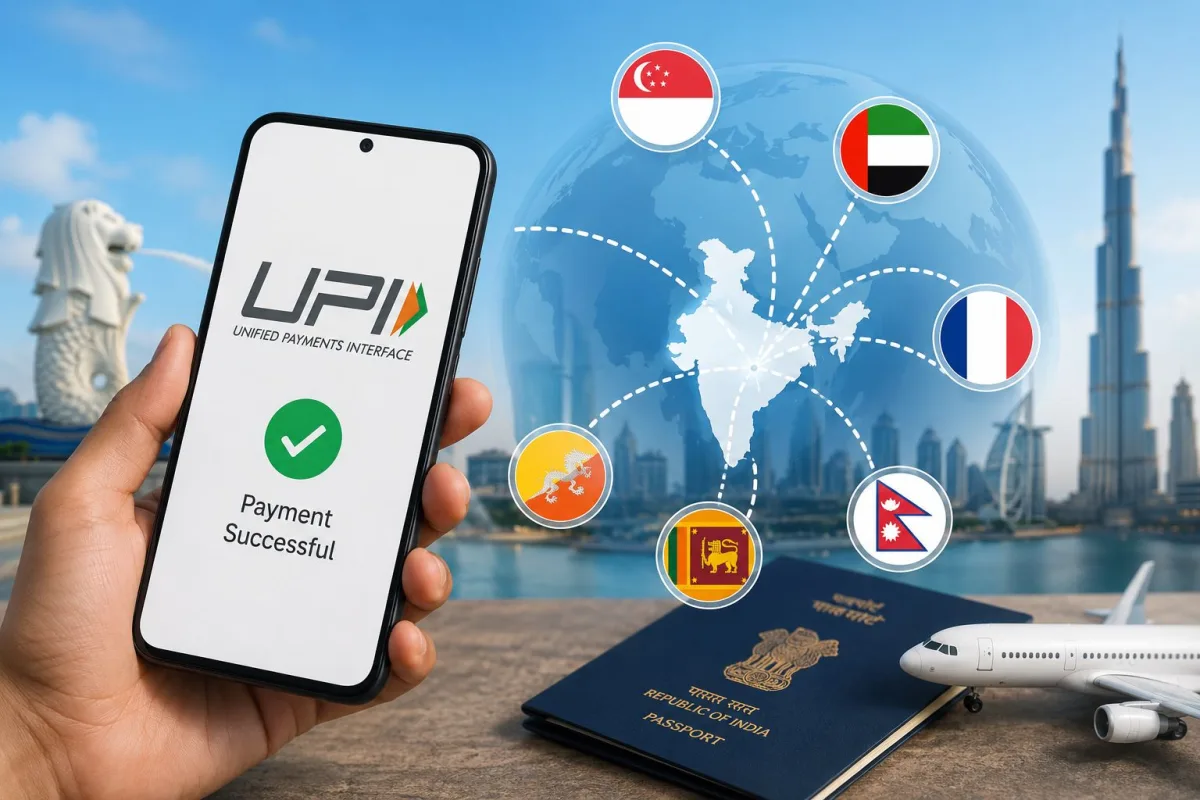
Here are the major active countries and new additions as of mid-2026:
- Qatar: The newest entrant on the list. Following recent agreements, Indian travelers can now scan and pay at major airports, retail stores, and tourist spots in Doha. This is a huge relief for transit passengers at Hamad International Airport.
- Malaysia: NPCI recently partnered with PayNet. You can now scan DuitNow QR codes across Malaysia using your Indian banking apps. This integration covers most local merchants, from hawker centers in Penang to malls in Kuala Lumpur.
- Israel: A fresh agreement will enable payments across Israel very soon. This targets both business travelers and the growing number of Indian tourists visiting the region.
- Sri Lanka and Mauritius: Rollouts have expanded significantly this year to boost cross-border retail payments. You can use your app for hotel bookings, local transport, and dining.
- UAE: A favorite destination for Indians. You can pay at thousands of merchant locations, especially in Dubai and Abu Dhabi. It works smoothly at the Dubai Mall and across various local supermarkets.
- Singapore: The PayNow linkage is one of the oldest and most reliable cross-border setups. It handles both merchant payments and peer-to-peer remittances.
- France: The European expansion started here. You can literally book tickets to the Eiffel Tower using your phone. The network is slowly expanding to regular Parisian retail outlets.
- Nepal and Bhutan: Fully functional for retail payments and money transfers, reflecting the deep economic ties between these neighboring countries.
How exactly do you pay with your phone abroad?
You might be wondering if you need a separate app or a special bank account for this. You do not. You use the exact same Google Pay, PhonePe, or Paytm app you use back home.
The mechanics are straightforward, but you need to activate the feature first. When you travel, you will not see standard Indian QR codes pasted on shop counters. Instead, you will scan the local country's official QR code system. In Singapore, it is the PayNow QR. In Malaysia, it is the DuitNow QR.
When you scan that foreign code with your Indian app, the software detects the currency automatically. It shows you the bill amount in the local currency, applies the live foreign exchange rate, and shows you the exact amount that will be deducted from your Indian bank account in Indian Rupees (INR). You enter your regular 4-digit or 6-digit PIN, and the payment goes through instantly.
Do keep an eye on the exchange rate markup. While it is generally cheaper than a standard credit card forex markup of 3.5 percent, your bank might still charge a nominal convenience fee for the currency conversion. Check with your specific bank before you rely entirely on this method for large purchases.
Steps to activate international payments
Before you board your flight, you must turn on international usage. Your bank blocks this by default for security reasons.
- Open your preferred payment app on your smartphone.
- Go to your profile or bank account settings menu.
- Look for a specific setting called "International UPI" or "UPI International".
- Select the specific bank account you want to use for foreign transactions.
- Toggle the activation switch and enter your PIN to confirm the change.
The feature usually stays active for a set period, like 30 to 90 days. After your trip, it turns off automatically, protecting you from unauthorized international requests.
NRIs can finally use international mobile numbers
For years, Non-Resident Indians complained about a major friction point. They could not use Indian payment apps unless they kept an active Indian SIM card. Telecom companies made this expensive and annoying, forcing people to buy international roaming packs just to receive bank OTPs.
That restriction is now officially gone. Apps like Paytm have updated their systems to allow NRIs to link their international mobile numbers to their NRE or NRO bank accounts. Currently, the system supports mobile numbers from over ten countries, including the US, UK, Canada, Australia, Singapore, and the UAE.
You register with your foreign number. The app verifies your linked non-resident bank account through the standard SMS verification process, and you get full access to the payment network.
This is genuinely useful for NRIs who visit family in India once or twice a year. Previously, they had to rely on cash, borrow a relative's phone, or deal with cards that local merchants refused to accept. Now, they can step out of the airport and pay for a local cab independently.
The UPI One World wallet for foreign visitors
India is hosting the India AI Impact Summit 2026 right now, bringing in delegates from over 40 countries. Foreign visitors usually face the exact opposite problem when they land in Delhi or Bengaluru. Every auto-rickshaw and street vendor asks for a QR scan, but foreigners cannot download Indian banking apps because they do not have an Indian bank account.
The solution is the UPI One World wallet. This is a prepaid wallet designed specifically for inbound travelers.
Foreign nationals can get this wallet activated at international airports, designated hotels, or authorized money exchange counters. The process requires a quick passport and visa verification. They hand over foreign currency or swipe their international credit card, and that money is loaded into the digital wallet in INR.
Once funded, they can scan any code across the country just like a local resident. The Reserve Bank of India has placed certain transaction limits on these wallets to prevent money laundering, but the limits are more than enough for daily food, travel, and shopping expenses.
When it is time to fly back home, the process is clean. Any unspent balance in the wallet is refunded back to their original payment method or given back in foreign currency. It completely eliminates the need to carry change or argue over cash fares with taxi drivers. For more details on protecting yourself from local travel scams as a tourist, check our scam prevention guides.
Beyond scanning: payments for app monetization
The network is also expanding its footprint in digital infrastructure and software development. Recently, Razorpay partnered with Replit, the popular online coding platform. This integration enables developers in India to monetize their apps and accept payments directly through the local network.
It lowers the barrier to entry for young developers. You no longer need complex international merchant accounts or high-fee credit card processors to start charging for a software tool you built. You can just plug in the payment gateway and start accepting subscriptions or one-time fees from users in INR. If you are building tools right now, you might also want to look at our developer tools section for more resources.
What happens if an international transaction fails?
Using a digital payment system thousands of miles away from your home bank can cause anxiety, especially if a transaction fails. Because international payments involve multiple parties, including your Indian bank, the NPCI network, the foreign clearing house, and the foreign merchant's bank, occasional timeouts happen.
If a scan fails or your money is deducted but the merchant does not receive it, the standard refund protocols apply. Your app will usually show the status as pending. Most cross-border network tie-ups have a service level agreement that forces auto-reversals within 24 to 48 hours for failed pings.
However, I recommend keeping a backup credit card or a small amount of local cash on hand. Do not rely completely on your phone for critical payments like hotel check-outs or flight changes, just in case your home bank schedules a server maintenance block during your travel dates. Always cross-check the official NPCI handles or your bank's customer service channels if an amount is stuck for more than three days.
Why this shift matters for regular users
The physical wallet is losing its utility very quickly. The combination of NRE account integration, prepaid wallets for tourists, and direct cross-border QR scanning creates a closed loop where cash is just not necessary anymore.
The global transaction volumes crossing the 1 million mark in FY26 shows that people are actually using these features, not just reading about them in press releases. It builds confidence in the entire system.
If you are planning a trip to Southeast Asia or the Middle East this year, activate the international feature on your app. It saves you the hassle of finding a trusted currency exchange booth on your first day in a new country. You can pay for your airport cab the minute you land. Read more about managing digital payment security in our detailed explainers.