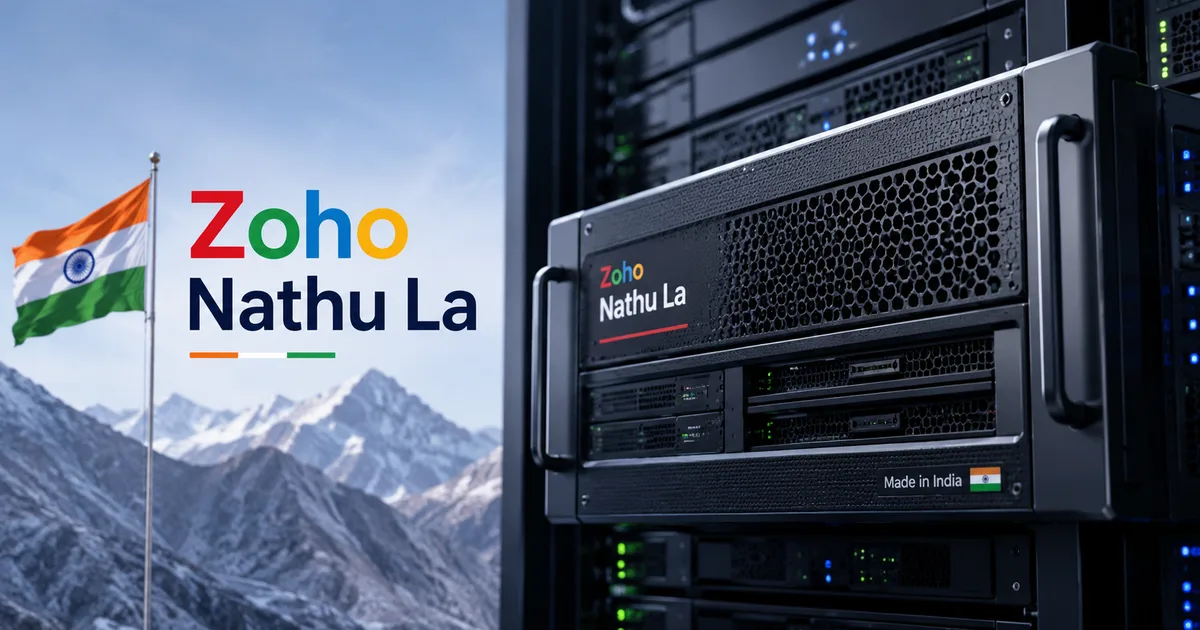
You probably know Zoho for its office apps, but the company just made a massive move into computer hardware. They recently announced the Zoho Nathu La server platform, which is a computer designed in India to run large data centers. If you run a business or use digital services in India, this affects you more than you think. Most servers running Indian websites are imported from multinational giants. Now, we have an option designed right here, and it aims to change how much companies pay to host their apps.
This single corporate announcement is a big deal. Honestly, if you ask me, it could completely change how much it costs to run an online business in India.
Why an indigenous server platform matters for India
When you open a banking app to transfer money via UPI, or check your documents on DigiLocker, your phone talks to a server. These servers are just high-power computers. They're stacked in giant warehouses called data centers. Almost every server in India is designed and sold by foreign brands. We just import them. So, Indian companies pay crazy high prices in foreign currency, mostly US dollars, to buy and maintain them. It means we rely entirely on global supply chains to keep our digital systems running.
Designing the hardware locally changes the whole game. Zoho designed the server architecture from the ground up in Nagpur instead of just assembling imported parts. They did it to optimize how hardware and software talk to each other (which makes sense, actually). That reduces costs and energy use. And it's a huge deal when you operate at Zoho's scale.
You might wonder why we care about where a server is designed. Think about food or energy security. Digital security is no different. In my experience, if a geopolitical crisis hits and disrupts hardware shipments, local tech companies will struggle to expand. (which is a scary thought, actually). Having a domestic design means Indian companies can keep building. They won't have to wait for foreign approvals or shipping containers. It's about self-reliance, plain and simple.
How Nathu La tackles rising AI inference costs
AI's everywhere now, but running it is crazy expensive. Every time you ask an AI tool to write an email or analyze a spreadsheet, the server has to run complex calculations. This process is called AI inference. And it needs a ton of power. As Indian businesses adopt AI, their data center bills are shooting up fast. I think many startups spend a huge chunk of their funding just to keep their AI models running.
Nathu La's built specifically to handle this. The server platform uses Intel Xeon 6 processors, which are optimized for high-performance tasks. By designing the motherboard and server chassis in-house, Zoho got power consumption down by twelve to eighteen percent compared to standard servers. That saves crores of rupees when you run thousands of machines day and night.
But the savings don't stop at the electricity meter. Zoho claims that the platform reduces the total cost of ownership by twenty to thirty percent. That's a massive margin in the tech world. If a startup spends ten lakh rupees monthly on server infrastructure, saving thirty percent means keeping three lakh rupees in the bank every month. Instead of sending that cash to foreign cloud providers, they can hire more developers or improve their products.
According to Zoho's official announcement, the Nathu La platform has the same performance but uses twelve to eighteen percent less power and cuts the total cost of ownership by twenty to thirty percent.
According to Zoho's official announcement, the Nathu La platform has some clear benefits over standard server setups:
- Power use drops by twelve to eighteen percent.
- The total cost of ownership is twenty to thirty percent lower.
- They manage the hardware design and board layout fully within India.
Honestly, this is a useful step. Hardware costs have been rising unchecked for years. And small businesses just had to accept whatever pricing major cloud providers threw at them. Now, there's a clear alternative. It shows that local engineering can compete with global standards on both cost and efficiency.
Understanding the engineering behind the server
Designing a server is hard. It's about more than just picking a chip and putting it on a board. You've got to manage heat, power, data flow, and wiring.
Solving the thermal challenge
The engineers at the Nagpur facility spent months testing layout after layout (which sounds exhausting, honestly). They wanted to reduce heat, which is a major issue in Indian data centers where temperatures get super high. Cooling a Nagpur data center in the summer is incredibly expensive. But by cutting the server's heat output, they cut down the energy needed for air conditioning.
Optimizing the board layout
Data speed is another big thing. The motherboard design makes the path between the processor and storage drives much shorter. This reduces latency. That's the tiny delay you feel when you load a page or search for a file. In everyday use, you might not notice a millisecond difference. But when millions of users access a database at the same time, those milliseconds add up fast. And the system gets sluggish. Nathu La makes sure data moves as fast as possible within the rack.
Thing is, this is just the beginning. Zoho built this hardware for themselves, but it shows others what's possible. I think other Indian tech giants might realize they don't need to rely on pre-built foreign servers. They can design their own hardware to suit their software. That's a level of customization you only saw in the US and China before.
If you want to read more about how Indian tech policy shapes these hardware decisions, check out our latest tech news updates.
What this changes for everyday Indian users
At first glance, server hardware seems far removed from your daily life. You don't buy servers. You buy phones and laptops. But the cost of running those servers is built into every single app you use. If they save thirty percent, they get more breathing room. That means cheaper software subscriptions, better free tiers, more features, and no random price hikes.
It also affects how your data is handled. India's DPDP Act has strict rules about where citizen data goes. In my experience, local servers give companies total control. They don't have to worry about foreign manufacturers putting hidden backdoors in the firmware. It's a massive win for data privacy.
We've seen similar shifts in other areas, like UPI. Before UPI, digital payments in India relied on foreign card networks like Visa and Mastercard. Today, UPI handles billions of transactions monthly, and it's fully local. That's the kind of shift we might see in hardware over the next ten years (which is exciting to think about, actually). It starts with one company building a server, and could end with a whole ecosystem of local hardware builders.
For more guides on digital safety and policy, check out our latest tech guides where we simplify complex rules.
The road ahead for indigenous hardware
Building a server is a big step, but the real test is scaling it. Zoho's their own biggest customer. So they can deploy Nathu La in their data centers right away. It gives them real-world data on performance. And their Nagpur engineers can fix bugs on the fly.
But there are still challenges. India doesn't manufacture high-end microprocessors yet. That means the Intel Xeon 6 chips used in Nathu La are still imported. So, even if the design is Indian, we still depend on global semiconductor companies for the actual silicon. (I'm not sure exactly why we haven't built a local fab yet, but the numbers here are a bit fuzzy). Building a domestic chip foundry is a massive project. It'll take years and billions of dollars. But designing the system board is a necessary first step. You can't run a chip without a motherboard, anyway.
Honestly, I'm excited to see how this plays out. It's easy to be skeptical about hardware claims, but Zoho has a track record of building things that actually work. They did it with software. And now they're doing it with hardware. It's a long journey, but every step away from foreign dependence makes our digital infrastructure more secure.
To understand more about tech developments and how they impact you, check out our detailed explainers section.