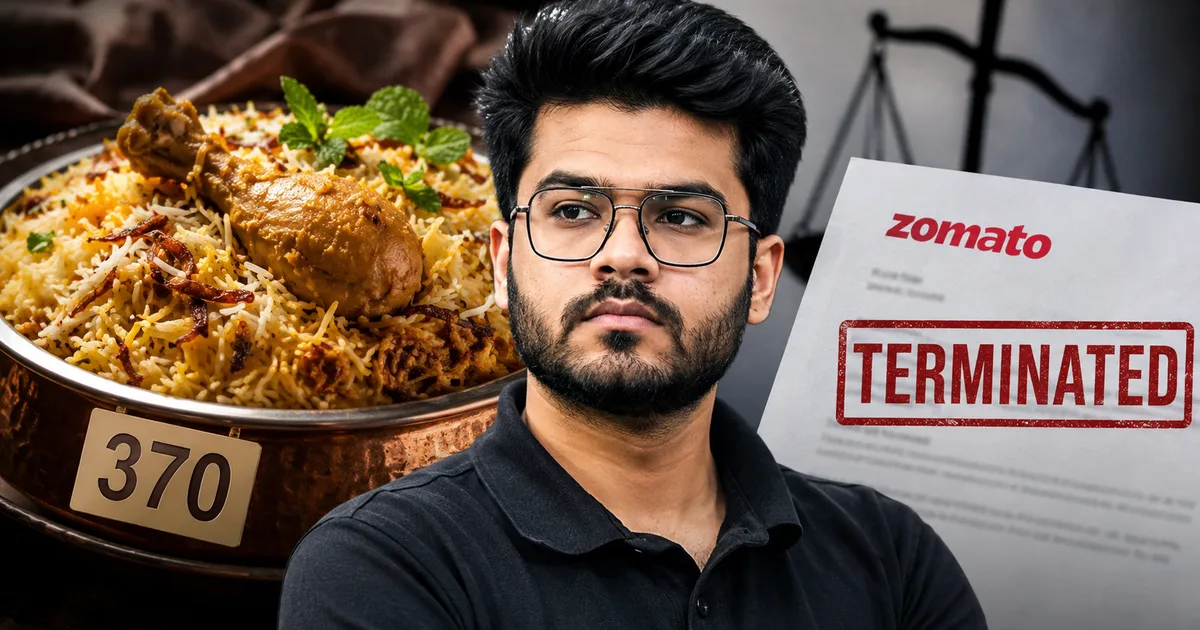
If you spent any time on Instagram or Twitter recently, you probably saw clips of the 370 biryani controversy. It started with a brief exchange during a comedy show and ended with a Gurugram developer losing his job. Honestly, it's one of the messiest online dramas we've seen in a while. It has also set off a massive debate about dating consent and how your personal behavior impacts your career.
Look, we all know social media makes anyone famous for fifteen minutes. But this time, the fame turned sour fast. Really fast.
The whole thing started at a live comedy show. Comedian Pranit More was doing crowd work. That's when a comic talks to the audience for laughs. He started chatting with a 22-year-old web developer named Himanshu Jangra who was sitting in the front row. Himanshu shared a story about a recent date. He took a woman out. And he spent Rs 370 on a plate of chicken biryani for her.
But he didn't stop there. If you ask me, that's where he made his first big mistake.
The stand-up comedy video that sparked the 370 biryani controversy
Himanshu explained that after the meal, the woman asked him to drop her home. That's when things went completely off the rails. Himanshu told the comedian, and the entire audience, that since he paid Rs 370 for her food, he expected physical favors in return (and yes, he actually said this). It was bad. He used a crude phrase to describe the transaction. Basically, he wanted a return on his investment.
Crowd-work is the standard format for many Indian comedians on YouTube now. You've probably seen videos of comics talking to people in the front row. It feels spontaneous. But it only works if the audience is willing to share their personal stories.
In this case, the comedian and the audience laughed. Then the clip was uploaded online. But when the video hit Instagram and Twitter, the internet didn't find it funny at all. Within hours, it went viral. Thousands of people called Himanshu out for his entitled, misogynistic attitude. Honestly, I think they were right to do so. They argued that buying someone a meal, whether it costs Rs 370 or Rs 3,700, doesn't buy you consent or any rights over their body.
Things escalated when prominent internet personalities noticed the video. Influencer Kusha Kapila blasted the comedian for encouraging this behavior on stage. It was a mess. She pointed out that laughing at these remarks makes the environment unsafe for women. Pranit More later deleted the video and posted an apology. He said that the audience member's views don't represent his own. But it was too late. The damage was done.
Here's the deal. The internet is really good at playing detective. It didn't take long for users to find Himanshu's professional profiles. They found out he worked at Starvik Design. That's a creative agency based in Gurugram.
Suddenly, the company's social media pages were flooded with negative comments. People were furious. They demanded that the agency fire their employee immediately. Google reviews for the company got hit with one-star ratings. It was a classic corporate PR nightmare. You can read more about how viral moments impact digital reputations in our trending tech news section.
Why Gurugram firm Starvik Design fired Himanshu Jangra
As the outrage grew, the founder of the design firm realized he had to act. Vivek Vishwakarma posted a video on Instagram to address the situation. He announced that they had fired Himanshu. Honestly, if you ask me, he had no other option. He explained that while Himanshu's work inside the office was fine, the company couldn't associate itself with someone who held such views.
When a company's name gets dragged into a social media storm, the response is usually swift. For a small agency like Starvik Design, reputation is everything. They rely on client trust to get design projects. If potential clients search for the company and find hundreds of comments calling them out for employing someone with misogynistic views, they'll simply take their business elsewhere. That's why the founder had to act quickly. He had to protect his brand.
The founder pointed out that the company has female employees and clients. Keeping Himanshu on the team would make the workplace feel unsafe. It would also hurt their reputation. It was a swift decision. But it raised some serious questions. Tough ones, too.
Can a company really fire you for something you said at a comedy show? Well, yes. Personally, I'm not sure exactly why anyone would think they can't.
In India, the answer is usually yes. Most private company contracts have a clause about code of conduct. If you do something in public that brings bad publicity to your employer, they can fire you. They don't need a court order. They just need to show that your actions harmed the business. You can read more about employee rights and digital guidelines in our digital guide.
"We cannot support this kind of mindset. When we saw the video, we decided immediately that we had to part ways with him," stated Vivek Vishwakarma, the founder of the firm.
The legal reality of getting fired over social media conduct
Let's look at the legal reality for private employees in India. It's tough. Most IT and design firms require employees to sign detailed employment contracts when they join. These contracts contain clauses about public behavior and company reputation.
If you get involved in a public controversy that makes the company look bad, the employer has the right to end your contract immediately. Under Indian labor laws, private companies have wide discretion in terminating employees for misconduct. This is especially true during a probation period. If a company receives hundreds of angry messages and one-star reviews because of you, they've got a solid business case for letting you go. Personally, I think that makes total sense.
Also, background checks are becoming much more thorough in India. Today, companies don't just verify your college degree or check your Aadhaar card via DigiLocker. They hire agencies to scan your social media profiles. And if they find posts that are offensive or illegal, you won't get the job. It's that simple. If you want to read about online safety and how to protect yourself, check our safety guides.
What this means for everyday Indian internet users
This whole mess is a wake-up call for anyone who uses the internet. It really is. We often forget that the line between our private lives and our professional lives has completely vanished (which is pretty scary, actually).
Here are a few practical lessons you should take away from this controversy:
- Your digital footprint is permanent. Once a video or screenshot is online, you can't fully delete it. Even if you deactivate your accounts like Himanshu did, others will keep sharing the copies.
- Employers are watching. Companies care about their brand value. If your public behavior threatens their business, they'll protect themselves by letting you go.
- Consent isn't transactional. Relationships and dates aren't business deals. You can't buy a meal for someone and expect physical intimacy as a return on investment.
- Anonymity is a myth. It takes the internet very little time to connect your face to your LinkedIn profile and your employer's address.
If you ever face harassment or see illegal content online, you can report it to the official Indian cyber police at cybercrime.gov.in or call the national helpline at 1930. Do it. Honestly, staying safe online is all about knowing where to get help.
Honestly, this whole situation is a harsh reminder of how fast things can go wrong. A silly comment to get a laugh at a comedy show ended up costing a young man his career. And his reputation. It's a lesson for all of us to be mindful of what we say, both online and offline.