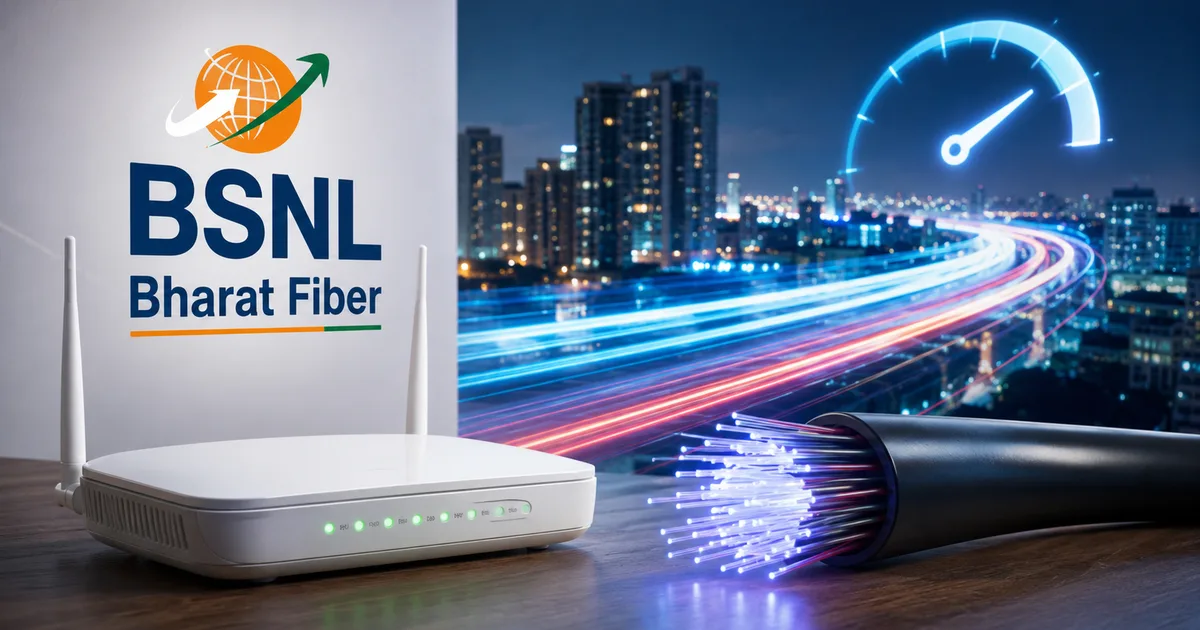
So you've probably heard about the new BSNL Bharat Fiber 2026 upgrades rolling out this month. Look, I get it. When someone says BSNL, your first thought is probably about dropped calls, slow internet from ten years ago, or a grumpy guy at the local exchange telling you the server is down. But things are actually changing, and they're changing fast. They have to. Reliance Jio and Airtel have been eating their lunch in the broadband space for years. Now the state-owned telecom is finally hitting back with some aggressive pricing and actual, usable speeds.
I've been tracking Indian telecom for a long time. We went from paying hundreds of rupees for 1GB of 3G data to practically unlimited everything. But the wired broadband market is pretty stagnant lately. Prices are creeping up. The entry-level plans from private players are getting more expensive. And they constantly push you to upgrade to faster speeds you don't really need.
That's why these new BSNL upgrades matter. They act as a price check on the entire industry (annoying for them, I know). Even if you never switch to BSNL, their presence forces Airtel and Jio to offer better deals to keep you.
What the Rs 399 Spark fiber plan means for you
The biggest addition to their lineup is obvious. BSNL just dropped the Rs 399 Spark Fiber plan. Honestly, it's pretty competitive. You get 50Mbps speeds. You also get a massive 3,300GB limit.
For a normal family streaming Netflix in 4K, running a few phones, and doing regular WhatsApp video calls, 50Mbps is completely fine. I know everyone wants gigabit speeds these days. But you don't. The private companies spend millions on ads telling you that you need 300Mbps for smooth gaming. Most people can't even tell the difference between 50Mbps and 100Mbps in daily use, unless they download massive 100GB game files every day.
And the 3,300GB cap? You'd have to try really, really hard to exhaust that in a month. We are talking about streaming high-definition video 24/7. Even if you manage to cross it, the speed just drops down to a slower tier rather than cutting off completely. It's plenty.
This Rs 399 price point hits a sweet spot for budget-conscious households and students. It's also great for small shops that need reliable Wi-Fi for UPI payments. They don't want to spend a thousand rupees a month.
Free usage and special entry-level offers
They are also trying to hook new customers with some entry-level sweeteners. If you're looking at their basic plans, BSNL is throwing in discounts and a free one-month usage offer. This is a classic telecom move to grab market share. But it works in your favor.
If you're tired of your current provider hiking prices every few months, taking BSNL up on a free trial month is a low-risk way to test their service. You don't have to disconnect your primary line right away. Just run them side-by-side for a month. See if the BSNL connection drops during rainstorms or power cuts.
Just remember to check the installation charges. Sometimes the free month comes with a sketchy setup fee that wipes out your savings. Ask the local BSNL exchange or the franchise operator directly before you sign anything. They often waive the fee if you commit to a six-month or yearly plan. You just have to negotiate.
BharatNet Phase 3 and rural connectivity
This isn't just about city users getting cheaper Netflix. A lot of these BSNL Bharat Fiber 2026 upgrades tie directly into BharatNet Phase 3. That rollout launched recently. And BSNL is managing the entire network.
What does this mean if you live outside a major metro? Basically, more reliable connections. They are pushing fiber deeper into districts where private players refuse to go because the profit margins are too thin. If you run a small business in a tier-3 town, or need stable internet for your kid's online classes, this infrastructure push is great.
Reports show that less than half of BharatNet connections are active despite the continued rollout. This is a known issue. Laying the cable is only half the battle. Maintaining it and getting people to sign up is much harder.
The real test for BSNL isn't launching new plans, it's maintaining the physical fiber lines and answering the phone when your connection drops on a Sunday afternoon.
I really hope they fix the maintenance issues with Phase 3. A fast fiber line in a village can completely transform the local economy.
Sharing towers and spectrum with Vi
Here is an interesting development happening behind the scenes. BSNL and Vodafone Idea are apparently in talks to share towers and fiber infrastructure.
In my experience, this is a smart survival strategy for both companies. Vi is struggling with massive debt and bleeding subscribers every month. BSNL has a massive network footprint in rural areas, but lacks the modern tech stack and 4G/5G density in cities. If they pool their resources, they might actually create a third option against the Jio-Airtel duopoly.
Will it work? I'm not sure exactly why, but telecom partnerships in India have a messy history. So it's worth watching. If Vi users get to roam on BSNL networks in remote areas, and BSNL users get access to Vi's city towers, everyone wins.
Wi-Fi calling and modern features
Another big piece of the puzzle is Wi-Fi calling. BSNL is finally rolling out nationwide Wi-Fi calling services at no extra cost.
If you have a weak cellular signal inside your house, this is a lifesaver. Your phone routes regular voice calls over your broadband connection. Airtel and Jio have had this for years. It's good to see BSNL catching up. This means you can make voice calls even if you live in a concrete apartment block where the cell signal drops to one bar.
They are also adding some OTT benefits. They introduced a 365-day plan with unlimited calling and OTT subscriptions. Indians love paying once a year and forgetting about it. Bundling streaming apps with an annual recharge is exactly what consumers want right now.
Exploring enterprise partnerships
Home users aren't the only ones getting attention. BSNL is exploring partnerships for backhaul and enterprise business, even talking with companies like Starlink.
Enterprise internet is where the real money is. Supplying dedicated leased lines to banks, IT parks, and government offices brings in steady revenue. If BSNL can get these enterprise contracts, they can use the profits to subsidize the cheaper home broadband plans for regular consumers.
They are even partnering with Viasat to modernize the Indian Navy's satellite communications. This shows they still have the technical capability to handle complex networks when they put their minds to it.
How BSNL compares to JioFiber and Airtel Xstream
We need a quick reality check on the competition. BSNL recently topped some broadband ranking tests alongside Airtel. This surprised a lot of people. They are clearly delivering the promised speeds on their fiber network.
But raw speed isn't everything. We should look at the actual experience of using these services day to day.
- Customer service is where BSNL traditionally falls flat. Private players have slick apps where you can track complaints, pay bills, and reboot your router remotely. BSNL often still requires calling a local lineman, visiting an exchange, or dealing with a clunky web portal.
- The OTT benefits situation is also completely different. Jio and Airtel aggressively bundle Amazon Prime, Disney+ Hotstar, Netflix, and a dozen other regional apps. BSNL is starting to offer some OTT packs, but their app ecosystem isn't nearly as polished or comprehensive.
- Downtime and repair speeds are another major factor. Private telcos usually fix fiber cuts within hours using automated ticketing systems. BSNL's repair times can vary wildly depending on your local franchise operator. Sometimes it's fixed in an hour, and sometimes you wait three days.
If you need absolute reliability for remote work or day trading, I'd still suggest keeping a cheap 5G data pack on your phone as a backup hotspot. This applies regardless of which fiber provider you use.
The franchise model explained
This is the most important thing you need to know about BSNL fiber. In most areas, BSNL doesn't run the fiber straight to your house. They use a franchise model. They partner with local cable TV operators or small ISPs.
BSNL provides the core bandwidth and the backend network. The local operator handles the physical wiring, the router installation, and the day-to-day customer support.
This means your experience depends entirely on that local operator. If your local franchise guy is responsive, answers his phone, and fixes cuts quickly, your BSNL connection is fantastic. You get rock-solid speeds and great uptime. But if your local operator is a mess, you'll have a miserable time. And complaining to the central BSNL helpline won't fix it.
Before you sign up for any of these plans, go talk to your neighbours. Ask them who their local BSNL fiber operator is. Find out if they are happy with the service. Local word-of-mouth is the only review that matters here.
The bottom line for Indian broadband users
You now have options. The BSNL Bharat Fiber 2026 upgrades bring some much-needed competition to a market that was starting to look like a two-horse race. The Rs 399 Spark plan is cheap enough to disrupt the entry-level segment. And the broader BharatNet expansion means more people in rural areas get access to decent speeds.
If you ask me, BSNL is finally making the right moves. The technology upgrades are solid. The pricing strategy is aggressive. Now they just need to execute on the customer service side.
We need a strong public telecom company in India. It keeps the private players honest. If you are unhappy with your current broadband bill, take a serious look at the new BSNL plans. Just do your homework on the local operator first.