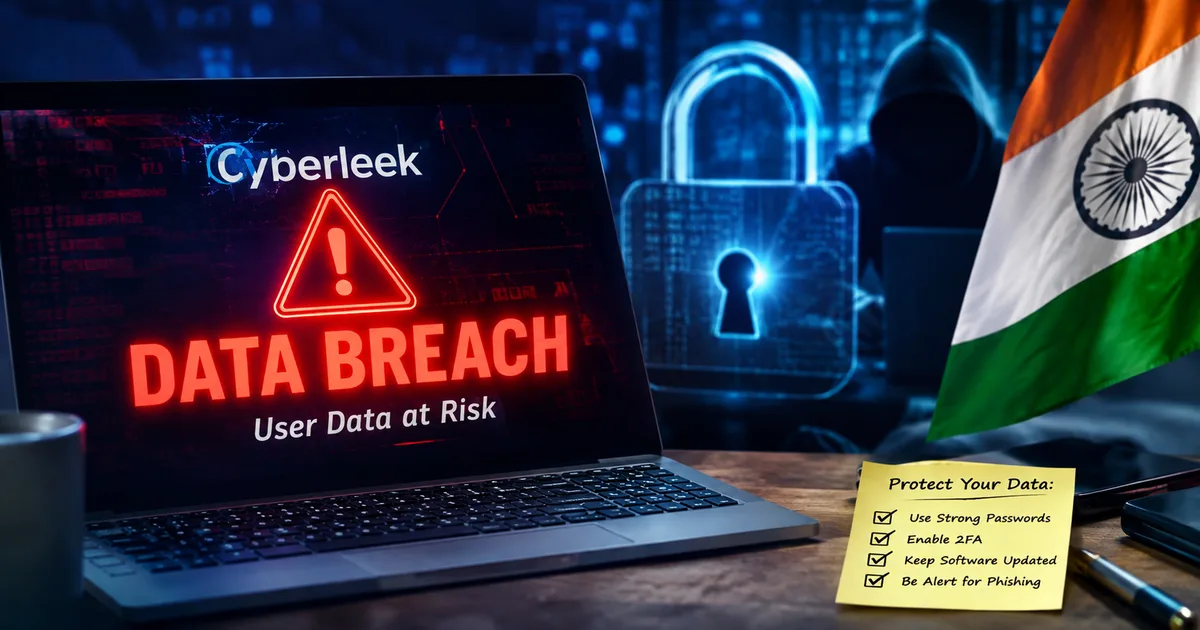
The Cyberleek data breach is one of the more alarming cybersecurity incidents to surface in India in 2026, and if your data was caught in it, you need to act fast. India's average cost of a data breach hit a record ₹25.5 crore in 2026, up 15.9% from ₹22 crore the previous year, according to IBM's Cost of a Data Breach report. That number sounds abstract until it's your Aadhaar-linked phone number, your UPI handle, your banking credentials, or your email address floating around on a dark web forum.
So let's break down what Cyberleek actually is and how it works. No jargon or panic-mongering. Just practical information.
What is Cyberleek and what happened?
Cyberleek is basically a label floating around Indian cybersecurity circles. It describes a massive wave of data leak incidents in 2026. Huge batches of Indian user data were dumped on hacker forums and dark web marketplaces. We're talking email addresses, phone numbers, and partial financial credentials. Sometimes even Aadhaar-linked details.
Thing is, the breach pattern isn't a single attack on one company. Think of it more like a compound incident. Multiple Indian businesses and platforms had their user databases compromised. Then all that data got aggregated and sold under the umbrella label "Cyberleek." Researchers at platforms like IndianBreaches and Trinetra Cyber Defense tracked these dumps throughout 2025 and into 2026. I think the scale is honestly a bit terrifying.
AI-driven attacks are now a major factor here. IBM's report specifically flagged AI-powered attack tools as a reason breach costs are climbing so fast. Attackers aren't just using old-school phishing anymore. They're using automated tools that probe thousands of systems at once to craft highly personalized scam messages. If you've received a sketchy WhatsApp message recently that seems to know your name or your bank, that's probably why. (Which makes sense, actually, given how cheap AI tools are now).
Which kinds of Indian data were exposed?
Based on breach intelligence reports from IndianBreaches and Trinetra Cyber Defense's India Breach Timeline 2025-2026, the data most commonly found in Indian breach dumps includes the following. (If you ask me, the Aadhaar numbers being exposed is the scariest part).
- Full name and mobile number (the most common combination)
- Email addresses and linked account usernames
- Partial debit/credit card details (usually last four digits and expiry)
- Physical addresses from e-commerce delivery databases
- Aadhaar numbers (in more serious breaches)
- UPI IDs and linked VPA (Virtual Payment Addresses)
- Login credentials from apps — sometimes in plaintext if the company wasn't encrypting passwords properly
But the Tata Electronics breach that surfaced in 2026 is worth a separate mention. That incident exposed confidential Apple and Tesla supply chain documents along with employee data. That's a very different threat profile. It is more corporate espionage than consumer harm, but it shows just how high up the chain these attacks are going. I'm not sure exactly why they got hit so hard, but the implications are massive.
Why is India being targeted so heavily?
Honestly? India is a massive, fast-digitizing economy with a ton of new internet users who haven't built defensive habits yet. And Indian data protection law was quite weak until recently.
The Digital Personal Data Protection Act (DPDPA) passed in 2023, but implementation is really slow. As of mid-2026, the Data Protection Board is still not fully operational. That regulatory gap means companies handling your data face very little pressure to invest in security. CERT-In (India's Computer Emergency Response Team) issues advisories. But enforcement against private companies is totally inconsistent.
India now has one of the highest rates of digital payment adoption globally. UPI processed over 18 billion transactions a month in 2026! All that financial activity creates a very attractive target. And unlike credit card fraud in the US, UPI fraud is often much harder to reverse once the money moves.
Warning signs that your data may have been compromised
You probably won't get a notification. Indian companies have a pretty bad track record of disclosing breaches to affected users. So watch for these signals yourself.
- Unexpected OTPs arriving on your phone that you didn't request
- Calls from "bank representatives" who already know your account details
- WhatsApp or SMS messages addressing you by name from unknown numbers
- Login alerts from services you use but didn't attempt to log into
- Small unauthorized transactions (₹1 or ₹2 test charges) on your debit or credit card
- Your email address appearing on breach-checking tools like Have I Been Pwned (haveibeenpwned.com)
If you see two or more of these signs, take it seriously.
How to protect yourself — specifically, as an Indian user
Lock down your UPI and banking
Go to your bank app right now and set a daily UPI transaction limit. Most people leave this at the default, which is often ₹1 lakh per day. Drop it to what you actually need. Maybe ₹10,000 or ₹20,000 for daily use. You can always raise it temporarily for big payments. And enable transaction SMS alerts if they aren't on already. These are free on most accounts.
Use DigiLocker carefully
DigiLocker stores your Aadhaar, driving licence, and PAN card digitally. It is genuinely useful. It's also reasonably secure. But your DigiLocker is only as secure as the phone number linked to it. If a scammer SIM-swaps your number, they can access DigiLocker. Basically, they convince your carrier to transfer your number to their SIM. So keep your telecom account secure. Add a PIN to it by visiting your Airtel or Jio account online. And please don't share your Aadhaar number carelessly. Use the masked Aadhaar option on the UIDAI website for services that don't strictly need the full number.
Enable two-factor authentication everywhere
And I mean everywhere. Email, social media, your Google account, and your banking apps. Use an authenticator app like Google Authenticator or Microsoft Authenticator instead of SMS-based OTPs where possible. SMS OTPs are better than nothing. But they are vulnerable to SIM-swap attacks. The authenticator app generates codes locally on your device. So even if someone hijacks your number, they can't get those codes.
Change passwords that have been breached
Go to haveibeenpwned.com and check your email address. If it shows up in any breaches, change the password for that service immediately. And if you are reusing the same password across multiple services, change all of them. Use a password manager. Bitwarden is free and works well. 1Password has a paid plan that is pretty reasonable. The goal is a unique, long password for every single service. (Annoying, I know, but you have to do it).
Be careful with Aadhaar-linked services
The Sanchar Saathi portal (sancharsaathi.gov.in) lets you check how many SIM cards are registered in your name. You can block the ones you don't recognize. Use it. Fraudsters sometimes activate SIM cards using stolen Aadhaar data. They use them for fraud while the real owner has absolutely no idea.
Where to report if something goes wrong
If you suspect you're a victim of cybercrime related to a data breach, act quickly. This includes things like unauthorized UPI transactions or identity theft.
- Call 1930 (the National Cyber Crime Helpline — available 24/7)
- File a complaint at cybercrime.gov.in
- Report to your bank immediately for any financial fraud (most have a 24-hour helpline)
- For Aadhaar-related misuse, contact UIDAI at 1947
The 1930 helpline can sometimes freeze fraudulent transactions if you call quickly enough. Don't wait. The faster you report, the better your chances are of actually recovering your money.
What should companies be doing? (Spoiler: more than they are)
India's DPDPA requires companies to implement reasonable security safeguards. They also have to notify affected users of breaches. But the word "reasonable" is doing a lot of heavy lifting there. And the Data Protection Board still hasn't been constituted in a way that creates real enforcement pressure. In my experience, regulations only work when companies actually fear the fines.
India's average cost of a data breach climbed to a record ₹25.5 crore in 2026, marking a 15.9% year-on-year increase from ₹22 crore in 2025, according to IBM's Cost of a Data Breach Report.
You'd think that massive number would scare companies into investing in security. And for large enterprises, it often does. But the problem is the mid-size companies. These are the ones handling millions of user records in sectors like edtech and health. Their security budgets are super thin. They treat breach disclosures as a PR problem to manage rather than a legal obligation.
Until the DPDPA gets actual teeth, Indian users are largely on their own when it comes to protecting their data. That is not a comfortable truth. But it is the truth.
The good news is that the steps above are not complicated at all. A few hours of setup can dramatically reduce your exposure. Better passwords, 2FA, UPI limits, and a Sanchar Saathi check will go a long way. Most attackers just go for the easy targets. Make yourself a harder one.