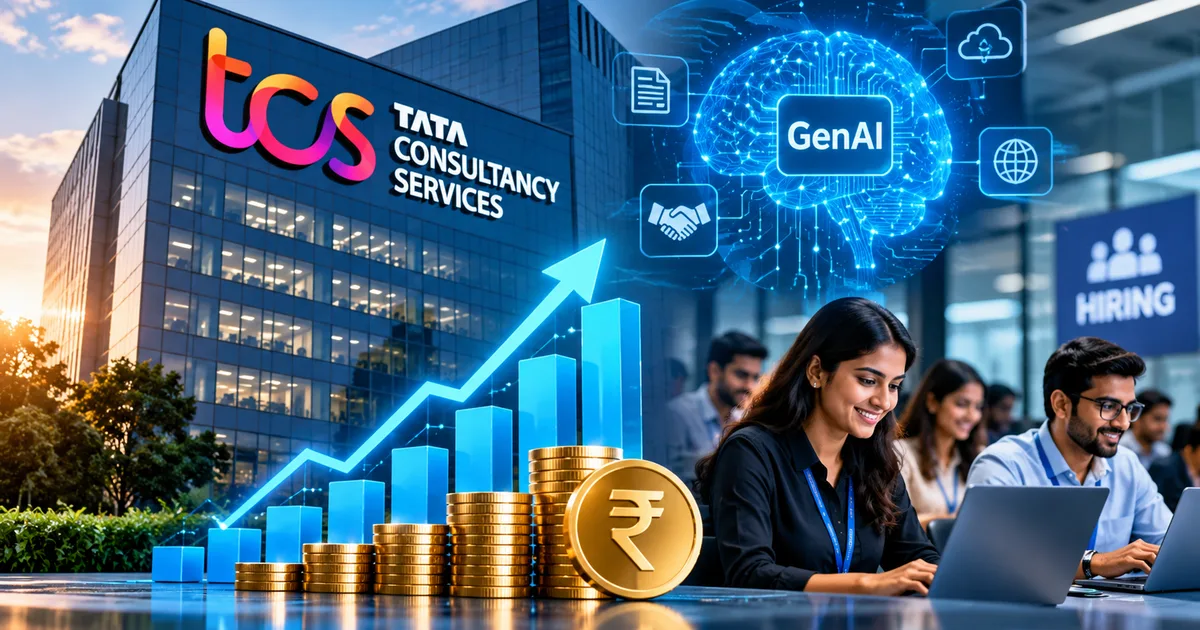
Look, the entire Indian IT sector is holding its breath right now. We're heading into the earnings season, and the TCS Q2 results October 2026 announcement is the one everyone is waiting for. TCS is scheduled to declare its numbers on Thursday, October 8. And honestly, the stakes are pretty high this time around.
If you track the markets or work in the IT sector, you already know things have been bumpy. A mess, honestly.
The TCS stock closed at ₹2,050.60 on September 30. That's a massive drop from its end of 2025 high of ₹3,205.75. A 36 percent drop is no joke for India's largest IT services company. Investors are nervous, and techies waiting for offer letters are anxious. Everyone wants to know if the worst is over.
I've been reading through the analyst reports and talking to some folks in the industry. Most major brokerages think we are looking at a quarter of stabilization rather than explosive growth. But there's a lot more to the story than just headline numbers. We have to look at the dividend payout and the big GenAI deals. Oh, and what this means for hiring in India.
Dividend expectations for TCS investors
Let's start with the thing most retail investors care about right now. Dividends. When the board meets on October 8, they aren't just approving the financial results. They'll consider a proposal to declare a second interim dividend. I actually think this is the main reason many retail folks hold the stock (which makes sense, honestly).
Thing is, TCS has a solid track record of rewarding shareholders even when growth slows down. In the first quarter of FY27, they paid a ₹12 per share interim dividend. That was a slight bump from the ₹11 they paid a year earlier. And for this upcoming second interim dividend, the record date is set for October 14, assuming the board approves it.
If you hold TCS shares in your demat account, keep that October 14 date in mind. You must be on the company's books on that date to get the cash credited to your bank account via NEFT or UPI. The exact amount is still a mystery. But given the pressure on the stock price, I'm guessing management might try to keep investors happy with a decent payout.
And if you want to keep up with more updates on tech stocks and market movements, you should regularly check our Latest Tech News section. We cover these earnings announcements closely.
Revenue and margin predictions from Kotak
So what are the big brokerages expecting from the actual business? Kotak Institutional Equities recently put out a report that paints a cautious picture. They're expecting TCS revenue to grow just 0.5 percent quarter-on-quarter. And year-on-year, they project a 2.8 percent growth.
Those aren't exactly numbers that'll set the stock market on fire. The sequential increase is mostly expected to come from their international business. But the margins are where things get tricky.
Kotak expects the margins are going to stay stable compared to the last quarter. But they project a 100-basis-point drop compared to the same quarter last year. Why? Wage revisions and pricing pressure. Clients abroad are bargaining hard right now. They want more work done for less money, and TCS recently had some acquisitions that eat into the margins.
"That makes the September quarter more of a test of demand stability, deal momentum and margin visibility than a straightforward high-growth quarter."
That quote from the Kotak report basically sums up the entire mood on Dalal Street right now. Nobody expects fireworks. They just want reassurance that the ship is steady. TCS management has stated they want to hit an exit EBIT margin of 25 percent by the end of FY27. It'll be interesting to see if they stick to that guidance on October 8.
The Porsche GenAI deal won't save this quarter
You've probably seen the headlines about the massive deal TCS signed with Porsche. It's a five-year partnership worth €1.25 billion. And on top of that, TCS is acquiring Porsche's consulting arm, MHP, for €320 million.
It sounds amazing on paper. The partnership is focused on artificial intelligence and digital transformation across the operations of the luxury carmaker. MHP will bring some serious automotive and industrial consulting skills into the TCS fold.
But here's the catch. Don't expect this massive deal to pump up the Q2 numbers. The acquisition of MHP is only expected to close in the coming months, and the revenue from the €1.25 billion contract will be spread out over five long years. It's a great win for the future. It proves TCS can still bag mega deals in the AI space. It just won't change the math for the quarter that ended in September.
This is a common trap retail investors fall into. They see a billion-dollar deal announcement and buy the stock, expecting immediate results. The IT services business is a slow burn. Deals take time to close and time to execute. It takes a while for them to reflect in the quarterly earnings.
IT hiring outlook and GenAI projects
Now let's talk about the human side of this. What does all this mean for the millions of Indian IT professionals and college freshers? The hiring situation has been pretty grim for the last eighteen months (annoying, I know). We covered this extensively when we looked at the TCS Q1 2026 Results: GenAI Projects and Hiring Plans for Indian IT Professionals a few months ago.
The sluggish 0.5 percent sequential growth projection tells you everything you need to know about the current hiring mood. When companies aren't growing fast, they don't hire aggressively. They focus on utilization. That means getting more billable hours out of the employees they already have.
But there's a silver lining, and it is GenAI. The Porsche deal is a perfect example. Global clients are very willing to spend money on artificial intelligence projects. They want to cut costs and automate their systems. If you're an IT professional with genuine AI skills, you are in a completely different market compared to a generic Java developer.
TCS, Infosys, and HCLTech are all scrambling to train their workforce in AI. But training takes time. So if a project requires immediate deployment of AI engineers, these companies are forced to hire laterally at a premium. The general hiring outlook is flat. But the niche hiring outlook for GenAI and cybersecurity is actually quite strong.
If you're a fresher waiting for an onboarding date, the Q2 results might give you some clues.
Pay attention to the management commentary on headcount. If the total headcount drops again, you might be waiting a bit longer. But if it stabilizes or goes up slightly, we might finally be seeing a turnaround in fresher onboarding across India.
Comparing TCS with the rest of the industry
You can't look at TCS in a vacuum. They're the bellwether for the entire Indian IT industry. What happens with TCS usually sets the tone for Infosys and Wipro.
For context, look back at how competitors performed recently. The Wipro Q1 2026 Results: Profit, GenAI & Hiring Explained report showed similar struggles with growth but pointed out the exact same push towards artificial intelligence. Everyone is reading from the same playbook right now.
The difference is execution. TCS has historically been better at maintaining its margins and winning massive consolidation deals during tough economic times. When clients in the US or Europe want to reduce their IT vendors from ten companies to just two, they usually pick TCS as one of the survivors. That scale is a massive advantage over smaller players.
The impact of global macro factors on Indian IT
You can't really understand the TCS Q2 results October 2026 without looking at what's happening outside India. The US and European markets bring in the lion's share of revenue for our IT sector. When their economies sneeze, Indian techies catch a cold.
Right now, global clients are incredibly cautious about their discretionary spending. What does that mean? Basically, if a project isn't absolutely necessary for keeping the lights on, or if it doesn't promise immediate cost savings, it gets put on hold. They're happy to sign deals that reduce their operational costs. But they aren't eager to fund experimental tech projects unless it involves GenAI.
We saw this trend clearly earlier this year. Clients are demanding more value for their money. They want to consolidate their vendors. They're telling TCS they'll give them more business in exchange for bulk discounts. This pricing pressure is exactly why margins are shrinking across the board. It's a tough environment to operate in.
Salaries, appraisals, and the reality for employees
Let's get real about what this means for the people actually writing the code. If you work in Indian IT, you've probably noticed that the days of massive 30 percent appraisal hikes and crazy counter-offers are long gone. The pandemic hiring boom is officially a distant memory.
Because revenue growth is hovering around that 0.5 to 2 percent mark, companies are keeping a very tight lid on costs. And in the IT services business, employee wages are the biggest cost. When margins are under pressure, the first thing management does is freeze hiring and moderate wage hikes. The numbers here are a bit fuzzy, but we're seeing single-digit appraisals becoming the norm again.
If you're an experienced professional, the strategy right now shouldn't be about jumping ship for a marginal pay bump. It should be about upskilling. You need to make yourself indispensable. That means moving away from legacy technologies and getting hands-on experience with cloud infrastructure and artificial intelligence.
As I mentioned earlier, the Porsche deal is a huge signal. TCS is moving past cheap coding hours. They are selling high-level digital transformation and consulting. If your skill set aligns with that shift, you'll do fine. If it doesn't, you might find yourself struggling to stay relevant in the coming years.
This whole situation is also pushing a lot of talent towards product-based companies and startups. But even that space has cooled down significantly. It's a buyer's market for tech talent right now in India.
What to watch for on October 8
Since the results will be announced after market hours on Thursday, the real action will happen on Friday morning when the markets open. Keep an eye out for these specific details in the exchange filing.
- The exact amount of the second interim dividend and confirmation of the October 14 record date.
- The total contract value. Kotak expects it to be between $10 billion and $11 billion. Anything lower than $10 billion will spook the market.
- Management commentary on client budgets for the upcoming calendar year 2027. US and European companies finalize their IT budgets in November and December. TCS management usually gives a hint about the mood of their clients.
- The attrition rate and total headcount numbers. This will tell you if they're starting to hire again or still shedding employees.
- Updates on the Porsche-MHP integration and any new GenAI specific project wins.
Honestly, I don't think we're going to see any massive negative surprises. The expectations are already quite low. The 36 percent drop in the stock price from its peak means the market has already factored in the slow growth. If management sounds even slightly optimistic about the future, we might see the stock bounce back a bit.
But remember, I'm just analyzing the tech trends and the analyst reports. This isn't financial advice. Do your own research before buying or selling any shares. The IT sector is going through big changes right now because of artificial intelligence. The companies that adapt will survive. The ones that rely on cheap labor arbitrage are going to face a tough decade ahead.
We'll have a full breakdown of the actual numbers once they drop on October 8. Until then, keep an eye on the broader market trends and maybe brush up on your AI skills if you're in the tech industry.