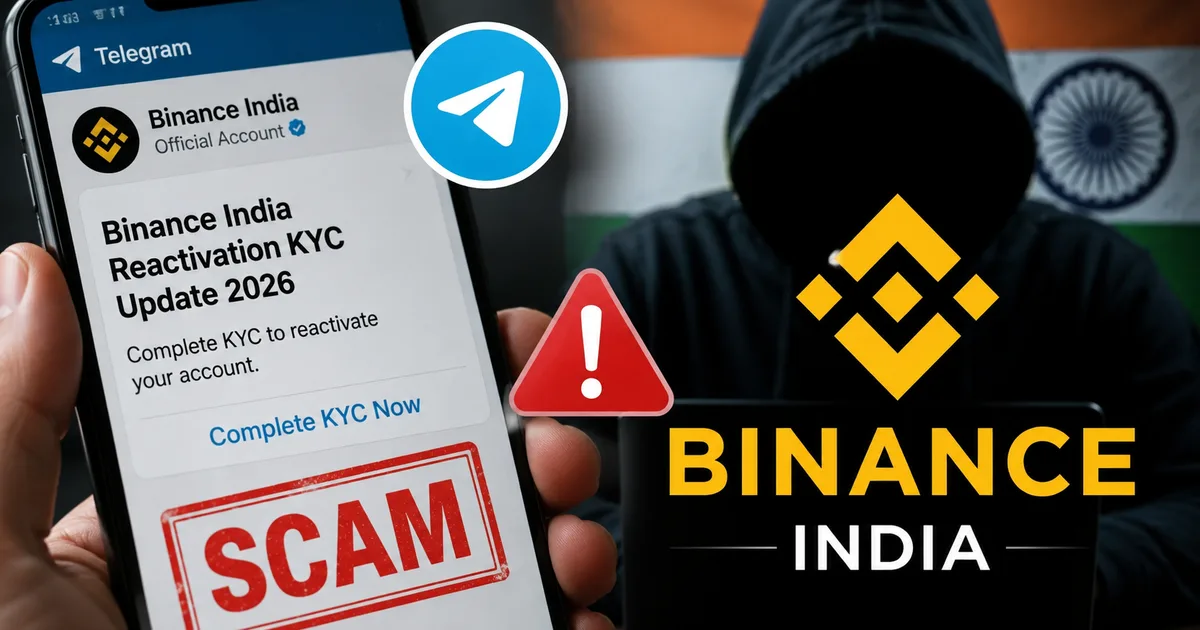
So, Binance is back in India. Or at least, it's trying to be. After the FIU crackdown and all that regulatory drama, the exchange registered with the Indian government earlier this year. And naturally, scammers are treating this like a massive festival sale.
Honestly, I've seen a lot of crypto scams. But this new Fake Binance India Reactivation KYC Telegram Scam is something else. It's targeted. It looks official. And right now, it is draining crypto wallets across the country.
Here's the deal. Scammers know you probably have an old Binance account sitting idle because of the ban. They know you want access to your funds (especially with Bitcoin prices jumping around so much). So, they are using that exact panic to steal everything you have.
Understanding the FIU regulations context
To understand why this scam works so well, you just have to look at the recent history of crypto in India. Late last year, the Financial Intelligence Unit (FIU) issued show-cause notices to several offshore crypto exchanges, including Binance, for operating without registering as reporting entities. Then, their URLs were blocked. And people were terrified they'd lose their money.
Now that Binance has paid the penalty and registered with the FIU, they are actually asking Indian users to update their KYC details to comply with local laws. This is a real thing happening right now. Scammers are hijacking this legitimate news event to trick you.
When you hear that you need to do KYC to get your account back, it sounds completely plausible. That is what makes this so dangerous. The scammers are reading the same crypto news updates you are, and they use that information to build a believable narrative. They don't need to invent a fake problem. They just pretend they are the solution to a real one.
What exactly is the Binance KYC reactivation scam?
Basically, criminals are sending urgent SMS messages or WhatsApp alerts claiming your Binance account needs immediate KYC reactivation because of the new FIU regulations in India. If you don't complete it, they say your account will be permanently frozen. They even claim your funds will be seized by the government.
It's a complete lie.
These messages always include a link. The link takes you to a fake Binance website that looks identical to the real one, or to a Binance India Support Telegram bot. Once there, they don't just ask for your Aadhaar card or PAN card. They trick you into authorising a withdrawal. Or they get you to hand over your seed phrase.
I talked to someone last week who lost about ₹3.5 lakh in USDT to this exact trick. They didn't even realise the money was gone until the support agent stopped replying.
The scary part is how convincing they sound. They use real jargon. They mention the Prevention of Money Laundering Act and FIU compliance. They use current news events to make their fake threats sound real. And because many Indian users were locked out of offshore exchanges for months, the story makes total sense to them.
How the scam works step by step
Look, understanding the mechanics is half the battle. This isn't a simple phishing link. It is a highly coordinated, large-scale effort.
Step 1: The panic message and SMS spoofing
You'll get an SMS that looks like it's from BINANC or a similar official-looking sender ID. SMS spoofing is very common right now. Indian telecom operators are still struggling to block these fake headers entirely. The message will say something like: Dear User, as per FIU India guidelines, your Binance account requires re-verification by tonight. Update KYC here or face permanent suspension.
Sometimes it comes via WhatsApp from an international number. But increasingly, they use compromised Indian numbers to bypass spam filters (which makes sense, actually). It makes the threat feel local and urgent.
Step 2: The fake portal
You panic. You click the link. It opens a site like binance-india-kyc.com or redirects you to a Telegram channel named Official Binance India Support. The site will ask for your login credentials. Then it asks for your 2FA code.
If they get you on Telegram, a very professional-sounding agent will ask for your registered email address. Then they tell you they need to verify your wallet ownership before they can process the KYC documents.
Step 3: The wallet drain
Here's where they get you. While you're typing your 2FA code into their fake site, they are logging into your real Binance account on their end. They initiate a withdrawal of your crypto. Binance sends a real 2FA code to your phone to confirm the withdrawal. You think this code is for the KYC login, so you type it into the fake site. The scammers use it to approve the transfer.
Boom. Your crypto is gone.
Sometimes, they do it differently. They ask you to connect a Web3 wallet like MetaMask to verify your identity on the blockchain. The smart contract you sign actually gives them permission to drain your wallet entirely. They call it a KYC signature, but it is actually a transfer approval.
The reality of crypto fraud in India right now
You might think this is a rare problem. It's not. The numbers here are a bit fuzzy, but the scale of crypto fraud in India is massive. Just recently, the Enforcement Directorate arrested two Chartered Accountants involved in a ₹641 crore cyber fraud network. These syndicates are well-funded. In my experience, they run like actual corporations.
And it's not just big cities. I saw a report where Chandigarh Police arrested a man from Rajasthan for a crypto investment fraud worth over $40,000. The money often gets laundered through complex peer-to-peer networks on these exchanges. This makes it incredibly hard for local police to track without specialised help.
When scammers steal your crypto, they don't just hold onto it. They immediately sell it for INR via P2P trading platforms to unsuspecting buyers, or they funnel it through privacy coins. By the time you realise you've been scammed, your money has changed hands five times. It ends up in a dummy bank account.
How scammers bypass standard security
You're probably wondering how they get past SMS alerts and email warnings. The thing is, criminals have adapted to our security habits. They know you're looking for OTPs, so they time their fake portal logins perfectly with your actions. When you hit submit on their fake page, a script instantly triggers a login request on the real Binance server. The OTP hits your phone. You see Binance Login. You type it into the fake site without reading the rest of the text message.
That text message usually says you are initiating a withdrawal. But because you're stressed about your KYC and rushing, you only look at the six numbers. That is the human error they rely on. No amount of encryption can save you if you voluntarily hand over the keys because you're panicked about losing your account access.
Major warning signs you shouldn't ignore
- Real exchanges don't give you 24 hours to complete KYC or threaten immediate confiscation. Regulatory updates give users weeks or months to comply. Any message demanding immediate action is a pressure tactic.
- Binance doesn't do official customer support via Telegram DMs. If someone messages you on Telegram claiming to be a Binance employee, it's a scam 100% of the time. They'll only communicate through their official app's support chat.
- Check the web address carefully. Scammers use tricks like replacing a lowercase L with an uppercase I. If the URL isn't exactly binance.com, close the tab immediately.
- Some scammers ask you to transfer a small amount of crypto like 0.01 BNB as a test transaction to verify your wallet. Legitimate platforms never ask for deposits to verify identity.
- If someone asks you to download Anydesk or TeamViewer to help you with KYC, hang up the phone immediately. They just want to watch you enter your passwords.
How to protect yourself and your crypto
I know this sounds scary. But keeping your money safe is actually pretty straightforward if you follow a few basic rules.
First, never click links in unexpected SMS messages. If you get an alert about your account, open the official Binance app directly. Don't follow the link. The app will tell you if you actually need to do anything. If the app says your account is fine, ignore the text.
Second, turn on anti-phishing codes. Binance has a feature where you can set a secret word. Every real email from them will contain this word. If the email doesn't have it, it's trash.
Third, use an authenticator app like Google Authenticator or a hardware security key like a YubiKey for your 2FA instead of SMS. SMS spoofing and SIM swapping are too easy for hackers these days. A physical key stops remote login attempts cold.
And finally, stay informed. Read advisories from cyber security experts and agencies like CERT-In. They regularly post updates on active cyber threats in India. Don't rely on random WhatsApp forwards for your tech news.
Where to report if you got scammed
If you made a mistake and clicked the link, you have to act fast. Don't wait around hoping the transaction will reverse. Crypto transactions are final.
Immediately call the national cybercrime helpline at 1930. This is the official Indian government hotline. The faster you call, the better the chances they might be able to freeze the destination bank accounts if the scammers try to convert the crypto to INR via P2P trading.
Then, file a formal complaint on the official portal at cybercrime.gov.in. Make sure you have screenshots of the messages and the fake website URL. Include the transaction hash of the stolen funds. Be as detailed as possible.
You also need to contact Binance support through their official app immediately. Tell them your account is compromised. They can freeze it to stop further unauthorised withdrawals. They actually have a pretty solid track record of working with law enforcement to recover funds if you report it quickly enough.
You can also check out our other scam alerts to stay updated on what criminals are trying next. And if you need to secure your digital life, look into reliable security tools.
Your crypto is your responsibility. Keep your guard up. Don't trust random Telegram messages. Take the time to secure your accounts properly. It is always better to double-check than to lose everything in five minutes.