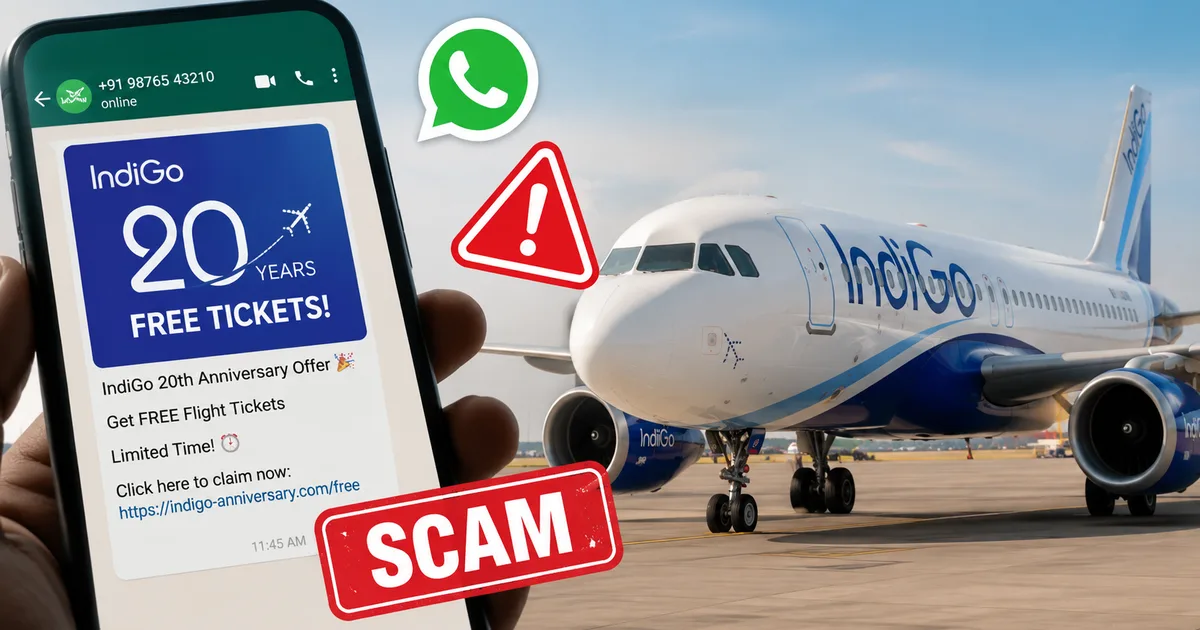
Look, we've all seen them. The brightly colored WhatsApp forwards promising unbelievable freebies. But this latest one is spreading like absolute wildfire across Indian family groups, and it's dangerous. I'm talking about the Fake IndiGo 20th Anniversary Free Tickets WhatsApp Scam 2026. You get a message from your uncle or a random college friend claiming IndiGo is handing out 20,000 free tickets.
Honestly, it sounds amazing. Who doesn't want a free flight to Goa? Or Dubai? Flight prices are going through the roof right now. So a free trip sounds like an absolute dream.
Thing is, it's a total trap. Scammers are piggybacking on actual news about IndiGo's anniversary to empty your bank accounts. I spent the morning digging into this. What I found is a mess. People are losing serious money just because they think they're getting a free vacation.
What exactly is the Fake IndiGo 20th Anniversary Free Tickets WhatsApp Scam 2026?
It starts with a simple WhatsApp message. It usually has a little airplane emoji and a link that looks vaguely official. Something like indigo-20years-offer.com or maybe free-tickets-indigo.in. (The links are always a bit sketchy, if you ask me.)
Here's the deal. IndiGo actually did announce some promotional offers for their 20th anniversary. Real news outlets covered it. The company launched real sales. But scammers saw this. They immediately spun up fake websites that look exactly like IndiGo's official portal. They copied the blue and white branding. They copied the font.
You click the link. You think you're about to score a free trip. But instead, you are handing over your phone's data to a cybercriminal sitting in a fake call center in Jamtara or somewhere across the border. They aren't trying to give you a holiday at all. They want your UPI PIN. And they want your Aadhaar details.
And it works. It works because it comes from people you trust. A forward from your dad seems safe. Right? But he just fell for it too. He clicked the link and unknowingly sent a virus to his entire contact list.
The real danger is the hidden APK
Sometimes it's just a phishing page asking for a Rs 99 processing fee. But the really nasty versions of this scam trick you into downloading an Android app. They call it a ticket generator. Or a claim portal app.
Once that APK file is on your phone, you are in serious trouble. It can read your incoming SMS messages silently. Which means it can read your bank OTPs without you ever seeing the notification. Your hard-earned money in SBI or HDFC can disappear in minutes. They can even intercept your DigiLocker OTPs. This is how they steal your identity.
How the IndiGo free tickets scam actually works (step by step)
Understanding their playbook is your best defense. If you know what happens next, you can stop yourself. I've broken down exactly what happens when you interact with this scam.
- The Bait: You receive a message that says something like "IndiGo 20th Anniversary! Get your free tickets now!" accompanied by a link. It almost always carries the "Forwarded many times" label at the top.
- The Fake Portal: You click the link and land on a site with IndiGo's exact branding. It looks surprisingly professional. There might even be fake comments at the bottom from people claiming they just got their tickets.
- The "Survey": The site asks you to answer three or four simple questions. "Are you a frequent flyer?" "Are you over 18?" "Male or Female?" This makes it feel legitimate. It's a psychological trick to make you feel like you're earning the reward.
- The Box Game: You are presented with a screen full of gift boxes. You have to tap to open them. The first one is always empty. The second one always contains the "winning" tickets. This builds false excitement.
- The Sharing Trap: After you "win", a popup tells you that to claim the tickets, you must share the link with 5 WhatsApp groups or 20 friends. A progress bar forces you to keep sharing until it hits 100%. This is how the scam spreads so fast across India.
- The Final Blow: After sharing, you are redirected to a page that either asks for a small "tax" payment via UPI, or asks you to download an app to generate your boarding pass. This is where the actual theft happens.
"Cybercriminals are heavily using current events and corporate milestones to create highly believable phishing campaigns targeting Indian smartphone users. They rely on the trust between WhatsApp contacts to distribute malicious payloads." - CERT-In Advisory Notes
Warning signs: how to spot this WhatsApp travel scam
You don't need a computer science degree to spot these scams. You just need to know what to look for. And honestly, it usually comes down to pausing for a second. Just trust your gut.
If you ever see a link like this, check these things.
- Look at the URL carefully: Official IndiGo links will always be
goindigo.in. The fake ones will have extra words, dashes, or weird extensions like.xyz,.top, or.pro. Scammers buy cheap domains to run these frauds. - The fake urgency: Scammers always make you panic. "Only 53 tickets left!" or a countdown timer ticking down from five minutes. Real airline promotions don't work like this. They want you to rush so you don't think straight.
- Grammar and spelling mistakes: Read the text carefully. You'll often find spelling errors or weird phrasing that a massive, billion-dollar corporation simply wouldn't publish on their homepage.
- The forwarding requirement: No real company forces you to spam your WhatsApp contacts to claim a prize. Ever. If you have to share it to win it, it is a scam. Period.
I wrote a whole piece on this in our explainers section about why major brands never use WhatsApp chain messages for marketing. It's totally worth a read. Especially if you're curious about how corporate marketing actually works.
The psychology of the trap
Why do so many smart Indians fall for this? I'm not sure exactly why it works so well. But I've spoken to doctors and engineers who clicked these links.
Basically, scammers use the scarcity principle. When you think something valuable is running out, your brain skips the logical checks. Plus, everyone is looking for a deal right now. Flight tickets are expensive. A free ticket feels like a lottery win.
They also abuse social proof. You see fake Facebook comments at the bottom of the scam page. Your brain thinks it must be safe since other people got it. It's incredibly manipulative. (Which makes sense, actually, given how our brains are wired.)
How to protect yourself and your family
You also need to protect your parents or older relatives who might not be tech-savvy. They are the primary targets here.
First, stop forwarding things blindly. I get it. You want to help your friends get a free flight. But take ten seconds to verify before hitting that forward button. A quick Google search for the IndiGo free tickets scam shows you the truth instantly.
If you clicked the link but didn't enter any details or download anything, you are probably fine. The site alone usually can't hack your phone. Unless you have a severely outdated browser. Just close the tab. Clear your browser history.
If you paid money or entered your UPI PIN: Contact your bank immediately. Call the customer care number on the back of your debit card. Tell them your account is compromised. Freeze your UPI access right now. Do not wait until the morning. Every minute counts. Change your banking passwords from a different device.
If you downloaded a strange app: Put your phone in airplane mode right now. This cuts off their access to your device. It stops them from transmitting your data back to their servers. Go into your settings and uninstall the app. Honestly, if I installed a scam APK, I would just factory reset my phone to be safe. It's a massive pain. But it's much better than waking up to an empty bank account.
You can find more detailed security measures in our tools and security guides.
Where to report the fraud
Don't just delete the message. You need to report it. Then the government authorities can take these fraudulent sites down. I know people think reporting doesn't do anything in India. But it actually helps block these domains for millions of other users.
Do these things right away:
- Report on WhatsApp: Report the specific message right inside the app. Long press the message, tap the three dots in the top right corner, and select 'Report'. This helps WhatsApp flag the sender's account and the link.
- Use the National Portal: Visit the official Indian cybercrime portal at cybercrime.gov.in. You can file a complaint anonymously if you prefer. They have a dedicated section for financial frauds and social media crimes.
- Call the Helpline: If you lost money, dial 1930 immediately. This is the National Cyber Crime Reporting Portal helpline. The faster you call, the higher the chance they can contact the receiving bank, freeze the transaction, and get your money back. The golden hour is everything here.
CERT-In is constantly monitoring these threats. They strongly recommend keeping your phone updated. Never click links from unknown numbers. Check out our latest news updates for more alerts from CERT-In and other regulatory bodies.
The bottom line
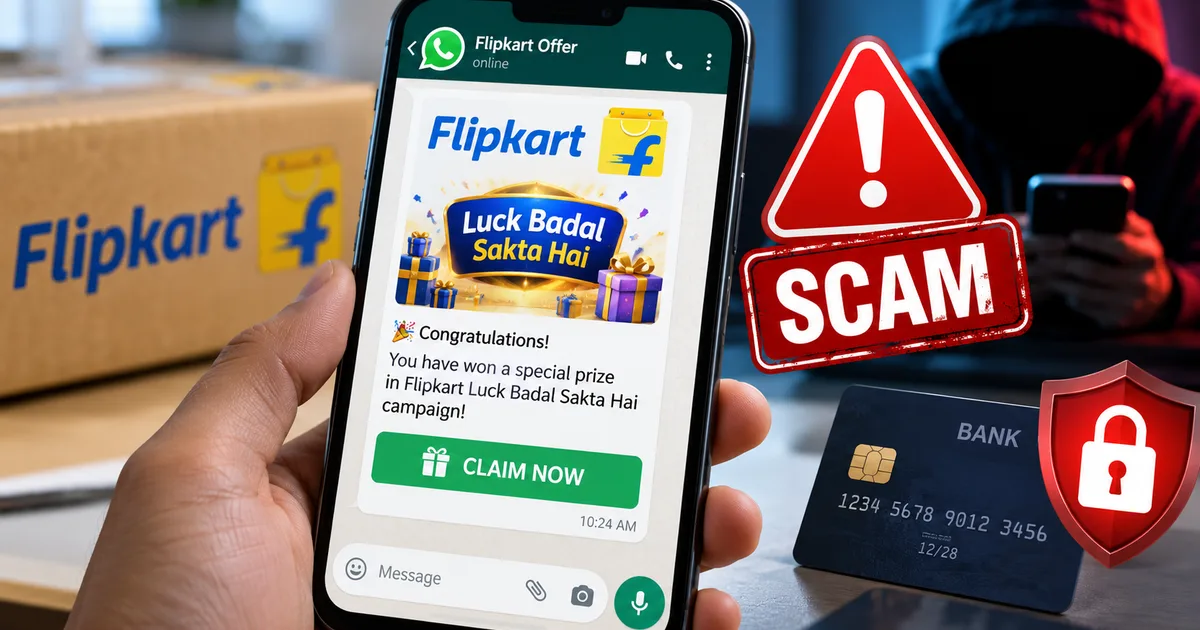
Look, scammers are getting smarter every single day. They are reading the news. They build traps based on real events. The Fake IndiGo 20th Anniversary Free Tickets WhatsApp Scam 2026 is just the flavor of the month. Next month it will be a fake Flipkart Big Billion Days sale link or a fake Jio offer.
You have to stay alert. Don't let a moment of excitement over a free ticket blind you to the basic rules of internet safety. Never install apps from outside the official app stores. Never enter your UPI PIN to receive a prize. Your UPI PIN is only used to send money from your account. Never to receive it.
Keep your money safe and tell your family to do the same. Education is our best defense against these gangs.
And seriously, tell your uncle to stop forwarding those random links to the family group. It's better to be a little annoyed with him now. That beats dealing with a drained bank account later.
You can read more about similar threats targeting Indian users in our comprehensive scams database.