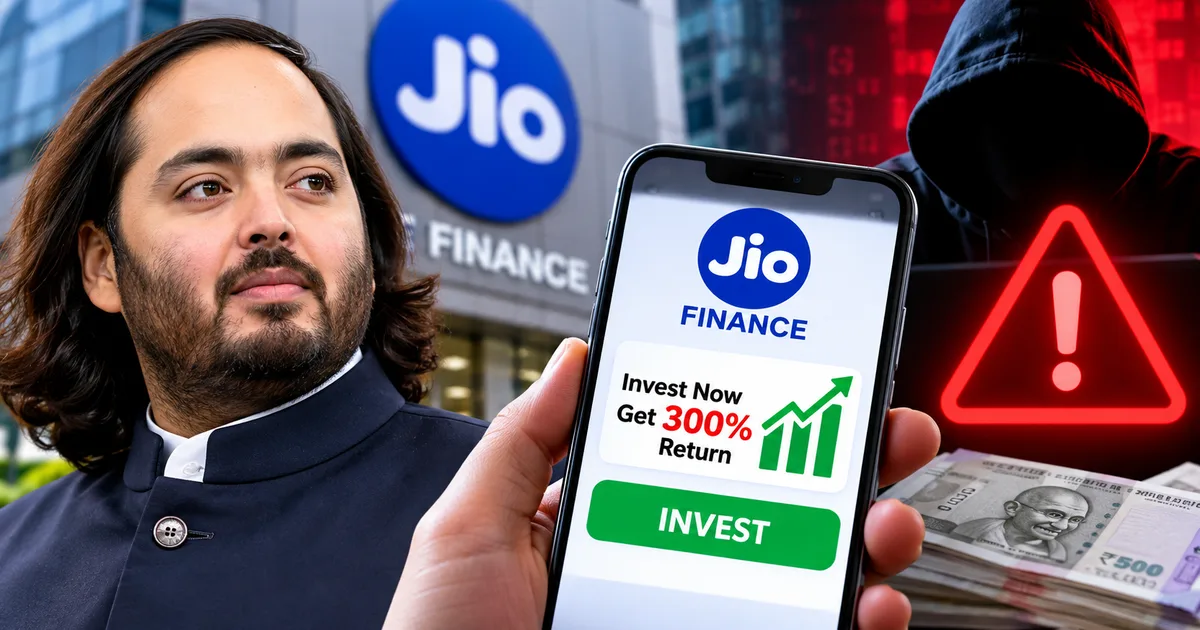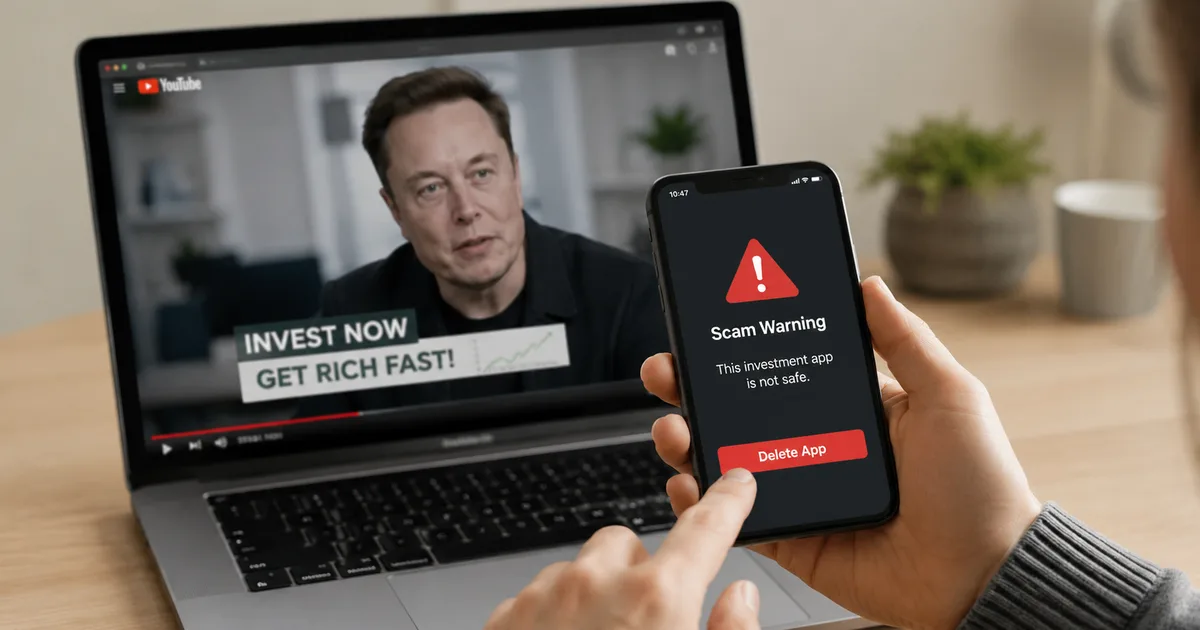
If you've seen a fake investment app advertised on Instagram or YouTube by what looks like Mukesh Ambani or Ratan Tata, complete with matching voice and lip movements, you've already been targeted by one of India's fastest-growing frauds. The celebrity deepfake investment scam has moved well beyond clumsy photoshopped screenshots. In 2026, the videos are convincing enough that even careful people are getting caught.
The format is pretty consistent. You get a deepfake video of a well-known face endorsing some "revolutionary investment platform," a link to a professional-looking fake app, and then a slow, patient process of building trust before taking everything you're willing to give. Bitdefender's research into global investment scam networks found these operations running paid Meta ads at scale across multiple countries, with India consistently among the top targets. A report by fintechbiznews.com found that IPL-themed deepfake investment scams caused potential losses of Rs 4.65 crore in a single season.
That's organised crime with a marketing budget.
What these scams actually look like
Scammers take real video footage of a celebrity, a business figure, a politician, sometimes a cricketer, and run it through AI tools that alter lip movements and voice to say whatever the script needs. Foreign Minister S. Jaishankar has already been the subject of exactly this kind of attack. Newschecker fact-checked a deepfake video of him promoting a sketchy investment opportunity that had been circulating on social media. Similar videos have used the likenesses of Narayana Murthy, Virat Kohli, and various IPL team owners.
These videos run as paid ads on Instagram, YouTube, and Facebook. Sometimes they appear on hijacked accounts with large real follower counts, which adds a layer of false credibility. The ad links to a landing page for a fake investment app, professionally designed, with fake testimonials, fake portfolio screenshots, and often a fabricated SEBI registration number.
The app itself might be available as an APK download, bypassing Play Store review entirely, or it might briefly make it onto official app stores before getting flagged. Either way, once installed, the scam runs on a well-tested script. You can read more about how social media fraud works in India to understand the broader pattern these operations follow.
How the trap is set, step by step
- A deepfake video in your feed shows a familiar face promising guaranteed returns of 300-500% in a few months. The production quality passes casual scrutiny: good lighting, professional background, voice that mostly matches.
- You click the link. It goes to a slick website, sometimes mimicking a real platform like Groww or Zerodha with near-identical design but a subtly different URL. "gr0ww.app" instead of "groww.in," that kind of thing.
- You invest a small amount, Rs 1,000 to Rs 5,000. It "works." The dashboard shows impressive returns. You can even withdraw this amount, which is deliberately allowed to build trust.
- A friendly "relationship manager" contacts you on WhatsApp. Very professional. Encourages you to invest more. Rs 10,000 becomes Rs 50,000 becomes Rs 2 lakh, while your dashboard shows beautiful profits the whole time.
- When you try to withdraw a large amount, suddenly there are "taxes," "compliance charges," or "processing fees" you must pay upfront before funds are released. You pay. Nothing comes. The app stops working. The WhatsApp number goes silent.
This sequence is known in fraud circles as "pig butchering," building the victim up before the final extraction. Mathrubhumi English has documented Indian cases where victims invested over Rs 10 lakh before realising what was happening. The longer the scammer maintains the illusion, the more they take. For a broader explainer on how AI-powered scams work, we've covered the full range of techniques being used against Indian internet users right now.
Warning signs that should make you stop
These are easy to miss in the moment. That's by design. But if you know what to look for, each one is a hard stop.
- The celebrity's lip movements look slightly off, or the voice has an unusual flatness, especially on longer sentences
- The investment app isn't on the official Google Play Store or Apple App Store. You're being directed to install an APK from a link.
- Promised returns are unrealistic. SEBI-registered mutual funds average 12-15% annually in good years. "500% in 60 days" doesn't exist in legitimate finance.
- The SEBI registration number shown on the site can't be verified at sebi.gov.in
- A "relationship manager" approaches you on WhatsApp, not through the app's official support channel
- Any withdrawal requires you to first pay a fee, via UPI transfer or crypto
- The celebrity's own verified Instagram or YouTube channel has no mention of this endorsement anywhere
Real celebrities do not endorse investment platforms in Instagram Reels without any announcement on their own verified accounts. If the same endorsement isn't on their verified page, the video is fake. Honestly, this single check would protect most people. It takes 30 seconds.
Why deepfakes make this harder than older investment scams
Earlier versions of this fraud used photoshopped screenshots, a fake WhatsApp message from "Rakesh Jhunjhunwala," a doctored newspaper headline. Those were relatively easy to spot with a bit of attention.
Deepfake video is different. Your brain is wired to trust moving faces and matching voices. We've spent our whole lives assuming that if a person says something on video, they said it. And scammers are now exploiting that assumption at scale with AI tools that have become dramatically cheaper and more accessible since 2024.
The BBC reported in 2026 that there's growing pressure on YouTube to vet advertisements the same way TV commercials are reviewed before broadcast. That's a reasonable demand. But that policy change, if it happens, will take years. Right now, the burden is largely on you (annoying, I know).
CERT-In has flagged AI-generated synthetic media as a major fraud vector for 2026, specifically calling out fake investment schemes that use manufactured celebrity endorsements. Check the latest CERT-In advisories regularly if you manage money online or run a small business.
Meta has already filed lawsuits against advertisers in Brazil and China for running celebrity deepfake scam campaigns on its platforms, according to ET BrandEquity. The platforms know this is happening. Lawsuits are slow, and the scammers move fast.
How to protect yourself before it's too late
- Before trusting any celebrity endorsement of an investment app, check that celebrity's own verified social media for any mention of it. If it's not there, the video is fake.
- Verify SEBI registration at sebi.gov.in before investing in any platform. Every legal investment advisor and registered product must appear in their official database.
- Never install investment apps from APK links shared via WhatsApp or from links in Instagram or YouTube ads. Use only the official Play Store or App Store.
- Treat the first "successful" withdrawal as bait, not proof. The scam accelerates once you believe the platform is legitimate.
- Search the app name on Google with "scam" or "fraud" appended. Victims post warnings quickly, and those results show up within weeks of new scams launching.
- Use video verification tools like InVID to check whether a suspicious clip has been manipulated or reused from other sources.
- Before transferring large amounts, talk to a real person you trust, a family member, a friend, a SEBI-registered financial advisor. Not a WhatsApp relationship manager you've never met.
I think the rule that overrides everything else is simple: if the promised returns sound too good to be true, they are. Always. No legitimate investment platform promises 300-500% returns with "zero risk." That number should trigger an automatic stop, no matter how convincing the video looks.
Where to report if you've been scammed
Act fast. The sooner you report, the higher the chance banks can freeze the transaction before money disappears into crypto wallets that are nearly impossible to trace.
- Call 1930, the National Cyber Crime Helpline, available 24/7. They can flag your transaction and alert your bank right away.
- File a complaint at cybercrime.gov.in. Keep your transaction details, screenshots of the fake app and ads, and any WhatsApp numbers ready before you start.
- Report the fake ad directly on Instagram or YouTube using the platform's "Report" button. This helps get it removed faster and protects others from seeing it.
- File with SEBI at scores.gov.in if the fake platform was impersonating a registered investment service.
- Contact your bank immediately if you paid via UPI or net banking. Ask them to raise a fraud dispute. Under RBI guidelines, banks must respond to fraud complaints within defined timelines.
Don't let embarrassment stop you from reporting. These scams are built to exploit trust in technology, in familiar faces, in the hope of financial security. The same scam will run on someone else until enough people report it. Our step-by-step guide to filing a cybercrime complaint covers exactly what information you need to have ready and how to make sure your complaint doesn't get stuck.