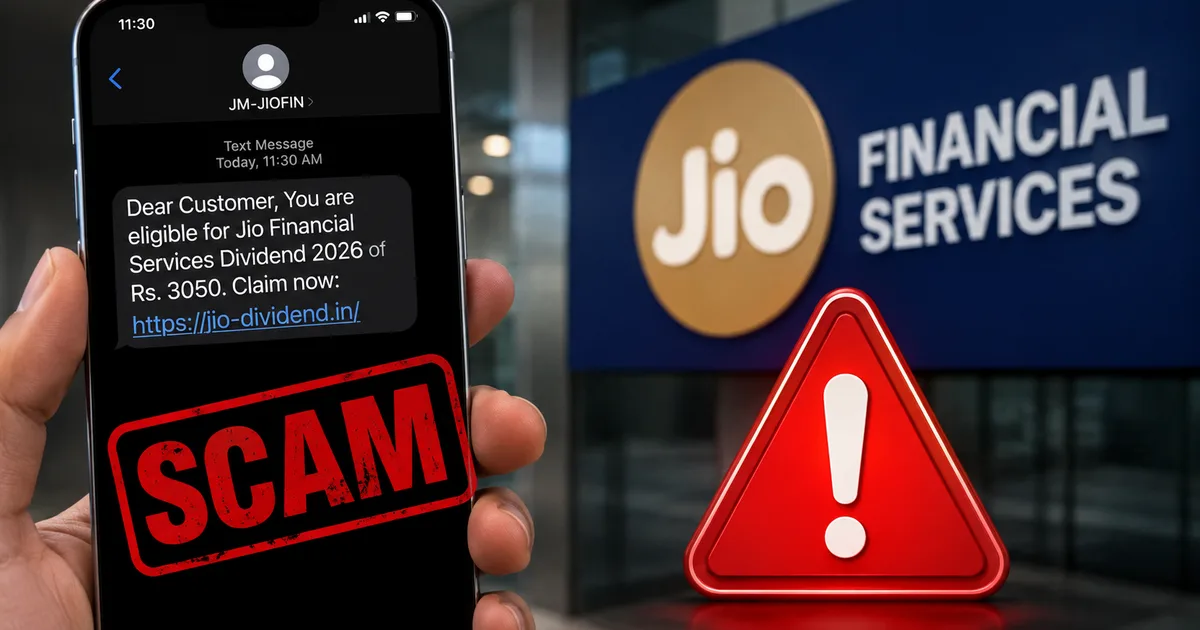
So, you just got an SMS claiming your Jio Financial Services dividend for 2026 is ready to be credited. And all you have to do is click a link to verify your bank account. Stop right there. Don't click it. Honestly, this is one of the more dangerous scams going around right now because it piggybacks on real news.
Here's the deal. Jio Financial Services actually did announce a dividend recently. They fixed August 10, 2026, as the record date for their FY25-26 dividend. Scammers read the news too. And they immediately weaponised this information (which makes sense, actually, given how fast these guys move). Basically, they're mass-sending text messages and WhatsApp forwards with fake claim links to empty your bank account.
I know, sounds complicated, but it's not. It's a basic phishing trap. They just dress it up as a corporate payout.
If you hold shares, or even if you don't, getting a message about free money makes most people pause. And that split-second hesitation is exactly what these fraudsters rely on.
What is the Jio Financial Services dividend scam?
This scam is pretty straightforward. You receive an SMS or a WhatsApp message. It looks like an official alert from Jio Financial Services or your bank. The message tells you a dividend amount, say ₹1,500 or ₹3,500, is approved for your account. But there's a catch. To get the money, you need to update your KYC or verify your account details through a provided link.
In my experience, these messages look incredibly convincing.
That link is fake. It takes you to a webpage that looks exactly like a real banking portal or the Jio Financial Services website. Once you enter your net banking credentials or your UPI PIN, the scammers steal them. And then they drain your account.
Critical Warning: Real companies will never ask you to click an SMS link to claim a dividend. Dividends are automatically credited to the bank account linked to your demat account through the National Automated Clearing House (NACH). You don't need to claim them manually.
Thing is, a lot of Indian internet users are falling for this. Scammers use the exact same language you'd see in official communications. They mention the actual record date of August 10, 2026. They use the correct corporate logo. They even spoof the sender ID so the SMS looks like it came from a legitimate source like "VM-JIOFIN" or "AD-HDFCBK". When a message pops up in the same thread as your actual bank alerts, your brain automatically trusts it.
I'm not sure exactly why it works so well, but it does.
This isn't an isolated incident. Scammers track the financial calendar closely. Whenever a major company announces a dividend, they spin up these fake websites within hours. The goal is just to catch retail investors off guard before the actual dividend hits their accounts.
How the fake link scam works, step by step
Let's break down exactly how they steal your money. If you know their playbook, you won't fall for it.
- First, you receive an urgent SMS. It usually says something like, "Dear Shareholder, your Jio Financial Services FY26 dividend of Rs 2,500 is pending. Please click here to verify your account and claim the amount before it expires." They blast these messages to thousands of random phone numbers. They don't know if you actually own the shares. They just know it's a numbers game.
- Then, you click the link. It opens a website that looks identical to your bank login page, DigiLocker, or a generic official-looking financial portal. The design is ripped straight from the real sites, complete with fake security badges and copyright notices.
- Next, the site asks you to enter your customer ID, password, or mobile number. Some advanced versions of this scam ask you to download an APK file, pretending it's a security module or an Aadhaar update tool required for the transfer.
- Once you enter your details, the scammers use them to log into your actual bank account on another device. Your bank sends you an OTP to authorise a new device login or a transaction. The fake website prompts you to enter this OTP to confirm the dividend receipt.
- Finally, you enter the OTP. The scammers instantly use it to authorise a massive transfer out of your account, usually via IMPS or UPI to a mule account. By the time you realise what happened, the money's gone.
I've seen similar tactics used in other frauds. You can read about them in our latest scam alerts. It's the same old trick, just a new wrapper. The news cycle changes. But the method remains identical.
Understanding how real dividends work in India
To really protect yourself, you need to understand how the system actually functions. When an Indian company like Reliance or Jio Financial Services declares a dividend, they announce a record date. If you hold the shares in your demat account on that specific date, you're eligible for the payout.
It is really that simple.
You don't have to fill out a form. You don't have to verify your PAN card again. The entire process is automated. Your stockbroker has your verified bank account details on file, whether that's Zerodha or Groww. The company transfers the money to the Registrar and Transfer Agent (RTA). They then use the NACH system to deposit the money directly into your account.
You'll simply wake up one morning and see an SMS from your bank. It will say an amount is credited via NEFT or ACH. It'll have a clear reference number. Nobody will ever ask you to input a password to accept this money. That's just not how the Indian banking system works.
Sometimes the transfer fails if your bank account details are incorrect or the account is dormant. In that case, the company reaches out to you via registered email, or your broker notifies you. They ask you to update your bank details in your demat account. They never send a sketchy text message with a bit.ly link.
Warning signs: how to spot the fake Jio SMS
You can easily spot these fake messages if you know what to look for. Look, scammers are smart. But they always leave clues. Here are the red flags:
- Urgency and deadlines are major red flags. The message tells you the dividend will expire or be cancelled if you don't act immediately. Corporate dividends don't expire overnight. If a dividend payment fails because your bank account is closed, the company retains it in an unpaid dividend account. You have seven years to claim it through the IEPF (Investor Education and Protection Fund). It's never an emergency.
- Suspicious links give them away. The URL in the SMS will look weird. Instead of a clean .com or .in domain, it might be a random string of letters, use URL shorteners like bit.ly, or have strange extensions. For instance, a fake link might look like "jio-dividend-claim-update.xyz" or "banking-kyc-auth.in/jio". Real banks use clear, predictable domain names.
- Requests for PINs or passwords are dead giveaways. I can't stress this enough. No official process will ever require you to enter your UPI PIN or banking password to receive money. Your UPI PIN is only for sending money, never for receiving it. If a site asks for a PIN to receive funds, you're about to be robbed.
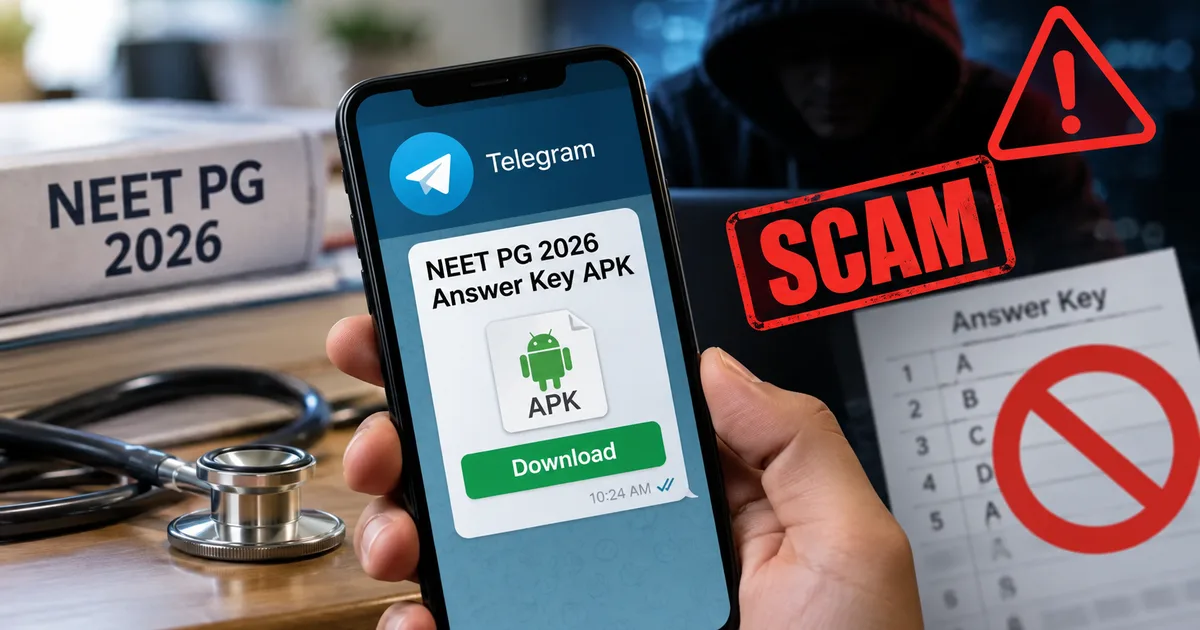
- Asking to download apps is extremely dangerous. If the link asks you to download an Android app (an APK file) outside the Google Play Store, it's a scam. This is a common tactic to install malware that reads your SMS OTPs in the background, forwarding them directly to the fraudsters without you ever seeing the message.
- Poor grammar and spelling are common. While scammers are getting better with AI tools, many still make basic mistakes. Look for weird phrasing, incorrect capitalisation, or strange spacing in the text message.
If you're unsure about digital safety basics, we have some solid advice in our safety guides section. It's worth a quick read. Just to refresh your memory on basic internet hygiene.
How to protect yourself from dividend frauds
You need to be proactive. The RBI and the government issue warnings constantly. But the first line of defence is always you. Here's what you must do to keep your money safe.
If you ask me, this is the most critical part.
First, ignore any SMS or WhatsApp message asking you to claim a dividend. If you own Jio Financial Services shares, just check your demat account app. The dividend drops directly into the bank account linked to your trading profile. There is zero manual intervention needed on your end. The company deposits it directly.
Second, never click links in unsolicited messages. Even if the message looks like it came from your bank. Sender IDs are easily spoofed. Scammers can make a text appear as though it came from the exact same number that sends your legitimate salary alerts (annoying, I know). If you're worried about your account, type your bank's website address directly into your browser or use their official mobile app.
Third, don't install random apps. If a webpage prompts you to download an APK to process a payment or verify your KYC, close the tab immediately. This is how they get access to your phone's SMS inbox. If you have older relatives using Android phones, check their settings and disable the 'Install from Unknown Sources' option. That one setting prevents most APK-based malware.
It is a total mess when these apps get installed.
And finally, stay informed about the actual news. Jio Financial Services did declare a dividend. They announced their Q4 results and recommended a final dividend, setting a record date to finalise eligible shareholders. But they communicated this through official stock exchange filings and press releases. Not sketchy text messages. You can verify such news on official platforms or reputable news sites like the ones we link to in our daily updates.
You can also use verification utilities from our tools section if you're ever in doubt about a website's authenticity. But the best tool is just common sense. If it feels rushed or asks for a password, it is a scam.
Where to report the scam
If you accidentally clicked the link and entered your details, don't panic. But you have to act fast. Every minute counts when dealing with financial fraud.
Immediately call your bank and block your account and debit cards. Tell them you suspect fraudulent activity. Use the official customer care number from the back of your debit card. Not a number you found on Google, since scammers plant fake customer care numbers there too. Next, you need to report the crime to the authorities.
Call the national cybercrime helpline at 1930. This is a dedicated number for reporting financial frauds. They have a mechanism to freeze the stolen funds across different bank accounts if you report it quickly enough.
The numbers here are a bit fuzzy on recovery rates, but it is your best shot.
You should also file a formal complaint on the official government portal: cybercrime.gov.in. Make sure you keep screenshots of the fake SMS and any transaction details. The more evidence you provide, the better chance the police have of tracking the network.
The Indian Computer Emergency Response Team (CERT-In) regularly issues advisories on these types of phishing campaigns. You can check their official website at cert-in.org.in for technical details on current threats. But the practical advice remains the same: never share your credentials. CERT-In has repeatedly warned about SMS phishing targeting Indian banking customers. They specifically note how scammers use current events to create a sense of urgency.
Financial frauds are getting terrifyingly sophisticated. We cover a lot of these tactics in our detailed explainer series because the only real protection is knowing the scammers' playbook. Share this information with your parents and older relatives who might not be as tech-savvy. They're usually the primary targets for these text message traps.
Talk about these scams openly with them. If we talk about these scams openly, they lose their power.