I spend a lot of time tracking cyber fraud. The sheer volume of attacks hitting regular people right now is staggering. If you look at the Latest Scam Alerts trends in India 2026, you'll notice a massive shift. Scammers have stopped sending poorly spelled emails. Now, they're taking over WhatsApp accounts and building sophisticated fake apps.
Honestly, things are getting worse because our phones hold everything. Your Aadhaar is linked to your bank. And your UPI app is just a tap away. A single mistake on a Tuesday afternoon can wipe out your life savings (which is terrifying, honestly). I'm not sure exactly why it's so easy for them, but it is.
The financial damage is totally real. Look, you need to know exactly how they work to stay safe.
The corporate WhatsApp hijack: The boss scam
This one is hitting finance professionals really hard. The Ministry of Home Affairs recently issued a nationwide advisory about a cyber fraud targeting company directors and finance teams. People call it the boss scam. In my experience, these corporate attacks usually start small before blowing up.
I read the reports from the Indian Cyber Crime Coordination Centre. They are sketchy. Criminals skip tricking people entirely. They completely hijack active WhatsApp Web sessions.
How the boss scam works
The attack starts with a single message. You get a file disguised as a routine account statement or an urgent regulatory notice from the RBI. It's usually a ZIP archive. And attackers often use phishing emails to make it look like it came from the Income Tax Department.
So, you download the ZIP file and extract it on your Windows work laptop. This is a total mess. Opening the archive installs a Trojan malware using a technique called DLL sideloading. Then the malware silently takes control of your active WhatsApp Web session.
Once the criminals have access, they use your compromised WhatsApp account to auto-forward the malicious ZIP file to all your contacts and corporate groups. They'll even add a message asking the recipient to forward it to the finance manager for verification. The infection spreads fast through the network.
In the final stage, the fraudsters impersonate the CEO. They send urgent instructions to the finance department. They demand an immediate transfer of funds to a specific bank account. Because the message comes from the actual WhatsApp account of the boss, the finance team processes the payment. They do it without a second thought.
Warning signs and how to protect yourself
You need to be deeply suspicious of sketchy ZIP files. It doesn't matter if the message appears to come from a trusted colleague. If you get an unexpected file claiming to be an RBI notice, stop.
- Never open ZIP archives or execute files from unverified sources on a company computer.
- Always verify urgent requests for fund transfers with a direct phone call.
- Keep your Windows operating system and antivirus software updated.
If you manage corporate networks, check the latest security guidelines from CERT-In to lock down external file sharing.
The malware app trap emptying bank accounts
We need to talk about mobile malware. The government recently flagged a massive cyber fraud racket operating on Facebook and Instagram. Basically, attackers are running advertisements for pornographic content to lure users into downloading malware-laced applications. It's wild.
I wrote about the Fake Binance India Reactivation KYC Telegram Scam 2026 recently. This new campaign uses similar psychological manipulation. They know people will click on explicit content. And they exploit that curiosity to get inside your phone.
How the app scam works
You see an ad on social media and click it. Instead of taking you to a website, the link prompts you to download an APK file directly. These apps hide behind weird names like Night Play, Reloop, Kyss, Vimo, Rivo, Nexo, and Vixa. (Super annoying, I know).
You install the app. You completely bypass the Google Play Store. The moment you open it, the app asks for Accessibility Permission. If you tap allow, you hand over complete control of your device.
Accessibility services are meant for users with disabilities. They allow apps to read the screen and simulate taps. When you give this permission to malware, it operates silently in the background. It reads your text messages and intercepts your OTPs. It also monitors your banking apps.
These malicious apps often install VPN services on your phone. They route your internet traffic through servers controlled by the attackers. They watch what you do and steal your login credentials. Then they initiate unauthorized transfers from your bank account.
Warning signs and how to protect yourself
The biggest red flag is an app asking for accessibility access right after installation. There is absolutely no reason a video player needs to read your entire screen.
- Never download APK files from random websites or social media ads. Stick exclusively to the official Google Play Store.
- Review your app permissions immediately. Go to your phone settings, search for Accessibility, and disable access for any app you don't recognize.
- If you suspect your phone is compromised, turn on airplane mode, back up your photos, and perform a factory reset.
The fake census 2026 verification calls
Fraudsters always piggyback on national events. With the 2026 Census preparations underway, criminals are using the exercise as a cover to steal identities and money. If you ask me, this is one of the lowest tactics they use.
I've spoken to people who got calls from individuals claiming to be government officials. The caller insists they need to verify family details for the upcoming census. They sound professional. They often have some basic information about you already.
How the census scam works
The caller tells you they are updating the digital census registry. They ask you to confirm your Aadhaar number and your PAN details. Then comes the trap. They tell you a verification code has been sent to your phone. And they ask you to read it back to them.
That code is actually an OTP for a password reset on your banking app or a transaction confirmation. The moment you share the OTP, they drain your account.
In some variations, the scammers send a WhatsApp link to a fake government portal. They ask you to pay a nominal fee of 10 INR for a census certificate. You try to pay the small amount using UPI. But the site captures your UPI PIN or sets up an auto-debit mandate that empties your linked account over time.
Warning signs and how to protect yourself
Government officials don't call you to ask for an OTP. They don't charge a fee for census verification. If you want to dive deeper into the broader digital landscape, check out our hub on Latest Tech News to see how these scams fit into the bigger picture.
- Never share an OTP with anyone over the phone. No legitimate organization will ever ask for it.
- Don't click on links sent via SMS or WhatsApp claiming to be official government portals.
- Remember that official census workers will visit your home in person and carry valid government identification.
The fake IPL 2026 ticket and streaming fraud
Cricket season in India is a goldmine for scammers. During the build-up to IPL 2026, authorities identified over 600 fake ticketing websites and 400 fraudulent streaming platforms designed to steal money from desperate fans.
I see this every single year. Matches sell out in minutes. Fans turn to Google or social media looking for spare tickets or free streams. Scammers know this. They set up incredibly realistic traps.
How the IPL scam works
You search for tickets and find a website offering premium seats at a slight discount. The site looks identical to official platforms like BookMyShow or Paytm Insider. You select your seats and enter your details. Then you make a payment using a UPI QR code or a credit card.
The money leaves your account, but you never receive a ticket. The website disappears a few days later. Then it pops up under a new domain name.
Thing is, the streaming scams are just as bad. You click a link promising a free live stream of the match. The site forces you to download a video player update to watch. That update is an APK file packed with malware, similar to the porn app trap mentioned earlier. Once installed, it steals your data.
Warning signs and how to protect yourself
Deep discounts on sold-out matches don't exist. If a deal looks too good, it's a scam.
- Only purchase match tickets from the official partners listed on the IPL website or the specific team's social media pages.
- Never pay for tickets by transferring money directly to an individual's UPI ID or bank account.
- Don't download third-party video players to watch cricket. Stick to official broadcasting apps like JioCinema or Star Sports.
NEET UG re-exam WhatsApp fraud
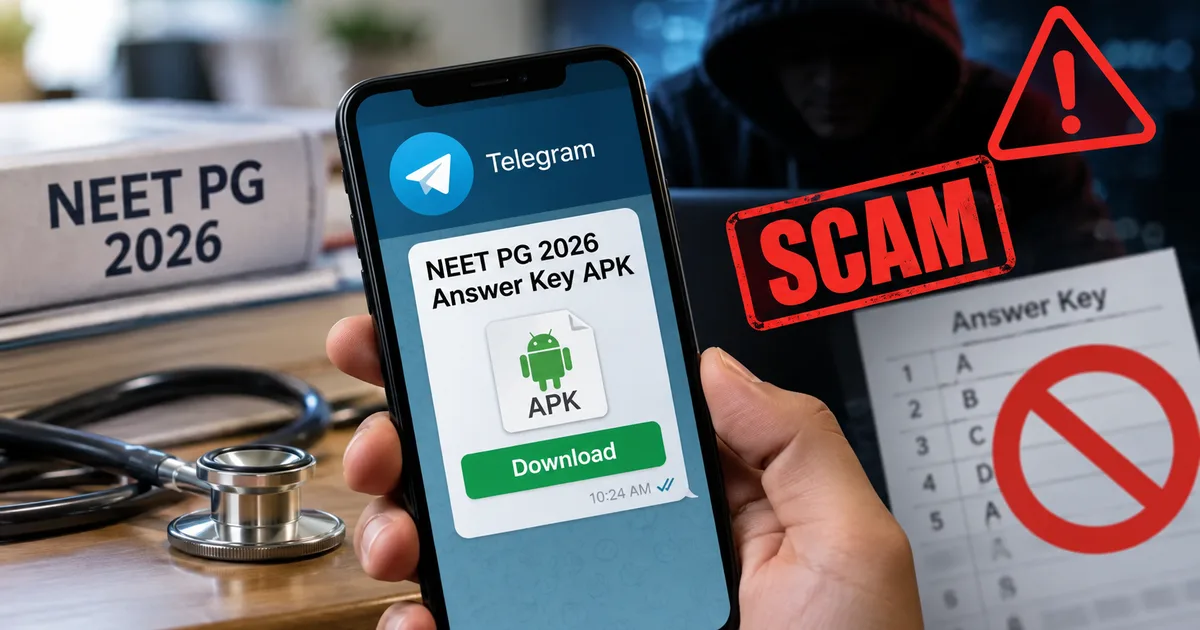
I think educational scams are particularly cruel because they prey on the anxiety of students and parents. Following the controversies around the NEET UG exams, the National Testing Agency announced a re-examination for certain candidates. The numbers here are a bit fuzzy, but thousands of students got targeted.
Scammers immediately flooded WhatsApp with fake notices. They demanded money for new admit cards or offered guaranteed seat allotments.
How the education scam works
A student receives a WhatsApp message claiming to be from the NTA. The message states that their previous admit card is invalid and they must pay a processing fee to download the revised document. The message includes a link to a fake website that looks exactly like the official NTA portal.
If the student enters their login credentials, the scammers capture them. If they pay the fee, the money is gone. Simple as that.
The situation got so bad that the NTA launched a verified WhatsApp communication channel to send authentic updates. They explicitly warned candidates that official messages will only come from their verified account (+91 78279 80287). This account has a blue tick and is solely a broadcast channel.
Warning signs and how to protect yourself
Official educational bodies rarely demand sudden payments via WhatsApp for essential documents like admit cards.
- Always verify the sender. Look for the blue verification badge on official WhatsApp accounts.
- Never click on links forwarded in WhatsApp groups to download admit cards. Manually type the official website address into your browser.
- Don't share your application number, date of birth, or passwords with anyone claiming to offer exam assistance.
For more ongoing warnings, bookmark our Scam Alerts & Safety section.
What to do if you get scammed
Time is your best asset if you realize you've been scammed. You can't sit around and feel embarrassed. You have to act fast to stop the money from moving.
First, call the national cybercrime helpline at 1930 immediately. The golden hour for recovering funds is the first few hours after the transaction. The 1930 helpline can coordinate with your bank to freeze the recipient's account before the criminals withdraw the cash.
Second, file a detailed formal complaint at cybercrime.gov.in. Provide all the evidence you have. Take screenshots of the WhatsApp chats and the SMS messages. Also capture the fake website URLs and the UPI transaction IDs. Don't delete anything.
Third, contact your bank directly. Call their emergency number and tell them you're a victim of cyber fraud. Ask them to block your debit cards and freeze your net banking access. They also need to stop any pending UPI mandates.
Scammers rely on your panic and your silence.