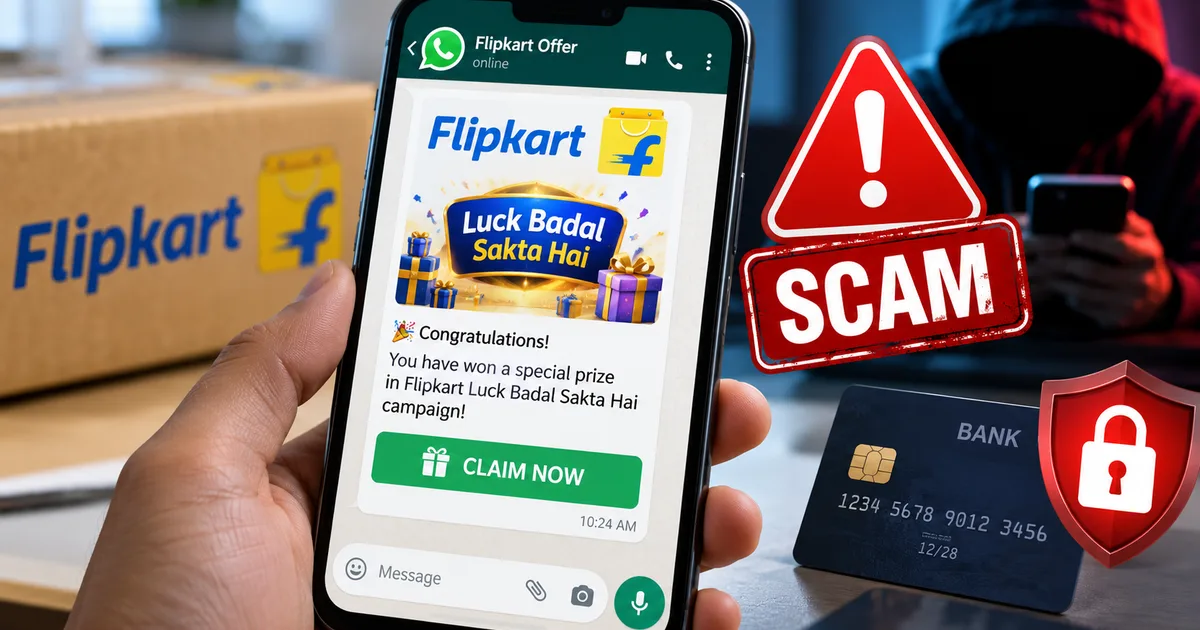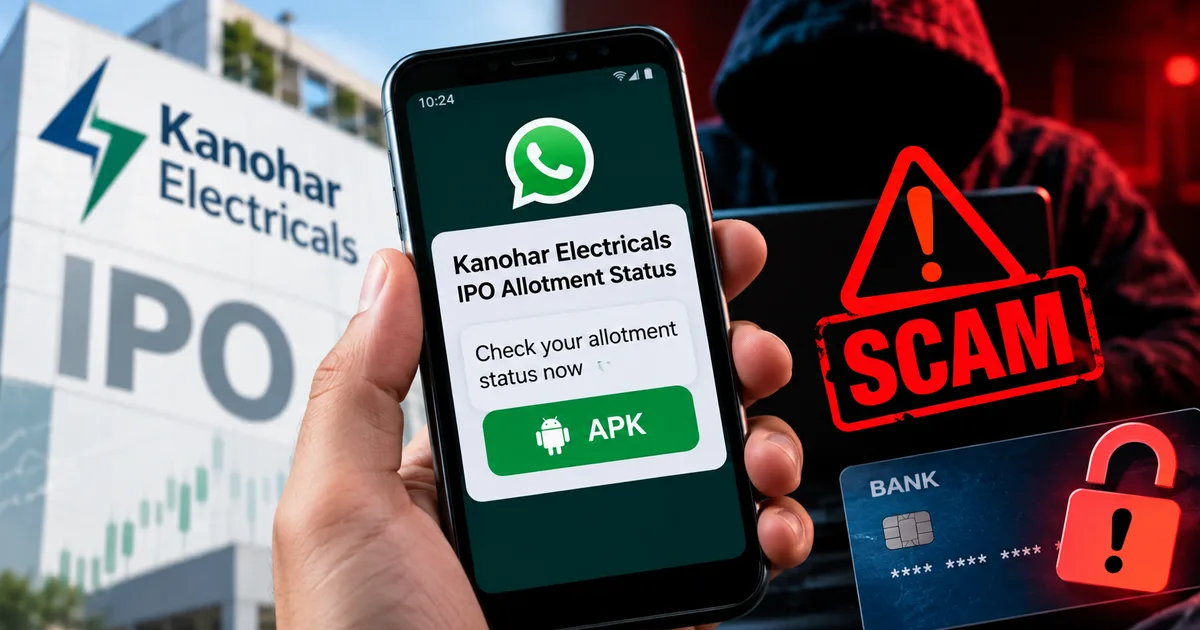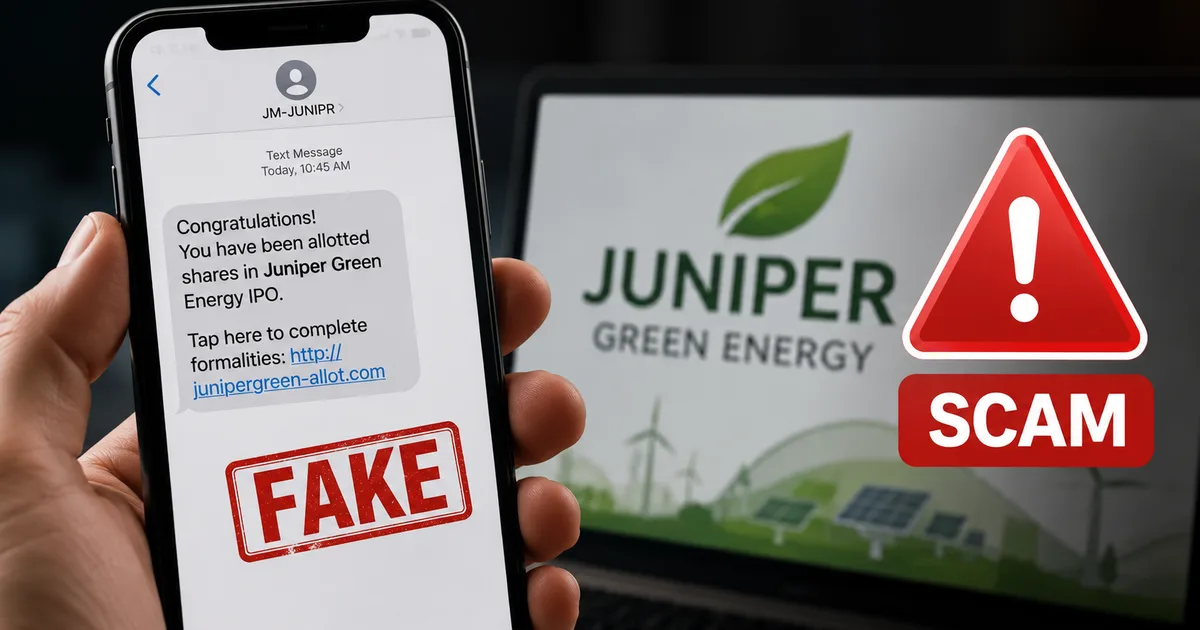
Look, the grey market premium for the Juniper Green Energy IPO is hovering around 4 percent right now. That's just enough to make retail investors hopeful, but not enough to guarantee a massive listing day pop. And exactly when we're all refreshing the BSE website to check if we got lucky, the scammers are working overtime. I've been getting messages all morning from people who clicked on a fake Juniper Green Energy IPO allotment SMS scam 2026 link. Honestly, it's infuriating how quickly these fraud rings adapt to the daily news cycle.
You apply for an IPO. You block your funds via UPI. You wait. Then your phone buzzes.
The message says you've been allotted shares. But there's a problem with your demat account, apparently. Or maybe it says you need to pay a small processing fee to get the shares. They use the official price band of Rs 214 to Rs 225 so it sounds real. I'm telling you right now, none of this is how the actual allotment process works.
If you click that link, you aren't getting shares. You're just handing over your login credentials. And then they'll drain whatever is sitting in your trading account (which happens a lot faster than you think).
Understanding the scale of this IPO allotment fraud
These fraudsters know the exact timeline of Indian public issues. They read the exact same news we do. And they know the allotment for Juniper Green Energy is happening today. So they blast out thousands of SMS messages and WhatsApp texts to phone numbers they bought off the dark web somewhere.
The premise is pretty simple. They play on your excitement. Or maybe your fear of missing out. The message usually claims you've got the shares, but your ASBA mandate failed at the last minute. Then they give you a link to retry your payment or verify your KYC details.
Thing is, your bank and your broker will never send you a random link to complete an IPO payment after the issue has closed. That window is just gone. If your mandate failed, you just don't get the shares. That's the end of the story. There's no second chance link.
But when you're anxious to lock in those potential listing gains, you might not think clearly. You click the link. And it takes you to a website that looks exactly like the official registrar's page or the NSE portal.
I've spoken to people who thought they were savvy investors. In my experience, they know how the stock market works and they read financial reports. But when they got a text at 9 AM saying their allotment of 66 shares was stuck due to a PAN linkage error, they panicked. They didn't stop to think about why the registrar would text them from a regular ten-digit mobile number. They just clicked it.
How the fraudsters steal your money step by step
I want to break down exactly how this happens so you know what to look for. Scammers rely on a specific sequence of events to get you to lower your guard.
First, you get a text message that looks urgent. It might even have a sender ID that looks somewhat official, like VM-BSEIPO or something similar. The telecom companies are supposed to block these. But the bad guys just register new fake companies to get around the filters completely.
Second, you tap the link because you want to check your status. The page that loads is a perfect clone of a real financial website. It has the BSE logo. It has the KFinTech logo. It'll ask for your PAN number and your DP ID. Sometimes it asks for your date of birth too.
Third, and this is where it gets dangerous, the site will prompt you to log in to your broker account to approve the transfer of shares. Or worse, it asks you to enter a UPI PIN to verify your bank account for the refund.
I need to be absolutely clear about this. You never, ever enter your UPI PIN to receive a refund or to check an allotment status. Your UPI PIN is only for sending money out of your account. If an app or a website asks for your PIN to process an IPO refund, you're being scammed.
Once they have your broker login or your UPI details, they take over. If they get into your demat account, they can sell your existing holdings and transfer the funds out. If they get your UPI PIN, they just empty your bank account directly. I've seen cases where victims lost lakhs of rupees in under five minutes flat.
The psychology of financial scams in India
Scammers don't just use technology. They use psychology. They know that applying for an IPO is an emotional process for retail investors. You tie up your capital for a week. You watch the grey market premium fluctuate. Then you read endless articles about whether the listing will be flat or if it'll double your money.
By the time the allotment day arrives, you're primed for action. When that text message arrives, your brain is already expecting news. So the scammers exploit that anticipation.
They also exploit the complexity of the Indian financial system. We have NSDL, CDSL, ASBA, and UPI mandates. There are registrar websites and broker apps. It's a lot to keep track of (annoying, I know). When a message says your CDSL linkage failed and gives you a link to resolve it, it sounds plausible enough to a tired investor who just wants their shares.
Warning signs that your allotment message is a scam
You need to be ruthless about ignoring unverified messages. If you ask me, this is how you can spot a fake text from a mile away.
- The link is suspicious. Official websites end in .com or .in or .co.in. Scammers use weird domains like .xyz, .vip, or strings of random numbers.
- The message asks for money. You already blocked funds when you applied. You never have to pay a separate processing fee or a late mandate fee.
- There is a sense of extreme urgency. They will tell you that your allotment will be cancelled in 15 minutes if you do not click the link. Legitimate financial institutions do not work on 15-minute ultimatums via SMS.
- The spelling is off. Read the message carefully. You will often find simple grammar mistakes or capitalized letters in the middle of words.
- They ask for your UPI PIN. Again, you never need a PIN to get your blocked money unblocked.
- The message comes from a regular mobile number instead of an official shortcode.
I've seen people lose their entire savings because they panicked over a message that had spelling mistakes in it. Take a breath. Just read the text before you act on it.
How to check your Juniper Green allotment status safely
You don't need to rely on random texts to find out if you got shares. There are only three places you should ever check your status.
You can check the official registrar's website. Or you can check the BSE website. You can check the NSE website too. That's it.
Don't Google how to check allotment status online and click the first sponsored link. Scammers buy ads to push their fake websites to the top of the search results.
Instead, log into your broker's app directly. If you use Zerodha or Upstox or Groww or Angel One, just open the app. If you got the allotment, it'll show up in your portfolio or in the IPO section. Your bank will also send you a real SMS saying the funds have been debited. If you didn't get it, you'll get a message saying the mandate was revoked.
If you want to use the BSE portal, go directly to bseindia.com. Type it into your browser yourself. Don't use a link from a text message.
Fraudsters are increasingly using spoofed SMS headers to make their messages look like they are coming from legitimate banks and stock exchanges. Always verify the source independently before clicking any links related to stock market transactions.
This is a real problem. The Telecom Regulatory Authority of India has been trying to crack down on these fake sender IDs, but the scammers keep finding workarounds. They route messages through international gateways or exploit loopholes in the bulk SMS registration process. I'm not sure exactly why it's so hard to stop them.
How to protect your demat account and bank details
We need to talk about basic security hygiene. I know you've heard this before. But people keep falling for these tricks because they think it won't happen to them.
First, enable two-factor authentication on your trading account. Most brokers require this now. But make sure you're using an authenticator app like Google Authenticator or Authy, not just SMS OTPs. SMS messages can be intercepted or redirected if a scammer manages to do a SIM swap on your phone.
Second, don't keep massive amounts of idle cash sitting in your trading account. If you sell some shares, transfer the money back to your primary bank account.
Third, be very careful about where you get your IPO news. Use legitimate financial apps. I highly recommend checking our guides section for safe trading practices. We also have a detailed breakdown of common investment frauds in our scam alerts category. And you can read up on general tech news in our news section to stay updated on the latest security breaches.
Fourth, if you get a sketchy message, just delete it. Don't reply to it. Don't click the link just to see where it goes. Sometimes just visiting a compromised website can download malware onto your phone.
Where to report IPO scams in India
If you did click the link and you realize you made a mistake, you have to move fast. Don't wait to see if the money actually leaves your account.
Call your bank immediately and freeze your account. Then call your broker and lock your trading account.
Then, you need to report the fraud to the authorities. The official portal is cybercrime.gov.in. I can't stress this enough, type the URL directly into your browser. Don't search for it, because scammers buy ads for fake reporting portals too.
You can also call the national cybercrime helpline at 1930. This number works across India. If you call them quickly enough, they can sometimes freeze the fraudulent transaction before the money is moved out of the banking system. The faster you act, the better your chances of getting your money back.
CERT-In also regularly issues advisories about these types of phishing campaigns. You can check their official website at cert-in.org.in to see active threats. It's worth keeping an eye on their updates if you're an active investor.
Look, participating in the stock market carries enough financial risk on its own. You don't need to add the risk of getting robbed by a guy with a laptop in a basement somewhere. Be paranoid about the links you click. If an allotment message feels wrong, it probably is. Just close the text and open your broker app instead.