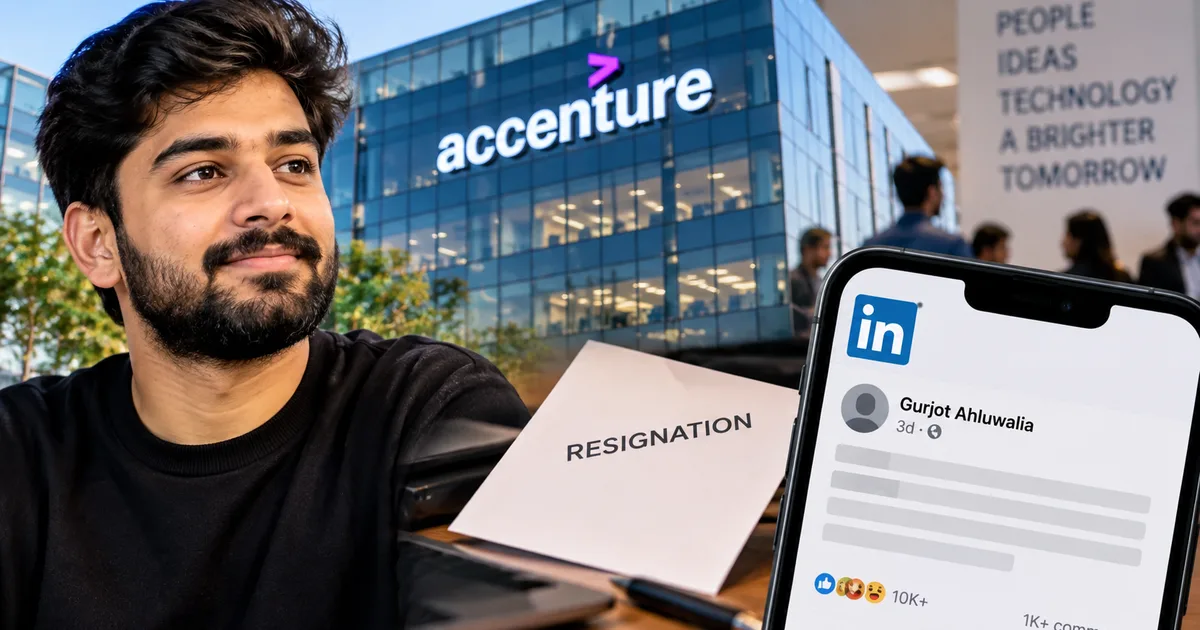
You've probably seen the posts flooding your timeline this week about the Gurjot Ahluwalia Accenture Resignation 2026 situation. The viral LinkedIn post and IT workplace debate explained here actually comes down to a collision of a few different stories that hit the internet at exactly the same time. People are angry. And honestly, they have every right to be.
I read through the posts and the comments. The anger is palpable. We're talking about people who spend 10 hours a day in front of a screen. They sit in Bengaluru traffic. They wonder why their bank accounts look so sad while their companies post record profits. It's a mess.
This isn't just one isolated incident. It's a massive boiling over of frustration. Indian IT workers are tired of the stagnant wages. They're tired of the toxic managers. So when a few specific stories went viral this week, the whole sector basically exploded in a collective venting session.
The details of what happened and why this matters for your own job are actually pretty straightforward.
The 5 crore net worth guy
Look, let's start with Gurjot Ahluwalia. He's an Accenture employee who shared how he hit a net worth of Rs 5 crore in just 11 years. Sounds amazing, right? A lot of people praised his discipline. He talked about delayed gratification and equity investments.
He attributed his success to two main things. Career advancement for higher income. Aggressive saving. He noted that his journey from a salaried middle-class person to a net worth of Rs 5 crore was made possible by no debt and zero rent.
But then you look closer. He had zero debt because his parents paid for his education. He paid zero rent because he lived with his parents. And suddenly, the story changes for a lot of people reading it. If you're paying Rs 30,000 for a tiny flat in HSR Layout and sending money back home to your family, his advice feels a bit hollow. It's entirely out of reach for the average person.
This isn't a knock on Ahluwalia. He played the hand he was dealt and played it well. He even admitted that recent market corrections knocked 8 to 10 percent off his net worth. The Indian equity market benchmark index Nifty dropped over 10 percent from last year's highs. He's open about the realities of investing. He famously said that investing is hard, but working a 9-5 for 40 years is harder. People resonated with that part.
Thing is, his story highlighted the massive gap between the haves and the have-nots in the Indian IT sector. If you have generational support, you can build wealth. If you're starting from zero and renting in Gurugram, your math looks very different, if you ask me.
If you want more context on how base pay structures are changing in these companies, you can read about the Accenture lump sum base pay split.
The five year insult and the counter offer
While people were debating Ahluwalia's privilege versus his financial discipline, another post blew up. Career coach Simon Ingari shared a story about an unnamed employee. This person got zero raises for five solid years. Not a single rupee extra from 2021 through 2025.
Think about that for a second. Think about inflation in India over the last five years. Think about the cost of petrol and the rent hikes. Working for the same salary for five years means you're taking a pay cut every single year.
So the employee did what anyone would do. They found another job offering a 65 percent hike and resigned. The boss was shocked. The boss actually asked why they were leaving when they were doing such a great job.
The 95 percent slap in the face
Exactly 48 hours later, the company came back with a 95 percent raise to try and retain them.
The employee turned it down. It was too late. And this is exactly what sparked the broader IT workplace debate. I'm not sure exactly why managers wait until you have one foot out the door to pay you what you're actually worth. Managers seem to think employees will just stick around forever out of loyalty. But loyalty doesn't pay the EMI on a 2BHK in Pune.
This happens all the time. A company will tell you budgets are tight. They'll give you a 3 percent hike and expect you to be grateful. Then you resign, and suddenly they find the budget to double your salary. It's insulting. It proves they had the money all along, they just chose not to give it to you.
A lot of this connects to the ongoing 1 lakh monthly income debate that has been raging recently. People are waking up to how much they're actually worth in the current market.
The shadow of AI and layoffs
You can't talk about the current workplace environment without talking about artificial intelligence. Companies like Accenture are planning AI-driven shifts. They're actively looking to exit employees who can't be retrained for an AI world.
This adds a huge layer of stress. Employees are being asked to upskill on their own time. They're expected to learn prompt engineering and figure out how to integrate AI into their daily workflows. If they don't, they risk being managed out of the company. It's a mess (annoying, I know).
So you have a situation where people are working harder than ever, trying to learn new technologies just to survive, while their salaries stay stagnant. It's a recipe for massive burnout. No wonder people are taking to LinkedIn and X to vent their frustrations.
Global versus Indian exit cultures
The fire got more fuel from a third viral post comparing exit processes. Someone shared their experience leaving American Express. They got their full salary in advance up to their last working date. Their full and final settlement was processed cleanly within 11 days. Gratuity was paid out without a fight. They even had enough money to float them through a few months in Europe.
Compare that to the average Indian IT company exit. It's a nightmare.
- You have to chase HR for 45 days just to get a response.
- They hold back your last month's salary as leverage.
- They try to deny your gratuity by claiming your full-time job was somehow contractual.
- You have to run around getting clearances from departments you never even interacted with.
- They threaten to withhold your experience letter if you do not comply with absurd demands.
We've seen this pattern repeat across the industry. Look at the recent 2026 TCS Nashik workplace harassment case that dominated the news. Look at the founder in Gurgaon who fired an employee just for asking to skip work for a few hours. Look at the manager who denied an employee leave for a critically ill family member, giving her a brutal choice between her job and her family. These aren't isolated incidents. They're symptoms of a work culture that treats human beings like expendable resources.
You can find more discussions about these kinds of workplace issues in our Tech Explainers section.
Why managers need to wake up
Employees are tired. The comments sections on all these posts say the same thing. People don't leave just for money. They leave because they feel undervalued. Ingari pointed out that waiting for a resignation letter is a massive failure of management.
Here are the things managers are getting wrong right now.
- They assume silence means satisfaction. Just because an employee is not complaining everyday does not mean they are happy.
- They weaponize the appraisal process to deny raises. They use arbitrary metrics to justify paying you less.
- They rely on a bad job market to keep people trapped. They know you have bills to pay, so they push you to the limit.
- They think a pizza party replaces a cost of living adjustment.
- They demand 70 hour work weeks but refuse to pay overtime.
"Retention requires more than occasional pay adjustments. Employees also need recognition, opportunities for growth, meaningful feedback, and leaders who proactively invest in their development. Waiting until a resignation letter arrives can be a costly mistake."
That quote from the viral post nails it. By the time someone drafts a resignation letter, they've already checked out mentally. Trust is broken. No amount of money is going to fix a relationship where the company only values you when you threaten to leave.
What this means for your career
Basically, you need to look out for yourself. Your manager isn't going to do it. The HR department is definitely not going to do it. If you've gone two years without a decent raise, it's time to start interviewing. Don't wait five years like the person in the viral post.
Make sure your investments are automated. You might not hit 5 crore in 11 years if you're paying rent in a metro city, but you can build a cushion. Having a financial cushion is what gives you the power to walk away from a toxic workplace. It gives you the power to say no to that 95 percent counter offer that came three years too late.
Protecting yourself during an exit
If you're planning to resign, you need to be smart about it. In my experience, you shouldn't just send an email and hope for the best.
- Download all your payslips and tax documents from the company portal before you resign. They might cut your access immediately.
- Read your contract carefully. Know exactly what your notice period is. Do not let them force you into staying longer than required.
- Calculate your own full and final settlement amount. Do not just trust the HR numbers blindly.
- Document everything. If you hand over a laptop, get a signed receipt. Do not leave room for them to claim you lost company property.
- Know your rights regarding gratuity. If you have completed five continuous years of service, you are legally entitled to it. Do not let them play games with contractual loopholes.
The workplace debate isn't going away anytime soon. Companies will have to change their retention strategies if they want to keep their best talent. Employees are talking to each other. They're sharing salaries. They're exposing toxic managers on LinkedIn and Reddit. The balance of power is shifting, even if it feels slow.
Keep your resume updated. Keep your skills sharp. Let them figure out the rest.