So, the Hyundai Bayon SUV 2026 India launch is officially happening. You might be wondering why we need yet another SUV from the Korean carmaker. Honestly, I thought the exact same thing. We already have the Venue. We have the Creta. But Hyundai thinks there is a gap right between those two, and the Bayon is their answer. They just opened bookings for a token amount of ₹11,000. It's a 4.2-metre crossover that promises to offer something a bit different for Indian buyers who want more space than a Venue but can't quite stretch their budget for a Creta.
Look, the sub-compact SUV market is a mess of options right now. It feels like every month we hear about a new model. But the Bayon is interesting because it stretches beyond that four-metre mark. That extra 200mm actually matters. It usually translates to real, usable legroom in the back seat and a boot that can swallow more than two small trolley bags. And if you're trying to keep up with the Latest Tech News and car launches, you know Indian families care deeply about rear-seat comfort.
I want to break down exactly what we know about this car.
Hyundai has been drip-feeding us teasers. Some concrete details are finally out. The launch is expected this festive season, likely in October 2026.
Design and dimensions of the Bayon
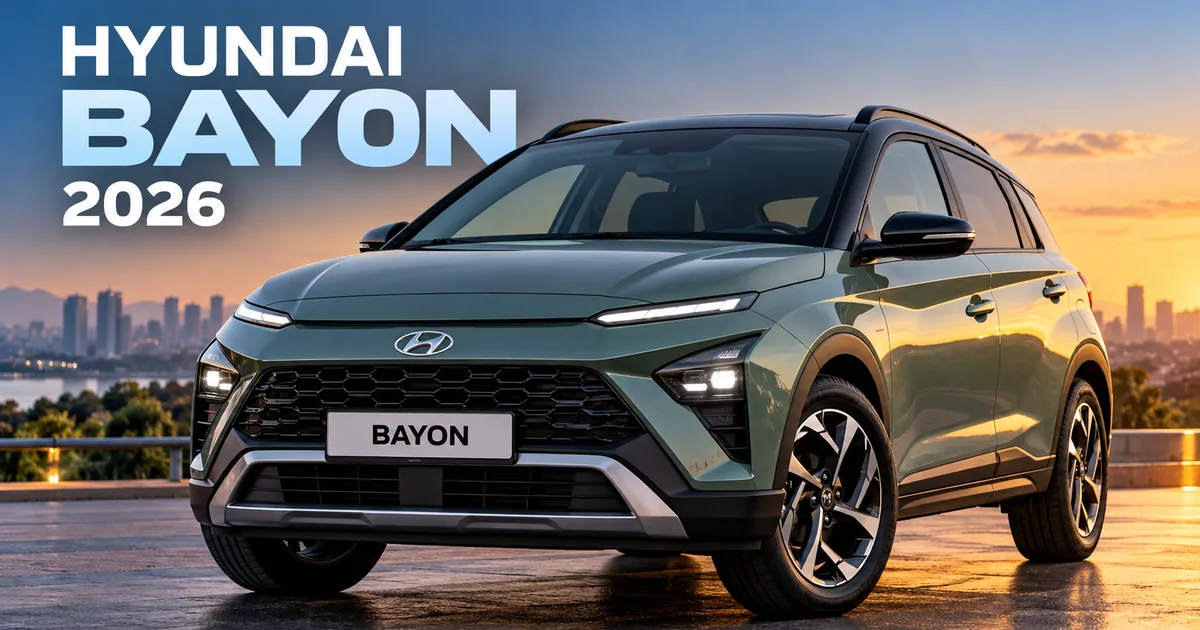
The Bayon is built on what Hyundai calls the Global K Enhanced Platform. From the outside, it definitely looks like a crossover rather than a traditional boxy SUV. It has a sloping roofline and a sharp upward kink near the C-pillar. The front end has inverted L-shaped LED daytime running lights connected by a thin black trim. The actual headlights are vertically stacked down in the bumper (which makes sense, actually, given current design trends).
It's a busy design. Some people love that futuristic look. Others think it's trying too hard. In my experience, designs like this take a bit to grow on you. The rear gets a roof-integrated spoiler and an LED light bar connecting the tail lamps. It also has a rear wiper. Honestly, that should be standard on every hatchback and SUV sold in India. It sits on dual-tone alloy wheels that look pretty sharp in the press shots.
Since it measures 4.2 metres in length, it's noticeably longer than the Venue. The big question is whether that length is going entirely into the boot or if rear passengers get more knee room. We'll have to wait and see the physical car to know for sure. I'm not sure exactly why they haven't clarified this yet. If you're comparing this to upcoming models, you might want to read about the Nissan Tekton SUV expected specs, which is another player looking to shake up this segment.
Interior features and tech upgrades
Hyundai rarely skimps on interior features. They know Indian buyers love a cabin packed with gadgets. The feature list is extensive.
- A connected-screen setup integrating the driver display and infotainment system.
- Dual-zone climate control for handling extreme Indian summers.
- A wireless phone charger to keep your devices topped up on long drives.
- An in-built generative AI voice assistant for natural voice commands.
Expect a lot of black plastics broken up by some premium-feeling materials. Hyundai mentioned leatherette upholstery, which is easier to clean than fabric. They also talk about an in-built generative AI voice assistant. This is supposed to make talking to your car more natural. Instead of memorising rigid commands like "set temperature to 22 degrees", you can apparently just tell it you're feeling hot. I think that's a lot better than yelling at a screen. We'll see how well it handles Indian accents in the real world.
A panoramic sunroof is almost guaranteed for the top variants. Indian buyers are obsessed with sunroofs right now. Hyundai might even throw in rear sunshades. Those are a godsend during our brutal summers (annoying, I know, when you park in the sun). If you enjoy deep dives into how car tech is changing, our Tech Explainers section has more on automotive software trends.
Expected engines and transmission
Here's where things get a bit predictable. The official booking announcement confirmed a petrol powertrain with manual and Intelligent Variable Transmission (IVT) options. Most reports suggest this is the familiar 1.5-litre naturally aspirated petrol engine that Hyundai uses in several other cars. If you ask me, sticking with a proven engine is a smart move.
This engine is smooth and reliable. It isn't going to set your pulse racing. But it gets the job done for city commutes and highway cruising. The IVT is basically Hyundai's version of a CVT automatic. It's great for stop-and-go traffic because it doesn't have the typical jerkiness of an AMT or the potential long-term reliability worries of a dual-clutch transmission.
There are strong rumours about a CNG variant too. Given the high petrol prices in India, a factory-fitted CNG option makes a lot of sense for buyers who drive long distances daily. We don't have official confirmation on the exact power figures yet. The numbers here are a bit fuzzy, but around 115 PS is a safe bet if it's the 1.5-litre unit (which is standard for this segment, anyway).
"The Hyundai BAYON embodies our vision of intelligent mobility by seamlessly integrating advanced technology, futuristic design and comprehensive safety into a compelling SUV package." - Tarun Garg, Managing Director and CEO, Hyundai Motor India Limited.
Safety and the Bharat NCAP factor
Safety has become a massive selling point in India. Tata and Mahindra changed the game by scoring high in crash tests. Other manufacturers have had to catch up. Hyundai states that the Bayon's platform is engineered for 5-star Indian safety standards.
That sounds impressive. But that's an internal assessment. The car hasn't been independently tested by Bharat NCAP or Global NCAP yet. We can't call it a 5-star car until a third party crashes it into a barrier and publishes the results. Still, the intent is clear. It's a massive step up from where Hyundai's budget cars were a few years ago.
The safety equipment list is pretty solid. Six airbags will almost certainly be standard across all variants, in line with current government mandates. You can also expect a tyre pressure monitoring system and ISOFIX mounts for child seats. Higher variants will probably get Level-2 Advanced Driver Assistance Systems (ADAS). Features like automatic emergency braking and lane-keep assist are becoming common in this price bracket, which, honestly, is great for everyone on the road.
Expected price and booking details
You can book the Bayon right now through Hyundai's website or at any of their dealerships. The initial token amount is ₹11,000. It's a fully refundable deposit, so there's no real risk if you change your mind later.
As for the actual price, Hyundai is keeping quiet until launch day. But we can make an educated guess. The Venue starts just under ₹8 lakh, and the Creta starts around ₹11 lakh. The Bayon needs to fit comfortably between them. I'm expecting a starting price of roughly ₹9.5 lakh for the base manual variant. The fully loaded automatic with Level-2 ADAS and a panoramic sunroof could easily touch ₹14 lakh or ₹15 lakh ex-showroom.
If that top-end price gives you pause, you might be tempted to just buy a larger vehicle.
In that case, you should check out the Hyundai Creta next gen 2026 upgrades to see if the jump in budget is worth it for your family.
How it stacks up against the competition
The Indian car market doesn't forgive mistakes. When you launch a car that costs over a million rupees, it has to offer clear value. I suspect the Bayon's biggest rival might actually be sitting inside the exact same showroom. A mid-spec Creta costs roughly the same as what we expect the top-spec Bayon to cost. That's a classic dilemma. Do you buy the smaller car with all the bells and whistles, or the bigger car with fewer features?
Then there's the Maruti Suzuki Fronx. The Fronx proved that Indians are perfectly happy buying crossover hatchbacks if they look good and offer decent ground clearance. The Bayon is basically aiming at that exact same customer. It has a more premium interior and potentially better safety credentials. The Fronx has been selling in massive numbers. Hyundai obviously wants a piece of that pie.
We also have to consider the Tata factor. Tata Motors dominates the SUV space right now with the Punch and Nexon. The Nexon is a sales juggernaut. The Bayon will have to lure buyers away from the Nexon's proven crash test safety and muscular styling. Hyundai is betting heavily on its generative AI tech and smoother petrol engines to win that fight. Some buyers find Tata's petrol engines a bit unrefined, so a smooth IVT option from Hyundai is a strong counter-punch if you think AMT gearboxes are sketchy.
We'll know exactly how it drives and feels once the test drives open up in October. If you're on the fence, that ₹11,000 token is refundable anyway.