The reality of software subscriptions right now
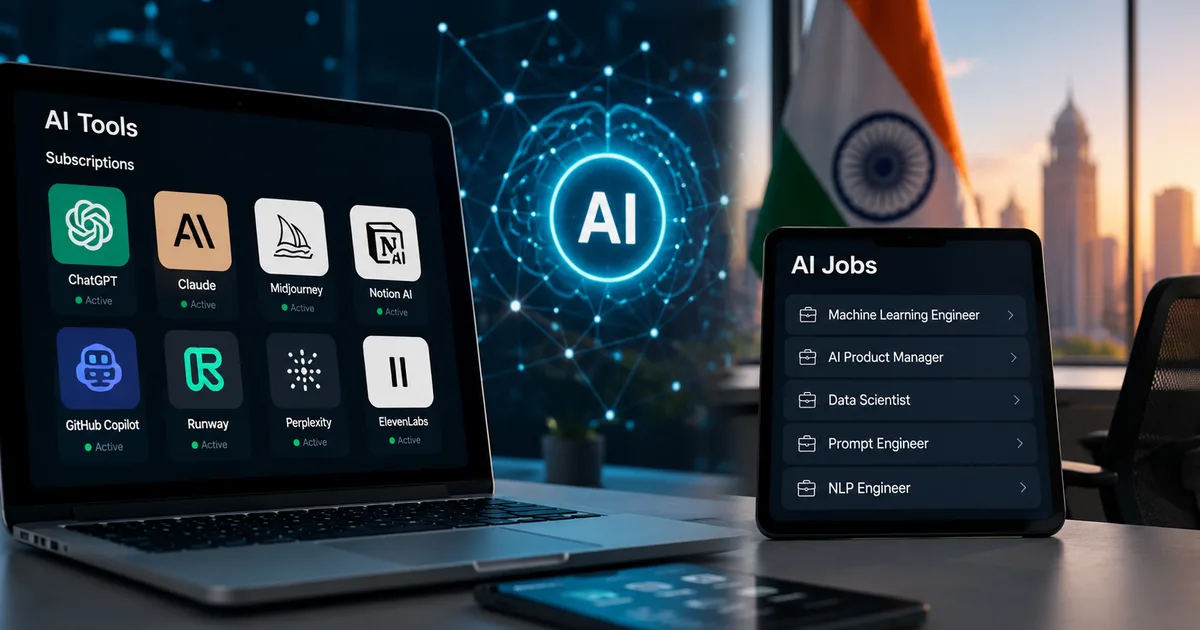
Tracking the latest AI tools trends in India in 2026 means facing a very annoying reality. Everything is getting expensive. You might have seen the news about tech industry lifestyles taking a hit. A recent MSN report pointed out that things like MacBooks and whey protein are getting more expensive. Software subscriptions are also seeing massive price hikes. That isn't a joke. ChatGPT Plus and Claude Pro cost around INR 1,950 a month each. That adds up incredibly fast.
I canceled two of my subscriptions last week. I realized I only really use one of them daily. People are starting to ask if these programs actually save enough time to justify the cost. And honestly, for most folks running a small agency out of Pune or doing freelance graphic design in Bangalore, a Rs. 2,000 monthly bill better deliver actual money back into your bank account.
The hype is fading fast.
We're past the phase where everyone just buys a subscription to play around with image generation. Businesses want actual returns. But look, a lot of the products out there just don't cut it yet for Indian workflows. They don't understand our local context well enough. They struggle with mixed Hindi-English prompts. If a chatbot can't understand basic Hinglish slang, it isn't going to help a local sales team close a deal.
Amazon is throwing serious money at Indian sellers
Some companies are trying to fix that local context issue. Amazon CEO Andy Jassy met with PM Modi recently. They committed to a massive $48 billion investment in India by 2030. According to WION, they added $13 billion specifically for cloud infrastructure in Mumbai and Hyderabad. So what does that mean for you on a daily basis?
Here's the deal. If you sell on Amazon India, things are changing very fast (and it's a bit overwhelming, I know). Mashable India reported that ahead of Prime Day 2026, Amazon expanded its automated Seller Assistant for MSMEs. If you sell phone cases or kitchen gadgets, this tool helps you automate listings. It also manages inventory.
I've spoken to a few sellers who tried the early beta. I'm not sure exactly why, but opinions are totally split. Some say it helps write product descriptions that don't sound completely robotic. Others think it's just another way for Amazon to control the platform. But if you want to compete this Prime Day, you probably have to use it. The barrier to entry for selling online is dropping. That means the competition is getting fiercer. You can read more in our guides section about navigating these platforms.
Thing is, Amazon knows exactly what they're doing. They give you the tools to make selling easier. That brings more sellers onto the platform. And that drives down prices. It's great for buyers. But for sellers, it means you have to work twice as hard to maintain your margins. You can't just rely on standard marketing anymore.
The great Indian talent gap is a massive problem
We need to talk about jobs. Everyone thinks algorithms are going to take their job. NITI Aayog released a roadmap for job creation in the AI Economy-2025 that admits some job losses are coming. But the actual data tells a completely different story.
India produces the most STEM graduates in the world. We lead the global rankings in skill penetration. Yet, MSN recently reported we're facing a projected shortfall of over 1.4 million professionals in this specific sector. This is a business crisis in the making.
Basically, a recent report from Shoolini University about what employers want in 2026 made it very clear. Companies are desperate for people who have hard technical skills. And they want those skills combined with actual industry experience.
"Companies are no longer impressed by generic tech knowledge. They demand specific, applied skills that translate directly into business efficiency and measurable cost savings."
They don't just want someone who knows how to type a prompt into a text box. They want someone who understands how to build a logistics pipeline. They want someone who uses automation to make it faster.
So if you're a student right now, stop worrying about losing your entry-level coding job. Start figuring out how to build things. Pick a specific industry. Learn how it works. Then figure out how to make it more efficient. That is how you get hired in 2026. The jobs aren't disappearing. They're just changing shape. You need to adapt.
Design and development are finally merging
Let's look at specific software. Figma just held Config 2026. Analytics India Magazine covered their new release of code-native design tools. This is a big deal for product designers in India.
For years, the handoff between designers and developers was a total nightmare. You draw a button, the developer codes it, and it looks completely different (which makes sense, actually, given the tools). Now, Figma is trying to bridge that gap entirely. Their new features can basically write the front-end code for the designs you make.
Honestly, this is one of the more useful updates they've released. I tried a similar application a few months ago and it was a mess. But Figma usually gets the user experience right. If you run a small dev shop and charge clients in US dollars, this is going to drastically cut down your build times.
You can check out our tools section for more detailed reviews on design software. The line between designer and developer is blurring entirely. Within a year, you probably won't be able to get a UI job without knowing how to read the code these programs spit out. It's uncomfortable for people who just want to draw pretty interfaces. But that's the direction the market is moving.
The rise of local language support
Let's talk about Indian languages. For a long time, all the big tech companies focused purely on English. That's finally changing. We're seeing a massive push for tools that actually understand Hindi, Tamil, Telugu, and Marathi.
This matters a lot. If you run a small business in Jaipur and want to set up an automated customer service bot on WhatsApp, an English-only bot is useless. Your customers want to chat in Hindi. Or they use a mix of Hindi and English.
The new models coming out in 2026 are specifically trained on Indian datasets. They understand the nuances of how we actually speak. I tried a beta version of a Hindi voice assistant last week. It didn't sound like a news anchor from the 1990s. It sounded like a normal person you'd talk to at a tea stall.
This is where the real money is going to be made. The companies that crack local language support will dominate the Indian market. Everyone else will be left fighting over the top 10 percent of English speakers in metro cities.
The law finally catches up with the tech
You can't talk about the latest software trends without talking about the legal side. Frontline Magazine reported that the India AI Court Rules 2026 just passed a ban on risk scoring.
If you missed this, risk scoring is when a company uses an algorithm to decide if you're a risky customer. Insurance companies do it. Banks do it when you apply for a home loan. The government finally stepped in. They said you can't use an opaque system to deny someone a service without explaining exactly why.
(I know, sounds complicated, but it isn't. It just means companies have to show their homework).
I think this is actually a really good thing. We need some guardrails before things get completely out of hand. Tech companies have operated with zero oversight for too long. Forcing them to explain their automated decisions is the absolute bare minimum we should expect.
Cybersecurity is giving everyone a headache
At the same time, cybersecurity is becoming a total mess. India Today reported that Apple just released early iOS updates specifically because they're terrified of new automated cybersecurity threats. Hackers are using scripts to find vulnerabilities faster than companies can patch them.
This affects you directly. It isn't just about massive corporations getting hacked. It's about your personal bank account. Scammers are using these tools to clone voices. They automate phishing emails that actually sound like they come from your boss or your bank.
Here are three things you must do today to protect yourself:
- Enable two-factor authentication on your primary email account and all banking apps.
- Install a reputable password manager and generate unique passwords for every site.
- Never approve a UPI payment request if you didn't initiate the transaction yourself.
If you're still using a sketchy password for your HDFC net banking, please stop. Go read our scams page and fix it. The attacks are only going to get more sophisticated from here on out. Don't wait until you lose money to take this seriously. If you spot a scam, report it to the cybercrime.gov.in portal or call the 1930 helpline immediately.
The creator economy is shifting gears
Let's talk about content creators. Indian Television Dot Com reported that TikTok unveiled a new automated agent for creators at Cannes Lions 2026. Now, I know TikTok is banned in India. But Instagram and YouTube are rolling out the exact same features here.
Basically, these platforms are giving creators tools to automate their video editing and generate scripts. They even let you reply to comments automatically. If you're a small YouTuber in Kerala trying to grow your channel, you're competing against people who use software to pump out five videos a day.
It's overwhelming. You can't match that volume manually. You have to start using these tools just to keep up. But there's a catch. Viewers are getting incredibly good at spotting automated content. If your video sounds like a machine wrote it, people will scroll past instantly. The trick is using the software for research and editing. But you have to keep your actual personality in the video. The creators who win in 2026 will be the ones who use technology to work faster. They won't use it to replace their own voice.
You can read our explainers on how algorithms push content to understand this better. The platforms want engagement. They don't care if a human or a script generated the video that gets it.
What you actually need to do right now
So where does this leave us? News On AIR says the India-AI Impact Summit is happening in New Delhi next week. A bunch of world leaders are going to show up and talk about how the tech is going to change everything.
Look, you don't need to care about the summit. You need to look at your own daily workflow. Look at what you do every day that takes up way too much time. Find one single tool that fixes that specific problem. Learn it properly. Stop paying for four different subscriptions when you only really use one.
Ignore the hype. Stop reading every single newsletter that promises to make you a millionaire in a week. Focus on your actual skills. And use technology to make yourself a little bit faster every day.