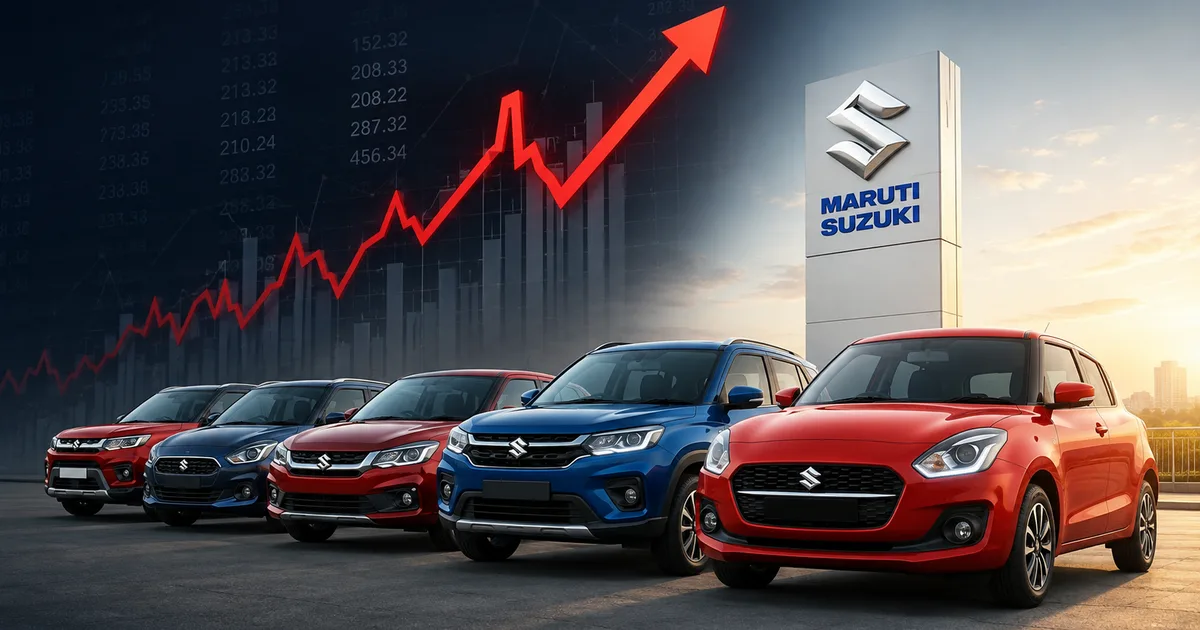
If you've been saving up for a new car this festive season, I've got some slightly annoying news. The Maruti Suzuki August 2026 price hike is officially here. Honestly, we all knew this was coming. But it still stings when you look at the final on-road price.
I'm not sure exactly why, but India's biggest carmaker just announced they're increasing prices across almost their entire lineup by up to ₹30,000. And yes, this applies to both Arena and Nexa models. If you were eyeing a new Swift or a Grand Vitara, your EMI just went up a little bit. We need to look at exactly what this means for your wallet. I think the numbers here are a bit fuzzy right now, but we know which cars are affected and why cars keep getting more expensive in India.
The Maruti Suzuki August 2026 price hike impact
Maruti Suzuki didn't just wake up and decide to charge ₹30,000 extra for every single car. The price hike is variable. It depends entirely on the model and the specific variant you choose to buy.
For some entry-level models, the bump might just be a few thousand rupees. But if you're looking at top-end variants of their premium SUVs, you'll feel the full ₹30,000 hit. I checked the latest updates from dealerships across major cities like Delhi, Mumbai and Bengaluru. The revised price list is already active. So if you walk into a showroom today, the quote they give you will include the new pricing.
"India's leading car manufacturer, Maruti Suzuki, is set to increase vehicle prices by up to Rs 30,000 across all models from August 2026, a move necessitated by the continuous rise in input costs."
I know it sounds complicated, but it isn't. Basically, if you haven't paid the full booking amount and locked in your price before the cutoff date, you're paying the new rate. Simple as that. Even if you booked the car three months ago but the delivery is scheduled for tomorrow, you're liable to pay the increased price unless your dealer offers price protection. They rarely do these days.
Which Maruti models are getting more expensive?
Maruti splits its cars into two retail channels. Arena is for the everyday mass-market cars. Nexa is for the premium cars. Both sides of the showroom floor are seeing price adjustments. In my experience, these adjustments always favor the dealer.
The Arena lineup changes
Arena is where most Indian families buy their first car. The price hike here hurts the most because buyers in this segment are highly price-sensitive. A ₹10,000 increase can sometimes make or break a loan approval for a middle-class buyer.
- The new generation Swift launched recently with the new Z-series engine is already seeing a price bump. The exact amount varies, but expect to pay around ₹10,000 to ₹15,000 more for the popular ZXi trims.
- According to recent dealer price lists, the Victoris SUV is seeing an increase of up to ₹10,000 depending on which variant you pick. It is a modest hike for a popular vehicle.
- Budget champions like the WagonR and Alto K10 aren't spared either. The increases are generally smaller, hovering around the ₹5,000 to ₹8,000 mark. It doesn't sound like much, but when you are stretching a budget to afford a ₹6 lakh car, every thousand rupees counts.
- India's favourite MPV, the Ertiga, is getting pricier too. Given the massive waiting period on the CNG variants, buyers will just have to accept the new price when their car finally arrives.
The Nexa lineup changes
If you want a Nexa car, you were already prepared to spend a bit more. But the August 2026 price hike hits these premium models the hardest.
- The Baleno is one of India's best-selling premium hatchbacks. The top-spec Alpha variants are getting noticeably pricier. If you wanted that 360-degree camera and head-up display, you will pay extra for the privilege now.
- You see the maximum ₹30,000 hike on the Grand Vitara, especially on the strong hybrid variants. The Grand Vitara has been a massive hit. Maruti knows people will still buy it even with the higher sticker price because it offers great mileage in city traffic.
- The Jimny off-roader has had a weird pricing history, with massive discounts followed by price corrections. Now, it is getting more expensive again. If you want a lifestyle 4x4, be prepared to shell out more.
- The newly introduced e Vitara electric SUV is also on the list of affected models. If you were planning to switch to an EV to save on petrol costs, you need to factor this higher initial purchase price into your long-term math.
Check out our car buying guides if you need help deciding which variant actually makes sense for your budget right now.
Why did Maruti Suzuki increase prices again?
People always ask why car prices keep going up every six months. Maruti's official statement blames a sustained rise in input costs and continuing inflationary pressures. But what does that actually mean for you and me?
It boils down to a few very real problems in the manufacturing world. First, raw materials are a bit of a mess right now. Steel and plastics cost more today than they did a year ago. A car is basically a giant metal and plastic box. When the raw materials get expensive, the box gets expensive. There's no way around it.
Second, electronics. Modern Maruti cars are packed with chips. Even a basic Swift now has a touchscreen and complex engine management systems. Sourcing these components is permanently more expensive (which makes sense, actually). The global supply chain never fully recovered from the disruptions of the past few years. And tech components are costly.
Third, logistics and operational costs. Moving cars from factories in Haryana and Gujarat to a dealership in Kerala or Assam takes fuel and manpower. Inflation hits logistics hard. Those costs are passed directly to the customer.
Honestly, I think carmakers also hike prices because they can. Demand in the Indian auto market is extremely strong right now. When people are willing to wait six months for a Grand Vitara, a ₹20,000 price hike isn't going to stop them from buying it. It's a seller's market.
Are other car brands doing the same thing?
If you're thinking about ditching Maruti Suzuki and walking into a Hyundai or Tata showroom, hold that thought. The entire auto industry moves in a herd. When the market leader hikes prices, everyone else follows suit within weeks.
Historically, when Maruti announces a price hike citing input costs, companies like Tata Motors and Hyundai India usually announce their own price hikes shortly after. They buy steel and electronics from the same global suppliers. So they face the exact same cost pressures. Jumping ship to another brand won't necessarily save you from inflation. You're just trading one set of price hikes for another.
How much extra EMI are we talking about?
Most people don't buy cars with cash. They take a loan. So, how does this affect your monthly budget?
Suppose you're taking a 5-year car loan at an interest rate of 8.5%. A ₹30,000 increase in the principal loan amount translates to an extra ₹615 on your monthly EMI. Over the course of 5 years, you'll end up paying roughly ₹36,900 extra in total. That includes principal and interest.
If the price hike on your specific model is only ₹10,000, your EMI increases by barely ₹200 a month. When you break it down like that, it doesn't sound completely terrible. But it's still money leaving your pocket that you could've spent elsewhere.
Should you buy now or wait?
If you're holding off on buying a car in hopes that prices will drop, I've got bad news. Car prices in India almost never go down. They only go up.
If you need a car right now, you just have to swallow the bitter pill and pay the new price. But there's a strategy you can use to soften the blow.
Wait for the festive season discounts. Navratri and Diwali are just around the corner. While the ex-showroom price has gone up, dealerships will absolutely offer cash discounts and exchange bonuses in October and November to hit their sales targets. Often, these festive discounts completely cancel out the recent price hikes.
Also, don't forget to negotiate on the insurance and accessories. Showrooms make a huge margin on insurance. Get a quote online from platforms like PolicyBazaar. Ask your dealer to match it. You can easily save ₹10,000 to ₹15,000 right there. That covers half of this new price hike.
When you're ready to book, ensure you use a secure payment method. Most dealers accept UPI for the initial ₹11,000 booking amount. It's fast and tracks easily on your bank statement. If you're worried about online frauds while paying booking amounts or dealing with sketchy financing agents, read our piece on recent payment scams to stay safe.
What are the alternatives if Maruti is too expensive?
If you feel the new pricing pushes Maruti cars out of your comfort zone, you might be wondering what your other options are. The Indian car market is incredibly competitive right now.
If you were looking at the Arena lineup, say the WagonR or Celerio, you might want to test drive the Tata Tiago. It's a solid hatchback. It feels a bit sturdier. And Tata often runs aggressive pricing campaigns to capture market share. Similarly, if the new Swift seems pricey, the Hyundai Grand i10 Nios is a fantastic city car with arguably better interiors for the price.
Moving up to the Nexa tier, the alternatives get very interesting. A ₹30,000 hike on the Grand Vitara pushes its on-road price dangerously close to cars in a slightly larger segment. You could look at the Kia Seltos or Hyundai Creta. Yes, they might cost a bit more upfront. But if you're already stretching your budget for a top-spec Grand Vitara, you owe it to yourself to check out the Korean competition.
If you were considering the e Vitara, don't ignore Tata's massive EV lineup. The Nexon EV and Punch EV have practically established the electric car market in India. They have proven range and massive service networks. Their pricing might just undercut the newly launched Maruti EV.
Always calculate the running costs before making a final decision on any brand.
The ripple effect on the used car market
A weird side effect of new cars getting more expensive is that used cars get more expensive too (annoying, I know). When a brand new Swift ZXi touches ₹10 lakhs on-road, a three-year-old Swift suddenly looks like a great deal at ₹6 lakhs. This increased demand pushes up second-hand prices.
If you're planning to sell your old car to buy a new Maruti, you might actually get a better exchange value right now. The dealership wants your used car. They can sell it for a premium in their True Value division. Use this as leverage when negotiating your new car purchase.
Getting your paperwork sorted
One quick tip for when you do buy: make sure your paperwork is in order before the delivery date. The RTO registration process is mostly digital now. Keep your Aadhaar linked to your current mobile number. The OTP verification is mandatory for vehicle registration in most states.
Once you get the car, skip the physical RC smart card wait. Just download your RC and insurance directly into your DigiLocker app. The traffic police across India accept DigiLocker documents natively now. It saves you the headache of carrying physical papers that can get lost or damaged.
Cars are expensive. They just got a little more expensive. Plan your finances carefully. Don't overstretch your loan tenure just to afford a higher EMI. And always negotiate the insurance.
You can read more about managing your money and understanding tech policies in our finance explainers section. Or check out our latest tech news for other industry updates.
Look, a car is a depreciating asset. Don't buy a top-end variant if a mid-spec one fulfills all your family's needs perfectly well. Your future self will thank you for keeping that EMI manageable.