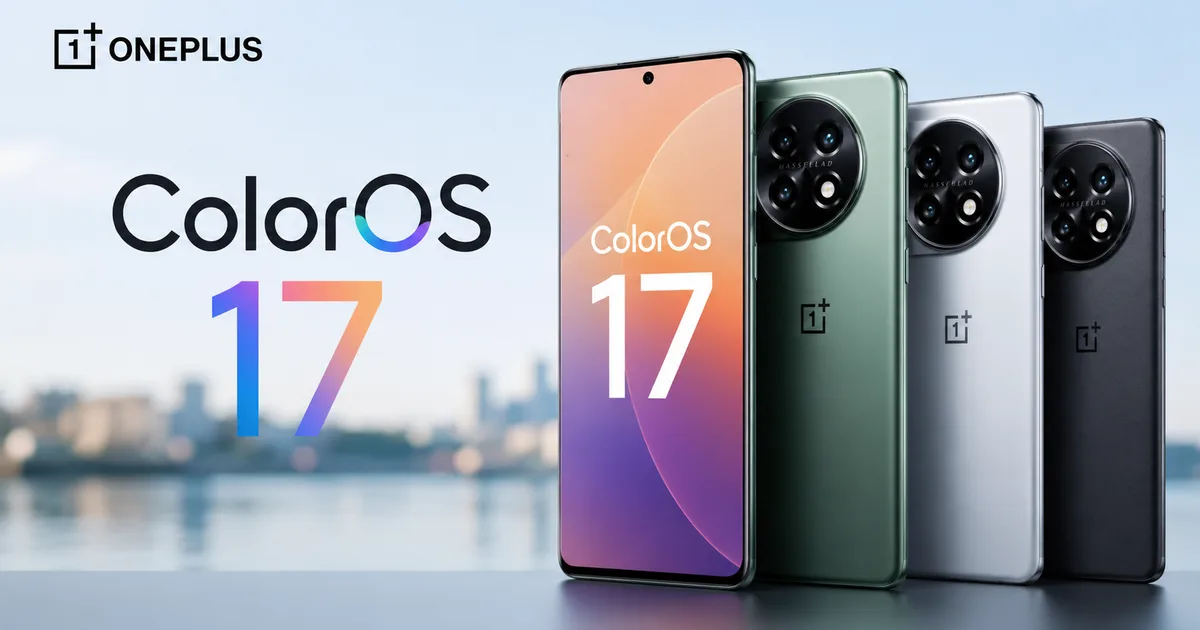
So, the day has finally come for OnePlus fans in India. The brand is officially pulling the plug on OxygenOS. Starting later this year, eligible devices in India will be moving to OnePlus ColorOS 17, and this merges the software experience with OPPO.
This is a massive shift for a brand that built its reputation on offering a faster alternative to heavy competitor interfaces. If you own a OnePlus device, you've probably got questions. What does this mean for your phone? Are you going to lose features? When is this happening? (It's a lot to process, honestly). I spent the weekend reading official press releases. I scoured developer forums. I talked to offline retailers to get you the facts.
Honestly, I'm not shocked by this move at all. The shift has been obvious ever since OnePlus and OPPO started merging their software codebases a few years back. OxygenOS has slowly been blending into ColorOS anyway. Now they're just dropping the pretense. They're calling it what it is.
If you use a OnePlus 11 or a Nord 4, you'll get the exact same Android 17-based software as an OPPO device. Some people will absolutely hate this. The OnePlus forums are already full of angry threads. But for others, it might actually mean faster updates. Let me break down exactly what this transition means for users here in India.
Which OnePlus devices get the update?
The biggest question everyone has right now is whether their phone makes the cut. Buying a premium smartphone in India is a serious investment, if you ask me. You expect software support to last a few years. If you bought a flagship recently, you're safe. Older mid-range phones are a totally different story.
Based on leaks and historical update patterns, the transition to ColorOS 17 will cover the following models in India:
- OnePlus 12 and OnePlus 12R
- OnePlus 11 and OnePlus 11R
- OnePlus Nord 4
- OnePlus Open
- Upcoming flagship releases slated for late 2026
Notice what's missing? The older Nord devices, like the Nord CE series, and the OnePlus 10 series seem to be left out of the initial Android 17 beta lists. I suspect those phones will get some final security patches on Android 16 and then stop getting major OS upgrades. This is always a mess during a software transition. Older devices get stranded on the legacy operating system. All the new features just go to newer hardware.
If you're unsure about your specific model, check out our explainers on tracking Android updates. It gets confusing quickly. Especially with how OnePlus names their Nord variants.
Why kill off OxygenOS entirely?
It comes down to engineering resources and cash. Maintaining two separate operating systems that are functionally identical under the hood makes zero business sense. OnePlus stated directly that this change will speed up their software development process.
This transition to ColorOS will allow us to deploy software updates faster and with fewer bugs across our entire smartphone portfolio.
I get the logic. I really do. When you have teams working on OxygenOS for India and global markets, and ColorOS for China, things get delayed. Communication breaks down. Bugs slip through. We've seen bad OnePlus updates before that broke basic functionality like Wi-Fi calling. By unifying everything under ColorOS 17, OPPO and OnePlus can theoretically push out patches much quicker. They only have to fix a bug once. (Which makes sense, actually).
But it still hurts if you bought a OnePlus specifically because you hated heavily skinned Android interfaces. For a long time, OxygenOS was the closest thing you could get to a Google Pixel experience. It just had faster charging and better hardware for the price.
Thing is, ColorOS isn't terrible anymore. Five years ago, it was bloated. It had aggressive battery management that killed background apps and broke notifications for WhatsApp. Today, it's actually quite clean. It has lots of customization options that power users genuinely like. I tried a recent OPPO phone last week. The software felt snappy. But it doesn't feel like stock Android. It has its own personality. You either like it or you don't.
What happens to OnePlus operations in India?
There have been a ton of wild rumors lately about OnePlus packing up and leaving India entirely. We saw similar exits in parts of Europe and the US over patent disputes. Then some offline retailers here in India stopped stocking their phones earlier this year. This was due to profit margin disputes. Naturally, people panicked on Twitter and Reddit.
Let me clear that up right now.
OnePlus isn't shutting down in India.
They recently began an organizational restructuring. In the corporate world, that usually means layoffs or moving executives around. But they've explicitly refuted the shutdown rumors. India is one of their biggest and most profitable markets globally. They aren't going to just walk away from it. The move to ColorOS is simply part of a global strategy to cut costs and align closer with their parent company, OPPO.
For you, the customer, the daily operations remain completely unchanged. Your device warranty is still valid. The official service centers will stay open. You can read more about avoiding scams related to fake customer service numbers. These scams always pop up when companies announce big changes. Never call a customer service number you find randomly on Google Maps.
New features in Android 17 and ColorOS
Since ColorOS 17 is built directly on top of Android 17, we can expect a mix of Google's new core features and OPPO's custom additions. The exact feature list isn't finalized yet. I'm not sure exactly why they keep it so under wraps. But we know a few things based on early developer previews and leaks from China.
Better privacy controls
Android 17 is heavily focused on restricting what apps can do in the background without your knowledge. ColorOS usually takes this a step further with its own security center. I expect we'll see more granular controls over location sharing and clipboard access. Given the recent rules from CERT-In about data privacy, this is a welcome change for Indian users. We are increasingly concerned about how apps handle our personal data.
AI integration everywhere
You can't launch software in 2026 without stuffing AI into it somewhere. Expect to see generative AI features baked directly into the photo gallery for editing and the keyboard for rewriting texts. Samsung and Google have already done this extensively. OPPO is playing catch-up. I'm hoping they include features that actually work well with Indian languages for voice dictation. Too many of these AI tools struggle with Hindi or Hinglish.
UI design changes
ColorOS 17 will likely introduce a new design language. OPPO tends to favor bright colors and lots of blur effects. If you prefer the understated look of older OxygenOS versions, you might need to get a custom launcher from the Play Store. Personally, I just want animations that don't stutter when I swipe home. That's the real test of a good UI for me. Not what the icons look like.
India-specific localizations
One area where ColorOS actually outshines the old OxygenOS is in local features. OPPO has a huge research and development center in Hyderabad, and they build a lot of software specifically for Indian users. In my experience, this localization makes a big difference. I fully expect ColorOS 17 to double down on this.
We should see better native integration with services like DigiLocker directly in the file manager. This makes it easier to pull up your Aadhaar or driving license. There's also usually a dedicated document vault feature for securely storing PAN cards. Plus, OPPO's AI caller ID and spam blocking features are often trained specifically on Indian telemarketing patterns. This is a lifesaver given how many junk calls we get daily.
There are also rumors about a built-in UPI payment widget right on the lock screen. This bypasses the need to open Google Pay or PhonePe every time you scan a QR code at a chai stall. If they actually implement that securely, it's a huge win for daily convenience.
They also need to ensure the new OS complies fully with the recent DPDP Act. ColorOS 17 will likely feature a localized data dashboard. It shows exactly which apps store your data on Indian servers versus foreign ones. This is becoming a massive selling point for privacy-conscious buyers.
The release timeline for India
When do you actually get this update on your phone? OnePlus usually rolls out major software updates in phases. They do this to catch bugs before they hit everyone.
Historically, the newest flagships get a beta version in late Q3 or early Q4. For ColorOS 17, that means the OnePlus 12 and 11 series should see early beta builds around October or November 2026. (The numbers here are a bit fuzzy, honestly). The stable public release will probably hit devices in December 2026 or January 2027.
Mid-range phones like the Nord 4 will follow a few months later.
Don't hold your breath if you have a non-flagship device. You might be waiting until mid-2027 to see any changes on your phone. Telecom carriers can sometimes delay these rollouts if you bought a locked phone. But that's less of an issue with unlocked devices bought directly in India.
If you're eager to try the new software early, you can sign up for the closed beta program on the official OnePlus community forums. Just remember that beta software is usually a mess. I wouldn't recommend installing it on your primary phone. Especially if you rely on banking apps that check for safety net certifications like UPI or ICICI's iMobile app. They often block access on beta software for security reasons.
A bittersweet transition for fans
Look, I've been using OnePlus phones off and on since the OnePlus One back in 2014. The appeal was always top-tier hardware combined with software that didn't get in your way. OxygenOS was a massive selling point. It was clean and fast.
Retiring it for ColorOS feels like the end of an era. The brand is completely different now than it was a decade ago. But we have to look at the reality of the smartphone market in 2026. Building and maintaining software is incredibly expensive. By sharing resources with OPPO, OnePlus can keep their phone prices relatively competitive in a market where everything is getting way more expensive.
Will ColorOS 17 ruin your OnePlus phone? Probably not. It'll just make it feel like a different brand entirely. And maybe that's okay. If the software updates arrive faster and the phone runs smoother, most regular people won't care what the operating system is called. Only the hardcore tech enthusiasts will actually miss OxygenOS.
We'll keep a close eye on the rollout schedule over the next few months. Keep checking our news section for real-time updates on when the beta program officially opens for Indian users. We will see what the early reviews say about battery life and performance.