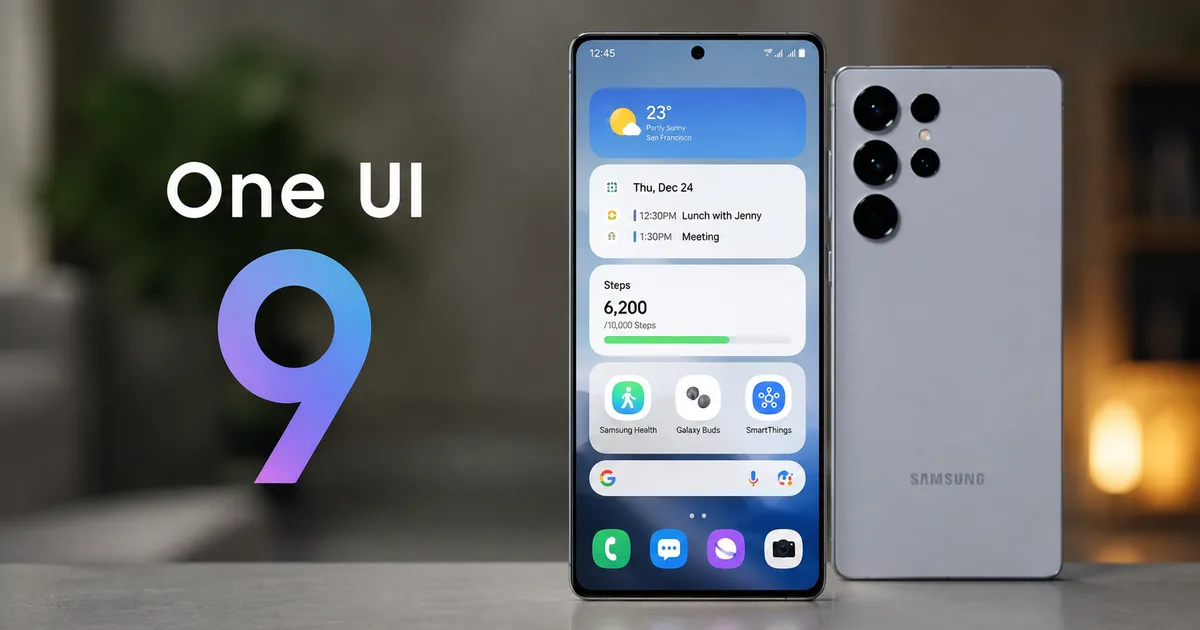
So, the rumour mill was right. We finally have some concrete details on the Samsung One UI 9 internal testing phase, and things are moving much faster than anyone anticipated. Samsung's already testing its next big Android 17 based interface on a massive list of 49 different Galaxy devices.
That's a huge number. Which is a good thing, in my experience. Usually phone makers keep their early tests locked down to just a handful of the latest models. But Samsung is taking a completely different approach this year. They're testing everything from the top foldables to the budget phones that most people actually buy.
Honestly, this is exactly what we want to see. Software updates used to be a mess for Android brands.
You'd buy a phone and pray you got an update before you had to upgrade. Not anymore.
I spent the morning digging through the latest test builds on Samsung's over the air servers. The data tells an interesting story about what Indian users can expect when this software finally lands.
What the leaked internal test list tells us
Thing is, internal testing isn't the same as a public beta. These are closed tests happening behind closed doors at Samsung's labs. But thanks to people monitoring the servers, we know exactly which phones are being prepped.
The list of 49 devices covers almost every major release from the last few years. The public beta is exclusive to the Galaxy S26 series right now. That makes sense. The S26 is their current champion. But the internal testing has expanded way beyond that.
I found it surprising to see phones like the Galaxy A26 already on the list. Mid range phones often get ignored until the very end of the update cycle. Seeing them early suggests Samsung is trying to speed up the rollout for everyone (which makes sense, actually). They aren't just focusing on people who spent a lakh and a half on an Ultra model.
This matters a lot in India. The A series and M series phones are the absolute backbone of Samsung's market share here. If you look around on the Delhi Metro or in a local cafe, you see people checking news on their Galaxy A35s and M34s. So giving these devices priority is a smart move.
How this impacts your next phone purchase
Buying a smartphone is an investment. You want it to last. And the fact that 49 devices are already in testing proves Samsung takes its long term software promises seriously. They recently committed to providing seven years of updates for their top models. That's basically a lifetime in phone years.
But software's tricky. You can promise seven years. If every update is full of bugs or takes ten months to arrive, that promise is worthless. The aggressive pace of the One UI 9 internal testing shows they are trying to fix the timing issue.
I think software support should be your top priority when buying a phone today. Hardware has plateaued. A phone from two years ago is still perfectly fast for WhatsApp and YouTube. The only thing that makes a phone feel old is outdated software.
The aggressive early testing phase for Android 17 indicates Samsung wants to avoid the buggy releases that plagued some older One UI versions. They're giving themselves more time to iron out the issues before public release.
What to expect from One UI 9 in India
So what will this new software actually do? We haven't seen the full feature list yet. But based on the Android 17 developer previews and Samsung's track record, we can make some educated guesses.
First, expect even more aggressive battery management. Samsung's been pushing hard on background app sleeping. I expect One UI 9 to take this further. That's a double edged sword. Your battery lasts longer, but sometimes important notifications get delayed because the system put the app to sleep. If you rely on time sensitive apps like stock trading tools, you'll likely need to dig into the settings to whitelist them.
Second, we're going to see a deeper integration of AI features. Samsung leaned heavily into AI with the S25 and S26 series (unsurprisingly, given the market trends). One UI 9 will likely bring some of those premium AI tools down to the cheaper phones. I'm talking about better photo editing and smarter text prediction.
This is where things get interesting for the Indian market. Samsung's been working on improving its regional language support. If their real time translation feature gets better at understanding mixed Hindi and English, that would be a huge deal. The numbers here are a bit fuzzy, but the potential is massive.
We also need to talk about security. With the rise of digital payments, our phones are basically our wallets. UPI is fantastic. But it also makes us targets. We've seen a massive increase in financial scams recently. You can read more about how to protect yourself in our scam awareness guides, but the operating system needs to do some heavy lifting too. Android 17 introduces stricter permissions for apps trying to read your screen or access your SMS messages. One UI 9 will enforce these rules. This should make it harder for sketchy apps to steal your OTPs.
The expected India rollout timeline
This is the question everyone wants answered. When do we actually get the update? Based on historical patterns and the current testing pace, here's my best guess. I'm not sure exactly why they stagger it this much, but it's the norm.
The public beta will likely launch properly in late August or September. India's almost always included in the first wave of beta countries. If you have a Galaxy S26, you can probably sign up through the Samsung Members app then.
But honestly, you shouldn't install beta software on your main phone. It'll have bugs. Your banking apps might stop working. Your battery life might tank. Just wait for the stable release.
The stable rollout usually starts rolling out to the flagship phones in late October or November. After that, it's a waiting game.
Samsung will release a detailed roadmap on their official forums. The premium A-series phones usually get it in December. The cheaper M-series and F-series models will likely have to wait until early 2027.
Is your phone on the list?
While we can't print the entire leaked list of 49 devices here, the general rule is simple. If you ask me, you are probably fine. If you bought a Samsung phone in the last two years, you're almost certainly getting One UI 9. If you bought a premium phone in the last three to four years, you're also probably safe.
Here's a quick breakdown of the likely eligible categories based on Samsung's official update policies:
- The Galaxy S26, S25, and S24 families.
- The Galaxy Z Fold 6, Fold 5, and Fold 4.
- The Galaxy Z Flip 6, Flip 5, and Flip 4.
- Most Galaxy A series phones released from 2024 onwards, like the A55 and A35.
- Recent M series and F series models, though these often get a slightly stripped down Core version of the interface.
If you're holding onto a Galaxy S21, you might be out of luck. That phone is approaching the end of its promised update cycle. It might get minor security patches. A full OS upgrade is highly unlikely.
What we want to see for Indian users
While the leaked list of 49 devices is impressive, the actual feature set is what matters. Samsung has a massive research and development center in Bengaluru. They understand the Indian market better than almost any other foreign brand. So what should they focus on for One UI 9?
First, they need to fix the spam situation. The built in caller ID and spam protection is okay, but it fails to catch a lot of the telemarketing calls we get daily. I'd love to see deeper integration with Indian telecom databases or a smarter on device AI filter that actually blocks the persistent loan offers and real estate pitches. We shouldn't have to rely on third party apps that drain battery and collect our contacts.
Second, DigiLocker integration needs a revamp. Right now, accessing your driving license or Aadhaar through the Samsung Wallet is functional, but clunky. The interface takes too many taps. When you're standing at an airport security gate, you need that document instantly. One UI 9 should have a dedicated, secure lock screen widget for government IDs.
Third, I want to see better thermal management for our climate. We have brutal summers. Using the camera outdoors in May or playing a game on a crowded train often causes phones to overheat and dim the screen aggressively. Samsung needs to tune the software scheduler to handle high ambient temperatures better (annoying, I know, when your screen goes dark). This is especially true for the mid range phones that lack advanced cooling systems.
We're also seeing a massive push for local payment systems. UPI is flawless. But soundbox integration or tap to pay features for local transport cards are still fragmented. If Samsung can unify these under a single, reliable interface that works offline for small amounts, they'd lock in millions of users for life.
Finally, we need less bloatware. The premium S-series phones are mostly clean. But if you buy a Galaxy M-series phone, it comes preloaded with dozens of unnecessary apps and lock screen services that serve ads. I know the profit margins are thin on budget phones. But bombarding users with notifications for casual games is a terrible experience. I hope One UI 9 takes a cleaner approach.
Why this matters more than hardware
We get obsessed with specs. We argue about processor speeds and megapixel counts. I do it too. But the reality is that software dictates the experience. You can have the fastest processor in the world. If the interface stutters or the apps crash, the phone feels cheap.
Basically, Samsung's software used to be heavy and slow. They've spent years refining it. One UI is now one of the most feature rich and customisable interfaces available. It isn't perfect. It still has too much bloatware out of the box, especially on the budget models. But it's reliable.
The fact that they're testing One UI 9 on 49 devices at the same time shows a level of engineering discipline that we rarely see in the Android world. It means they're building the software to scale across different hardware configurations from day one. That should result in fewer bugs when the update finally hits your device.
I'll be keeping a close eye on the update servers over the next few weeks. Once the official beta program opens up in India, we'll put it through its paces. We need to see if the new features actually add value or if they're just gimmicks designed to look good on a presentation slide.
And check your storage space. Major OS updates often require five to ten gigabytes of free space to install properly (which is a massive chunk of storage). You don't want to be scrambling to delete photos when the update notification finally appears.