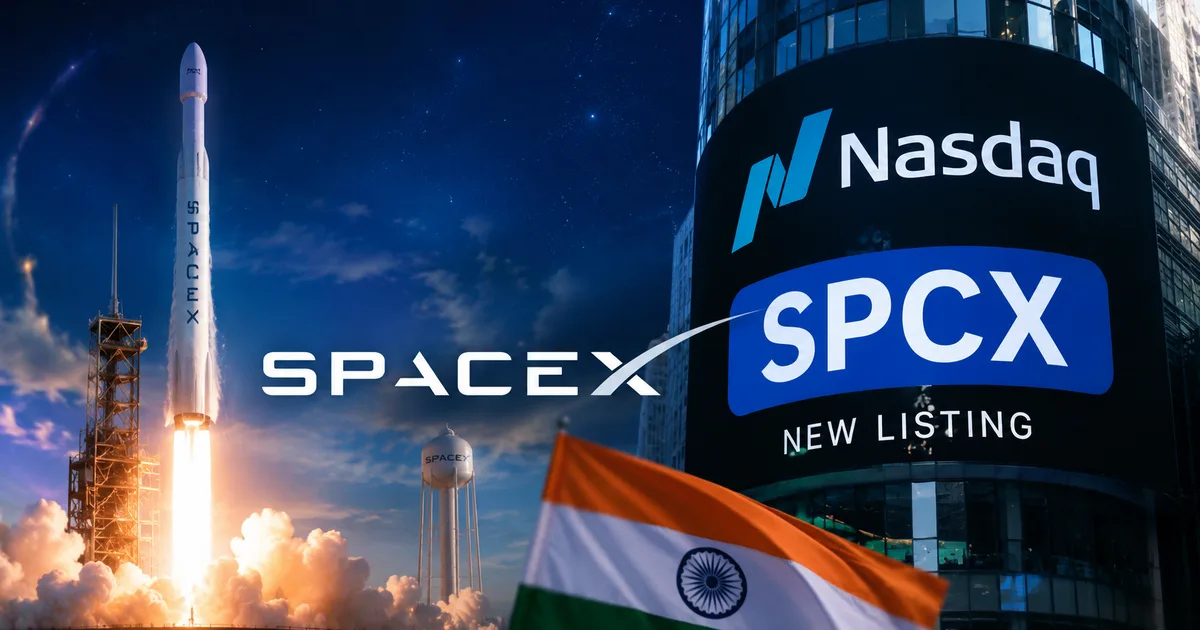
The news is officially out. On June 12, 2026, the long-awaited SpaceX Nasdaq IPO finally hit the market. Elon Musk's space company listed its shares at $135 each, raising a massive $75 billion. This makes it the largest stock debut in history, passing Saudi Aramco's previous record from 2019. If you're sitting in Mumbai or Bengaluru, you're probably wondering if you can get a piece of this action. Buying US stocks from India isn't as difficult as it used to be, but it does require navigating some rules set by the Reserve Bank of India.
How to invest in SpaceX from India
Indian retail investors can't buy shares directly through their local Zerodha or Groww domestic accounts. You need a broker that offers access to US markets. Several Indian platforms have partnered with US-based clearing houses to make this happen. Alternatively, you can open an account directly with global firms like Interactive Brokers.
Once your account is set up, you have to fund it. This is where the Reserve Bank of India rules come into play. Under the Liberalised Remittance Scheme (LRS), Indian residents can send up to $250,000 abroad every financial year. At the current exchange rate, that's roughly Rs 2.08 crore. For most retail investors, this limit is more than enough. You'll need to submit a Form A2 through your bank to authorize the transfer. Some banks allow you to do this online via net banking, while others still require a visit to the branch. The money is converted from rupees to US dollars and sent to your broker's US bank account. It usually takes two to four business days for the funds to reflect in your account.
Under the Liberalised Remittance Scheme, the Reserve Bank of India allows individuals to remit up to $250,000 per financial year for permitted current or capital account transactions.
And remember, your bank will charge you a fee for this transfer, which can range from Rs 500 to Rs 1,500 per transaction depending on your bank's policy.
Understanding the SpaceX share price and valuation
SpaceX priced its shares at $135 for the debut. At this price, the company's valuation is a staggering $1.75 trillion. To put that in perspective, that's larger than the entire GDP of many small nations. For an Indian retail investor, $135 is about Rs 11,200 for a single share. That might feel like a steep entry price, especially if you just want to test the waters with a small amount of money.
This is where fractional shares become useful. Most modern international brokers allow you to buy fractions of a stock. You don't have to buy one whole share of SPCX. You can invest as little as $10 or $20, which is around Rs 800 to Rs 1,600. The broker will allocate a fraction of a share to your account. This makes it possible for students or young professionals to participate in the IPO without emptying their savings.
But is the valuation justified? NDTV Profit reports show that while public interest is high, reporters at NDTV Profit point out the company's high debt load and capital-intensive projects. SpaceX builds Starship and expands its Starlink satellite network, both of which require billions of dollars in continuous funding.
The costs of buying US stocks
Investing abroad isn't free. Beyond the brokerage fees, which are often zero on modern platforms, you have to deal with taxes. The Indian government collects tax on outward remittances under the LRS.
If you send money abroad to buy stocks, you face Tax Collected at Source (TCS). Under the latest guidelines, there's no TCS on foreign remittances up to Rs 7 lakh in a financial year. But once you cross that Rs 7 lakh threshold, a hefty 20% TCS is applied to the excess amount. For example, if you decide to remit Rs 10 lakh to buy SPCX shares, you won't pay TCS on the first Rs 7 lakh. However, you'll pay 20% TCS on the remaining Rs 3 lakh, which comes to Rs 60,000. This isn't an extra tax; you can claim it back when you file your Income Tax Return (ITR), but it does lock up your capital for several months.
So, if you plan to invest large sums, you need to budget for this cash flow hit.
Then there's the exchange rate markup. When you convert rupees to dollars, banks don't give you the interbank rate. They add a margin, which can be 1% to 2% of the transaction value. Some digital platforms offer better rates, but you should always compare the total landing cost before sending your money. When you eventually sell your shares and bring the money back to India, you'll face currency conversion fees again, plus potential capital gains taxes.
Step-by-step guide to buying SPCX shares
If you've decided to buy SpaceX shares, you need to prepare a few things first. The process isn't instant, but it's straightforward if you follow the right sequence. Here's exactly how you can get started:
- Choose an international brokerage platform that operates in India and complete your Know Your Customer (KYC) process using your PAN card and Aadhaar.
- Link your Indian bank account to the brokerage platform for funding.
- Initiate a fund transfer using the bank's outward remittance section, and select the correct purpose code for foreign investments.
- Wait for the funds to clear in your US brokerage account, which usually takes a few business days.
- Search for the ticker symbol SPCX on your broker's platform and place a buy order.
Honestly, you should avoid unofficial platforms or brokers that offer pre-IPO shares. There've been multiple instances of online fraud where retail investors were offered fake SpaceX shares before the official listing. If someone sends you a link on WhatsApp promising cheap pre-listing shares, ignore it. You should only use registered, licensed brokers to ensure your money is safe. We've covered similar traps in our investment scams guide.
Tax implications on your gains
When you invest in US stocks, you're subject to Indian tax laws on any profits you make. US shares are treated as unlisted shares for Indian tax purposes.
If you hold your SPCX shares for less than 24 months, any profit you make upon selling them is treated as short-term capital gains. These gains are added to your regular income and taxed at your applicable slab rate. If you're in the 30% tax bracket, you'll be taxed at 30%. If you hold the shares for more than 24 months, they qualify as long-term capital gains. These are taxed at 20% with indexation benefits, which helps reduce the tax burden by adjusting the purchase price for inflation.
Additionally, the US government imposes a 25% withholding tax on dividends paid to foreign investors, though India and the US have a Double Taxation Avoidance Agreement (DTAA) that allows you to claim credit for this tax in India.
But since SpaceX rarely pays dividends and instead reinvests all capital into starship development and satellite launches, you probably don't need to worry much about dividend taxes. Your primary focus will be on capital appreciation. You can track currency rates using our remittance tools to see how exchange rate shifts impact your returns.
Risks you must consider
Every investment comes with risks, and SpaceX isn't an exception. Before you send your hard-earned rupees across the ocean, you should consider the potential downsides.
First, the valuation is incredibly high. At $1.75 trillion, a lot of future success is already priced into the stock. If Starship encounters technical delays or Starlink faces regulatory hurdles in major markets, the stock price could react sharply. Second, you're exposed to currency risk. If the rupee strengthens against the US dollar, the value of your US investments in rupee terms will go down, even if the stock price remains flat. Historically, the rupee has depreciated against the dollar, which has acted as a tailwind for Indian investors, but past trends don't guarantee future results.
Third, there's the governance structure. Reports from Moneycontrol show that Elon Musk will retain a majority of the voting control even after the public listing. This means retail investors will have virtually no say in how the company's run. If you invest, you're essentially trusting Musk's personal vision and decisions completely.
For more analysis on how global market trends impact local retail portfolios, check out our latest tech explainers.
Alternative investment routes for Indian investors
If direct stock purchase sounds too complex or expensive because of the remittance process, you might look for indirect routes. Historically, Indian mutual funds have offered international schemes that invest in US tech giants.
However, the Securities and Exchange Board of India (SEBI) has strict limits on how much Indian mutual funds can invest abroad. Because of these industry-wide caps, many Indian asset management companies have stopped accepting new investments in their overseas funds. Even if these funds start accepting money again, it'll take time before they can buy SPCX shares in large quantities. Another option is exchange-traded funds (ETFs) that track the Nasdaq index. If SpaceX joins the Nasdaq 100 index in the future, passive ETFs in India that track this index will automatically buy a small portion of the stock. But this won't give you concentrated exposure to SpaceX, and you'll have to wait for the index rebalancing to happen.
So for now, if you want direct and immediate ownership of SpaceX, direct international brokerage remains your only viable path.