So, the US government just dropped a massive policy update that has everyone talking. The US Visa Bond Programme made permanent in 2026 is the headline you are seeing everywhere right now across Indian media. If you have active WhatsApp family groups, I guarantee someone has already panicked and sent a forwarded message claiming Indians now need to deposit 16 lakh rupees just to visit New York or attend a tech conference in Silicon Valley.
Look, that claim is just wrong. Mostly wrong for us with Indian passports, anyway. But it's painfully true for citizens of a bunch of other countries.
I spent all morning reading through the State Department notices and the Federal Register. I checked immigration law blogs too. The reality is complicated, if you ask me. It affects a lot of people, but probably not the way your anxious uncle thinks. But it is a massive shift in how the US handles immigration. And that is a huge deal for Indian students dreaming of Stanford. It's also a big deal for techies hoping for that elusive H-1B visa lottery win.
Let me break down exactly what is happening right now. I'll tell you who has to pay up and what this means for Indians trying to travel or study or work in America.
What is this $20,000 visa bond rule anyway?
Imagine lending money to a friend who keeps "forgetting" to pay you back. Next time they ask for a loan, you might say something different. "Sure, I'll lend you 5,000 rupees, but give me your expensive smartphone as collateral." If they pay you back on time, they get the phone back. If they vanish, you keep the phone.
That is basically what the US government is doing with visitor visas right now.
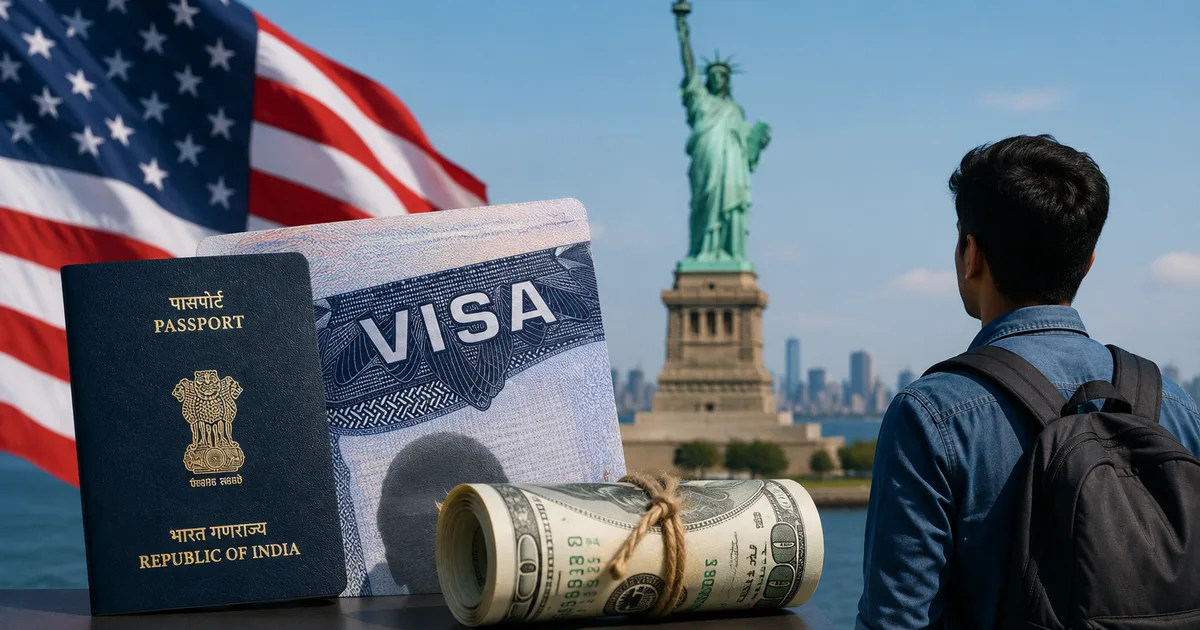
Under the permanent B-1 and B-2 visa bond programme, consular officers have a new power. They can ask applicants to post a financial bond before they get a visa stamp. The amounts are big. They range from $5,000 to $20,000. Depending on the exchange rate, that is around 4 lakh to 16.5 lakh INR. The numbers here are a bit fuzzy because of currency fluctuations, obviously.
You pay the bond. Then you visit the US and leave before your visa expires. And then you get your money back. But if you overstay, the US government keeps your cash. (Overstaying means staying even one single day past the date stamped by the border officer at the airport.) They just pocket the 16 lakh rupees.
Thing is, this isn't totally new. The Trump administration piloted a version of this in 2020 as a temporary measure. The Biden team paused it for a while to review the data. Now, in 2026, it is officially a permanent fixture of the US immigration system. The pilot project is over. This is just how it is now.
Why are they doing this?
Money, mostly. And politics. The two usually go hand in hand.
The US has a massive problem with people coming in on tourist visas (B-2) or business visitor visas (B-1) and never leaving. The official government term for this is the "overstay rate." Some countries have overstay rates pushing 30 or even 40 percent. People arrive on a tourist visa. Then they disappear into the economy. And then they work illegally.
The US authorities simply got tired of chasing people down. Tracking down millions of overstayers is expensive. It is practically impossible, honestly. So they decided to change the incentives. They want to make it ruinous to break the rules.
"The State Department's move to make the visa bond program permanent is a direct response to countries with high B-1/B-2 overstay rates, creating a severe financial deterrent against immigration violations."
Honestly, I get the logic. If you have 16 lakh rupees of your family's savings on the line, you will make absolutely sure you get on that return flight to Delhi or Mumbai. It shifts the burden of compliance. The burden goes from the US government directly onto the traveler.
Is India on the 50-country list?
No. You can breathe a sigh of relief.
The rule specifically targets 50 countries with high overstay rates. According to State Department data, India's overstay rate is low compared to the volume of travelers we send every year. Most Indian tourists respect the rules and come back home. Most Indian business travelers respect the rules and come back home.
But our neighbors in South Asia are not so lucky.
If you are reading this from Nepal or Bangladesh, this rule hits you directly. Citizens of Bhutan are on the targeted list too. A tech entrepreneur from Dhaka wanting to attend a startup conference in Chicago might now have to pony up $15,000 just to prove they will go home afterwards. A grandparent from Kathmandu wanting to visit their grandchildren in Texas faces the same hurdle. That is a brutal barrier to entry for ordinary people. They are just trying to live their lives.
India isn't currently on the list, but you shouldn't ignore this. The list is dynamic. It gets reviewed and updated based on statistics. If overstay rates from India suddenly spike, we could easily be added next year (which makes sense, actually). The US government has the permanent legal framework to slap this requirement on anyone they choose. And they don't need to pass new laws through Congress to do it.
What it means for Indian H-1B techies
You might read this and think something like, "I am on an H-1B, why should I care about a tourist visa rule? I have a work permit."
You should care because of the broader trend.
The permanent implementation of this financial bond shows something specific. The US immigration system is strictly transactional now. It is also increasingly hostile to outsiders. They are putting up higher walls. And some of those walls are quite literally made of cash.
We are seeing the ripple effects in other visa categories. Look at the current H-1B situation, for example. There are bills moving through the US Congress right now. They propose pausing the H-1B programme entirely for three years to protect American jobs. A total pause is unlikely to pass into law, but the mere fact that they are debating it seriously shows the political climate. Lawmakers are aggressively trying to restrict foreign workers. This is especially true for people from India who make up the bulk of H-1B recipients.
Consider the recent news reports about Trump floating a $100,000 bond for some green card applicants. That is over 80 lakh rupees. I'm not sure exactly why they settled on that number, but it's huge. If you are an Indian techie stuck in the green card backlog, the idea of having to suddenly produce 80 lakh rupees just to keep your application alive is terrifying. It turns immigration into a game. And only the ultra-wealthy can play that game.
Here is how this shifting environment impacts you today:
- Increased scrutiny at interviews: Visa officers are under immense political pressure to deny applications that look even slightly suspicious. Your paperwork has to be flawless. A single missing document or contradictory statement during your interview can lead to a rejection.
- Longer administrative wait times: Implementing these complex bond systems takes massive administrative resources. That means fewer officers are available to process regular applications. This directly leads to longer wait times for H-1B stamping in consulates across India like Chennai and Hyderabad.
- Family visits get exponentially harder: While you might be safe working on your H-1B in Seattle, getting a B-2 tourist visa for your aging parents to visit you might face much tougher screening. The officers know the bond rule exists, and they might informally apply higher scrutiny to Indian applicants even if we aren't officially on the bond list yet.
I have friends working at major tech firms in the US who are terrified to visit India for Diwali or a family wedding. In my experience, they aren't sure they will get their visa stamped promptly to return to their jobs. This new bond programme is mostly aimed at tourists from other nations. But it just adds to the anxiety of being an immigrant worker.
How Indian students are affected
Indian students are the backbone of US university science and engineering departments. You take a massive loan. Then you go on an F-1 visa and study hard. You graduate, and hopefully transition to an H-1B. (If you are currently navigating this transition, you should really check out our guides on the topic).
Let's be clear about something. The $20,000 bond does not apply to F-1 student visas. You don't have to pay a massive cash bond just to study in America. Your university admission and financial proofs are enough.
But the story doesn't end there for students.
Just like with tech workers, the environment is getting significantly tougher for international students. The same political forces pushing for B-1/B-2 financial bonds are looking very closely at the OPT programme. There are constant rumors about raising OPT application fees to exorbitant levels. Sometimes they float numbers like $10,000 or even $100,000. They do this specifically to discourage American companies from hiring international graduates instead of domestic citizens. The situation is a mess.
If you are a high school student in India right now, you might be planning to study in the US in 2027 or 2028. You need to deeply factor this uncertainty into your plans. The landscape is shifting under your feet.
The US is no longer a guaranteed path to a high-paying tech job in Silicon Valley. You have to be exceptional. You have to be persistent. And honestly, you have to be lucky with the lottery systems. Because of this, many students are already looking at alternative destinations like Canada or Australia. But even those options are narrowing. Canada is currently having its own severe immigration backlash right now. That backlash causes massive work permit denials for international graduates.
The reality of traveling to the US now
Let's step back from the techies and students for a minute. What if you are just a regular professional? Maybe you want to take your family on a vacation to Disney World in Florida. Or maybe you want to see the Grand Canyon.
Since India is not on the dreaded bond list, your application process remains exactly the same as it was before. You fill out the grueling DS-160 form. Then you pay the standard application fee and wait for an interview slot to open up.
The major problem is those wait times.
Even now in 2026, getting a visitor visa appointment in India can take several months. Sometimes it takes over a year depending on the consulate. The system is severely backlogged. Consular officers are now tasked with assessing risk for these new permanent bond requirements for other nationals. So the whole bureaucratic machine slows down even further. (Annoying, I know.)
I cannot stress this next point enough. Do not fall for agents who claim they can magically bypass the system for a fee.
We have seen a huge spike in visa appointment scams recently. Some sketchy travel agents will charge you 50,000 INR or more. They promise a guaranteed expedited slot within a week. They use automated bots to hoard appointments, or they just forge documents entirely. When you show up at the US consulate in Mumbai with a fake appointment letter, you don't just lose your 50,000 rupees. You will likely get a lifetime ban from ever entering the United States for committing fraud.
If you encounter one of these agents making impossible promises, report them immediately on the government's cybercrime.gov.in portal. Or you can call the national 1930 helpline. Never share your original passport details or pay via UPI to random Telegram groups promising quick US visas. It is always a scam.
Looking ahead to 2027 and beyond
The permanent implementation of the visa bond programme is a massive warning sign. It is a warning sign for anyone watching global migration trends. The era of relatively easy travel to the United States is closing. Work migration to the US is closing too.
For Indian tech professionals, the stakes are higher than they have been in a generation. You can no longer just assume your H-1B will be routinely renewed. You can't assume your green card will eventually come through before you retire. You absolutely must have a solid backup plan. Maybe that means exploring the booming GCC tech hubs like Dubai or Riyadh. Or maybe it means looking at the massive investments happening right here at home in India's own digital public infrastructure.
The US is tightening its borders. And they are increasingly doing it financially. The $20,000 bond doesn't directly hit Indian passports today. But the restrictive sentiment behind it impacts every single Indian currently navigating the American immigration system.
My advice? Keep your paperwork impeccably clean. Never lie on your applications, even about minor details. And if you do get a visa, definitely don't overstay your welcome. The US government is making it very clear they are keeping close tabs on who comes. And they are keeping close tabs on who leaves.