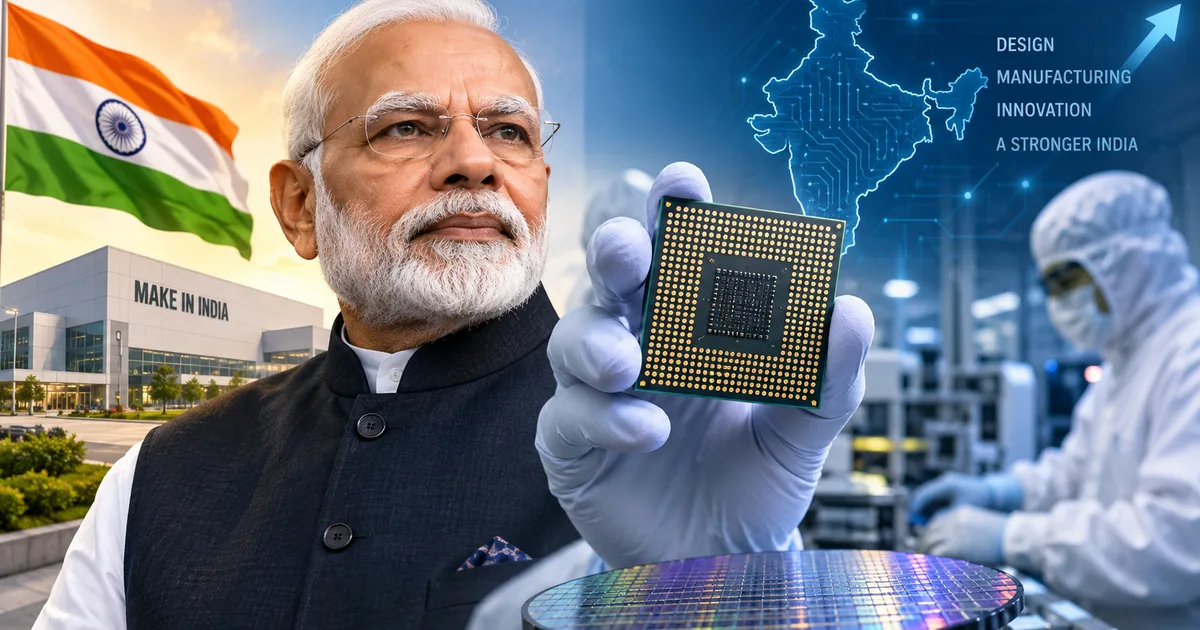
If you're reading this on a smartphone, you're holding dozens of tiny chips. Your car has hundreds. Your smart TV has them. Your UPI transactions and Aadhaar authentications run on massive server farms powered by them. But until recently, almost none of these chips were made in India. That's exactly what Semicon India 2026 is trying to fix. Prime Minister Narendra Modi is inaugurating the fifth edition of this massive semiconductor event on September 17 at Yashobhoomi in New Delhi.
And honestly, it's about time we took this seriously. India imports billions of dollars of electronics every year. The pandemic showed us exactly what happens when global supply chains break down completely. Remember when you couldn't buy a specific car model because of a global chip shortage? Or when laptop prices shot up overnight? Yeah, that was a wake-up call (and an expensive one, honestly).
So what's this event actually about? Is it just another trade show with fancy banners and corporate presentations? Not really. It's a very aggressive push by the government to get companies like Micron, AMD, Intel, and Qualcomm to build actual factories right here in India. Let me break down exactly what's happening in Delhi, what the government's plans are, and why it actually matters for your next smartphone upgrade.
What exactly is a semiconductor anyway?
Before we get into the heavy stuff, let's keep it simple. A semiconductor is the brain of your electronic device. It's typically made of silicon. It controls the flow of electricity, making complex calculations in fractions of a microsecond. Without them, your phone is just a useless block of glass and metal.
Thing is, making them is incredibly hard. You can't just set up a factory in a month like you would for textiles. A chip fabrication plant takes billions of dollars to build. It requires highly purified water and completely uninterrupted power. I think it is quite literally the most complicated manufacturing process humans have ever invented. And right now, places like Taiwan and South Korea control most of it.
India wants a piece of that pie. The government has approved several mega projects, and they're pushing hard to move from policy announcements to actual factory production. They call this theme "Silicon to Systems: Building the Ecosystem".
You can read more about how India is pushing tech boundaries in our Tech Explainers section.
The big numbers behind Semicon India 2026
The numbers floating around this event are massive. We're talking about more than 600 participating companies setting up shop across 15,000 square meters of exhibition space. Around 50,000 visitors are expected to walk through the doors over the three days. Representatives from 52 countries are flying in. More than 400 executives and over 150 speakers will be there to talk deals and strategy.
But the number that actually matters is the overall investment goal. PM Modi met with CEOs of global semiconductor giants right before the event. The target they have is an overall electronics manufacturing ecosystem worth $200 billion. The numbers here are a bit fuzzy, but that's a staggering amount of money. It means jobs. Real, high-paying engineering and manufacturing jobs for Indian graduates.
Look, I've seen a lot of tech conferences make big promises that quietly fade away. But the presence of specific country pavilions shows this is getting serious international traction. Japan, South Korea, Malaysia, and the Netherlands have set up massive booths in New Delhi. (Which makes sense, actually, since they already have mature chip industries.) If they're here, they smell money and opportunity.
PM Modi's semiconductor vision for India
The Prime Minister's vision is pretty straightforward. Stop buying everything from outside. Start making it here. The government wants India to be a global hub for semiconductor design and manufacturing. National security is the real driver here.
"The three-day event will focus on building out India's semiconductor ecosystem under the theme 'Silicon to Systems: Building the Ecosystem'. The conference and exhibition will cover the semiconductor value chain, from materials and manufacturing equipment to chip design, fabrication, advanced packaging and electronics systems." (Communications Today)
We're already pretty good at chip design. Tens of thousands of engineers in Bengaluru and Hyderabad design the complex logic that goes into global products. But the actual physical manufacturing happens elsewhere. The current push is to bring the fabrication to Indian soil. That is the actual printing of microscopic circuits onto silicon wafers.
They also want to handle the packaging. Packaging is the process of putting the fragile bare chip into the protective plastic casing you see on a green circuit board. It might sound simple. But advanced packaging is a highly technical field right now. In my experience, people completely underestimate how hard it is.
There is a specific focus on supply chain resilience. If a factory shuts down in another country due to a natural disaster, it shouldn't paralyze Indian automakers or our phone manufacturers. Building local capacity is a direct response to that vulnerability.
For more updates on government tech initiatives, you can check out the Latest Tech News.
What is the "Sand to Silicon to Systems" experience?
One of the main attractions at Yashobhoomi this week is an exhibit called the 'Sand to Silicon to Systems' Value Chain Experience. It sounds like corporate jargon. But it's actually a pretty cool concept.
It walks visitors through the entire journey of how a chip is made. It starts with raw materials like sand. Then it moves to the massive equipment needed to process that silicon. After that, it shows the fabrication process and the advanced packaging. Finally, you see the finished electronics systems we buy in stores.
Basically, it shows India wants to build every single part of this puzzle. The India Semiconductor Mission (ISM) and the Ministry of Electronics and Information Technology (MeitY) want the entire supply chain to exist within our borders. They want local companies supplying the raw materials to the foreign companies running the fabs.
What this chip manufacturing push means for everyday Indian tech users
You might be wondering why you should care about a factory in Gujarat or Assam. The answer comes down to price and availability.
When chips are made locally, companies save on heavy import duties. They save on shipping costs and logistics delays. Eventually, those savings can make their way to the consumer in the form of cheaper electronics. It also means Indian brands can source components much faster.
If an Indian startup wants to build a new electric scooter or a smart home security system, they won't have to wait months for a shipment from Taiwan. They can source the brains of their devices locally. This speeds up the entire innovation cycle.
This localized hardware manufacturing push ties into broader digital efforts too. Our software infrastructure is already top-tier. Think about how fast UPI works. For our hardware to match our software, we need local silicon. Speaking of local tech pushes, you might be interested in What Is JioSpaceFiber? India's Satellite Internet Explained if you follow rural connectivity trends.
Why global chip companies are looking at India now
You have to ask yourself why these massive corporations are suddenly interested in India. They have operated happily in East Asia for decades. The answer is risk management. Boardrooms in the US and Europe are getting nervous about having all their eggs in one basket.
Geopolitical tensions are real. If a conflict breaks out in a major chip-producing region, the global economy grinds to a halt. You wouldn't be able to buy a new phone. Hospitals couldn't get new MRI machines. Companies want a backup plan.
India has a massive domestic market. We buy millions of smartphones every month. We are buying more cars and more laptops than ever before. Also, our financial markets are maturing rapidly, making it easier for tech companies to operate. You can see this modernization in other sectors too, just look at What is SEBI's T+0 Settlement? Same-Day Stock Trading in India Explained (2026). If a company sets up a factory here, they have a ready-made market right outside the factory gates.
This is why you see state government pavilions at Semicon India 2026. Twelve different Indian states have set up booths to pitch their specific regions to these executives. They are offering land and tax breaks to win these multi-billion dollar factories for their states.
The road ahead for semiconductor manufacturing in India
It won't be easy. Setting up a semiconductor fabrication plant requires a flawless industrial environment. A power cut of even a few milliseconds can ruin months of work and millions of dollars of silicon wafers. The factories also need millions of liters of ultra-pure water every single day. Managing these resources in India will be a massive logistical challenge. It could be a mess, honestly.
India is taking a phased approach to building this industry. It's a smart, calculated move to walk before we run. The immediate focus areas include:
- Setting up advanced packaging and testing facilities with companies like Micron.
- Training 68,000 engineering students specifically in chip design.
- Developing domestic raw material suppliers to feed future fabrication plants.
- Offering heavy government subsidies to make the financial math work for foreign investors.
The event at Yashobhoomi also has a Startup Pavilion and a Student Hackathon. The organizers know that throwing money at foreign companies isn't enough to build a permanent industry. We need local talent to run these machines and design the next generation of hardware.
So yes, Semicon India 2026 is a big deal. The government is willing to spend heavy political and financial capital to build a chip industry from scratch. It will take years to see the full results. But the foundation is being laid today in New Delhi.