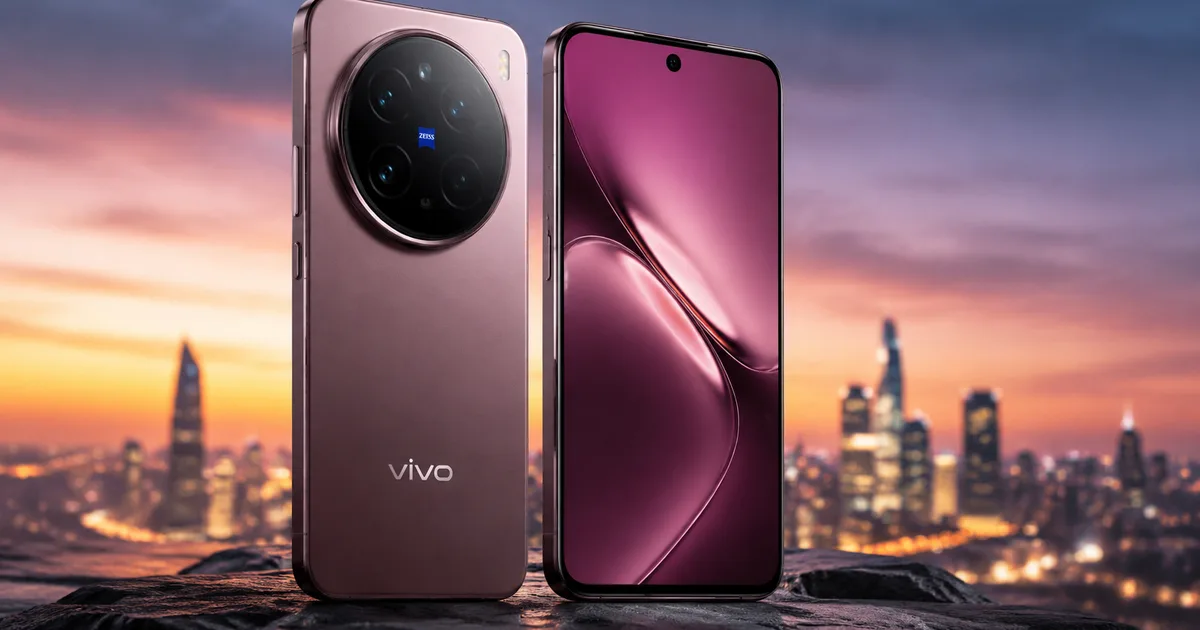
The Vivo X300e India Launch has been floating around the rumour mill for a few weeks now. If you're planning to buy a premium smartphone this year, you've probably seen the leaks. The naming conventions get confusing, especially with the Ultra and FE models also making headlines. But the 'e' model usually hits that sweet spot between flagship performance and a price that doesn't entirely empty your bank account. I want to break down exactly what we know about the expected specs, the pricing details for the Indian market, the battery life, and those heavily advertised AI camera features. Honestly, it's easy to get lost in the marketing jargon. So we're going to look at what these features actually mean for your daily use.
Breaking down the expected specs and processor
When you buy a phone today, the processor is the engine running everything in the background. Recent leaks (and a listing on China's 3C certification website) suggest the Vivo X300e will pack the Qualcomm Snapdragon 8 Gen 5. That sounds like a lot of numbers. Basically, it's the newest and fastest chip available for Android phones right now.
For an everyday user in India, a processor like this means two things. Speed and heat management. Our summers are brutal. If you've ever tried to record a long 4K video during an afternoon wedding in May, you know that phones overheat and shut down the camera app. The newer Snapdragon chips handle heat better. You can run heavy applications without the back of the phone turning into a frying pan.
It also changes how you multitask. You might have WhatsApp open. Then you switch to Google Pay or PhonePe to scan a QR code at a shop, and jump back to Google Maps for directions. Older phones stagger and lag during quick switches like this. This processor handles that switching instantly. For gamers, this chip will run BGMI or Call of Duty at the highest frame rates without dropping performance after thirty minutes of play. I think this level of power is slightly overkill for most people. But it does mean the phone will last three or four years without feeling slow.
Look, modern Android systems are aggressive about closing apps you aren't using to save battery. The Snapdragon 8 Gen 5 has a low-power core cluster that manages notifications and background syncs without draining your battery. This means you get your WhatsApp messages and email alerts instantly, without the phone waking up its high-power cores. You can read more about how processors impact daily use in our processor guide.
The battery and 90W charging situation
Battery life is the single most common complaint I hear from smartphone users. We use our phones for everything now. We pay for groceries, order food, book cabs, and watch YouTube on the commute. The Vivo X300e is expected to come with a sizeable battery. It's likely around the 5000mAh mark. The exact numbers here are a bit fuzzy, honestly. But what is confirmed by the certification listings is the 90W fast charging support.
Let's talk about what 90W actually looks like in practice. You wake up and realise you forgot to plug your phone in overnight. So you plug it in. You go brush your teeth and make some chai. By the time you're ready to leave for the office 20 minutes later, the phone is at 70 percent or higher. It changes how you think about charging. You don't need to charge it overnight. You just plug it in when you need a quick top-up.
There's a catch, though. Fast charging generates heat. And heat degrades batteries over time. Vivo usually includes software features to optimize charging. It slows it down when the phone gets too warm. But if you live in a hot city like Chennai or Delhi, you might want to avoid playing heavy games while the phone is plugged into that 90W brick.
The 90W charger will likely be included in the box. Many brands like Samsung and Apple have stopped providing chargers. You have to spend an extra Rs 1,500 to Rs 2,000 for one. Vivo has traditionally kept the charger in the box. That adds genuine value to the overall package.
How the AI camera features actually work
This is where smartphone companies are spending all their marketing budgets right now. Every phone claims to have an AI camera. But what does the Vivo X300e actually do differently?
The physical camera lenses on a smartphone are tiny. They physically can't capture as much light as a professional DSLR camera. To fix this, phone makers rely on software. When you take a picture on a modern smartphone, you aren't just capturing light through a lens. The phone takes multiple photos in the fraction of a second before and after you press the shutter button. The AI processor then stitches the best parts of those photos together to create a single, clean image.
Portrait mode enhancements
Vivo has always focused on portrait photography. The new AI features are expected to improve edge detection. If you've ever taken a portrait photo and noticed the software blurred out your glasses or a strand of your hair, you know how annoying that is. The AI model in the X300e is trained to recognize specific objects like spectacles and stray hair. It keeps them sharp while blurring the background realistically.
It also adjusts the lighting on the face. If you're shooting against the sun, the AI will brighten the subject's face while keeping the background sunset properly exposed. They're also tuning the color science for Indian skin tones. Many foreign brands struggle with this, often making brown skin look grey or washed out. In my experience, Vivo's algorithms are usually quite good at maintaining natural warmth in skin tones.
Object removal and generative editing
Sometimes you take a great photo at the Gateway of India, but there are ten strangers walking in the background. The new AI editing tools will let you circle those people and erase them. The AI then looks at the surrounding pixels and fills in the blank space. So it looks like nobody was ever there.
It isn't perfect. If you zoom in closely, you can sometimes see a weird smudge where the person used to be. But for posting on Instagram or sharing in a family WhatsApp group, it works perfectly fine. You don't need to be a professional photographer to use these tools. They are built directly into the default gallery app. You just tap a button and the software does the heavy lifting. I'm interested to see how fast these edits process on the device compared to cloud-based solutions (which require a strong internet connection).
Low light and night mode
Taking photos at night is always a struggle for smartphones. The Vivo X300e uses AI noise reduction to clean up grainy photos taken in low light. Instead of just brightening the image and making it look artificially washed out, the software tries to preserve contrast and shadows. If you're taking photos at a dimly lit restaurant or a night market, the camera will automatically detect the scene and apply the right processing.
Expected price in India and where it fits
The smartphone market in India is a mess. The pricing strategy will make or break the Vivo X300e. Based on historical pricing and the cost of the Snapdragon 8 Gen 5 processor, we can expect the phone to launch somewhere between Rs 45,000 and Rs 55,000.
This puts it directly in competition with the upcoming OnePlus models and the Samsung FE series.
When the phone launches, there will be bank offers. Brands usually tie up with HDFC or SBI to offer a flat discount of Rs 3,000 to Rs 5,000 on credit card transactions. You'll also see no-cost EMI options on Flipkart or Amazon.
If the base variant launches at Rs 49,999, it sits in a very competitive spot. If it crosses the Rs 55,000 mark, it gets dangerously close to premium flagship territory, where people start considering base model iPhones or Samsung Galaxy S series phones. The mid-premium segment is all about balancing features and price. You can track ongoing smartphone deals on our buying guides page.
Connectivity and 5G performance
Thing is, we often talk about cameras and processors, but we forget that these are actually communication devices. The Vivo X300e will support all the major 5G bands used by Jio and Airtel in India.
What you should care about is carrier aggregation. This is a technology that lets the phone connect to multiple 5G bands simultaneously. That gives you a more stable connection even when you're moving or in a crowded area. If you frequently stream high-resolution videos on JioCinema or Hotstar while commuting on a train, this feature reduces buffering.
The phone is also expected to have improved Wi-Fi 7 hardware. Even if your home router is still on Wi-Fi 5 or 6, having the newer hardware means your phone is ready for when you eventually upgrade your home internet setup.
Software experience and long term updates
Hardware is only half the story. The software running on the phone dictates how enjoyable it is to use. Vivo phones run on Funtouch OS in India. I think it has improved drastically over the last few years. I'm not sure exactly why, but older versions were filled with bloatware (pre-installed apps that you didn't want and couldn't delete). They've cleaned it up significantly, though you might still find a few unnecessary apps out of the box that you'll need to uninstall.
The Vivo X300e will likely launch with Android 17. What matters is how many years of updates Vivo promises. The industry standard for premium mid-range phones is shifting to three years of major Android updates and four years of security patches. This means the phone will stay relevant and secure until 2030.
Security updates are critical if you use your phone for banking. With the rise of UPI and apps like DigiLocker storing your Aadhaar and PAN details, an outdated phone is a security risk. You don't want a device that stops getting security patches after two years. For more on digital safety and how to spot scam apps, check our scam awareness section.
Should you wait for this launch?
Deciding whether to upgrade is always tricky. If you have a phone that is less than two years old, you probably don't need the Vivo X300e. The improvements in processors and cameras are incremental year over year. You won't notice a massive difference in day-to-day tasks like browsing Instagram or reading news.
But if you're holding onto a phone from 2022 or earlier, this will feel like a massive jump. The 90W charging alone will change how you manage your battery life. The camera improvements will be immediately obvious.
I recommend waiting for the official launch before making any decisions. The leaked specs look promising. But the final Indian pricing will determine if it's actually worth your money. We'll have a full review of the device once we get our hands on a retail unit. The launch date is expected to be announced soon.
If you're looking for a reliable phone that takes good photos without requiring manual adjustments, this is a strong contender. Just keep an eye on the official launch price and those initial bank discounts.
"The integration of the Snapdragon 8 Gen 5 and advanced imaging technology brings flagship-level photography to a more accessible price point in the Indian market."
Key things to remember before buying
- Wait for the official launch date to confirm final pricing and storage variants.
- Check for bank discounts from HDFC, SBI, or ICICI during the first week of sale.
- Consider whether you actually need the processor upgrade or if your current phone works fine for another year.
- Always buy a sturdy case, as phones with large camera modules tend to wobble on flat surfaces.