Imagine you run a small hardware shop in Jaipur and need a ₹2 lakh loan to stock up before Diwali. You walk into your local bank branch. The manager gives you a list. They want two years of income tax returns, six months of bank statements, your GST filings, and maybe a property paper as collateral.
Getting that paperwork together takes a week. You download PDFs, take photocopies, and sign every single page. The bank takes another two weeks to verify everything. By the time the money hits your account, the festival rush is over.
This slow and frustrating process is exactly what the RBI's Unified Lending Interface (ULI) is built to fix.
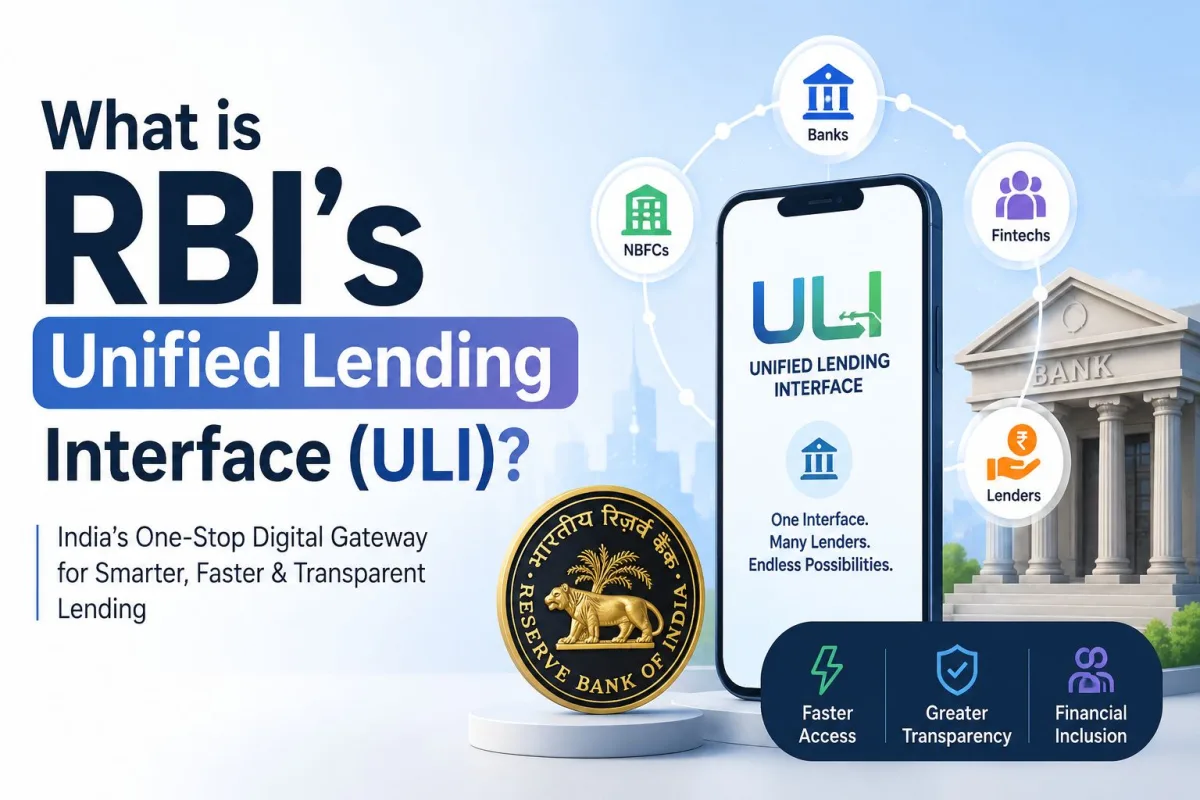
The Reserve Bank of India has recognized that while moving money in India has become incredibly fast, borrowing money is still stuck in the past. ULI is the proposed solution to digitize the entire lending process. Let us look at how this system actually works and what it means for everyday borrowers.
The simplest way to understand ULI
Think about how we sent money ten years ago. You needed account numbers, IFSC codes, and a waiting period to add a payee. Then UPI arrived. Now you scan a QR code, enter a PIN, and the money moves instantly.
The government wants to do the exact same thing for credit. ULI is essentially the UPI of loans. Instead of moving cash between bank accounts, it moves your verified financial information from the places that hold it directly to the banks that need it.
When you apply for a loan today, you act as a delivery person for your own data. You fetch tax records from the income tax portal. You fetch land records from the state revenue office. You hand all these documents to a loan officer.
With ULI, the bank asks for your permission to fetch this data digitally. You approve the request on your phone. The ULI system talks directly to the tax department, the land registry, and your bank. The lender gets verified data in seconds, and the loan can be approved in minutes.
Connecting the scattered data dots
Right now, your financial identity is completely fractured. Your tax data sits with the central government. Your property papers are sitting in a state government office. Your daily cash flow is tracked by your current bank. Your business identity is tied to your GST number.
Banks hate this. They spend massive amounts of time and money trying to verify if the photocopies you gave them are real. They hire third-party agencies to do physical checks.
The Unified Lending Interface solves this by plugging all these separate databases into one common network. By mid-2026, the ULI platform has grown significantly. It now connects 64 different lenders with 136 data services.
This is not just about central government data. State governments are actively participating. The Jammu and Kashmir government recently formed a panel specifically to integrate their state databases with the ULI platform. Private players are also involved. Real estate platforms like Square Yards have digitized over 10 crore property records to plug directly into this lending initiative.
How this changes agricultural and rural loans
This integration is a massive shift for rural India. Historically, farmers struggle to get formal bank loans because banks require solid proof of land ownership. Physical land records are easily disputed and hard for a bank branch in a city to verify quickly.
Because of this friction, farmers often turn to local moneylenders who charge massive interest rates.
Under the ULI system, state land registries are connected directly to the banks. A farmer looking for a tractor loan does not need to drag paper land records to a bank branch. The bank requests the digital land record through the ULI platform. The state database confirms the ownership instantly. The farmer gets the loan at a fair bank interest rate rather than a predatory local rate. You can read more about how technology is changing rural finance in our financial technology explainers.
How ULI is different from Account Aggregators
If you follow Indian fintech, you might be thinking this sounds exactly like the Account Aggregator (AA) framework that launched a few years ago. They are related, but they do very different things.
Account Aggregators are strictly for banking and investment data. If you use an AA, you are giving an app permission to read your bank statements or mutual fund holdings. It is limited to financial institutions.
ULI is much wider. It is an umbrella that covers non-banking data. It pulls in your Aadhaar verification, your DigiLocker documents, state land records, and satellite data for agricultural assessments. In the future, it might even pull in your electricity bill payment history to prove you are a reliable payer.
Think of the Account Aggregator as one specific tool. ULI is the entire toolbox that banks use to build a complete picture of your financial health.
Fighting fraud and fixing credit
There is another major reason the RBI is pushing this system. India has a massive problem with loan fraud.
When a bank relies on physical documents or uploaded PDFs, bad actors simply use image editing software. They inflate their income on a fake bank statement or forge a property document to secure a business loan. This kind of fraud forces banks to be extremely cautious. They reject genuine applicants just to be safe.
"A system that relies on directly fetched, source-verified data eliminates the possibility of document forgery. When banks trust the data completely, they are willing to lend more freely to genuine borrowers."
Because ULI pulls the data directly from the source, fake documents become useless. If a borrower claims they pay ₹50,000 in GST every month, the bank does not look at a PDF. The bank's software asks the GST network directly.
This level of trust democratizes credit. When banks spend less money fighting fraud, they can afford to give out smaller loans. A ₹50,000 working capital loan becomes profitable for a bank because the verification cost drops to zero.
The privacy question: Who sees your data?
A system that connects your tax records, land ownership, and bank statements sounds slightly terrifying. The immediate question is whether the RBI or the government is building a massive, central database of everything you own.
They are not. ULI is a pipeline. It is not a storage tank.
The architecture is built entirely around user consent. Your data only moves when you explicitly say yes. If a bank wants to check your GST history for a loan, they trigger a request. You receive a notification. If you approve it, the data travels straight from the GST network to the bank through encrypted channels.
The ULI platform simply routes the traffic. It does not store a copy of your tax records. You have complete control over who gets to see your information and for how long. It is crucial to remain vigilant about digital consent, especially with the rise of loan app scams that trick users into sharing too much data.
The reality check on ULI adoption in 2026
While the concept is brilliant, the actual rollout is facing normal infrastructure friction.
It is completely changing how credit works in India, but it is not happening overnight. The RBI has recently had to review the ULI rollout with lenders amid slow adoption rates on the ground.
- Legacy systems: Building the central platform was the easy part. The hard part is getting legacy banks to change their internal systems. Upgrading massive, outdated core banking software to talk smoothly with modern ULI APIs takes time and money.
- Corporate mindset: Bank employees are used to doing things the old way. A credit risk manager who has spent twenty years looking at physical files is naturally skeptical of an automated digital approval system.
- Data standardization: State land registries all use different formats. Translating this data so a bank algorithm can read it instantly requires a massive technical effort.
We are currently in a transition phase. Some forward-thinking digital banks and NBFCs are fully onboard, offering instant loans to small businesses. Traditional banks are moving much slower. If you are looking for ways to navigate modern digital credit, you can check our digital loan guides for practical advice.
The final takeaway
The way Indians borrow money is fundamentally changing. The days of carrying a thick folder of documents to a bank branch are ending.
The Unified Lending Interface is doing the unglamorous backend work of connecting government databases, state records, and financial institutions. By removing the friction of document collection and verification, it allows money to flow to the small businesses and farmers who actually need it.
It will take a few years for every bank branch in the country to fully adopt the system. But the shift is inevitable. Just as UPI killed the NEFT waiting period, ULI will eventually kill the loan paperwork file.