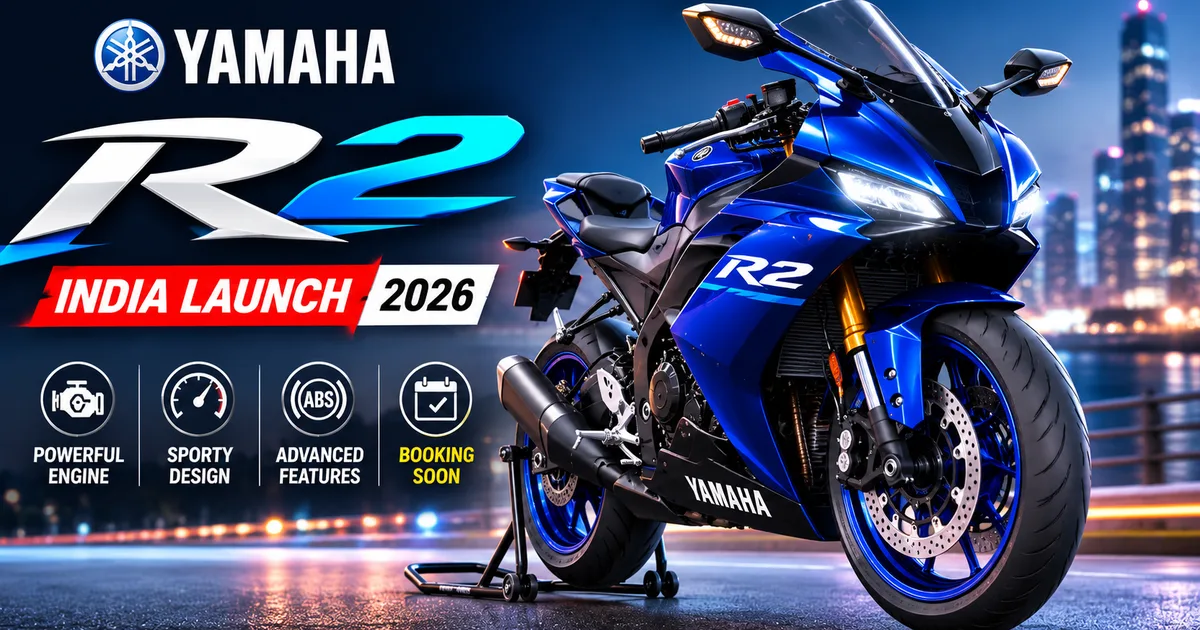
The Yamaha R2 India Launch 2026 is officially on the calendar, and the two-wheeler market is paying attention. If you've been waiting for a middle ground between the 155cc R15 and the expensive twin-cylinder R3, this is exactly what you've been looking for. Yamaha changed the Indian motorcycle landscape back in 2008 when they brought the first YZF-R15 to the country. It gave everyday college kids and young professionals a real taste of track dynamics. But things changed over the last decade.
The R15 got more expensive. And the competition got way faster. Basically, a massive gap opened up in the 200cc sports bike category.
It was a mess.
People wanted more power. They asked for a logical upgrade path. Now we finally have a confirmed launch date of August 27, and pre-bookings have quietly started across the country. I've been tracking the dealer leaks and reports from BikeWale closely. And the official teasers. So I've broken down the expected pricing and engine specs for the new Yamaha R2 below. I've covered the booking process too.
The gap in the Indian sports bike market
Look at the Indian sports bike scene right now. You have the 150cc class, which is fantastic for beginners learning the ropes. Then you jump straight into the 300cc or 400cc class. That costs a small fortune to buy and maintain. There was a glaring missing step.
The KTM RC 200 has been sitting very comfortably in that specific sweet spot for years. It had sharp handling and decent power without breaking the bank completely. Yamaha noticed this trend. Honestly, they saw loyal R15 owners moving to the Austrian brand because there wasn't a logical next step within their own showrooms.
The Yamaha R3 is a great piece of engineering. But it's fully imported and highly taxed. The on-road price in cities like Bengaluru or Mumbai easily pushes past the four lakh rupee mark (which makes sense, actually, given the import duties). That's simply out of reach for a lot of younger riders. The R2 steps right into this empty space. It is designed specifically for the rider who has outgrown their 150cc bike but can't justify the massive EMI for a twin-cylinder motorcycle. You can read our guides on two-wheeler loans if you're planning to finance a new bike this year.
What to expect from the R2 engine
The upcoming Yamaha R2 will share its core platform with the YZF-R15. I think that's a very good thing. The Deltabox frame is arguably the best handling chassis in its segment. It is stiff and predictable. It gives you immense confidence in the corners.
What changes is the heart of the machine. Yamaha is keeping the exact engine specifications a heavily guarded secret until the August 27 launch. But reports from RushLane and ZigWheels suggest a noticeable bump in displacement. We aren't looking at a completely new engine design. It'll likely be an overbored version of the existing liquid-cooled single cylinder.
The R15 engine famously loves to be revved hard. You have to keep it high in the rev range to get power. The R2 engine should have much more usable midrange torque for daily city commutes, while keeping that top-end rush for weekend highway rides. This puts it squarely against the KTM RC 200. The Yamaha has to make somewhere around 20 to 22 horsepower to be taken seriously. Anything less than that, and buyers will just stick to the top-spec R15 M instead.
Cooling and transmission details
Liquid cooling is an absolute necessity for an engine making this much power in Indian summers. The radiator setup will likely be larger than the one found on the R15. This means the engine won't overheat during heavy stop-and-go traffic in cities like Delhi or Chennai.
The six-speed gearbox will definitely carry over. Yamaha gearboxes are usually slick and precise. A slip and assist clutch will be standard. That makes the clutch lever action much lighter. This saves your left hand from cramping up during long commutes. And I expect an optional quickshifter for clutchless upshifts, similar to what we see on the R15 M.
Design, features, and the new logo
The official teaser dropped recently. It deliberately blurred the lines between the standard R-series logo and a distinct number 2. The styling will draw heavily from the larger R-series motorcycles. Think sharp fairings and a split seat setup. And it has that signature Yamaha face with bright LED projectors.
The riding posture will probably be quite committed. You'll lean forward over the tank. You will put weight on your wrists. This isn't a relaxed commuter bike for long traffic jams. It is built for corners and open roads.
Pillion comfort will likely be minimal. The rear seat on these sports bikes is usually small and sits quite high. If you regularly ride with a passenger, you might want to look at a naked streetfighter instead.
Expect a fully digital instrument cluster. Bluetooth connectivity is standard on almost everything nowadays. So the R2 will definitely have it. You'll get call alerts and SMS notifications right on the dash. You might even get basic navigation prompts. Suspension duties will be handled by upside-down forks at the front and an adjustable monoshock at the rear. Braking will see a necessary upgrade. Dual-channel ABS is standard equipment for safety on wet roads.
Yamaha R2 expected price in India
Pricing dictates everything in the Indian market. Dealers are saying the expected price is around Rs 2.15 lakh to Rs 2.20 lakh ex-showroom. This is a very calculated move by the company.
When you add local RTO registration charges and mandatory five-year insurance, costs go up. Throw in the handling fees, and you're looking at an on-road price close to Rs 2.5 lakh to Rs 2.6 lakh depending on your state. This pricing strategy undercuts the bigger 300cc bikes significantly. It asks a reasonable premium over the R15 M.
But you have to ask yourself if that extra cost translates to enough performance. A 200cc bike makes a lot of sense if you do frequent weekend highway runs. For purely city riding in heavy traffic, the smaller R15 is still plenty fast and easier to manage. Read our detailed explainers on how engine cubic capacity directly affects your insurance premiums. Thing is, a slightly bigger engine always means slightly higher running costs year after year.
How to pre-book and the refund policy
You can actually put your money down right now. Pre-bookings have started across India for a token amount of Rs 10,000. This is a smart move by the company to see what people think before the official launch event.
The best part of this pre-booking phase is that the token amount is fully refundable. If you wait for the August 27 launch and see the final spec sheet, you might decide you don't actually like the bike. Then you can get your money back. There are no hidden deductions.
Here's how you actually book the motorcycle:
- Visit your nearest premium Yamaha Blue Square dealership. Regular small dealerships might not take R2 bookings initially.
- Provide your basic KYC details like Aadhaar card or PAN card for the booking docket.
- Pay the Rs 10,000 token amount via UPI or credit card. Cash works too.
- Collect the official booking receipt and keep it safe for the final payment or refund processing.
Some dealerships might try to push expensive accessories or extended warranties during the initial booking process. You don't have to buy them right now. Wait for the bike to physically arrive at the showroom. If you run into any sketchy dealership asking for extra non-refundable processing charges, walk away. We regularly cover these kinds of deceptive dealership practices in our scams section, so stay informed.
The 200cc competition
The biggest hurdle for the Yamaha R2 is the KTM RC 200. The KTM has dominated this specific price bracket for a long time. The RC is sharp and incredibly aggressive. It's the default choice for anyone who wants a track-ready 200cc machine.
The Yamaha R2 needs to have a more refined experience. Yamaha engines are famous for their smoothness and long-term reliability. If the R2 can match the KTM's overall pace while having better engine refinement, it'll sell in massive numbers. The Japanese reliability factor holds huge weight in India.
There's also the Suzuki Gixxer SF 250. It is a great motorcycle with a good oil-cooled engine, but the design feels a bit dated now compared to modern sports bikes. The Bajaj Pulsar RS200 is much cheaper. But it lacks the premium finish and handling dynamics of a proper Japanese sports bike.
Yamaha has a massive fan base in India. People who bought the original R15 ten or fifteen years ago are now looking for a second or third motorcycle. The R2 is aimed directly at them. They want the Yamaha badge. They want the Deltabox frame too. But they want it to go faster on the highway.
Maintenance and real-world running costs
Owning a sports bike in India isn't just about having the cash for the initial down payment. The daily running costs add up quickly.
Fuel efficiency for a 200cc sports bike will likely hover around 35 to 40 kilometres per litre if you ride sensibly in the city. If you ride hard and hold gears longer, expect that number to drop closer to 30. Spare parts for Yamaha are generally affordable in India. That is especially true since the R2 shares a platform with the R15. Parts like brake pads and oil filters won't drain your bank account every service interval.
But you have to remember that full fairings are expensive to replace if you drop the bike. The upside-down front forks look great and improve handling. But they are prone to oil seal leaks on bad Indian roads (annoying, I know), and those aren't cheap to fix. Always factor in the cost of good riding gear when budgeting for a new motorcycle. A decent ISI or DOT certified helmet and a riding jacket will cost you another ten to fifteen thousand rupees. Don't buy a two lakh rupee sports bike and ride it in chappals and a t-shirt. The road rash isn't worth it.
The final verdict before launch
The upcoming August 27 launch event is going to be genuinely interesting. Yamaha has managed to keep the actual motorcycle under wraps surprisingly well. There are very few clear spy shots of the production model testing on Indian roads.
We already know the expected price bracket. And we know the booking amount. The chassis platform is public knowledge too. The only major missing pieces of the puzzle are the exact horsepower figures and the torque curve. The kerb weight is a mystery as well. I'm not sure exactly why they hid the weight. But those numbers will dictate exactly how the bike feels on the road compared to its rivals.
If you're currently in the market for a sub-300cc sports bike, hold your money for a few more days. Even if you end up buying something else from KTM or Suzuki, the Yamaha R2 is definitely worth checking out first. If Yamaha prices this wrong, it'll sit in showrooms collecting dust. But if they hit that Rs 2.15 lakh mark with over 20 horsepower, it'll sell. We'll see the real numbers on August 27. Keep an eye on our news section for live updates from the event.