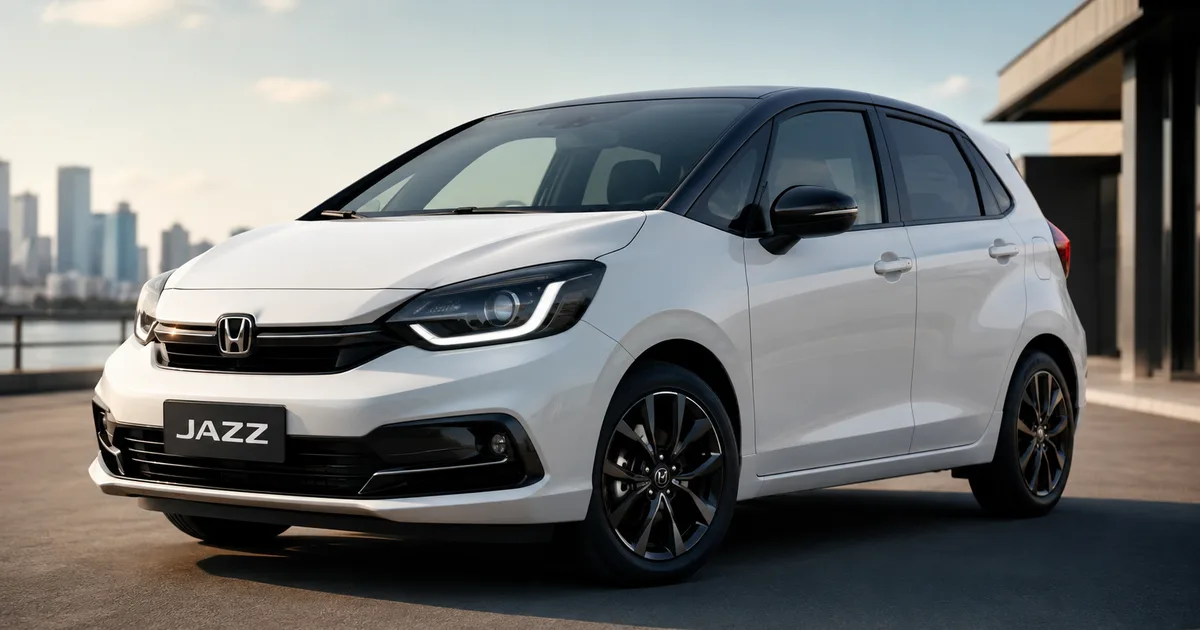
I still remember my first time driving a Honda Jazz in Bengaluru traffic. The sheer space inside that car made no sense from the outside. It felt like some sort of magic trick. Now, Honda has pulled the covers off the 2027 Honda Jazz facelift in Japan, marking the 25th birthday of this practical little hatchback.
You probably know it as the Jazz, but in Japan they call it the Fit. Whatever name you use, this car has a cult following in India. I constantly get messages asking if Honda will ever bring it back. So I looked into the new Japanese release. I wanted to see the design changes and figure out the chances of an India launch.
Spoiler alert: it doesn't look good for Indian fans.
What exactly changed in the 2027 update
Honda didn't rebuild the car from the ground up. This is a 25th-anniversary celebration model. So the changes are mostly cosmetic. Basically, the Japanese market gets a refined look that keeps the cute bulbous shape intact. I think they played it really safe here.
The front grille is slightly sharper. And they added some new retro color options. The RS trim is their sporty variant. It gets more aggressive styling on the front bumper. Honestly, you'd need to park the 2026 model right next to this 2027 version to notice the differences immediately (annoying, I know). Honda kept things safe. That makes sense for a car bought entirely for its practicality.
Inside, the layout is exactly the same.
You still get those incredible Magic Seats that fold flat or flip up. If you've ever tried moving a potted plant or a small bicycle in a hatchback, you know why those seats matter. The infotainment screen gets a minor software bump. But don't expect any massive AI integration or futuristic dashboards.
The Japanese pricing breakdown and what it means
Cars in Japan are priced differently than here. But the conversion gives us a baseline. The 2027 Honda Jazz facelift launched with a starting price of around 1.8 million Japanese Yen.
Convert that directly, and you're looking at about Rs 10.64 lakh in Indian currency. That's just the base model. The hybrid versions and the RS trim push that number much higher.
Think about that price tag for a second. Thing is, if Honda brought this car to India tomorrow through the CKD route, import taxes and local GST would push the on-road price past Rs 14 lakh in places like Karnataka or Maharashtra. Would you pay that much for a premium hatchback when the Hyundai i20 and Maruti Baleno exist at lower price points? Most Indian buyers simply won't.
We're a highly price-sensitive market. Even with Honda's reputation for engine reliability, asking an Indian family to spend 14 lakh on a hatchback is a very tough sell. We want metal for our money. And we want road presence.
Why the Indian car buyer moved on
Look, we need to talk about why the Jazz left India in the first place. The Indian car buyer changed dramatically over the last five years. I see this every time I visit a dealership. People walk straight past the hatchbacks. They look at the compact SUVs.
If you have 12 to 15 lakh rupees to spend right now, you're probably looking at a Tata Nexon or a Hyundai Venue. Or maybe Honda's own Elevate. Ground clearance matters on our pothole-filled roads. The high seating position makes you feel safer. The Jazz has more interior space than most compact SUVs. But it just doesn't have that commanding road presence.
Honda knows this.
They watched the Jazz sales figures drop month after month before finally pulling the plug in 2023. They replaced it in the lineup with the Elevate SUV. That move actually worked for their bottom line. The Elevate sells in numbers the Jazz could only dream of in its final years.
The e:HEV hybrid technology we are missing
One of the biggest losses for us is the hybrid technology in the new Japanese Fit. Honda uses their e:HEV dual-motor hybrid system in these cars. It's incredibly efficient.
In stop-and-go traffic, the car runs mostly on electric power. The petrol engine basically acts as a generator for the battery. In Japan, owners report getting mileage figures that would make a Maruti Swift blush (which makes sense, actually). We do get this technology in the Honda City Hybrid in India. But it pushes the price of that sedan well over Rs 20 lakh.
Putting that hybrid system into a small hatchback for the Indian market would make the car impossibly expensive. The Indian government currently taxes hybrid vehicles at almost the same rate as pure petrol cars. So unless the GST council decides to cut taxes on strong hybrids, we'll never see these efficient small cars on our roads.
Union Minister Nitin Gadkari has occasionally mentioned pushing for lower hybrid taxes. But no official policy change has happened yet.
Emissions and safety regulations
We also have to consider the regulatory environment in India today. The BS6 Phase 2 emission norms made cars more expensive to produce. Automakers had to add complex sensors and hardware just to pass the tests.
Then you have the upcoming Bharat NCAP safety ratings. Indian buyers actually care about crash test scores now. That's a massive shift from ten years ago. Building a hatchback that passes stricter emission laws and gets a high safety rating is incredibly difficult. And keeping the price competitive is a mess. Tata managed it with the Altroz. But they sell enough volume to justify the development costs. In my experience, Honda simply doesn't have that kind of volume in the hatchback segment.
The electric future complication
There's another reason we probably won't see this petrol-powered Jazz return. The entire Indian auto industry is scrambling toward electrification. Tata Motors is pushing EVs aggressively. Mahindra has a huge lineup coming. And even Maruti Suzuki is finally launching the eVX later this year.
Honda has been notoriously slow with electric vehicles in India. They're reportedly working on an Elevate EV for 2026. Bringing a petrol or hybrid hatchback back into a market that's aggressively shifting toward SUVs makes zero financial sense. Honestly, if you're waiting for a new Jazz, you're holding out for a ghost.
Alternatives you can actually buy right now
If you absolutely must have a premium hatchback today, the market still has options. They just don't have the Honda badge on the front.
- The Hyundai i20 remains the default choice for premium features. It has the sunroof, the big screens, and the flashy design.
- The Maruti Suzuki Baleno offers incredible fuel efficiency and easy maintenance. It is the practical choice for most people.
- The Tata Altroz gives you a five-star safety rating and a solid diesel engine option if you do a lot of highway driving.
- The Toyota Glanza gives you the Baleno's reliability with Toyota's superior warranty and service network.
None of them have the interior flexibility of the Jazz (which is a shame). But you can actually walk into a showroom and buy them with a full warranty today using your UPI app.
Buying a used Honda Jazz instead
This is where things get interesting. I constantly advise people to look for a well-maintained used Honda Jazz. The 1.2-liter i-VTEC engine is virtually indestructible if you service it regularly. And the CVT automatic gearbox is perfect for city traffic. It's smooth and predictable. It doesn't jerk like an AMT.
You can find a 2018 or 2019 model for somewhere between Rs 5 lakh and Rs 7 lakh. The exact numbers here are a bit fuzzy depending on the condition and your city. Just get it checked by a trusted mechanic first.
One massive warning though. When buying a used car in India, you have to do your paperwork properly.
Make sure you check the RC status on the Parivahan website before handing over a single rupee. Check for pending traffic challans online. Verify that the previous owner's bank loan hypothecation is actually removed from the RC. You can check many of these details directly on your DigiLocker app now. I've seen too many people get stuck with cars that have sketchy paperwork.
The Australian connection tells the global story
I was reading a report from CarExpert Australia this morning. They confirmed the facelifted Jazz isn't coming to their market either. Australia often gets right-hand drive models from Japan or Thailand. If Honda isn't bothering to update the car for the Australian market, it tells you everything you need to know about their global strategy for this hatchback.
They're focusing entirely on the HR-V and the CR-V globally. The small car segment is shrinking everywhere, not just in India. People want SUVs. It's a global consumer trend.
Should you care about this Japan launch
Yes and no.
As a car enthusiast, I love seeing what Honda does with the Fit in Japan. They get all the cool hybrid tech and the RS variants that actually handle beautifully. The packaging is a masterclass in automotive engineering. Fitting that much space into a car that small is genuinely impressive.
But as an Indian consumer, this news doesn't change your daily commute. You can't buy it. You won't see it on the roads. It's just a reminder of a car that used to make a lot of sense for Indian families before we all decided we needed 200mm of ground clearance.
Honda India is focusing on the Elevate and the City right now. The Amaze is also due for a massive update soon. That update will likely take design cues from the bigger Honda sedans. If you want a small Honda in India, that compact sedan is your only real option going forward.
Looking at Honda's larger strategy in India
Honda seems to be playing a very conservative game in India right now. They closed their Greater Noida plant a few years ago. Then they consolidated all manufacturing in Rajasthan. They're making just enough cars to stay profitable without taking massive risks.
Launching a new premium hatchback is a massive financial risk. You have to retool the factory lines. You also have to train the service network across the country. Plus you have to spend millions on marketing campaigns just to get people into the showrooms. And for what exact outcome? To sell maybe 1,500 units a month in a segment that is actively shrinking? The business math simply doesn't work.
They'd much rather spend that money developing the upcoming Elevate EV. That EV has a much higher chance of success and higher profit margins. You can read more about upcoming car launches in our latest automotive coverage or check our car buying guides.
The lasting legacy of the Jazz in India
Let's take a second to appreciate what the Jazz actually achieved here. When it first launched in India years ago, it was wildly overpriced. I remember people scoffing at the sticker price. But the people who bought it absolutely loved it.
It was the only car where you could fold the rear seats completely flat and literally sleep in the back on a long highway road trip. The visibility from the driver's seat was unmatched because of those massive quarter glasses. It felt like driving a greenhouse. The mechanical reliability meant you only visited the service center once a year for basic oil changes and filter replacements.
Those specific traits still matter today. I still see first-generation Jazz models running around Delhi and Mumbai looking perfectly fine. The owners refuse to sell them because they can't find a modern replacement. Nothing else offers the same mix of interior space and bulletproof reliability without spending upwards of 20 lakh rupees.
Final thoughts on the matter
I know a lot of you were hoping this 2027 facelift meant a return to the Indian market. I'm not sure exactly why it didn't work out earlier, but I wish I had better news for you today. The automotive market has moved on permanently. The 2027 Honda Jazz is a fantastic, practical car for the narrow, perfectly paved streets of Tokyo.
It's just not the car Honda wants to sell in the flooded streets of Mumbai.
Or the traffic jams of Bengaluru anymore.
If you're in the market for a new car right now, look at the compact SUVs. If you specifically want that Honda badge on the steering wheel and that famous i-VTEC reliability, go test drive the Elevate. It doesn't have the clever Magic Seats. But it will handle the massive speed breakers in your neighborhood much better than a low-slung hatchback ever could.
And if you remain completely obsessed with the idea of owning a Jazz, start scanning the used car portals right now. Find a clean, low-mileage example from 2019 or 2020. Have a mechanic inspect it thoroughly. Pay a little extra for it if you have to. And hold onto it tightly. Automakers literally don't make cars like that for the Indian market anymore. And they likely never will again.