We've been waiting over a decade for this. Ever since Apple introduced its digital wallet in the US back in 2014, Indian iPhone users have been asking the same question every single year. When is it our turn? The wait is officially over. The Apple Pay India Launch 2026 is happening this October. And while it's a big deal, there are some serious limitations you need to know about before you try paying for your morning filter coffee with your iPhone.
I've been tracking the rumours about this launch for months. Honestly, Apple struggled to navigate India's strict banking regulations and the dominance of the National Payments Corporation of India (NPCI). They finally found a way in. But it's not the complete payment solution many of us hoped for. We will look at exactly what works on day one and which banks are on board. You'll see why you can't throw away your physical wallet just yet.
The reality of the Apple Pay India launch
Apple Pay is a digital wallet that lets you store your credit and debit cards on your iPhone and Apple Watch. Instead of pulling out a plastic card and tapping it on a point-of-sale machine, you just tap your phone.
That sounds simple enough. I think most of us have been doing something similar with Samsung Pay or Google Wallet.
But Apple's approach is about deep hardware integration. When you make a payment, the process is authenticated using Face ID or Touch ID. This makes it incredibly secure. You don't need to open an app. You don't need to scan a QR code. You just double-click the side button, glance at the screen, and hold it near the card machine.
According to Apple Pay VP Jennifer Bailey, the service is available on the iPhone XR and later models. It also works on the Apple Watch. This covers the vast majority of iPhones actively used in India right now. Basically, if you bought an iPhone anytime in the last six years, you're covered.
Supported banks: Axis Bank takes the lead
Here's the deal. Not every bank is ready for this. In fact, most of them aren't.
At launch, Apple Pay in India only supports Axis Bank credit cards. And even then, it's restricted to cards issued on the Visa and Mastercard networks.
If you have an HDFC Bank or ICICI Bank card, you're out of luck for now (annoying, I know). They simply aren't on the launch list. RuPay is also completely missing from the equation. I'm not sure exactly why it took so long, but Apple and Indian banks have spent years arguing about merchant discount rates and data localization rules. Apple takes a tiny cut of every transaction made through Apple Pay globally. Indian banks have resisted sharing that revenue. Axis Bank just managed to sign the papers first. They probably viewed the partnership as a premium customer acquisition strategy.
I fully expect the others to join soon. You can read our Tech Explainers to understand how banking partnerships usually roll out in phases. HDFC Bank can't afford to stay off the platform for long. But for the October launch window, Axis Bank has exclusive bragging rights.
Why is there no UPI support yet?
This is the big disappointment. We all live on UPI. I scan QR codes for my cab rides and to pay the local electrician. India runs on it.
Apple Pay in India won't support UPI at launch.
According to reports from Reuters and CNBC TV18, Apple is still building the UPI integration. Right now, they're focusing purely on card-based tap-and-pay payments.
UPI requires an entirely different security architecture. The NPCI has strict rules about third-party apps handling UPI pins and routing transactions. Apple wants to integrate UPI natively into the iOS Camera and Wallet app. They don't want to force users to open a separate application. Building this in a way that satisfies both Apple's privacy standards and the NPCI's technical requirements is taking time.
So, if you want to scan a PhonePe or Google Pay QR code at the kirana store, you still need those specific apps. Apple Pay won't do it yet. When Apple eventually adds UPI, it'll probably change how we use iPhones entirely. For now, we're stuck with cards. If you're interested in the broader ecosystem, the Apple Intelligence 2026 India Rollout Explained piece covers what else Apple is bringing to the table this year.
Step-by-step setup guide for Apple Pay
Getting started is incredibly easy. I tried setting up a similar tap-and-pay system before and it was a total headache. Apple usually gets the user experience right.
First, make sure you're running the latest version of iOS. You need an iPhone XR or a newer model.
- Open the Wallet app on your iPhone.
- Tap the plus icon in the top right corner of the screen.
- Select 'Debit or Credit Card' from the options presented.
- You can either scan your physical Axis Bank card with your iPhone camera or type the numbers in manually.
- Review the terms and conditions.
- You'll receive an OTP from Axis Bank on your registered mobile number. Enter it to verify the card.
That's literally it. The card will appear in your digital wallet. You can set it as your default payment method if you want.
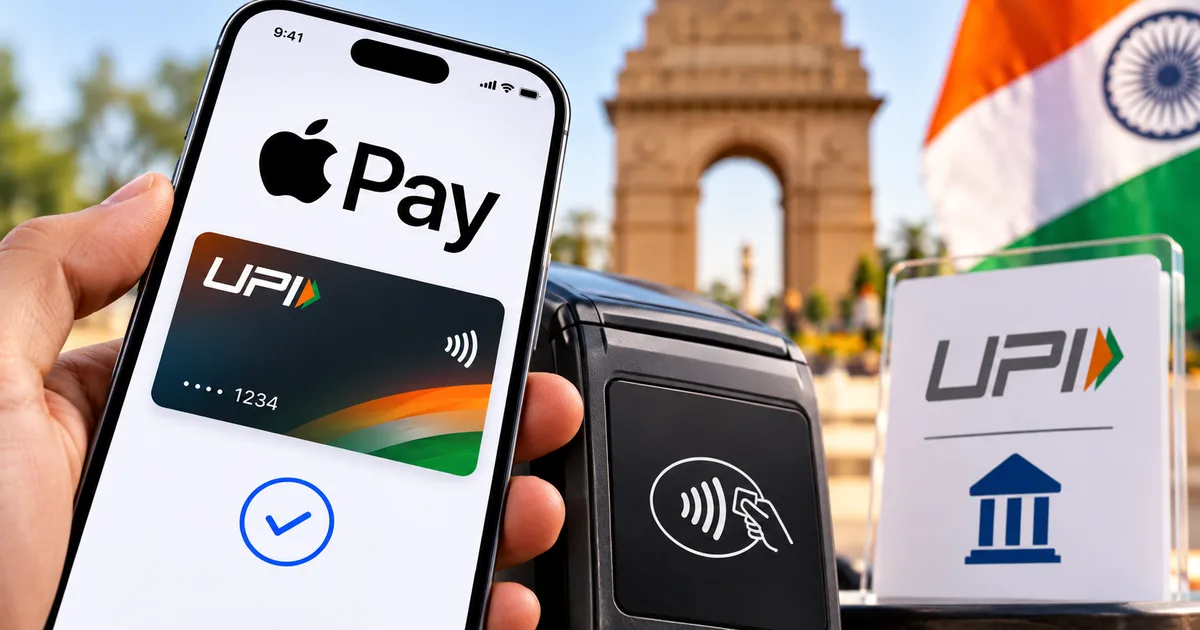
To actually pay at a store, the process is equally simple. You don't even need to wake the phone up first. Just double-click the side button on your iPhone. The screen will light up and ask for Face ID. Look at your phone. Then hold the top edge of the phone near the card machine. A checkmark will appear on the screen to confirm the payment went through. I know, it sounds too simple to be secure. But it is.
Security and privacy: Is it safe?
Honestly, it's much safer than carrying the physical card in your pocket.
When you add your card to Apple Pay, it doesn't store your actual 16-digit card number on the device. It certainly doesn't store it on Apple's servers. Instead, the system creates a unique Device Account Number. That number is encrypted and locked away in the Secure Element, a dedicated chip on your iPhone that is completely isolated from the rest of the operating system.
"Every single transaction requires Face ID, Touch ID, or your passcode. Even if you lose your phone in an auto-rickshaw, nobody can tap it at a store without your face or your specific code."
Plus, your physical card can get skimmed by a sketchy card machine. Tap-and-pay via your phone generates a dynamic, one-time security code for every single transaction. So even if a hacker intercepts the NFC signal during a purchase, that data is completely useless for a second transaction.
Apple also doesn't track what you buy. They don't know where you shopped or how much you spent. That information stays between you and the merchant. Axis Bank gets the transaction data, but Apple doesn't. In my experience, this privacy-first approach is refreshing.
Do Indian shops need new machines?
One of the biggest questions I get is whether local shops will need to upgrade their billing machines to accept Apple Pay. The short answer is no.
If a store already accepts contactless card payments, the kind where you just tap your Visa or Mastercard on the machine, they're already equipped to accept Apple Pay. The technology is identical. It uses standard NFC protocols.
Think about your local supermarkets like Reliance Smart or your neighbourhood pharmacy. Look at their swipe machines. Most of them have a symbol that looks like a sideways Wi-Fi icon. That means they're NFC enabled. Your iPhone is just a virtual version of your plastic card.
The merchant doesn't pay any extra fees because you used an iPhone instead of a physical card. The transaction is processed exactly the same way. This is a massive advantage for adoption. Apple doesn't have to convince shop owners to install new hardware. That was a huge hurdle for earlier payment technologies.
How does it compare to Samsung Wallet and Google Pay?
Samsung has had a massive head start in India. They launched Samsung Pay years ago. Early on, Samsung phones even had a technology called MST, which mimicked the magnetic stripe of a physical card. This meant you could use a Samsung phone even on old machines that didn't have tap-and-pay.
They dropped MST recently. So now Samsung Wallet relies on the exact same NFC technology that Apple is using. But Samsung Wallet currently supports a much wider range of Indian banks. They've just been operating here longer.
Google Pay dominates the UPI space alongside PhonePe. Google Pay does allow you to tokenize credit cards for tap-and-pay on Android phones. The numbers here are a bit fuzzy, but most Indians purely use it for scanning UPI QR codes.
Apple is entering a crowded market. They're betting that the seamless integration between the iPhone hardware and the Wallet app will win users over. The animation is just smoother, and the Face ID authentication feels magical. The privacy guarantees are stronger too. But until they match the bank support of Samsung Wallet and the UPI utility of Google Pay, they'll remain a niche player.
The bigger picture for digital payments in India
India is a QR code country. We crossed 10 billion UPI transactions a month a long time ago. The infrastructure is deeply embedded in our daily lives. So where exactly does Apple Pay fit into this landscape?
It clearly targets the premium segment of the market. People who buy iPhones often use credit cards for dining out at nice restaurants or buying electronics. Apple wants a piece of that specific action. It's the exact same strategy they're using globally. If you want to see how other companies are expanding their tech in India this year, check out the Tata Aeris Car 2026 India Launch: Expected Price, Specs, and Design Features Explained for a look at the connected consumer space.
I think we'll see a slow but steady shift in behaviour among iOS users. People with iPhones will start tapping their devices instead of swiping physical cards. It's faster. It feels more secure. And let's be real, people like looking cool at the checkout counter. The convenience of not having to dig through a bag to find a wallet is a strong selling point.
Most point-of-sale machines in Indian retail stores already have NFC capabilities. You don't even need a mobile network connection to make the payment go through (which makes sense, actually, given store layouts). This is great for stores located in mall basements where the signal often drops.
What to expect next
Apple is clearly playing the long game here. The October launch is just step one in a multi-year strategy.
Over the next six to twelve months, we should see major players like HDFC Bank and SBI Card get on board. They simply have too many affluent customers to ignore this platform. Also, RuPay credit cards on UPI are seeing massive adoption right now. Apple will eventually have to support RuPay if they want to capture real transaction volume in the country.
The lack of immediate UPI support is annoying, yes. But building a system that complies with RBI and NPCI guidelines while maintaining Apple's strict security architecture takes time. They chose to launch with credit cards now rather than delay the whole thing another year waiting for the UPI integration to be perfect.
I'll update this guide as soon as new banks are added to the roster. Keep an eye on our Latest Tech News section for the exact release date next month and any surprise announcements.
For now, if you have an Axis Bank card and an iPhone, get ready to leave your physical wallet at home. The rest of us will just have to keep waiting and scanning our QR codes. Hopefully, our banks will sign the paperwork soon.