Imagine this. It's late November, just over a week before the December 6 exam, and you're staring at legal reasoning passages at 11:30 PM with a cold mug of chai on your desk. Suddenly a coaching WhatsApp group lights up with a forwarded screenshot. Someone says a Telegram channel has the CLAT 2027 paper leak ready for advance booking, and all you have to do is pay Rs 10,000.
Your heart skips a beat.
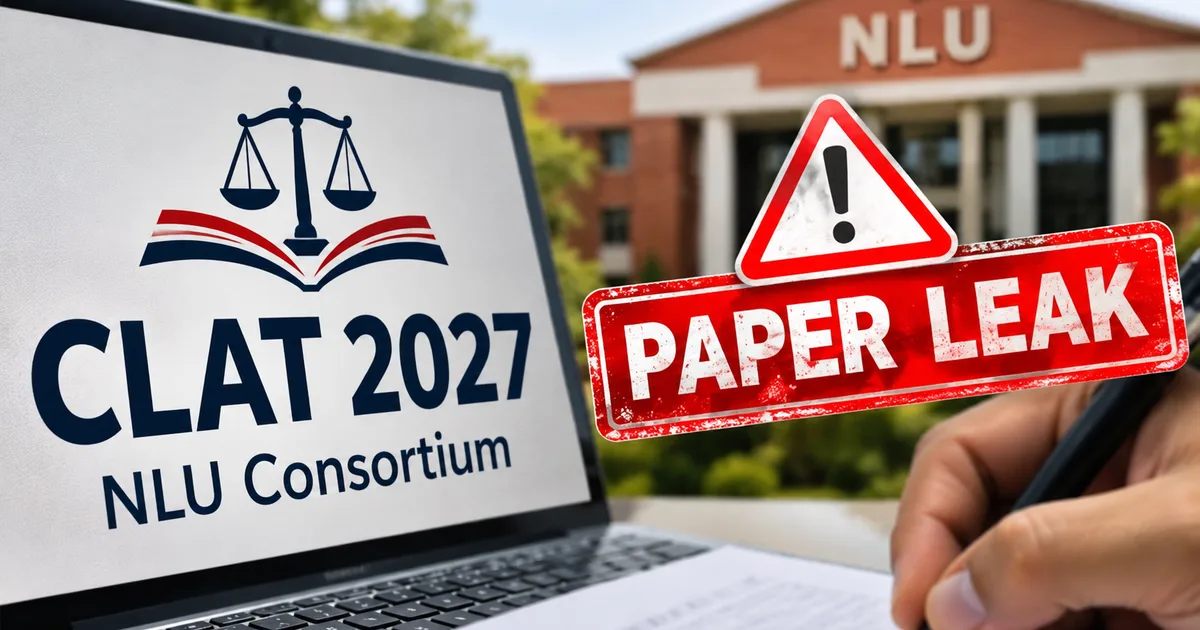
Even if you've studied honestly for a whole year, the panic that everyone else might buy an unfair edge is brutal. Scammers are banking on that exact panic right now. On November 16, 2026, the Consortium of National Law Universities put out a public notice calling these viral CLAT 2027 paper leak claims completely fake. Nobody outside the Consortium has the paper. And if anyone on Telegram asks you for cash to get it early, it's a scam, plain and simple. If you ask me, calling it out fast was the only smart move.
What triggered the Consortium of NLUs advisory
This warning didn't just pop up out of thin air. Reports from Careers360 and Shiksha.com say a Telegram channel named 'CLAT papers' started selling early access to the CLAT 2027 question paper right before the December 6 exam.
Their pitch was pretty slick. The channel told students that anyone who booked a slot early would get the paper three days before exam day for Rs 10,000. They even dropped a few sample questions to look legit and said those came straight from the actual test.
Look, if you've watched Indian entrance exams over the past few years, this whole routine feels painfully familiar. Scammers copy regular mock-test questions and slap a scary name on a Telegram channel, then they drop teasers right when admit cards go live (which makes sense, honestly, since that's when nerves are worst). Students are already stressed about seats across 26 National Law Universities and affiliated colleges like IIULER Goa. So even a sketchy screenshot goes viral in minutes. I'm not sure why people still fall for these cropped chats every year, but panic does weird things to your brain.
The Consortium didn't wait for rumours to get worse. In its November 16 notice, the body made it clear that third-party access claims have zero truth to them. CLAT 2027 is an offline pen-and-paper test happening across around 68 cities on December 6, 2026, and no outside user or Telegram group has it. Nobody can sell it early.
How Telegram paper leak scams actually work behind the scenes
People keep asking how a Telegram channel pulls off a Rs 10,000 scam when everyone knows leaks are risky. Honestly, it isn't real hacking. It's mostly basic psychology mixed with how Telegram works.
Think of it like a street vendor outside a cinema hall selling 'handwritten scripts' of a big Friday movie before it even releases. Anyone can type up ten believable dialogues on cheap paper and charge eager fans for a peek. And when you finally sit in the hall and realise every line is fake? The vendor is already gone.
Telegram makes disappearing absurdly easy. Here's how the scam usually goes down:
- An anonymous admin creates a public or invite-only channel with names designed to rank in Telegram search, then seeds it with free current affairs PDFs so students join weeks in advance.
- Once exam fever peaks in late November, the channel starts posting blurry sample questions and fake 'happy customer' chat screenshots from previous years.
- Interested students get pushed into direct messages, where the scammer quotes Rs 10,000 for an 'early slot' and demands payment via UPI to a mule account or through gift vouchers.
- After collecting money from dozens of anxious students, or sometimes asking for admit card PDFs and Aadhaar details under the excuse of 'verifying your roll number', the admin either blocks the buyer or deletes the entire chat history for both sides.
Thing is, losing Rs 10,000 already hurts. For a student or a middle-class parent stretching budgets for coaching fees, that's a huge amount of money. Handing over your Aadhaar details or a copy of your hall ticket is even worse, especially when they already have your phone number. Scammers use those details to blackmail you later. They know a law aspirant scared of getting disqualified will pay hush money just to stay out of trouble.
If you ask me, this looks just like other latest Indian scam alerts I've seen this year, from fake admit card links to bogus scholarship sites. The cover story changes every season. Still, the scammer's trick is always urgency mixed with secrecy.
Why sample questions look convincing to tired students
What about those 'leaked' sample questions on Telegram? Why did smart students actually think they were real?
Because CLAT has a predictable format. Unlike rote-memory exams, CLAT is mostly about reading comprehension and legal principles tied to recent Supreme Court or legislative news. Anyone with a Rs 500 mock-test book or a basic AI chatbot can spit out five tough passages on constitutional law in ten minutes flat.
When you're dead tired from solving mocks, your brain starts seeing patterns everywhere (I know, it sounds dumb in the afternoon, but at midnight before an exam, panic really messes with your head). You spot one neat passage on a trending legal issue and assume it's genuine. Basically, those teasers are just bait lifted from coaching notes or old tests.
Why the Public Examinations Amendment Act 2026 changes the stakes
Here's the bit most students and parents miss. People still treat buying a leaked paper like a grey area where only the seller gets busted if things go wrong. That's a risky bet in 2026.
In its notice, the Consortium pointed straight to the Public Examinations (Prevention of Unfair Means) Amendment Act, 2026, which was notified on July 31, 2026, along with existing cybercrime laws. Under these rules, even trying to buy or share unauthorised exam material is a punishable offence.
Trying to buy or share purported CLAT 2027 question papers can land you in serious legal trouble. Even engaging with fraudulent accounts or forwarding unverified leak claims can trigger strict action under the Public Examinations Amendment Act, 2026 and cybercrime laws.
Think about that. Suppose you don't pay a single rupee and just forward a viral Telegram screenshot to three friends on WhatsApp to ask if it's real. You've already circulated unauthorised material tied to an exam scam claim. The Consortium says it is watching online chats right now and will start legal action against anyone caught sharing or trying to get this stuff.
India's exam security has gotten way stricter over the last two years, from law tests to 2027 Indian exam rules. If you ask me, police and exam boards don't brush off WhatsApp forwards like they used to, what with tighter answer-sheet tracking in states and central anti-cheating laws. One careless forward could ruin your shot at all 26 NLUs before you even reach your exam centre.
How to verify real CLAT 2027 updates and stay safe
The real CLAT 2027 admit card is out for both UG and PG students (finally, right?). So as you get ready for December 6, only one web address matters. It's consortiumofnlus.ac.in.
Everything official happens inside your candidate login on that portal. You won't get updates on Telegram or in a WhatsApp broadcast list run by a random senior. And if an SMS promises 'updated exam centre details' with a shortened link, don't click it.
You don't need fancy tech skills here. A few basic habits can keep your phone clean during this final week:
- Bookmark consortiumofnlus.ac.in directly in your phone browser instead of searching for login links on Google, because fake lookalike websites sometimes buy search ads during exam week.
- Turn off automatic media downloads in Telegram and WhatsApp groups so sketchy PDFs or APK files never land on your phone uninvited.
- Never share your CLAT application number, date of birth, or bank OTP with anyone claiming to offer 'grace marks', 'seat confirmation', or advance papers.
- Mute noisy unofficial exam gossip channels for the next eight days and stick to official mock tests or your own revision notes.
In my experience, half of exam-week panic comes from scrolling through Telegram at midnight. If you're curious about how fake websites copy real domains or steal login data, check out our simple digital tech explainers. You'll spot the red flags in seconds.
What to do if you spot a CLAT 2027 paper leak claim
Say you actually see one of these Rs 10,000 Telegram offers. Or maybe a friend texts you a QR code asking to split the cost. What do you do?
First, stop. Don't forward that message anywhere. And don't post it on Reddit or X to 'warn people' either (tempting as that is), because reposting screenshots gives scammers free reach and puts you in the sharing chain.
Save the proof privately instead. The Consortium of NLUs, along with reports from Jagran Josh and Careers360, laid out a clear way to keep evidence before the scammer hits delete:
- Take clear screenshots of the chat, post, and profile bio showing the channel name and handle.
- Copy and save the exact URL, Telegram account ID, date, and timestamp of the message.
- Record any UPI ID, QR code, or bank payment request sent by the fraudster without making a transaction.
Once you've got those details, email them straight to the Consortium secretariat at clat@consortiumofnlus.ac.in. You should also report the scam on the government portal cybercrime.gov.in. Already sent money to a fake paper seller? Call the national cybercrime helpline 1930 right away. The exact recovery odds are a bit fuzzy, I'll admit, but calling within the first couple of hours gives banks a real chance to freeze the scammer's account before that Rs 10,000 gets cashed out. You can also read our online cyber safety guides if you want a walkthrough on filing a digital complaint with screenshots.
Scammers go after CLAT every single year because the pressure feels huge. Around 68 cities will host thousands of students trying to get into top law schools on December 6. If you ask me, no random Telegram admin hiding behind a burner SIM has a shortcut to those seats. Your admit card is live. Stick to your revision notes.