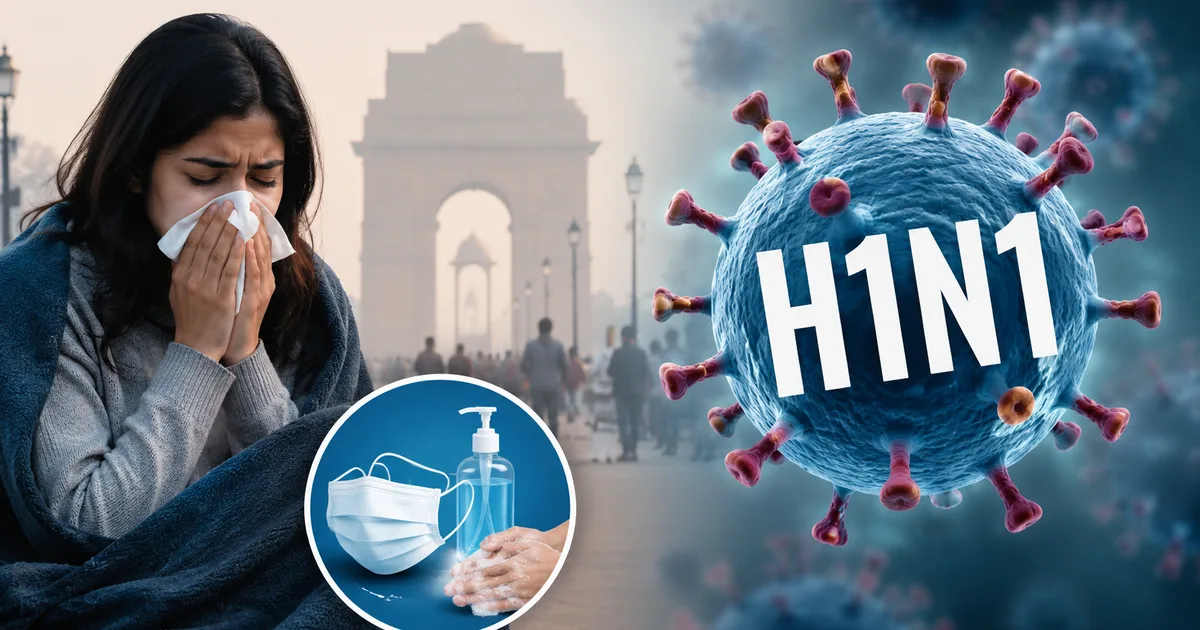
So, you probably saw the news or got a WhatsApp forward about it. The Delhi H1N1 Influenza Surge 2026 is officially here, and the numbers are honestly a bit concerning. We are looking at a nearly six-fold increase compared to last year. Hospitals across Delhi and the NCR region have reported over 1,344 confirmed cases already, and outpatient departments are a complete mess right now.
I know what you're thinking. Another virus. Another set of guidelines to follow. But this isn't some sketchy new pathogen we haven't seen before. H1N1 is the swine flu strain we've dealt with for years. The difference this time is the sheer volume of infections hitting the capital all at once. And it's happening right in the middle of the monsoon transition.
Thing is, you don't need to panic. You just need to know what you're dealing with. And how to handle it. I've been going through the reports from local health authorities. I want to break down exactly what is happening, what symptoms you should actually worry about, and what the government is telling us to do.
Understanding the current H1N1 outbreak in Delhi
Let's look at the actual data. The Delhi health department confirmed around 1,349 cases of H1N1 in a very short span. That is a massive jump from what we normally see during this season.
But here's the good news. Authorities haven't recorded any deaths directly linked to this outbreak so far (which makes sense, actually, given past years). The virus is spreading fast. But for most people, it isn't turning into a severe situation. It is just making them completely miserable for a week.
The sudden spike probably comes down to a mix of things. I'm not sure exactly why it hit so hard this week. But the unpredictable weather changes we've had in Delhi recently create the perfect breeding ground. Add in the massive crowds. Add in a dip in our collective immunity to this strain over the last few years. When you have millions of people using the Delhi Metro and crowded DTC buses every single day, a highly contagious respiratory virus doesn't take long to find new hosts.
If you're following the general news updates, you'll notice major hospitals like AIIMS and Safdarjung are setting up dedicated isolation wards again. Private hospitals are doing the same. It feels a bit like the 2020 days. But the protocols are much more straightforward this time around because doctors know exactly how to treat it.
Real symptoms you should not ignore
Everyone gets a cough or a cold eventually. In my experience, the trick is knowing when that scratchy throat is just Delhi pollution and when it is actually H1N1.
The onset is usually very sudden. You might feel totally fine in the morning. And by evening, you're completely wiped out with a fever.
Here's what you need to look for:
- High fever that hits fast and stays above 101 degrees Fahrenheit.
- Severe body aches, especially in your lower back and legs.
- A dry, persistent cough that doesn't produce mucus right away.
- Chills and unexpected sweating, even when the AC is on full blast.
- Extreme fatigue that makes getting out of bed feel impossible.
Some people also get nausea or stomach issues. Doctors mention that is more common in young kids.
Look, if you just have a runny nose and a mild headache, it might just be a regular seasonal bug. But if you get that sudden fever and body ache combination, it is time to take it seriously. Don't just pop a Dolo-650 (we all do it), ignore it, and head to the office in Gurgaon. Stay home. You don't want to be the person who infects half your floor.
Who is at high risk right now
Most young, healthy adults will recover from H1N1 in around a week with rest and plenty of fluids. But the virus can be really hard on specific groups of people.
If you have elderly parents at home, you need to be extra careful. Anyone over 65 is automatically in the high-risk category. I think the same goes for kids under five. Their immune systems just don't handle this strain well. And they can develop complications like pneumonia much faster.
You also need to watch out if you or someone in your family has pre-existing conditions. Diabetes, asthma, hypertension, or heart issues make you much more vulnerable to severe symptoms from H1N1. Pregnant women are also at a higher risk. They should consult their doctors immediately if they develop any flu symptoms.
Basically, if you fall into one of these groups, don't wait three days to see if the fever breaks. Book a tele-consultation or visit a clinic on day one.
How the virus actually spreads
H1N1 spreads exactly like the regular flu. It is primarily an airborne virus.
When an infected person coughs or sneezes in a crowded space, they release tiny droplets containing the virus. If you are standing nearby and breathe those in, you get infected. It is that simple.
But it also spreads through contaminated surfaces. Say someone coughs into their hand, then grabs a pole on the Metro. Or touches an elevator button in your apartment building. The virus can survive on that surface for a few hours. You touch the same button, then rub your eyes. You just infected yourself.
If you ask me, this is exactly why hand hygiene is still the absolute best defense we have.
Prevention and government guidelines
The government hasn't issued any lockdowns. They aren't likely to. There is no need for panic buying. But they have released clear guidelines for hospitals and the public to manage the load.
They are strongly advising everyone to go back to basic respiratory hygiene. It sounds repetitive, but it actually works.
- Wash your hands with soap for at least 20 seconds. Do it as soon as you get home from outside.
- Use a good alcohol-based hand sanitizer when you are travelling. Keep a small bottle in your bag or car.
- Wear a mask in crowded indoor spaces. I know no one wants to wear N95s again in this humidity, but if you are on a packed train at Rajiv Chowk, a basic surgical mask can cut your risk significantly.
- Avoid touching your face. This is surprisingly hard to do, but it stops the surface-to-eye transmission route completely.
If you feel sick, isolate yourself immediately. Don't go to work. Don't send your kids to school if they have a fever. The Delhi government has mandated that hospitals stock up on Oseltamivir, which is the main antiviral medication used to treat H1N1. But you only get that with a prescription. Doctors usually save it for severe cases or high-risk patients. You can't just buy it over the counter at your local pharmacy (which is probably for the best).
Should you get a flu shot?
This is the question everyone is asking on family WhatsApp groups right now.
Yes, you probably should get a flu vaccine if you haven't had one recently. The current seasonal flu shots available in India are designed to cover the H1N1 strain.
It costs anywhere from 1,500 to 2,000 INR at most private clinics. You can usually book an appointment online, pay via UPI, or walk into a major hospital chain. Some employers even cover it under their corporate health plans. So check your HR portal before you pay out of pocket. Once you get it, some hospitals will push the vaccination record straight to your DigiLocker. This makes it easy to track.
The vaccine takes about two weeks to build up full immunity in your body. It won't magically protect you if you were exposed yesterday. But getting the shot now is still a very smart move. Especially if you have high-risk people at home.
Using tele-medicine during the surge
I think one thing that has drastically improved since the last major health crisis is our tele-medicine infrastructure. If you suspect you have H1N1, you really don't need to sit in a crowded waiting room. You don't need to risk infecting others. And you definitely don't want to catch something else.
Apps like Practo, Apollo 24|7, Tata 1mg, and Pharmeasy let you consult with a doctor in minutes. The fees are usually around 400 to 800 INR. You can pay instantly via UPI. The doctor can assess your symptoms over a video call. They can prescribe medications like Oseltamivir and send a digital prescription straight to your phone. Then you can use that same app to order your meds and book a home test.
It's a much safer way to handle the initial stages of the flu (annoying to set up the apps, I know). Plus, keeping your medical records digital means you don't have to carry physical files around if you do end up needing to visit a hospital.
Testing and when to see a doctor
You don't need to rush to a lab the second you get a cough. But if your symptoms match the H1N1 profile, testing is a good idea to confirm what you have.
Most major diagnostic labs in Delhi offer home collection for H1N1 PCR tests. They cost around 3,000 to 4,500 INR depending on the lab and the specific panel. It's a simple nasal and throat swab. You get the results on your phone in about 24 hours.
Many private labs also offer family packages if multiple people at home are showing symptoms. This can bring the per-person cost down slightly. But don't feel pressured to test everyone. If a doctor has already confirmed one case in your household, they usually just treat others with the exact same symptoms for H1N1 without a separate test.
If your fever crosses 103 degrees, or if you start having trouble breathing, drop everything. Go to a hospital emergency room. Don't wait for a test result. Chest pain, confusion, extreme dizziness, or severe vomiting are also red flags that require immediate medical attention.
In my experience, this surge is just a loud reminder that seasonal viruses are adapting and hitting harder. Keep your immune system strong. Eat properly, and don't ignore a persistent fever. We've navigated worse outbreaks than this in Delhi.
You can check out our other explainers for more deep dives into health tech. Or browse our guides for tips on managing digital health records. Just use your common sense. Wear a mask when it is crowded. And wash your hands.
"The sudden increase in cases is a concern for vulnerable populations, but the current hospitalisation rates show our medical infrastructure is handling the load. Early testing and isolation are the best strategies right now."
If you're looking for official updates, you can always check the Ministry of Health website. Or look out for statements from the Delhi Directorate General of Health Services. They update their numbers regularly. The news channels usually get the daily hospital stats out faster, though.
Honestly, the biggest risk right now isn't just the virus. It's the misinformation spreading online. People are sharing weird home remedies and fake alerts on WhatsApp. Ignore them. Stick to medical advice from actual doctors and verified news sources. If you see a forward claiming some magical herb cures swine flu in two days and asks you to click a link to buy it, please don't. That is a scam you want to avoid entirely.