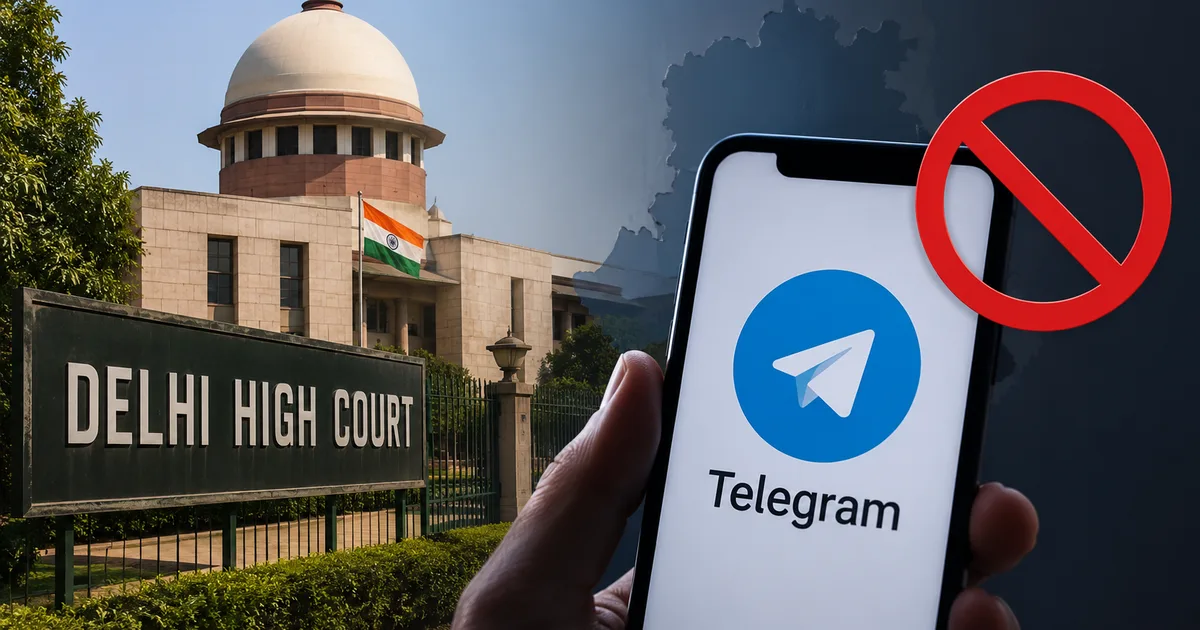
The debate over the temporary Telegram ban in India has reached the Delhi High Court. After the NEET-UG 2026 paper leak controversy, the government decided to temporarily block access to the popular messaging platform to prevent cheating and the circulation of leaked questions. This sudden move sparked intense debates about digital rights and privacy. If you're one of the 150 million users of Telegram in India, this decision affects how you communicate and share files online every single day.
If you ask me, looking closely at the facts shows that the government blocked the platform just before the NEET-UG re-exam. Their goal was simple: stop the leaks. But blocking a whole app that millions of people need for work and studies (which is a lot of people, obviously) is extreme. Telegram didn't take this sitting down. They went straight to court. For most of us, waking up and seeing that messages didn't send was a shock. It was a mess.
On June 17, 2026, the court asked the government for proof. They want to see what actually justified this block.
The link between Telegram and the NEET-UG 2026 paper leak
To understand this controversy, we have to look at the NEET-UG exam. It's one of the most competitive tests in India, and it decides who gets into medical college. When leaks happened, the National Testing Agency faced a massive backlash from both students and parents. Reports showed that leaked papers were sold on Telegram channels for tiny amounts. Some sketchy groups even asked for payments through UPI apps. Honestly, I think this caused a massive uproar across the country, leading to street protests and demands for a complete re-exam. The pressure on the government to act was just immense.
Naturally, the government panicked. They had to secure the upcoming re-test. So MeitY blocked access.
They ordered ISPs to block Telegram until June 22, 2026. But here's the problem: Telegram isn't just some chat app (which is pretty obvious if you use it). People see it as critical infrastructure. Students use it to share study materials and join coaching groups, while developers use it to run bots. Small businesses also use it to reach customers. So this block disrupted daily life for millions of people who had absolutely nothing to do with the leak. It's like shutting down a major highway because someone transported smuggled goods on it. Many students lost access to study guides right before their exams.
Why the Delhi High Court questioned the ban
The Delhi High Court took up Telegram's petition. The platform argued that a complete ban is just disproportionate. They claim they've always complied with valid takedown notices. If a specific channel shares leaked papers, block that channel. Don't kill the whole network. The court seemed to agree with this logic. The bench asked the government to present the files and evidence that led to this decision. They want to see if a real emergency actually existed.
"The government must show that it explored less restrictive measures before choosing to block the entire platform."
This quote highlights the legal standard in India. Under the rules, blocking has to be a last resort. The court's now reviewing whether MeitY followed the proper procedure or just rushed into a ban. The government has to present its proof by the next hearing.
Honestly, in my experience, this is a reasonable demand. Government agencies often choose the easiest path, which is to block everything. But that ignores the rights of citizens who rely on these services daily.
What the MeitY notice means for regular users
If you're a student or a professional, you're probably wondering what happens next. The hearing is ongoing, and the court's notice to MeitY shows that the judiciary takes digital rights seriously. But for now, the block remains active. Many users struggle to access their files and study groups. Some try to use workarounds like proxy servers, but in my view, those aren't always safe. It's a frustrating situation for students who need their study materials right away.
Here are the main details of the situation:
- The block is temporary, scheduled to end on June 22, 2026, unless the court decides otherwise.
- Many users turn to VPNs, though this comes with security risks.
- The government defends its decision by pointing to the integrity of public exams.
This isn't the first time India has seen platform blocks. But this time, it's different because Telegram is actively fighting back. They aren't just a silent bystander. They argue that a block on 150 million users over the actions of a few bad actors violates the right to freedom of speech. Honestly, they have a point. Banning a platform that millions use because a few groups shared leaked papers is a huge overreach.
The legal debate over Section 69A of the IT Act
The government relies on Section 69A of the IT Act. This law gives them the power to block online content in the interest of sovereignty and public order. The paper leak, they argue, threatened public order because millions of students protested. So they felt justified to take extreme action. But Section 69A is a double-edged sword. It allows the government to issue blocking orders behind closed doors. The review committee meetings are confidential. In my experience, this lack of transparency is exactly what digital rights advocates in India have criticized for years. You can read more about how these policies are formed in our section on tech explainers. The law exists to protect citizens, and it shouldn't just be a shortcut for the state to block services.
If the court rules in favor of Telegram, it could limit how the government uses Section 69A in the future. It would mean the government can't just ban an app because they find it difficult to moderate. They'd have to show that they tried other methods first. That would be a massive shift in how internet regulations are enforced.
How to protect your digital communication in India
While the legal battle plays out, you need to think about your own data and communication. Many students had notes stored on Telegram that they can't access now. This is a reminder not to rely on a single platform for important files. I think we've all seen people lose years of study material because their favorite group was suddenly deleted or blocked. It's a harsh lesson in digital dependence. If you're preparing for exams, always keep offline copies of your resources. To rely on cloud services that can be blocked overnight is simply too risky.
Here are a few steps we recommend to keep your data safe:
- Back up important files and documents to local storage or government-approved services like DigiLocker.
- Avoid using unreliable free VPNs to bypass the block, as they often log and sell your browsing data.
- Use alternative messaging services that support end-to-end encryption for your private chats.
It's also smart to stay updated on Indian policy changes. You can follow our Indian policy updates to see how these laws are changing. And if you're looking for tools to help you manage your files securely, check out our digital safety guides.
What lies ahead for Telegram and Indian internet regulations
The outcome of this case is going to matter for a long time. If the court upholds the ban, it sets a dangerous precedent. Any app could get blocked overnight if a user posts illegal content. Honestly, that's a scary prospect for tech companies operating in India. It could also hurt the startup ecosystem. Many Indian startups use Telegram for community growth and support. In my experience, if the platform is unreliable, they'll have to move elsewhere, which costs time and money.
But if Telegram wins, it forces the government to be precise. They'll have to target specific channels instead of shutting down the whole app. That's a win for user rights. We'll know more after the government submits its reply. For now, we wait.