So, The EPFO Portal Is Down. Again.
Look, I get it. You applied for a PF advance because you actually need the money. Maybe it's for a medical emergency, or you're buying a house, or you just want what is rightfully yours. And what do you see? A server error. Honestly, it's incredibly frustrating.
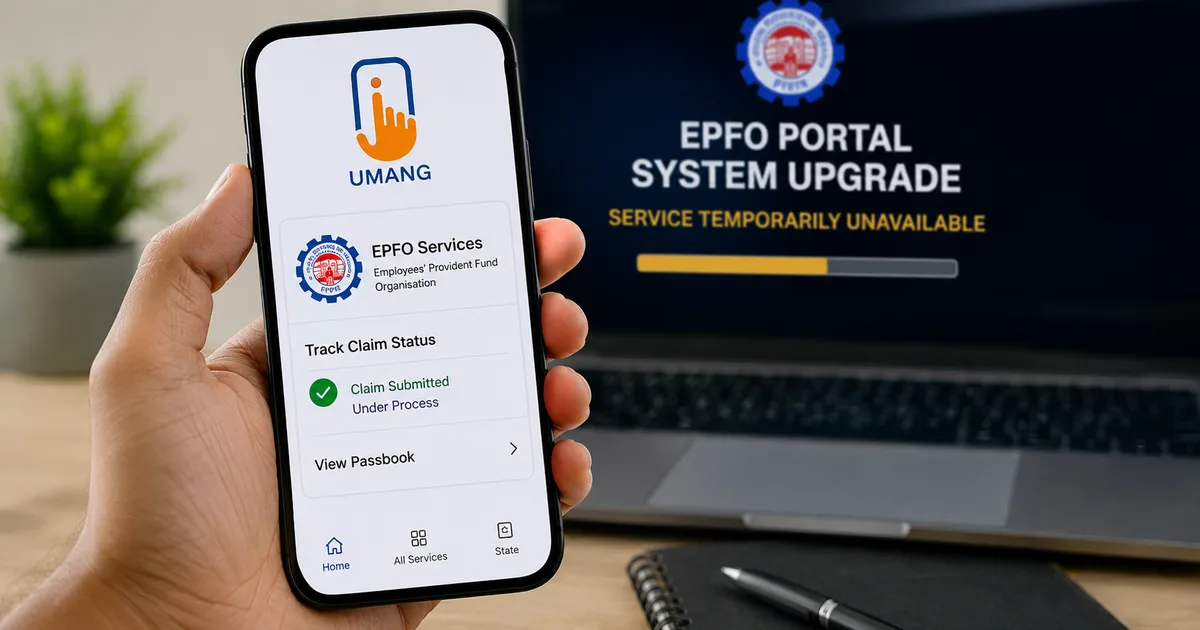
For the past week, millions of Indian salaried employees have been staring at the same downtime message on the Employees' Provident Fund Organisation (EPFO) portal. It started as a scheduled system migration. It was supposed to end fast. But it's just dragged on. They missed the initial deadline. Then the July 1 deadline. Then July 2. And now we're looking at July 3 or later to get online services back.
Thing is, a system upgrade this big is a mess. We're talking about one of the world's largest social security organizations moving an ancient database to a modern system. I think it sounds complicated, sure. It isn't an excuse for bad communication. It's just the reality. They're moving to a new system that has faster claim processing and better security. But right now? Right now it means you can't access your passbook. Employers can't file returns. Claim processing is basically frozen.
Why Is The System Upgrade Taking So Long?
The official word is this is a major technology migration. They're shifting from older architecture to a centralized system. In theory, that makes everything smoother. I'm not sure exactly why it stalled during the transfer. Anyone who's worked in Indian IT knows migrating legacy government databases is a total nightmare.
"EPFO subscribers may face a delay up to 2 weeks while applying for claims or using certain services, as informed by the Employees' Provident Fund Organisation (EPFO) in a public notice on its website."
Basically, they underestimated the time to migrate data for over 60 million active members. So, they had to extend the outage. First it was July 1. Then July 2. The latest target is July 3. And let me be real with you. I wouldn't bet my last rupee on that July 3 deadline. (Which makes sense, actually). Just prepare for a delay of up to two weeks for any new claims to process once the system is back online.
How to Track Your Claim Status When the Main Portal is Down
Here's the deal. The main unified member portal is struggling, but you aren't completely in the dark. You can still check your claim status using the Umang app. The Umang (Unified Mobile Application for New-age Governance) app is the government's super-app. It has a separate pipeline to the EPFO servers.
Step-by-Step Guide for the Umang App
If you don't have the Umang app yet, download it from the Google Play Store or Apple App Store. Don't get it from random WhatsApp links. We've seen enough scams with fake government apps lately.
- Open the Umang app and log in using your MPIN or OTP via your registered mobile number.
- Use the search bar at the top and type "EPFO".
- Tap on the EPFO service. You will see a bunch of options here.
- Select "Track Claim".
- Enter your UAN (Universal Account Number) and request an OTP. This OTP will go to the mobile number linked to your Aadhaar.
- Enter the OTP and submit.
You'll see a list of your recent claims and their current status. Now, a quick warning. The backend database is going through a massive shift. So the status on Umang might be delayed by 24 to 48 hours. If your claim says "Under Process," it might stay stuck there until the migration is completely done.
What About SMS and Missed Call Services?
If the Umang app is acting up, you can fall back on old-school methods. This happens when millions of people suddenly migrate to it. I tried this last week. It's surprisingly reliable, in my experience.
Missed Call Service: Give a missed call to 9966044425 from the mobile number registered with your UAN. The call disconnects automatically after two rings. Then you'll get an SMS with your latest PF balance and recent contributions. It doesn't give you a detailed claim status. But it confirms your account is active.
SMS Service: Send an SMS to 7738299899 in this format: EPFOHO UAN ENG. (Replace 'ENG' with 'HIN' for Hindi, 'TAM' for Tamil, etc.). Again, this gives you a summary. It isn't a detailed claim tracker. But it's definitely better than nothing.
What Employers Need to Know Right Now
Employees are stuck, and employers are also pulling their hair out trying to generate UANs for new hires and submit monthly returns. The employer portal has been down just as long. If you run a small business, you're probably worried about missing the deadline for PF deposits and facing penalties.
Don't panic.
Historically, when EPFO systems go down for extended periods, they extend compliance deadlines. We expect an official circular extending the due date for the June 2026 contributions. That's normally July 15. Keep an eye on the official EPFO Twitter account or your registered email for that notification. Until then, keep your payroll data ready so you can upload it the second the portal is stable.
Beware of PF Withdrawal Scams During the Outage
This is a big deal. Scams love chaos. When a major government system goes down, fraudsters swoop in. They pretend to be "EPFO Helpdesk" agents who can "fast-track" your claim for a fee.
Here's how the scam usually works. You complain about the delay on Twitter or Facebook. Within minutes, a fake customer care account replies with a phone number. They ask you to call them or send a WhatsApp message. When you call, they say there's a "server error." Then they need you to download an app (like AnyDesk or TeamViewer) to "verify your Aadhaar KYC digitally."
Once you download that app, they have control of your phone. They'll ask you to open your banking app to "pay a nominal processing fee of Rs. 10." While you do that, they steal your bank login details and wipe your account clean.
How to Protect Yourself
- EPFO never asks you to download any remote desktop app. Never.
- EPFO never charges a fee to process a claim.
- EPFO will never ask for your bank OTP or UPI PIN.
- Only trust updates from the official website (epfindia.gov.in) or the verified @socialepfo handle on X (formerly Twitter).
If you encounter a scam, report the number immediately to the National Cyber Crime Reporting Portal at cybercrime.gov.in. Or just call the 1930 helpline. Don't engage with them.
The Bigger Picture: Why This Migration Matters
We love to complain about government tech. But we need to look at what they're actually trying to do here. The EPFO manages over ₹20 lakh crore in assets. That's a massive amount of money. For decades, it was managed on decentralized databases that didn't talk to each other properly. (Terrifying, I know).
This upgrade is about moving to a centralized, cloud-based system. Once this painful migration is done, claims should process much faster. We're talking about automated settlements for simple claims like illness advances within a day or two. Not weeks. It also makes linking your UAN with your Aadhaar and DigiLocker much more seamless.
So, yes, the delay is annoying. The lack of clear communication from the authorities about the exact timeline is frustrating. The end result should be a much better system for all 60 million of us.
What Should You Do Now?
If you have an urgent claim pending, try the Umang app route. If it still shows "Under Process," you just have to wait. There's literally nothing you or your HR department can do to speed it up while the central database is offline.
If you were planning to file a new claim this week, I strongly suggest waiting until July 5 or 6. Even if they restore the portal on July 3, the traffic is going to be insane. Millions of people will try to log in at the same time. The servers will inevitably crash again. Give it a few days to stabilize. Then file your claim.
We'll keep updating this space as we get more news on the portal's status. For now, keep your UAN and Aadhaar details handy. Check the Umang app. Ignore those sketchy fake "EPFO Helpdesk" numbers on Twitter. Your money is safe. The pipes are just getting upgraded.