Indian students and parents waiting for school grades are currently the prime targets of online scammers. With the Central Board of Secondary Education preparing to announce the results of the second school exam, fraudulent web addresses are spreading rapidly on WhatsApp and Telegram. You must watch out for fake CBSE Class 10 second board result links that claim to offer early scorecard downloads or direct marks checks. These malicious links want to steal your personal data or drain your bank account through UPI scams. Scammers always search for new events to exploit, which we cover in our fraud alerts database.
Things are getting worse. The stress is just too much. Parents need to see the grades right now, and students are losing sleep over their future college seats. Scammers know this panic and use it. They send messages that look like they're from CBSE, saying you can see results early. I think this anxiety is bad enough without thieves trying to rob you.
How the second exam scorecard scam works
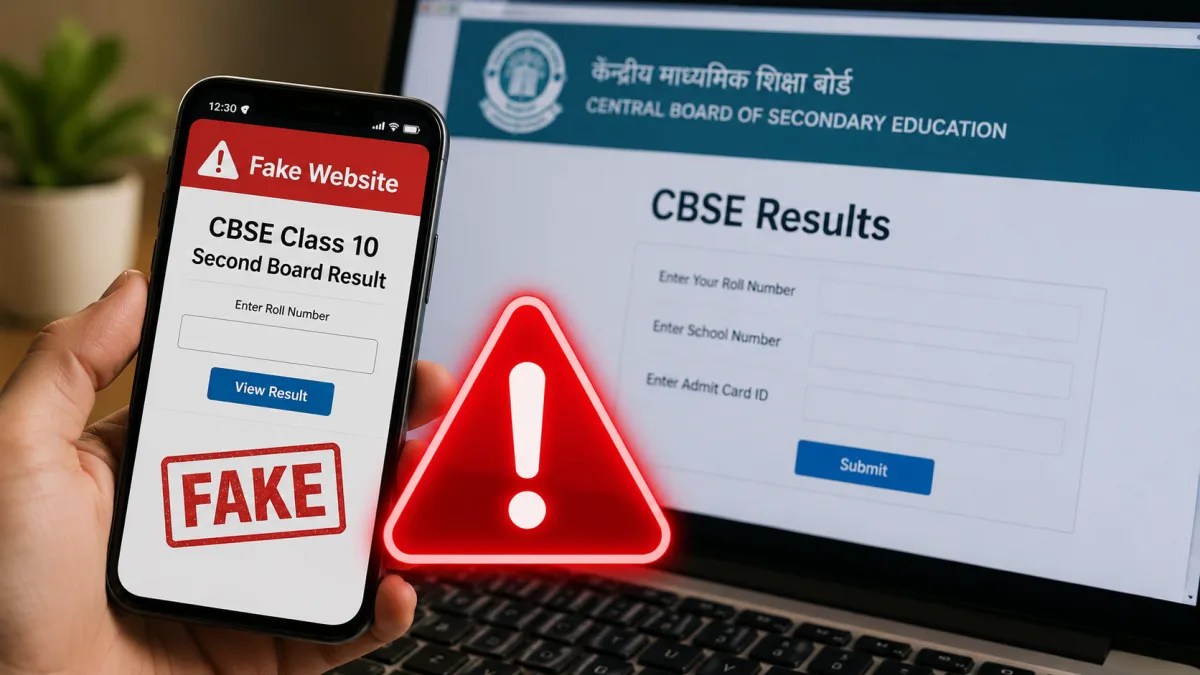
First, scammers buy fake website addresses that look just like the official CBSE site. It's easy for them to copy the layout. Basically, they make these pages look so real you won't even doubt them. Then they write WhatsApp texts that sound super urgent. They say things like 'CBSE Session 2 Result Out! Click here to download marksheet.' I think it's the oldest trick in the book.
CBSE has officially warned parents and students against trusting unauthorized third-party links or unofficial websites. The board has confirmed that results will only be uploaded to official domains and that no charges are levied for scorecard access.
Here's exactly how they set the trap.
The bait in your chats
First, you get a message on WhatsApp. It might be from a random number, or maybe a forward in some school group. The message has a link. It promises to show the CBSE Class 10 second board result instantly. Honestly, the tone is always super urgent. It'll say something like 'CBSE Class 10 second board exam results are live now.' (which is a total lie, by the way). They even use fake news clippings to make it look real.
The mirror copy website
Next, you click that link. It opens a page that looks exactly like the official CBSE results portal, using the same layout and national emblem. The page asks you to input your roll number, school number, admit card ID, and your phone number. Once you type that in, the scammer has it. They'll use these details to target you with other scams later, or even hack your academic accounts. I think this is where most people get tricked.
The small verification fee trap
Then a popup appears on your screen. It says the official server is overloaded. So to see your marks or get the PDF, you've to pay a tiny fee of ten rupees. They'll show you a fake payment page or a QR code. Ten rupees is a tiny amount. Parents don't think twice and just pay it. If you ask me, that's exactly what the scammers count on.
The bank account drainage
But when you scan that QR code, you aren't paying ten rupees. The page actually triggers a UPI collect request or steals your PIN. In minutes, your bank account is empty. Scammers transfer your money to multiple mule accounts. (Operation Mule Hunt 2.0 has shown how scammers rent bank accounts to move stolen money quickly, which makes it very hard to get your cash back.) I'm not sure why UPI apps don't flag these faster, but it's a huge mess.
Honestly, this is one of the worst scams out there. It targets families when they're stressed. They end up losing their hard-earned savings while thinking they're just checking marks. In my experience, these scammers have no shame.
Warning signs of a fake CBSE Class 10 second board exam result link
You can spot these tricks if you look closely. Scammers make mistakes, and CBSE has strict rules about how it publishes results. If you want to read more about how online fraud operates, check out our recent scam explainers.
The suspicious website address
Look at the website address. It's the biggest giveaway. The official site for CBSE results is cbse.gov.in or results.cbse.nic.in. If the link you got ends in .blogspot.com, .xyz, .xyz/cbse, or has random words like 'cbse-result-direct-link', it's fake. Indian government websites always use the gov.in or nic.in domain extensions. I've seen many scam links using weird domains like 'cbse-result-2026-update' which are sketchy.
Demands for payments or UPI details
Another giveaway is asking for money. CBSE never charges you to see your scorecard. Getting your marksheet is absolutely free. If a site asks for even one rupee to show your card, close it immediately. NEVER share your UPI PIN or approve collect requests on your phone just to check marks.
Poor website design and spelling mistakes
Watch out for typos and bad design. Fake pages often have stretched logos or broken buttons that don't work. They use panic-inducing words to make you act fast. You'll see things like 'Link expires in 2 hours' or 'Server closing soon.' CBSE never limits your time. Honestly, you can check your results even weeks after they're out.
How to check CBSE Class 10 second board result safely
You don't have to risk your money to get your grades. The board has official channels that are safe and free. Also, you can use online security tools to check if a web address is safe. I've used these before when a link looked sketchy.
Use the official board web portals
Go straight to the official CBSE website. Just type the address cbse.gov.in directly into your browser's search bar. Don't click links from WhatsApp or Telegram. The main site has a results page that sends you to the right servers. The only domains you can trust are cbse.gov.in, results.cbse.nic.in, and cbseresults.nic.in.
Access marksheets via digital lockers
Use government apps instead. You can get your marksheets through DigiLocker or the UMANG app. They require Aadhaar verification. They link directly to the CBSE database. Your marksheet there is legally valid across India. In my experience, DigiLocker is the safest way to store documents. It's way better than clicking random download links.
Verify dates through mainstream news outlets
Check major news channels first. CBSE always releases official press notes before any results go live. If the news hasn't confirmed it, don't trust WhatsApp forwards. The board works with school principals, so you can just ask your teachers. Also, CBSE usually calls out fake notices on their official Twitter page, which makes it easy to verify.
What to do if you clicked a phishing link
If you already clicked a sketchy link and entered details, don't panic. But you must act fast to protect your money.
- First, change your passwords. If the fake site asked for email credentials or social logins, change those passwords immediately. Enable two-factor authentication on all your accounts.
- Second, freeze your accounts if you entered bank details or UPI information. Contact your bank immediately. You can block your UPI ID through your payment app or call your bank's customer care to block your account temporarily. (I once had to block my card after a phishing incident, and most banks now have quick toggle buttons in their apps for this, which is a lifesaver.)
- Third, scan your phone for malware. Some phishing links download background apps onto your device. Check your download folder and uninstall any app you don't recognize. Run a security scan using a trusted mobile antivirus tool.
Where to report education scams in India
Reporting these scams helps protect other kids. The Indian government has quick systems to block fake sites and track thieves.
- You should report the incident to the National Cyber Crime Reporting Portal. The official website is cybercrime.gov.in. You can file a complaint online with details of the website link and the WhatsApp number that sent it to you.
- If you lost money to a scam, call the national cybercrime helpline at 1930 immediately. The police can freeze the transaction if you report it within the first few hours.
- You can also report fake notices and links to the Indian Computer Emergency Response Team, known as CERT-In, at info@cert-in.org.in. They have the authority to block malicious domains in India.
Stay alert. CBSE will release the results soon, but checking them shouldn't cost you your lifetime savings. Stick to the official sites and keep your personal details safe.