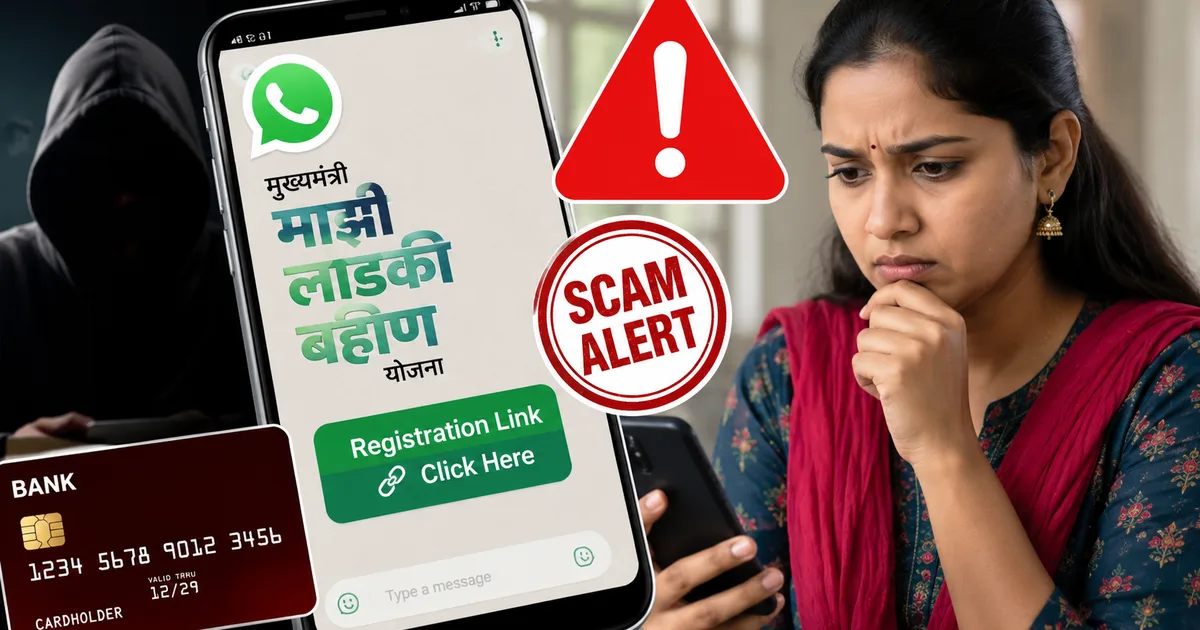
Look, the Maharashtra government's welfare schemes are often chaotic. But the current situation surrounding the Ladki Bahin initiative is just a mess. Right now, thousands of honest people are falling for fake Mukhyamantri Majhi Ladki Bahin Yojana registration WhatsApp scams. It's costing them their entire life savings. Scammers know perfectly well that millions of women across the state are desperately waiting for their promised Rs 4,500 installments. They also know the government recently made e-KYC mandatory and removed over 69 lakh ineligible women from the beneficiary list following a massive verification drive. The confusion on the ground is massive right now. People are panicking about being disqualified or missing out on the funds. And that sheer panic is exactly what cybercriminals use to bypass your logic and steal your bank details.
Honestly, you can't even blame the general public for being confused by the official process. Just last week, we saw that over 14,000 men somehow managed to register and receive payouts meant exclusively for women under the scheme (which makes sense, actually, given how rushed the rollout was). Opposition leaders like Supriya Sule are out there alleging a massive Rs 4,800 crore fraud in the system itself. They're demanding strict investigations. So the state government is scrambling to fix the leaks. They're running aggressive verification drives and demanding strict Aadhaar linking before processing the next batch of payments. When the official process feels this disorganized, a helpful-looking WhatsApp message offering a direct registration link seems like a blessing. But I promise you, it's a dangerous trap.
What exactly is this fake registration scam?
Thing is, it starts the way most digital financial fraud starts in India these days. You get a forwarded message on your family WhatsApp group. Or maybe it's a direct message from an unknown phone number with an official-looking profile picture of a state government logo. The text usually claims your name was flagged or removed from the Ladki Bahin beneficiary list. Sometimes it says your pending payment is stuck in the system because your e-KYC documentation is incomplete.
To fix this problem, the message provides a web link. It promises a quick verification process so you can get your money credited directly to your bank account by the evening. If you click that specific link, you're walking straight into a trap designed to empty your bank balance. I've seen dozens of these scam messages floating around recently. They look really convincing. They use the correct Marathi administrative terminology. They feature prominent photos of the Chief Minister and perfectly copy the visual design of actual state government web portals.
But here's the truth. The Maharashtra government doesn't process official scheme registrations or e-KYC updates through random WhatsApp links sent by unknown numbers. They just don't operate that way. The real process requires visiting official government centers or getting verified through authorized local officials in your ward. Scammers are simply piggybacking on the real news about mandatory e-KYC deadlines. They want to create a false sense of extreme urgency. They're hoping you'll act before you think.
How the scam actually works, step by step
Understanding the exact mechanics of the fraud is the best way to defend yourself and your family. The criminals behind these operations are highly organized. They run these phishing schemes like actual corporate businesses. They even have customer support scripts. If you want to spot their tricks, you need to know exactly how they operate from start to finish.
- The bait message arrives first. You receive a highly alarming WhatsApp text warning that your Ladki Bahin payout is permanently blocked, creating immediate anxiety. The message always includes a blue clickable link, usually shortened using a free service like bit.ly, so you cannot see the actual website address before tapping it.
- Next comes the fake portal. You click the link and land on a website that looks exactly like the official Maharashtra government site. It asks you to fill out a form with your full name, Aadhaar number, PAN details, phone number, and sensitive bank account details, harvesting your identity.
- Then they try the malware download trick. Sometimes, the fake site tells you that you must download a special verification app to complete the e-KYC process. This is actually a malicious APK file. If you install it, the rogue app hides in your phone's background and quietly reads all your incoming SMS messages, automatically forwarding your secret bank OTPs directly to the scammers.
- Finally, the UPI PIN trick is deployed if they skip the malware. The fake site tells you that a small test transaction of Rs 1 is required to verify your bank account is active. It automatically redirects you to your PhonePe, Google Pay, or Paytm application. It asks you to enter your secret UPI PIN to authorize the one rupee. But the hidden transaction is actually a mandate to auto-debit tens of thousands of rupees from your account instantly.
And just like that, the money is gone before you even realize what happened. You think you're authorizing a tiny verification fee to get government funds. In reality, you're handing over the keys to your entire bank balance. I spoke to a cybercrime investigator last month who specifically tracks these UPI frauds. He said the speed at which these organized gangs operate is terrifying. By the time you get the SMS alert that money has left your account, they've already transferred it through five different shell accounts across the country. Then they withdraw it from a random ATM.
The warning signs you simply cannot ignore
Basically, you don't need to be a software engineer to spot these frauds. You just need to slow down and consciously look for the red flags. Scammers rely heavily on your rush to get things done quickly. If you pause for just ten seconds and examine the situation, the illusion usually falls apart completely.
- They ask for your UPI PIN. You never, ever need to enter a UPI PIN to receive money into your account. A PIN is only used when you are actively sending money to someone else or checking your balance. If any website, caller, or app says to enter your PIN to receive your Rs 4,500 installment, it is a scam 100 percent of the time. No exceptions.
- The web address looks weird. Official Indian government websites always end in the .gov.in or .nic.in domain extensions. If the link in the WhatsApp message ends in .com, .org, .xyz, .net, or is just a random string of numbers, close the browser tab immediately.
- There is extreme artificial urgency. Real government deadlines usually give citizens weeks or even months to comply with new rules. If a WhatsApp message says your bank account will be permanently blocked tonight at 8 PM unless you click the link immediately, they are deliberately trying to panic you into making a sloppy mistake.
- You receive unsolicited APK files. The government will never send you an application directly on WhatsApp and ask you to install it manually. Official government apps are always hosted on and downloaded securely from the Google Play Store or the Apple App Store.
How to protect your bank details today
So, how do you actually stay safe in this environment? The internet feels like a minefield right now. But you can build a very solid defense by changing just a few basic digital habits. I always tell my older family members to treat every single unknown WhatsApp link like a loaded weapon. Just don't touch it unless you know exactly where it came from. The numbers here are a bit fuzzy, but I'd guess most people get caught because they act on instinct.
First, verify absolutely everything through official channels. If you hear rumors that Ladki Bahin beneficiaries need to complete a new e-KYC process, don't click the link in the forwarded message. Open your web browser independently. Search for the official Maharashtra government portal yourself and read their actual press announcements. Or better yet, visit your local Maha-e-Seva Kendra or Panchayat office to get the correct information directly from an authorized government person.
Second, manage your personal documents securely. Stop sending photos of your Aadhaar card or PAN card to random unknown numbers on WhatsApp just because they claim to be officials. Use the government's official DigiLocker application to store and share your credentials safely. If you absolutely must share a physical photocopy with someone, write the specific purpose and the current date across the document in ink. This way, it can't be easily reused by scammers to open fake bank accounts in your name later.
"Citizens are strongly advised not to click on unverified links received via SMS or WhatsApp promising government scheme benefits. Always verify information from official .gov.in websites and never install applications from unknown sources or third-party links." (CERT-In Advisory on Social Engineering Frauds.)
You should also check out our detailed guides on securing your smartphone against modern threats. Simple things like disabling the "Install from Unknown Sources" option in your Android security settings can block a massive percentage of malware attacks automatically. It takes exactly two minutes to set up. But it can literally save your life savings from being wiped out by a single bad click.
What to do if you have already clicked the link
Look, mistakes happen. These scammers are seasoned professionals. They spend all day figuring out new ways to trick smart people. If you clicked a fake registration link and entered your sensitive details, you need to act right now. Or worse, maybe you accidentally downloaded a rogue app. Don't wait around to see if the money leaves your account. By then, it's entirely too late to do anything.
- Disconnect your phone immediately. Turn off your mobile data and your Wi-Fi connection right away, or switch the phone to Airplane Mode. If you downloaded a malicious app, disconnecting it from the internet stops it from sending your incoming bank OTPs back to the scammers' servers.
- Call your bank without delay. Use another person's phone to call your bank's official emergency helpline number. Tell them you suspect active fraud and ask them to freeze your account and completely block your UPI ID immediately. Do not use the compromised phone to make this call.
- Report the crime to the authorities. Call the national cybercrime helpline at 1930 immediately. The faster you call this specific number, the higher the mathematical chance they have to freeze the scammer's receiving bank account before they can withdraw your stolen cash from an ATM.
- File an official written complaint. Go to the official Indian government portal at cybercrime.gov.in and file a detailed report. Keep screenshots of the original WhatsApp messages, the phone numbers they came from, and the fake website as digital evidence for the police.
- Factory reset your compromised phone. If you installed a fake verification APK file, simply dragging the app icon to the trash is not enough. The malware often leaves hidden, persistent files behind in your system. You must back up your important photos and contacts safely, and then perform a complete, hard factory reset of your device to wipe it clean.
The Mukhyamantri Majhi Ladki Bahin Yojana is supposed to provide desperately needed financial relief to women across the state. It isn't a hunting ground for organized cybercriminals. But unfortunately, wherever there is a large distribution of government funds, fraudsters will follow the money (annoying, I know). It's an ugly reality of the digital age in India today. If you want to read more about how these criminal syndicates operate, take a look at our detailed breakdown of recent online fraud cases sweeping the nation.
Stay alert out there. Question absolutely every single message that asks for money or personal identity details. Take five minutes to warn your parents, your aunts, and your neighbors about exactly how this specific WhatsApp trick works. The absolute best defense against these criminal networks is an educated community. And if you're still confused about the ever-changing official scheme rules or e-KYC deadlines, always check our detailed explainer section for verified, hype-free updates on government policies.