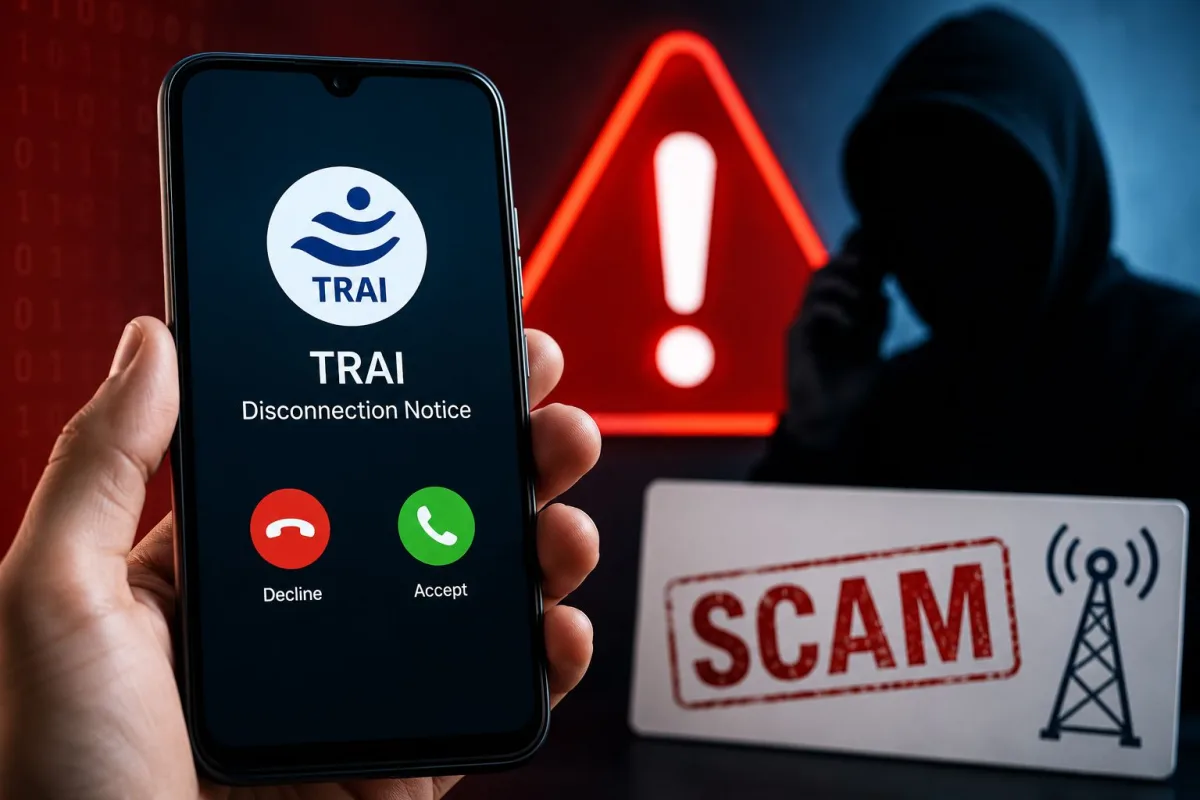
You're sitting at your desk or maybe just having your morning tea. Your phone rings. It's an automated voice. The message is blunt and terrifying. Your mobile number will be disconnected in two hours by the Telecom Regulatory Authority of India because of illegal activities. To stop this, you need to press 9.
If you've received one of these fake TRAI disconnection calls, you aren't alone. This is currently a massive fraud targeting Indian smartphone users in 2026. The panic is immediate. Honestly, nobody wants their phone number blocked. Your bank accounts and your UPI are tied to that single 10-digit number. And scammers know this.
They just use your fear of losing access to your digital life. Even highly educated people fall for it. A few months ago, philanthropist Sudha Murty was targeted by fraudsters. They were posing as Department of Telecommunications officials. These scammers are convincing. They are highly organized. Look, let me be clear right here. TRAI doesn't call you. The DoT doesn't call you. Your number isn't getting blocked in two hours.
The reality of the telecom department impersonation fraud
This is a massive impersonation operation. Criminals use automated systems to blast thousands of interactive voice response calls across India every hour. They pretend to be regulatory authorities. The whole setup relies on artificial urgency. Basically, they want you so scared about a sudden disconnection that your logical brain shuts down. They use official-sounding terms. They say things about regulatory compliance or Aadhaar misuse.
In my experience, the automated voice sounds highly professional. I've listened to recordings of these calls (which makes sense to do if you write about tech). It mimics the exact tone you hear when you call customer care for a telecom operator like Jio or Airtel. That familiar corporate voice makes the threat feel real. But government departments don't operate like this. If there is an actual issue with your paperwork, your telecom provider sends an SMS. Or they cut off outgoing services first. They don't use dramatic two-hour countdowns on an automated call.
How the mobile disconnection scam works step by step
The mechanics of this fraud are predictable once you know what to look for. The criminals follow a specific script. The initial contact starts with the automated IVR call. You answer the phone. You hear a pre-recorded message claiming your mobile service is about to be terminated. The voice tells you to press a specific number to speak with an executive. Usually, they ask you to press 9. Pressing that button is the trap.
It redirects your call to a live scammer sitting in a boiler room operation. This person answers the phone with a crisp greeting. They'll tell you that a phone number registered under your Aadhaar card has been used for harassment. Or they say it is used for money laundering. You will obviously deny this. You'll say you only own one number. And that is exactly what they want you to say.
The scammer acts sympathetic. They claim you are a victim of identity theft. To help you, they offer to transfer your call to the cyber police. Or maybe a higher-ranking government official. They say this is to file a clearance report. Suddenly, you're talking to a fake police officer.
Sometimes this happens over a Skype video call. Sometimes it is a WhatsApp video call. The scammer is sitting in a fake police station setup wearing a uniform. They call this a digital arrest. They demand your bank details to verify your identity. They ask you to transfer money to a safe government account while they investigate the identity theft. They promise to refund the money once you are cleared. The money never comes back. You just sent your savings directly to a fraud syndicate.
The psychology behind the panic
I'm not sure exactly why our brains shut down completely during these calls, but cognitive overload is real. Someone tells you your primary connection to the world is going dark in 120 minutes. You stop processing logic. Think about what is linked to your phone number. Your Aadhaar is linked. Your bank accounts are linked. Losing that number feels like losing your identity.
Fraudsters exploit this perfectly. They don't give you time to think. They don't give you time to verify. The two-hour deadline is fabricated entirely to prevent you from calling your actual telecom operator. They keep you on the line. They isolate you.
Warning signs of fake mobile disconnection calls
You need to recognize the red flags before panic sets in. The signs are always there if you pause for just a few seconds.
- Your caller ID shows a generic 10-digit mobile number or a strange international code like +92. Government agencies don't call from personal numbers.
- The automated voice creates artificial urgency with a strict deadline.
- You are asked to press a number to speak with an executive.
- The person on the line offers to transfer you directly to the police. Real police departments don't take transferred calls from telecom customer service.
- They send you official-looking documents over WhatsApp.
That last point is incredibly common now. During these calls, the criminals try to legitimize their claims by sending you documents on WhatsApp. They send letters with fake DoT letterheads and forged police IDs. These documents look highly authentic. They steal real logos from government websites. Don't trust a PDF sent over a messaging app. Official government departments don't serve legal notices via WhatsApp attachments.
What to do if you already pressed 9
Look, if you pressed the number and spoke to someone but hung up before sharing details, you're generally safe. Pressing the button doesn't hack your phone. It just routes the call. But your number is now marked as active in their database. You will likely get more scam calls in the following weeks. You just need to be extra vigilant. Ignore unknown callers.
If you gave them your Aadhaar number but no banking details, you should immediately lock your biometrics using the mAadhaar app. It's a simple step. It stops anyone from using your fingerprints for financial fraud.
How to protect yourself from IVR fraud
You have complete control over this situation. You just need to know the rules of engagement.
Never press any numbers on an unexpected automated call. If the voice says press 9 for customer care, just hang up. Disconnecting the call is your strongest defense.
Don't trust Truecaller completely. Don't trust your phone's default caller ID either. Scammers regularly spoof caller IDs. Your screen might literally say Telecom Department. Or it might say Mumbai Police. You can't rely on that text. If you're genuinely worried about your number being a mess, you can check it yourself. The Indian government has a portal called Sanchar Saathi. You can log in with your primary number. You can see exactly how many SIM cards are registered to your name.
The DoT has already used this system to disconnect over 3.6 million bogus SIMs. If you spot a number you don't recognize on that portal, you can report it right there. Then you get it blocked. Talk to your family. I highly recommend mentioning this scam to older relatives (they get targeted the most). They are often the most vulnerable to calls claiming authority from the government. A simple five-minute conversation over dinner can save them from losing their retirement funds. If you want to read more about general cyber hygiene, you should check out the advisories published by CERT-In on their official portal. You can also read our guide on common financial frauds to see how these tactics overlap with other scams.
How regulators are fighting back
The government isn't sitting idle. The scale of the problem is forcing regulators to build better technical defenses. The Reserve Bank of India recently stepped in. Telecom fraud quickly becomes banking fraud. Banks are now mandated to use the Mobile Number Revocation List technology provided by TRAI. They have a strict deadline of March 31, 2025. They have to implement this fully.
What does this mean for you? The MNRL is essentially a massive database of disconnected mobile numbers. A scammer gets a number blocked. Then they try to use a recycled number to access banking services. The bank's systems will instantly know that the number's ownership is changed. This stops criminals from hijacking bank accounts using old numbers. Or disconnected numbers.
The DoT is actively launching new systems to intercept these calls before they reach your phone. But technology alone can't stop everything. Scammers constantly find workarounds. They route calls through international voice-over-IP networks. You have to be your own first line of defense.
Where to report telecom fraud in India
Action is better than just ignoring the problem. Reporting these numbers helps authorities shut down the networks. If you get a fake TRAI disconnection call but you didn't lose any money, you should report the phone number on the Chakshu facility. This is located on the Sanchar Saathi portal. It takes two minutes. It helps flag the scammer's number for blocking.
If the worst happens and you actually transferred money, you must act immediately. Or if you shared sensitive financial details.
Call 1930 without delay.
This is the national cybercrime financial fraud helpline. Calling them within the first hour gives your bank the best possible chance of freezing the fraudulent transaction. After making the call, go to cybercrime.gov.in. File a formal written complaint. Keep a record of the phone numbers that called you. Keep a record of any transaction IDs from your banking app. You might also want to secure your social accounts just to be safe. Don't let embarrassment stop you from reporting. These syndicates are highly organized. They manipulate human psychology for a living. Filing a report is how you fight back.