A Pune doctor recently lost Rs 12.31 crore. A project manager in Mumbai lost Rs 1.23 crore. A 70-year-old man in Ahmedabad had his life savings of Rs 62 lakh wiped out. These are not isolated incidents of bad investments. These people are victims of highly organized fake WhatsApp trading groups, which have become the most dangerous financial threat in India right now.
The scam is sophisticated. Fraudsters no longer just offer basic stock tips. They now run elaborate cons involving fake institutional accounts, promises of guaranteed IPO allotments, and duplicate trading applications that look exactly like the real thing. They impersonate foreign portfolio investors and executives from well-known domestic brokerages.
You might think you are too smart to fall for this. The victims are doctors, techies, corporate executives, and experienced businessmen. The scammers use group psychology and fake data to override your common sense. If you are active on social media or looking for investment opportunities, you are a target.
How the institutional account investment scam works
The entire operation is a well-rehearsed psychological trap. It happens in distinct stages over several weeks. Scammers build trust slowly before asking for large sums of money.
Phase one is the social media advertisement
It starts with a simple ad on Facebook, Instagram, or YouTube. The ad usually features a deepfake video of a famous Indian business leader or a genuine-looking stock market guru. The video talks about a "free masterclass" or a "VIP stock tips group" that consistently beats the market. You click the link, and you are redirected to a WhatsApp group.
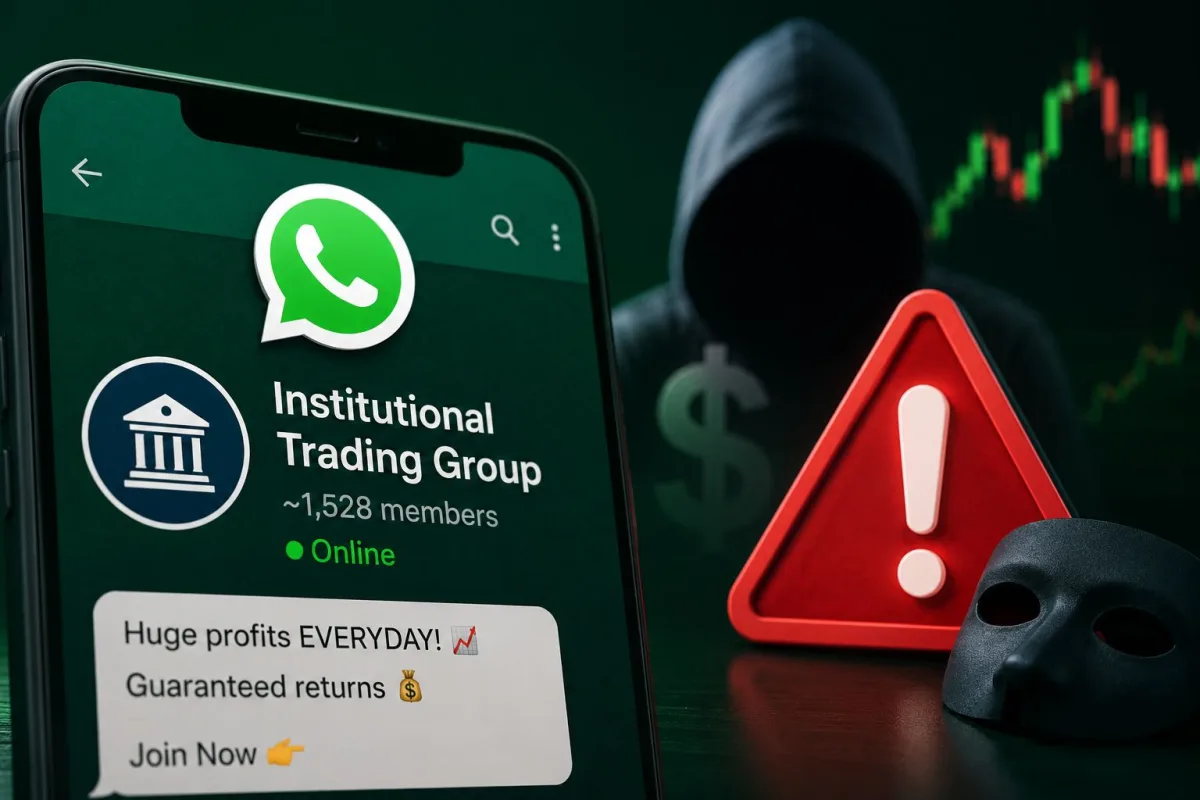
The group usually has a professional name. They use names that sound like registered foreign funds or elite branches of Indian brokerages. You will see a group admin who claims to be a senior fund manager with decades of experience.
Phase two is the illusion of a busy community
Once you join the fake WhatsApp trading group, you will notice it is very active. The group might have 150 members. What you do not realize is that 145 of those members are the scammers themselves or automated bots.
These fake members constantly post screenshots of massive profits. They thank the "sir" or "guruji" who runs the group for his brilliant stock recommendations. They create an environment of extreme wealth generation. You watch this happen for a week or two. The stock tips they provide for the open market are often stolen from legitimate financial news channels. Since the market generally moves, some of these free tips will naturally be correct, which builds your trust in the admin.
Phase three introduces the fake trading app
After you are convinced that the group leader knows the market, they introduce the trap. The admin announces a special opportunity. They claim that regular retail investors like you are at a disadvantage. They tell you that they have secured a special "institutional account" or "FPI account" (Foreign Portfolio Investor) that allows VIP members to buy stocks at a discount or get guaranteed allotments in heavily oversubscribed IPOs.
They instruct you to download a specific trading application to access this VIP account. They provide a link directly in the WhatsApp chat. This is a massive red flag. The link downloads an APK file to your Android phone, or redirects you to a sketchy web portal on iOS.
The app you install looks incredibly professional. It might even steal the logo and color scheme of a legitimate broker. You create an account, and the interface shows live stock prices pulled directly from the NSE or BSE data feeds. Everything looks authentic.
Phase four is the money transfer and fake profits
To start trading, you need to add funds to your new wallet. The app gives you a bank account number, an IFSC code, or a UPI ID. You transfer the money.
Your money does not go to a SEBI-registered brokerage account. It goes directly into the personal bank account of a money mule. However, the scammers manually update the database of your fake trading app. When you open the app, you see your "balance" reflect the exact amount you transferred.
The group admin tells you what to buy. You execute the trade in the app. The app is programmed to show massive profits. Your initial investment of Rs 1 lakh quickly turns into Rs 3 lakh on the screen. The greed sets in. The fake members in the WhatsApp group start posting that they are taking out loans to invest more. The admin pressures you to increase your capital to secure a block trade or a massive IPO lot.
Phase five is the withdrawal block and extortion
Eventually, you decide to withdraw your original capital or your profits. You click the withdraw button in the app. The transaction fails.
You contact the group admin or customer support. They tell you that your account is frozen because you need to pay a "20% capital gains tax" upfront before the withdrawal can be processed. They insist that this tax cannot be deducted from your account balance, and you must transfer fresh funds from your bank.
If you pay the fake tax, they invent a new fee. They might call it a "security deposit" or a "SEBI clearance charge." They will bleed you dry until you realize you have been scammed. Once you stop paying or threaten to go to the police, they block you on WhatsApp and delete your account on the fake app. Your money is gone.
SEBI warnings against FPI market access claims
The Securities and Exchange Board of India (SEBI) is highly aware of this fraud. They have issued multiple advisories warning Indian investors about social media entities touting fake FPI or FII market access.
Fraudsters are falsely claiming to be registered with SEBI and offering trading platforms that supposedly allow resident Indians to access the market through Foreign Portfolio Investor routes. SEBI has clarified that there is no provision for retail investors to use FPI accounts, and any platform offering this is illegal and fraudulent.
There is no secret backdoor to the stock market. Guaranteed IPO allotments do not exist. If a WhatsApp group administrator is promising you special privileges that you cannot get through a standard Demat account, they are lying to you.
Warning signs of an investment scam
You can spot these scams early if you know what to look for. Keep these indicators in mind before you move your money.
- The trading app is distributed as an APK file through a chat message instead of the official Google Play Store or Apple App Store.
- The bank details provided for adding funds belong to a random individual or an unrelated private limited company, rather than a SEBI-registered broker pool account.
- The group admin uses high-pressure tactics, demanding that you transfer funds immediately to avoid missing out on an exclusive block trade.
- The group is filled with members who constantly post enthusiastic screenshots of massive profits using overly formal or unnatural language.
- The platform asks you to pay taxes or withdrawal fees out of your own pocket instead of deducting them directly from your trading balance.
How to protect your money and your future
Your first line of defense is skepticism. Never trust financial advice from strangers on the internet. If you want to learn about the market, read books or follow registered investment advisors who operate through official channels.
Always verify the SEBI registration number of any broker or advisor. You can do this directly on the SEBI website. Legitimate brokers will never add you to a WhatsApp group without your explicit written consent, and they certainly will not ask you to install third-party apps from a chat window.
If you are exploring guides on how to invest, stick to well-known, regulated platforms. Check our explainers on how the actual stock market and IPO allotment process works. Understanding the mechanics of the market is the best way to realize that the promises made by these scammers are mathematically impossible.
Where to report cyber fraud in India
Time is your biggest enemy if you fall for this scam. Scammers move stolen money through a complex web of mule accounts rapidly. If you act within the first hour, known as the golden hour, the authorities have a chance to freeze the funds in the destination account.
Call the national cybercrime helpline at 1930 immediately. Tell the operator you have been the victim of an online trading fraud. Provide the bank account numbers or UPI IDs where you sent the money. This hotline is connected directly to the banking system and can sometimes intercept the transfer.
After calling 1930, you must file a formal written complaint on the official government portal at cybercrime.gov.in. Upload all your evidence. Take screenshots of the WhatsApp group chats, the fake app interface, and your bank transaction records. Save the APK file if you downloaded it, as it contains digital evidence for the police.
Finally, visit your bank branch. Speak directly to the manager. Provide them with the cybercrime complaint number and ask them to mark a lien on the fraudulent accounts you transferred money to. They have internal fraud prevention mechanisms that they can trigger if provided with an official police reference.
Share this information with your family and your older relatives. They are the prime targets for these fake WhatsApp trading groups. Education and awareness are the only ways to stop these syndicates from operating in India.