The Google Pixel 11 Pro Fold 2026 leaks have been pouring in all week, and we finally have a clear picture of what Google is planning for its next flagship foldable. And look, I usually take early smartphone leaks with a pinch of salt. But the sheer volume of official-looking renders and regulatory filings we're seeing ahead of the August 12 Made By Google event suggests these details are solid.
If you're sitting in India waiting to upgrade your phone, the big question is whether you should wait for this device or just buy something else right now. The short answer? You should probably wait. But let's break down exactly why and how much it's going to hurt your wallet.
A completely redesigned camera module
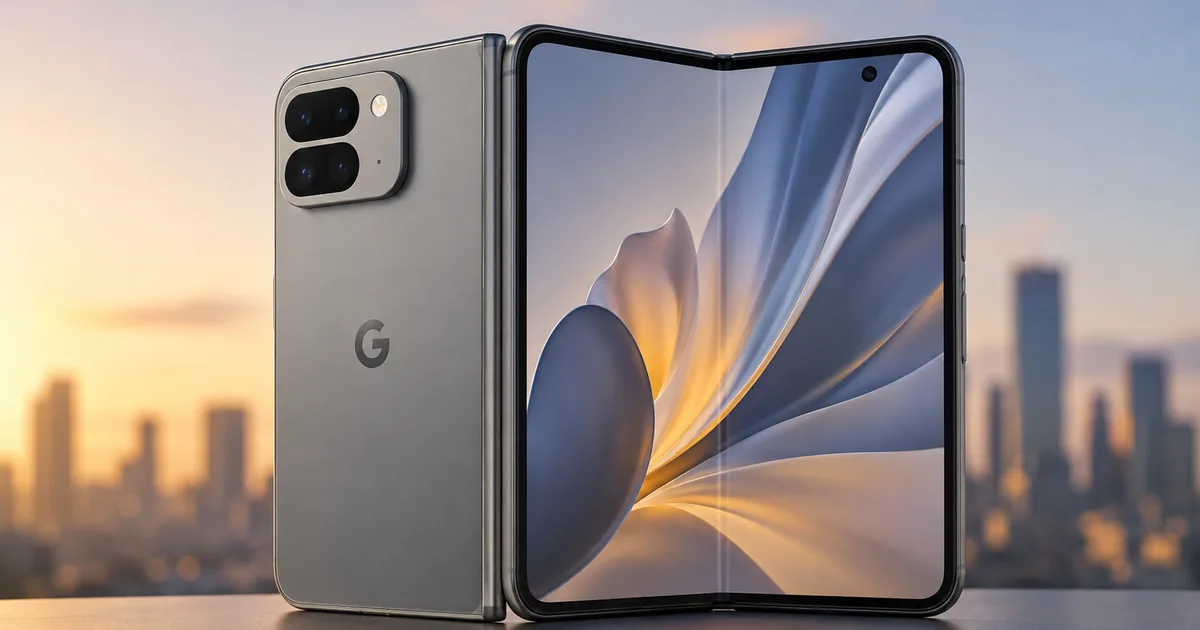
The most obvious change in the Google Pixel 11 Pro Fold leaks is the back of the phone. Google is ditching the old camera bar design we've seen for the last few years. It's gone.
Instead, we're getting this massive, rectangular camera island tucked into the top-left corner. Honestly, I have mixed feelings about it. The visor design gave Pixels a unique identity, but this new module looks a bit generic. Some people will love the cleaner look. If you ask me, I think it looks like they slapped a domino on the back of the phone.
But the hardware inside that module is what actually matters. According to the GSMArena leaks, we're looking at a serious telephoto upgrade. The Fold has always lagged behind the mainline Pro phones in camera hardware just because of space constraints (which makes sense, actually). This year, it seems Google figured out how to cram the good stuff in.
"The new rectangular module houses a triple-camera setup, including a redesigned periscope telephoto lens that finally brings true flagship zoom capabilities to the foldable form factor."
For Indian users, this is a big deal. Whether you're zooming in on a cricket match from the stands or trying to get a decent shot of your kid's school performance, you want that telephoto lens. If you're paying well over a lakh for a phone, you shouldn't have to compromise on the camera. You just shouldn't.
The Tensor G6: Is it finally good enough?
Under the hood, the Pixel 11 Pro Fold is going to run on the new Tensor G6 chipset. Reports suggest this chip is on a highly efficient 2nm node.
Let's talk about processors for a second. This is where Google has historically struggled. The Tensor chips have always been great at AI tasks, but they're terrible at thermal management. Try recording a 4K video outdoors in Delhi during May with an older Pixel. The phone will beg for mercy within minutes.
The move to a 2nm process for the Tensor G6 is supposed to fix this. Smaller nodes mean better efficiency and less heat. If this is true, it solves the biggest complaint most of us have had with Pixel devices.
And you'll need that efficiency. The AI features Google is packing into Android this year are incredibly demanding. From real-time translation during calls to advanced photo editing, the processor is going to be working hard. You can read more about how AI is changing smartphones in our detailed explainer section.
What about the battery?
We don't have exact battery capacity numbers yet. But looking at the leaked renders, the device is slightly thinner than last year's model. Usually, thinner phones mean smaller batteries.
Google is banking entirely on the efficiency of that Tensor G6 chip to maintain or improve battery life. Thing is, I'm skeptical. Foldables have two screens to power, and the inner display is massive. Until we get real-world testing, I'd suggest keeping a fast charger handy.
New colours and design tweaks
Let's talk aesthetics. The 9to5Google leaks show the Pixel 11 Pro Fold in a few different shades. But the one catching everyone's eye is "Pine."
- It is a deep, muted green that looks surprisingly premium.
- The matte glass finish on the back seems to be sticking around, which is great for rejecting fingerprints.
- The inner bezels look slightly thinner, giving you a bit more usable screen space.
Honestly, the green looks fantastic. It's a nice break from the standard black and white slabs we usually get. Though let's be real. Most of us will slap a thick case on it the second we buy it anyway. Dropping a foldable phone is a uniquely terrifying financial experience.
Expected India price and availability
Here's the deal with pricing: it's going to be expensive. Very expensive.
Some of the earlier leaks suggested it could cost as much as the Galaxy Z Fold 8 Ultra. If we look at current market trends and factor in import duties and taxes, we're probably looking at a starting price somewhere around ₹1,60,000 to ₹1,80,000 in India. The numbers here are a bit fuzzy, honestly.
That's a massive amount of money. You could buy a decent second-hand car for that price. But foldables are still a luxury category. Want the cutting-edge tech? You pay the early adopter tax.
Google has been getting better about launching its devices in India simultaneously with the global rollout. We should expect pre-orders to open right after the August 12 event. Devices will likely ship by late August or early September. They'll almost certainly partner with Flipkart and maybe a few offline retail chains like Croma or Reliance Digital.
I'd also expect some hefty bank offers during the initial launch window. Usually, you can get an ₹8,000 to ₹10,000 instant discount if you use specific credit cards. Keep an eye on our news page for exact launch offers once they're announced.
How does it compare to the competition?
You can't look at the Pixel 11 Pro Fold in a vacuum. You have to stack it against the phones it's trying to beat.
Take the Samsung Galaxy Z Fold series. Samsung has years of experience refining the hinge and the software. Yes, the Pixel 11 Pro Fold doesn't seem to support a stylus. Which is a bummer if you like taking handwritten notes. But Samsung's cover screen is notoriously narrow. Typing on a Samsung Fold while it's closed feels cramped. Google's wider cover screen approach is just better. Especially for normal, daily tasks.
Then there's the Vivo X Fold series. It occasionally makes its way to our shores. Vivo usually throws absolutely insane camera hardware into their foldables, but their software experience is heavily customized. It's not for everyone. If you prefer a clean interface, the Pixel wins by default.
Finally, we have the OnePlus Open. Honestly, the Open was arguably the best foldable of the last generation. It was light and the cameras were great. Google is going to have a very hard time beating OnePlus on pure value. OnePlus usually undercuts Google's pricing by a lot.
Google's trump card is its computational photography. Nobody processes a photo quite like a Pixel. The skin tones and the HDR balance are why people buy Pixels. If they can bring that exact experience to a folding screen without compromise, it'll find its audience. Regardless of the price.
The hinge mechanism: A make or break feature
Let's talk about the most fragile part of any foldable phone: the hinge. Early leaks haven't given us a teardown of the internal mechanics just yet. But industry chatter suggests Google has completely re-engineered the folding mechanism.
If you used the earlier Pixel Folds, you know they didn't always open perfectly flat without a little extra push (annoying, I know). The new mechanism is reportedly much smoother. It allows the device to snap flat effortlessly. More importantly, it's supposed to reduce the crease visibility on the inner display.
In a dusty environment like most Indian cities, the durability of that hinge is important. We need to see an IPX8 rating at minimum. But honestly, some dust resistance like an IP58 rating would be a game-changer. In my experience, I've seen too many friends ruin expensive foldables because a few grains of sand got caught in the mechanism during a trip to Goa.
Repairability and after-sales service in India
This brings me to a major pain point for Pixel users in India: after-sales service. Buying a phone for ₹1,50,000 is one thing. Getting it fixed when something goes wrong is another.
Google has historically relied on third-party service partners like F1 Info Solutions in India. The experience has been mixed. Sometimes you get a replacement device in days. Other times, you're waiting weeks for a specific part to be shipped from abroad.
If Google wants Indian buyers to trust them with premium foldable money, they need to overhaul their service network. We need dedicated premium support for Fold customers. Imagine your inner screen cracking because you accidentally closed the phone on a small coin. You don't want to be fighting with a customer service rep over warranty clauses for a month. You want a solution immediately.
We haven't seen any leaks about improved warranty terms for India, but it's something to watch closely during the August 12 announcement. If they announce a comprehensive accidental damage protection plan specifically for the Indian market, that would be a huge selling point. You can read more about consumer rights and warranty issues in our consumer guides section.
Display tech: Brighter and faster
Another area where the Pixel 11 Pro Fold needs to shine is the display. The Indian sun is unforgiving. And if you can't read your screen outdoors, the phone is useless.
Leaks point to new OLED panels that push peak brightness well past 2500 nits. This means you won't have to squint while scanning a Paytm QR code at a street vendor at 1 PM. Both the outer and inner screens are expected to support dynamic 1-120Hz refresh rates. This is standard for flagships now, but still important for battery saving.
The aspect ratio is also worth noting. The original Pixel Fold had a very passport-like, wide outer screen. It was great for typing but made apps look weird. They're reportedly shifting to a slightly taller, more conventional smartphone aspect ratio for the cover screen. This makes it much easier to use one-handed while walking or standing in a crowded metro.
Software and AI: The real selling point
Hardware is only half the story with a Pixel. The software is why you actually buy one.
Google is expected to ship this with Android's latest version. It's heavily customized for the large folding screen. The multitasking capabilities should be robust. Basically, dragging and dropping files between apps and running two full-sized apps side-by-side makes a foldable actually useful for work.
Imagine having your email open on one half of the screen and a spreadsheet on the other, all while sitting in a cab in Mumbai traffic. It's a genuine productivity boost.
Then there's the AI. We're expecting a massive push for on-device AI capabilities. Things like generating meeting summaries and writing emails might happen entirely on the phone. No cloud processing needed. This is a huge privacy win. You can catch up on all the latest AI developments in our AI tools directory.
AI in everyday Indian life
Google's Gemini AI integration is going to be the centerpiece of their marketing. But how does that actually help an average user in India?
Think about localized features. Live Translate is already excellent. But imagine real-time translation of regional Indian languages happening entirely on-device, without needing an active internet connection. If you're travelling across states, that's a superpower.
Or consider the spam call problem. India is notorious for relentless spam calls. Google's Call Screen feature is expected to get a massive AI upgrade. It could answer calls on your behalf and weed out the telemarketers before your phone even rings. If they can get this working perfectly with Indian accents and languages, I know people who would buy the phone just for that feature.
Should you wait for it?
If you're in the market for a premium foldable right now, hold off. August 12 is just around the corner. Even if you decide the Pixel 11 Pro Fold is too expensive, its launch might push down prices for older foldables or competitors.
But if you're heavily invested in the Google ecosystem and want the best camera possible on a folding phone, this looks like the device to get. The combination of the new Tensor chip and the upgraded cameras is hard to beat.
We'll have full coverage of the Made By Google event, so check back for the official specs and confirmed India pricing. Until then, take these leaks as a very strong indication of what's coming. But maybe don't sell your current phone just yet.
The smartphone market in India is incredibly competitive right now. Brands are fighting hard for your money in the premium segment. Google knows they need to deliver something special to justify that massive price tag.