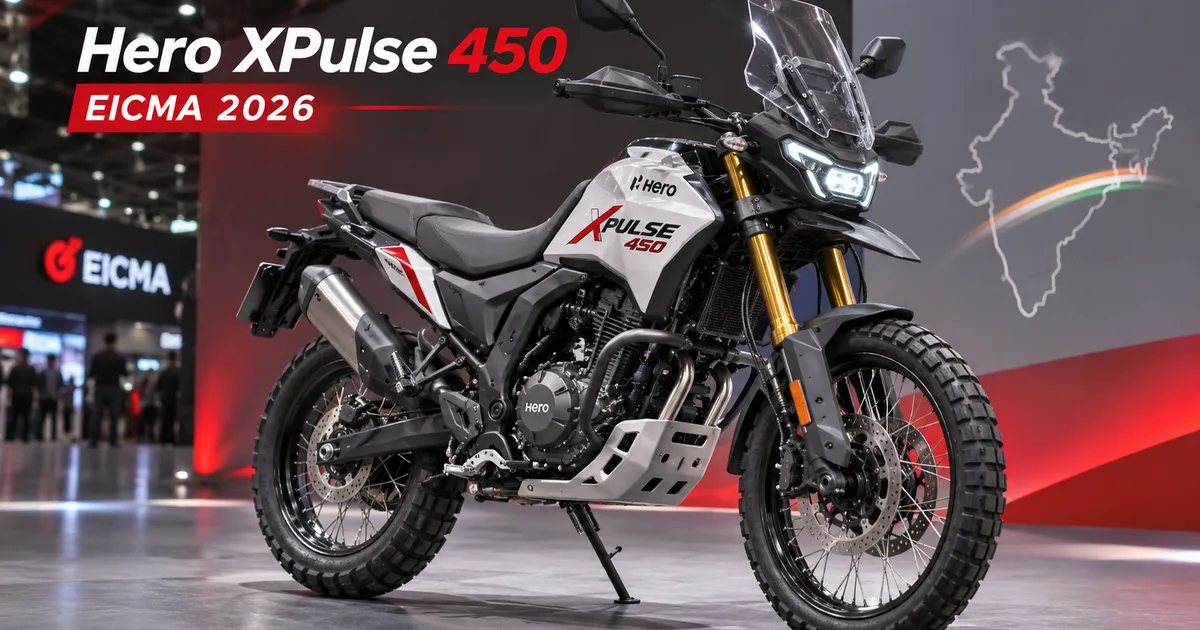
If you have ever ridden an XPulse 200 through a muddy trail or broken city roads, you know the charm of a light adventure motorcycle. You also know the exact moment your heart sank when you hit an open highway and realized the engine simply ran out of breath at 90 km/h. That gap in Hero MotoCorp's motorcycle lineup is finally closing. At EICMA 2026 in Milan, the long-rumored Hero XPulse 450 made its official public debut in production-ready form. (And yes, it looks every bit like the Hero MotoSports Dakar rally bike that inspired it.)
For years, Indian riders wanted a lightweight adventure bike with real highway touring power. The original 199cc motor was sweet for beginners, but long rides across state borders needed more punch. Look, this new bike brings that exact upgrade. It jumps straight into the mid-capacity adventure segment dominated by Royal Enfield and KTM. In my experience, this is the exact shift Hero needed to make. If you want to know what changed under the skin, here is everything about the engine, hardware, pricing, and expected arrival on Indian roads.
To stay updated on the latest motorcycling announcements and tech updates, check out our Latest Tech News coverage.
Hero XPulse 450 liquid-cooled engine and power outputs
The main story here is what sits inside the brand-new steel trellis frame. Hero dropped the old air-and-oil-cooled single-cylinder layout entirely. Instead, the bike has a freshly developed 421cc liquid-cooled engine. This single-cylinder motor makes 46.6 hp (around 47 PS) of peak power.
That's a huge leap. To put those numbers in context, the XPulse 200 4V makes around 19 hp. So you're getting more than double the power of the smaller bike. I think that extra power is going to change long-distance touring for a lot of people. It means holding 120 km/h on the Bengaluru-Mysuru expressway or cruising through high-altitude passes in Himachal Pradesh without making the engine scream.
Engine cooling matters a lot when you move from trail riding to highway touring. Liquid cooling keeps temperatures steady when you push high speeds on hot afternoons in Rajasthan (which makes sense, actually). The motor works with a 6-speed gearbox with an assist and slipper clutch. That helps stop rear-wheel lockups during fast downshifts on gravel.
Hero's Dakar rally program provided the baseline engineering for this motor, giving riders high rev limits alongside low-end torque for rock crawling.
Rally-ready frame and KYB suspension breakdown
A big engine is useless if the frame bends under pressure. So Hero redesigned the frame around the new 421cc motor using high-tensile steel tubing. It copies rally bikes. The tank stays slim between your knees, and you get a tall stand-up riding position.
Suspension hardware on the bike got a lot of attention at EICMA. Up front, the bike has fully adjustable 225mm travel KYB front forks. The rear has a long-travel monoshock on an aluminum swingarm, with similar controls for preload and rebound settings.
Basically, here's what that setup means for riding in India:
- Soaking up deep potholes, speed breakers, open ruts, and monsoon-damaged asphalt without bottoming out.
- Maintaining control over loose riverbed rocks and dirt tracks when off-roading.
- Adjusting suspension firmness when carrying a heavy pillion rider or mounted panniers.
The bike keeps standard adventure wheel sizes: a 21-inch wire-spoked wheel up front and an 18-inch wheel at the back. Both wheels get block-pattern tube tires built for dual-sport riding. You get disc brakes on both wheels with dual-channel ABS. And yes, it comes with a dedicated off-road mode that turns off the rear ABS completely.
Hero XPulse 450 vs Royal Enfield Himalayan 450 specs
When this bike hits showrooms, its main target is going to be the Royal Enfield Himalayan 450. Both bikes show off modern Indian engineering for global touring, but they do things differently.
The Himalayan 450 has a 452cc liquid-cooled Sherpa engine making 40 hp and 40 Nm of torque. Hero's 421cc engine makes 46.6 hp. That gives the XPulse a clear edge on paper. But power isn't everything when you're riding through mountain passes.
Weight is where Hero wants to win. I'm not sure exactly how final the numbers are, but early spec sheets suggest the XPulse 450 weighs under 180 kg. Meanwhile, the Himalayan 450 weighs 196 kg. Honestly, a 15 to 20 kg difference is huge when you drop a bike in a muddy ditch and have to pick it up alone.
If you want to read more about rival adventure tourers coming to the Indian market, check out our Royal Enfield Himalayan 440 detailed specs guide.
Cockpit technology and riding electronics
Hero stepped up its dashboard tech for this bike. You get a tall, portrait-style color TFT display mounted high behind a clear rally windscreen. The layout looks like the roadbook displays Dakar racers use.
The system has Bluetooth connectivity, turn navigation, call alerts, and music controls. Buttons on the handlebar let you move through options without taking your hands off the grips (even with thick gloves on).
You also get riding modes like Road and Off-Road that adjust throttle response and traction control. (Honestly, keeping menus simple on a rally bike is a relief, because bloated menus get annoying fast.)
Expected India launch date and INR pricing
The reveal at EICMA showed the bike is ready for production, but riders back home are waiting on local launch dates. If you ask me, Hero MotoCorp will probably show the bike at India Bike Week in Goa before opening bookings.
Showroom launches in cities like Mumbai, Bengaluru, Delhi, and Pune should follow soon after. Deliveries will likely start in the first quarter of 2027.
Here is how pricing will probably look in India:
- Base Variant: Expected around ₹2.80 lakh (ex-showroom).
- Rally Pack Variant (featuring fully adjustable suspension and taller seat height): Expected around ₹3.10 lakh (ex-showroom).
With a starting price under ₹3.00 lakh, Hero puts this bike right between the Royal Enfield Himalayan 450 (starts near ₹2.85 lakh) and the KTM 390 Adventure (sits closer to ₹3.60 lakh). For detailed breakdowns of other automotive and tech concepts, visit our Tech Explainers section.